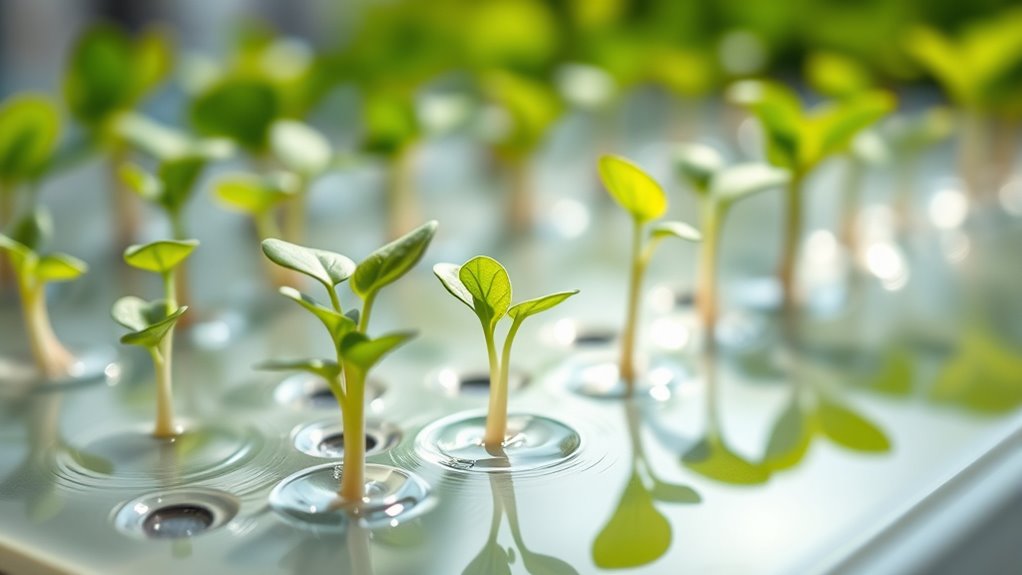

You should start feeding your seedlings in hydroponics once their initial true leaves have fully developed and the plants are sturdy enough to handle nutrients. Begin with a diluted nutrient solution, around 25-50% strength, and gradually increase the concentration as they adapt. Regularly check pH levels to guarantee proper absorption and adjust lighting to support growth. Continuing this process helps your seedlings develop strong roots and healthy foliage—learn more to facilitate a smooth shift.
Key Takeaways
- Begin feeding once seedlings develop their first true leaves, typically 1-2 weeks after germination.
- Start with diluted nutrient solutions (~25-50%) to prevent root stress.
- Gradually increase nutrient concentration as seedlings adapt and grow stronger.
- Regularly monitor pH levels to ensure optimal nutrient absorption.
- Ensure adequate lighting during feeding to promote healthy growth and nutrient uptake.
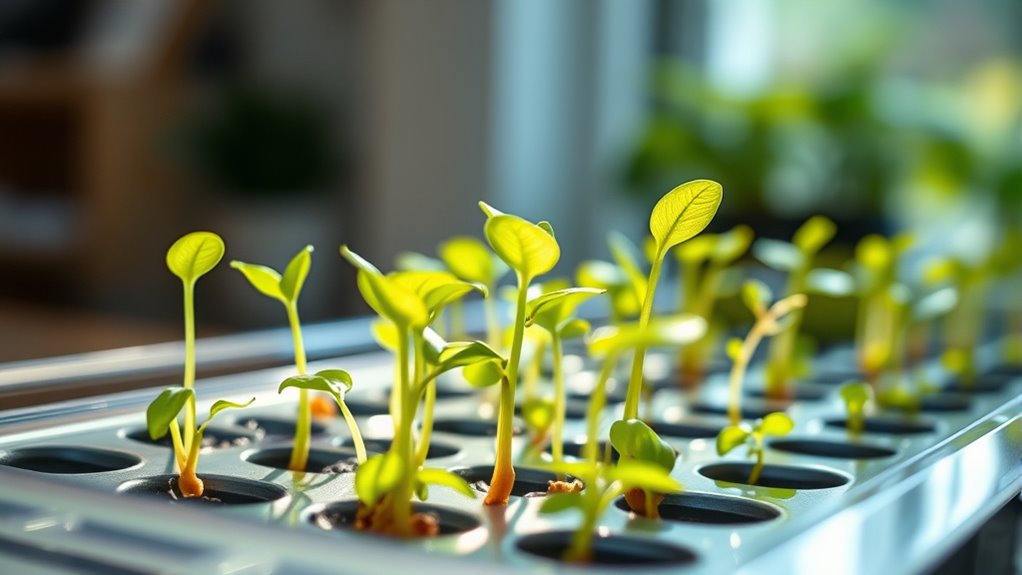
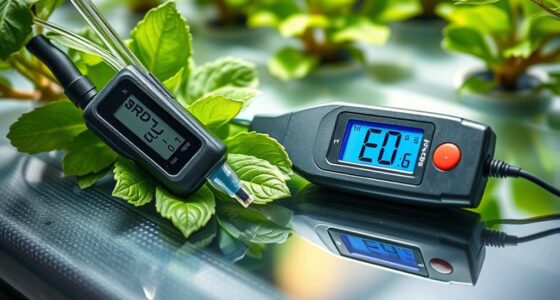
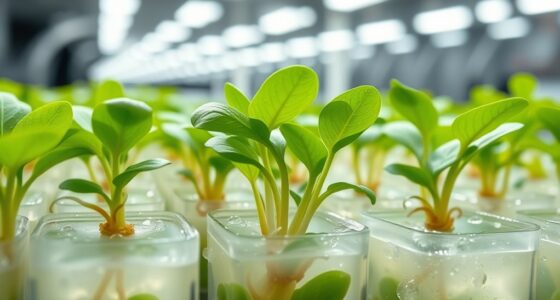
Starting to feed seedlings in hydroponics marks an important shift from their early growth stage. At this point, your seedlings have developed a sturdy root system and are ready to begin receiving nutrients beyond their initial seedling stage. This changeover is vital because it supports healthy growth, stronger stems, and more vigorous foliage. The key is to carefully monitor nutrient concentration; you want to provide enough nutrients to promote growth without risking nutrient burn or toxicity. Typically, you should start with a diluted nutrient solution, around 25-50% of the recommended strength for mature plants, and gradually increase it as your seedlings adapt. This cautious approach helps prevent overstressing delicate roots and guarantees a smooth transition to a full hydroponic environment. Regularly checking pH levels ensures optimal nutrient absorption and prevents deficiencies. Lighting adjustments play a crucial role during this phase as well. As you begin feeding your seedlings, ensure they receive adequate light intensity to maximize nutrient uptake. If you’re using artificial lighting, increase the light intensity gradually to match their growing needs, usually around 16-18 hours of light per day. Proper lighting not only boosts photosynthesis but also influences nutrient absorption, making your seedlings more resilient and vigorous. Keep an eye on the light distance from the seedlings; too close can cause heat stress, while too far reduces light efficiency. When combined with appropriate lighting adjustments, you’ll notice faster, healthier growth, and your seedlings will be better equipped to handle the increased nutrient load.
Frequently Asked Questions
How Do I Identify Nutrient Deficiencies in My Seedlings?
You can identify nutrient deficiencies in your seedlings by observing their growth and leaf color. Pale, yellowing leaves often indicate nitrogen deficiency, while stunted root development suggests lacking phosphorus. Keep an eye out for pest prevention issues that may hinder nutrient uptake, causing deficiencies. Regularly check roots for healthy development, and adjust your nutrient solution accordingly to guarantee your seedlings stay strong and vibrant.
Can Seedlings Tolerate High Nutrient Concentrations Early On?
Seedlings can’t tolerate high nutrient concentrations early on, as their seedling maturity isn’t developed enough to handle strong feeds. You should start with a diluted nutrient solution and gradually increase concentration as they grow. Proper nutrient timing is essential; wait until your seedlings develop a sturdy root system and healthy leaves before ramping up nutrients. This approach prevents nutrient burn and promotes healthy, vigorous growth.
What Are Signs of Overfeeding in Hydroponic Seedlings?
You’ll notice overfeeding in your hydroponic seedlings through leaf burn and root rot. If the leaves turn brown at the edges or become scorched-looking, it’s a sign of too much nutrient solution. Similarly, if roots appear slimy or brown and start decaying, you’ve overdone it. These symptoms indicate nutrient imbalance, so reduce feeding immediately to protect your seedlings’ health and promote healthy growth.
How Often Should I Check Ph Levels During Early Feeding?
You should check the pH levels daily during early feeding to guarantee ideal nutrient absorption. Regular pH testing helps you catch any fluctuations that could harm your seedlings. Keep an eye on nutrient monitoring closely, adjusting the pH as needed to keep it within the ideal range for seedlings, typically around 5.5 to 6.5. Consistent monitoring promotes healthy growth and prevents issues caused by pH imbalances.
Are Organic Nutrients Suitable for Hydroponic Seedlings?
Organic nutrients can be suitable for hydroponic seedlings if you guarantee organic compatibility and proper nutrient sourcing. You need to select organic-approved fertilizers that dissolve well in water and provide essential nutrients. Keep in mind that organic options might have slower nutrient release, so monitor your seedlings closely. Regularly check your system’s pH and nutrient levels to prevent deficiencies or imbalances, giving your seedlings the best chance to thrive organically.
Conclusion
So, you might think waiting to feed your seedlings until they’re fully grown is the way to go. Turns out, giving them nutrients early isn’t just beneficial—it’s essential. Ironically, neglecting to start feeding at the right time can stunt their growth or even kill them. So, don’t wait too long. Start feeding your seedlings when they’re still tiny. After all, a little nutrient boost early on might just be the secret to thriving, healthy plants—and avoiding unnecessary setbacks.