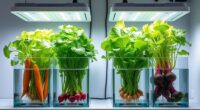
To successfully germinate seeds in hydroponics, focus on providing a sterile, moist medium kept at 65-75°F to encourage sprouting. Ensure your nutrient solution is balanced and tailored for seedlings, with a pH between 5.5 and 6.5 for ideal nutrient availability. Regularly monitor and adjust water pH and nutrients to prevent deficiencies or lockout. By maintaining consistent environmental conditions and proper care, you’ll set a strong foundation for healthy seedling growth, with more details to guide you ahead.
Key Takeaways
- Use sterile, moist mediums like rockwool or coco coir to promote healthy germination.
- Maintain water pH between 5.5 and 6.5 for optimal nutrient availability.
- Start with diluted nutrients and gradually increase strength as seedlings develop.
- Keep environmental conditions stable, with temperatures around 65-75°F and consistent moisture.
- Regularly monitor and adjust nutrient solution strength and pH to prevent stress and ensure healthy growth.

Have you ever wondered how seeds sprout successfully in a hydroponic system? The key lies in creating the right environment that supports healthy seedling development. When starting your seeds hydroponically, understanding seedling nutrition is essential. Unlike soil, where nutrients are naturally present, hydroponic systems rely on carefully balanced nutrient solutions. These solutions provide essential elements like nitrogen, phosphorus, and potassium, which are critical for seedling growth. Ensuring your seedlings have access to the right nutrients promotes vigorous root development and strong foliage. It’s important to start with a diluted nutrient solution that’s tailored for young plants, gradually increasing strength as they grow. This prevents nutrient burn and guarantees steady, healthy development from the outset.
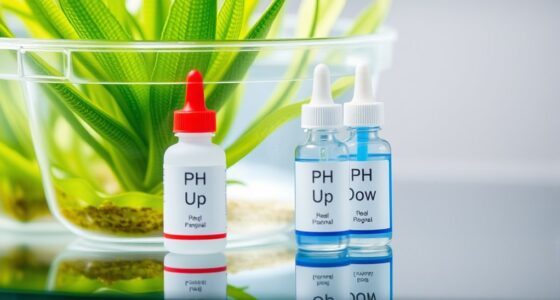
Water pH management plays an equally important role in seed germination. In hydroponics, maintaining the correct water pH ensures nutrients remain available to your seedlings. Most plants thrive when the pH level is between 5.5 and 6.5. If the pH drifts outside this range, nutrients can become insoluble or unavailable, which stunts growth or causes deficiencies. Regularly testing the water’s pH and adjusting it with pH up or down solutions helps maintain ideal conditions. You’ll want to measure pH frequently, especially during the early stages of germination, when seedlings are particularly sensitive. Proper pH management creates a stable environment, enhances nutrient uptake, and prevents issues like nutrient lockout.
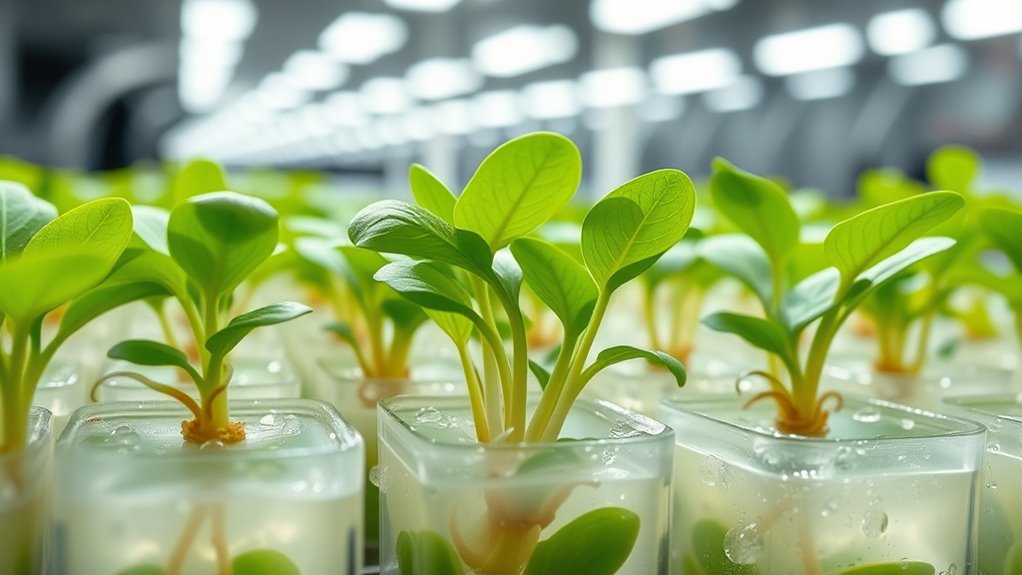
To give your seeds the best chance to sprout, guarantee your hydroponic system provides consistent moisture and oxygen. Use a sterile, moist medium like rockwool or coco coir to support the seeds without drowning them. Keep the environment warm—around 65-75°F (18-24°C)—to encourage sprouting. As soon as the seeds sprout, you should monitor the seedling nutrition and water pH closely, making adjustments as needed. Consistency is key; fluctuations in nutrient levels or pH can stress the young plants, slowing growth or causing failure to establish.

NAMOTEK 5 Pack Seed Starter Tray with Heat Mat and Grow Light Humidity Domes, 60 Cell Trays Germination Station Cloning Kit
【UPGRADED SELF-WATERING】—Self-Watering seed starter tray kit takes the guesswork out of watering time and frequency. It minimizes over-watering,…
As an affiliate, we earn on qualifying purchases.
As an affiliate, we earn on qualifying purchases.
Frequently Asked Questions
How Long Does Seed Germination Typically Take in Hydroponics?
Seed germination in hydroponics usually takes between 3 to 7 days, depending on the plant type. You should start by soaking your seeds to speed up germination. Keep them in a warm, dark place initially, then introduce light exposure once the seeds sprout. Maintaining consistent moisture and proper temperature helps guarantee quick, healthy germination. Patience is key as each seed variety has its own timeline.
Can All Seed Types Be Germinated Hydroponically?
Not all seed types are suitable for hydroponic germination. You need to take into account seed compatibility, as some seeds require specific conditions or seed pre-treatment like soaking or scarification to sprout properly. Research each seed’s needs before attempting hydroponic germination. By ensuring proper seed compatibility and applying necessary pre-treatments, you improve your chances of successful germination and healthy plant growth in your hydroponic system.
What Temperature Is Optimal for Seed Germination in Hydroponics?
You should aim for an ideal temperature around 65-75°F (18-24°C) for seed germination in hydroponics. Maintaining this range encourages healthy growth and guarantees quick germination. Keep in mind, some seeds benefit from seed coat removal to improve water uptake, and light exposure requirements vary—some seeds need darkness, while others require light. Consistent temperature, proper seed preparation, and understanding light needs are key to successful germination.
How Do I Prevent Fungal Issues During Germination?
To prevent fungal issues during germination, focus on fungal prevention by maintaining a sterile environment. Keep your grow area clean, sanitize containers, and avoid excess moisture that promotes mold growth. Use sterilized seed-starting mediums and ensure proper air circulation. Avoid overwatering, and consider applying organic antifungal treatments if necessary. These steps help minimize fungal risks and promote healthy seed germination in your hydroponic setup.
What Are Common Mistakes to Avoid During Seed Germination?
Imagine planting seeds in a delicate garden; avoid common pitfalls that can hinder growth. You should always prioritize seed sterilization to prevent unwanted pathogens and use high-quality water to keep conditions ideal. Skipping these steps may lead to issues like mold or poor sprouting. Additionally, don’t overcrowd your seeds or expose them to extreme temperatures. Being attentive and gentle during germination helps guarantee healthy, vibrant seedlings.

600 PCS 1 Inch Rockwool Cubes for Hydroponics, Rock Wool Hydroponic Planting Blocks with 20 Plant Name Tags, Rockwool Starter Plugs for Seedling & Cutting in Soilless Cultivation (12 Sheets)
Package Included: The product includes 12 sheets of 1 inch rockwool cubes for hydroponics with 10 plant name…
As an affiliate, we earn on qualifying purchases.
As an affiliate, we earn on qualifying purchases.
Conclusion
Now that you understand the delicate balance of seed germination in hydroponics, you realize it’s both simple and complex. While the process requires careful attention and patience, it also offers a rewarding growth without soil’s unpredictability. Just like nurturing tiny seeds into thriving plants, your efforts transform tiny beginnings into lush, vibrant life. Embrace the challenge, enjoy the journey, and watch as your hydroponic garden blooms with potential—proof that great things often start small.

EZTOCH Hydroponic pH EC Meter, Water pH TDS PPM Meter with Simultaneous Display for Reservoir Nutrient Solution, pH EC Meter for Water Hydroponic DWC System Setup, Measure Conductivity for Aquaponics
Simultaneously display pH EC Temp or pH ppm Temp: This pH tester can display the measured values of…
As an affiliate, we earn on qualifying purchases.
As an affiliate, we earn on qualifying purchases.

VIVOSUN Liquid Nutrients Base A & B Bundle, Grow Big Hydroponic Fertilizer, Supports Vegetative and Flowering Stages for Outdoor, Indoor Plants, Best Plant Food, Set of Quarts
The Perfect Combination: Vivosun nutrients base A & B are two-part, concentrated, holistic formulas that provide complete macro…
As an affiliate, we earn on qualifying purchases.
As an affiliate, we earn on qualifying purchases.