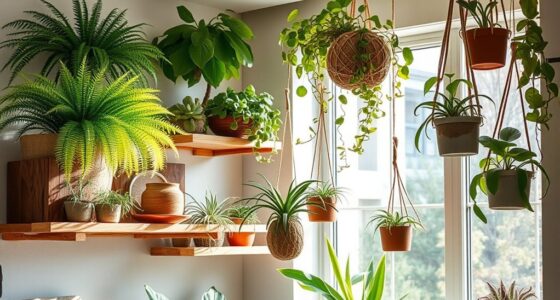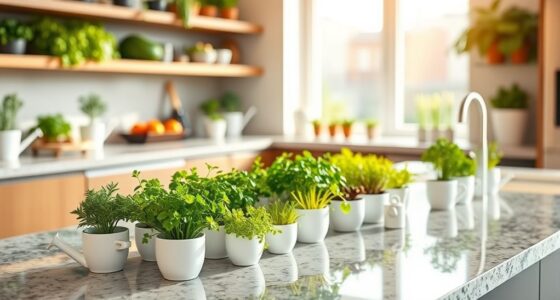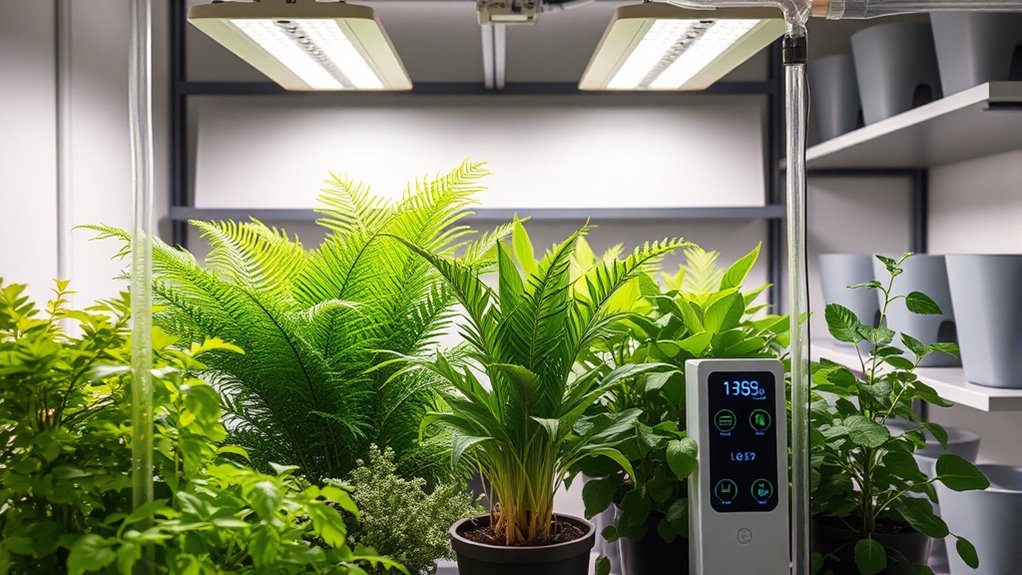
Upgrading your old indoor garden with new technology boosts plant health and simplifies maintenance. Replacing traditional lights with energy-efficient LED grow lights offers tailored spectra and less heat stress, promoting stronger growth. Adding automated watering systems ensures precise moisture delivery, reducing waste. Incorporating automotive LED tech can further optimize light conditions for your plants. These upgrades create a vibrant, efficient space and help your garden thrive; explore more to discover how seamless integration makes a difference.

Get garden gear delivered free with Prime
- Fast, free delivery on millions of items
- Prime Video, Amazon Music and more included
- Member-only deals all year
Key Takeaways
- Replace outdated lighting with energy-efficient LED grow lights for better plant health and reduced energy costs.
- Incorporate customizable spectra, such as automotive LED technology, to optimize plant growth conditions.
- Install automated watering systems with soil moisture sensors to ensure consistent and precise watering routines.
- Position new lighting strategically to ensure even light distribution and promote vigorous, stress-free plant development.
- Integrate compatible smart controls for seamless operation and improved overall system efficiency and plant care.
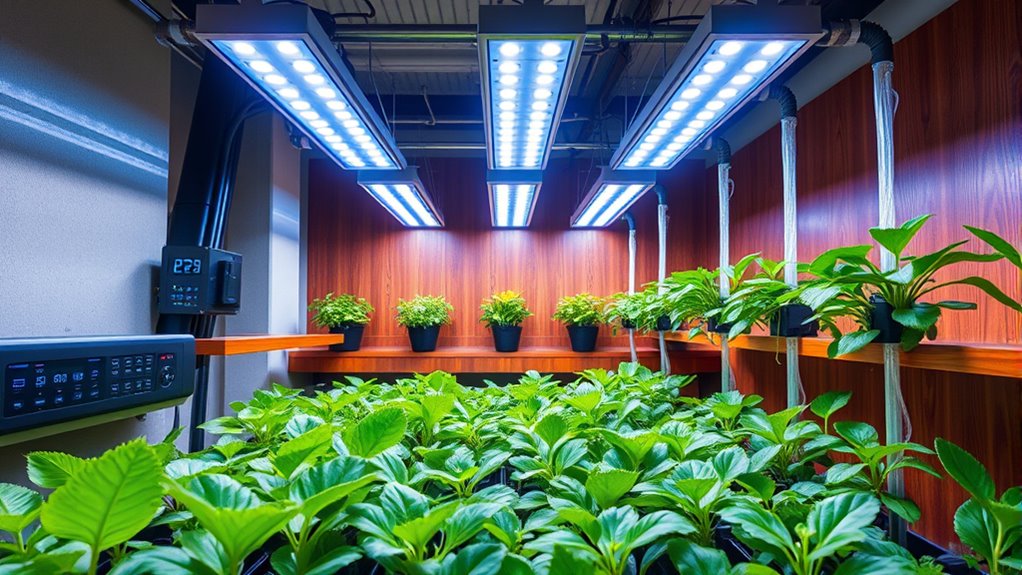
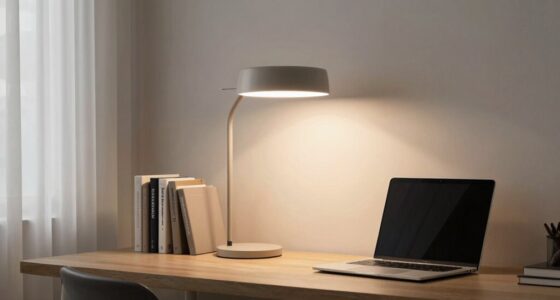
Transforming your indoor garden can substantially boost its health and aesthetics, making your space more vibrant and inviting. Upgrading your existing systems with the latest technology ensures your plants flourish while simplifying maintenance. One of the most impactful improvements you can make is implementing LED lighting. Unlike traditional grow lights, LED lights are energy-efficient, produce less heat, and can be tailored to specific plant needs. With adjustable brightness and spectrum controls, you can simulate natural sunlight, encouraging healthy growth year-round. Installing LED lighting above your plants not only enhances their appearance but also promotes faster, stronger development. It’s a smart upgrade that saves on electricity costs and reduces heat stress, especially important if your garden is in a confined space or near sensitive plants. Incorporating automotive LED lighting technology can provide specialized spectra that optimize plant growth and energy efficiency.
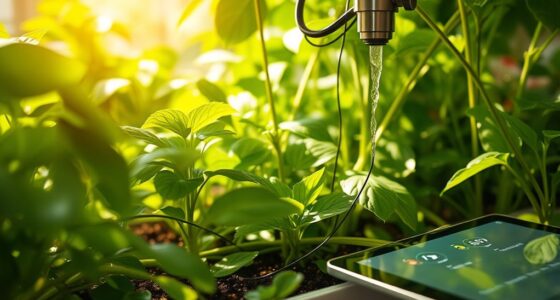
Another key upgrade is adopting automated watering systems. Manual watering can be inconsistent, leading to overwatering or underwatering—both of which stress your plants and stunt their growth. Automated watering systems take the guesswork out of plant care. They deliver precise amounts of water at scheduled intervals, ensuring each plant receives the right hydration exactly when it needs it. These systems often come with moisture sensors that monitor soil conditions in real-time, adjusting watering schedules accordingly. This not only keeps your plants healthier but also frees up your time, so you don’t have to worry about daily watering chores. Plus, automated watering reduces water waste, making your garden more sustainable.
Integrating these technologies is straightforward and highly effective. Start by replacing your old lighting setup with an LED grow light that fits the size and needs of your indoor garden. Position it at an appropriate height to ensure even light distribution. For watering, choose an automated system compatible with your garden’s size and plant types. Connect it to moisture sensors if possible, so it reacts dynamically to your plants’ needs. Once set up, these systems work seamlessly, providing consistent care without constant manual intervention. Over time, you’ll notice your plants exhibiting more vigorous growth, fewer signs of stress, and an overall healthier appearance.
energy-efficient LED grow lights for indoor plants
As an affiliate, we earn on qualifying purchases.
As an affiliate, we earn on qualifying purchases.
Frequently Asked Questions
Can I Upgrade My Old Indoor Garden Without Replacing the Entire System?
Yes, you can upgrade your old indoor garden without replacing the entire system. Start with DIY upgrades like adding new LED grow lights or smart watering systems. Make sure to do compatibility checks to guarantee new components work with your existing setup. This way, you enhance your garden’s performance easily and cost-effectively, extending its lifespan and boosting plant growth without the need for a full replacement.
What Are the Best Budget-Friendly Tech Upgrades for Indoor Gardens?
Think of your indoor garden as a thriving orchestra waiting for a tune. To upgrade on a budget, you can enhance your lighting system with affordable LED grow lights that boost plant growth. Improve your watering system by installing simple drip emitters or moisture sensors. These tech upgrades harmonize your garden’s performance without breaking the bank, turning your space into a lush, flourishing symphony.
How Do I Ensure Compatibility Between New Tech and My Existing System?
To guarantee compatibility between new tech and your existing system, start by checking if your garden automation devices support sensor integration and compatible communication protocols like Wi-Fi, Bluetooth, or Zigbee. Read device specifications thoroughly, and look for universal connectors or standards. Updating firmware or software may also be necessary. Test new components in a small section first to confirm seamless integration before upgrading your entire indoor garden system.
Are There Any Safety Concerns When Adding Modern Electronics to Indoor Gardens?
You might find it surprising, but adding modern electronics to your indoor garden isn’t risky if you prioritize electrical safety and water resistance precautions. Always guarantee devices are certified for indoor use, keep electronics away from water, and use GFCI outlets. Properly insulating connections and avoiding overloading circuits help prevent hazards. By taking these simple steps, you can enjoy your upgraded system safely and confidently, knowing you’re protecting both your plants and your home.
How Often Should I Perform Maintenance After Upgrading My Indoor Garden?
You should perform maintenance on your upgraded indoor garden weekly. Check your watering schedule to guarantee plants aren’t over or underwatered, and inspect for pests regularly. Clean any new tech components like sensors or LED lights to prevent buildup, and adjust watering and pest control as needed. Staying consistent helps your garden thrive, so set a routine for maintenance, making sure your plants stay healthy and productive.
automated plant watering system with soil moisture sensors
As an affiliate, we earn on qualifying purchases.
As an affiliate, we earn on qualifying purchases.
Conclusion
Now that you’ve upgraded your indoor garden with the latest tech, you’re well on your way to a lush, thriving oasis. Imagine your plants basking in ideal light, their leaves glistening like jewels in a Victorian greenhouse. With these modern touches, you’ll enjoy healthier growth and more bountiful harvests. So, keep nurturing your green sanctuary, and soon you’ll be the envy of every gardener in the digital age—proof that even old-world charm can meet futuristic innovation.
smart indoor garden lighting with customizable spectrum
As an affiliate, we earn on qualifying purchases.
As an affiliate, we earn on qualifying purchases.
automotive LED grow lights for plant growth
As an affiliate, we earn on qualifying purchases.
As an affiliate, we earn on qualifying purchases.
Halloween Picks
halloween
As an affiliate, we earn on qualifying purchases.