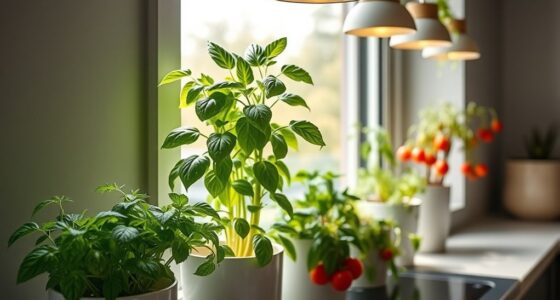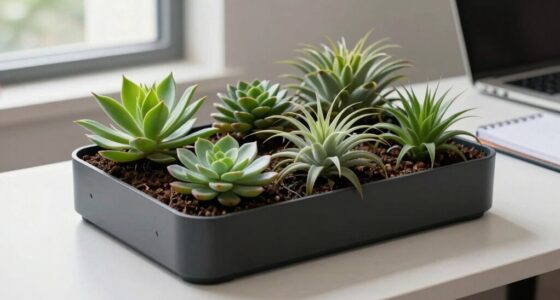
To build a sustainable indoor garden system, choose eco-friendly materials like coconut coir or expanded clay pellets for your substrates, as they’re renewable and reusable. Opt for biodegradable containers such as bamboo or ceramic pots, which are free from harmful chemicals and environmentally friendly. These materials reduce waste, minimize indoor pollution, and support healthy plant growth. Keep exploring to discover even more eco-conscious options that can make your garden both beautiful and sustainable.

Get garden gear delivered free with Prime
- Fast, free delivery on millions of items
- Prime Video, Amazon Music and more included
- Member-only deals all year
Key Takeaways
- Use organic, renewable substrates like coconut coir and expanded clay pellets to support plant roots sustainably.
- Choose biodegradable containers such as bamboo or ceramic pots to minimize environmental impact.
- Opt for recycled plastic containers to repurpose waste and enhance durability.
- Select eco-friendly materials that reduce chemical leaching and promote healthier indoor environments.
- Prioritize materials with long lifespan and recyclability to minimize waste and support a resilient indoor garden system.
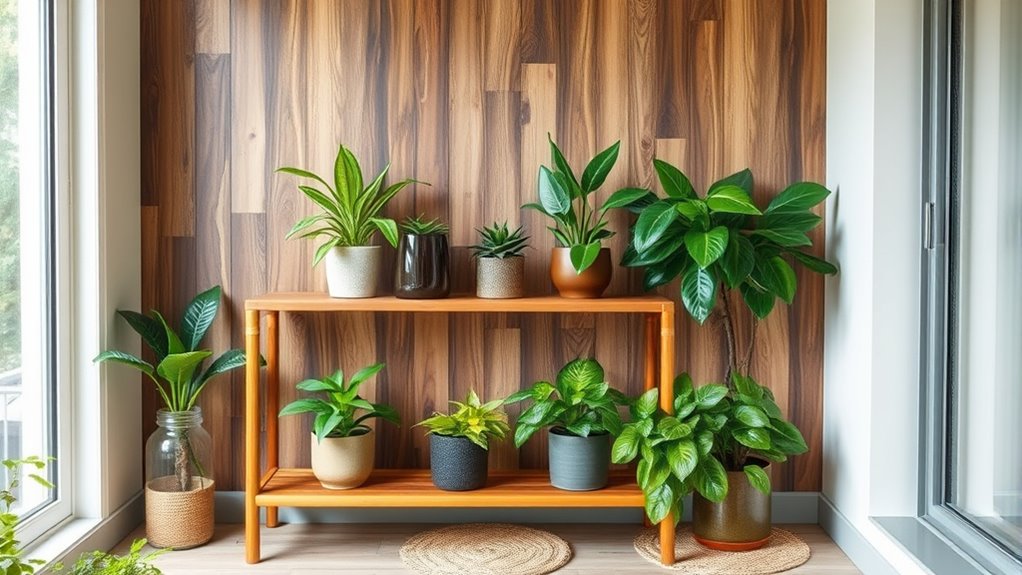
Ever wondered what materials you need to create a thriving indoor garden? The good news is, choosing sustainable materials makes your gardening endeavors not only eco-friendly but also more cost-effective in the long run. One of the key considerations is selecting the right hydroponic substrates. These substrates serve as the medium that supports your plants’ roots, providing stability and facilitating nutrient absorption. Instead of traditional soil, you can opt for organic options like coconut coir, which is renewable, biodegradable, and holds moisture well. Alternatively, expanded clay pellets are lightweight, reusable, and free from harmful chemicals, making them an excellent choice for sustainable setups. These hydroponic substrates are durable and can often be cleaned and reused multiple times, reducing waste and environmental impact.
Choosing sustainable hydroponic substrates like coconut coir and expanded clay pellets supports eco-friendly indoor gardening.
When it comes to containers, eco-friendly options are your best bet. Traditional plastic containers, while affordable and widely available, pose environmental concerns due to their long decomposition time and potential chemical leaching. Instead, look for biodegradable or recycled materials. Bamboo planters, for example, are rapidly renewable and add an aesthetic touch to your indoor garden. Recycled plastic containers are another sustainable choice—they give new life to waste materials and can be just as durable as conventional options. Additionally, ceramic or clay pots made from natural materials not only look stylish but are biodegradable and free from synthetic chemicals. These eco-friendly containers ensure your plants are housed in safe, non-toxic environments, aligning with your goal of sustainability.
Using eco-friendly containers and hydroponic substrates also encourages a cleaner indoor environment. You avoid the potential off-gassing and chemical residues associated with some synthetic materials. Plus, these choices often require less frequent replacement, which means less waste and fewer resources used over time. When setting up your indoor garden, be mindful of the entire lifecycle of your materials—consider how they’re produced, how long they last, and how they can be disposed of or recycled. This holistic approach helps you create a truly sustainable system that benefits your plants and the planet alike.
Additionally, selecting cost-effective materials can make your indoor gardening project more accessible and sustainable in the long term. Ultimately, selecting sustainable materials like organic hydroponic substrates and eco-friendly containers doesn’t mean sacrificing functionality or style. It’s about making smarter choices that support healthy plant growth while minimizing your environmental footprint. With these materials, you build an indoor garden that’s resilient, eco-conscious, and beautifully integrated into your home. So, when you’re planning your setup, keep sustainability front and center—your plants, your home, and the planet will thank you.
eco-friendly hydroponic substrates coconut coir
As an affiliate, we earn on qualifying purchases.
As an affiliate, we earn on qualifying purchases.
Frequently Asked Questions
How Do Sustainable Materials Impact Indoor Air Quality?
Using sustainable materials helps improve your indoor air quality by reducing indoor air pollutants that off-gas from traditional materials. These eco-friendly options often have better material biodegradability, meaning they break down naturally without releasing harmful chemicals. When you choose sustainable materials, you create a healthier environment for your indoor garden, minimizing pollutants and supporting a cleaner, safer space for both plants and people.
Are Eco-Friendly Materials Cost-Effective for Large-Scale Indoor Gardens?
A penny saved is a penny earned. Eco-friendly materials can be cost-effective for large-scale indoor gardens because they often lead to significant cost savings over time. You’ll benefit from lower energy and maintenance costs, and material sourcing may become easier with a focus on sustainable options. While initial investments might be higher, the long-term financial and environmental benefits make eco-friendly choices a smart, economical decision for your indoor garden.
What Maintenance Do Sustainable Building Materials Require?
You need to establish simple maintenance routines, like cleaning surfaces and checking for signs of wear, to keep sustainable building materials in good shape. Regular upkeep helps extend their material lifespan and prevents issues like mold or deterioration. By staying proactive with maintenance routines, you guarantee your indoor garden system remains functional and eco-friendly for years to come, saving you money and reducing environmental impact.
Can Recycled Materials Withstand Indoor Climate Conditions?
Recycled materials like recycled plastic can withstand indoor climate conditions, especially moisture and temperature fluctuations, making them a practical choice. Bamboo, known for its durability, also performs well indoors, resisting pests and decay when properly treated. You should guarantee these materials are sealed or treated appropriately to enhance their longevity. With proper care, recycled plastic and bamboo can be reliable, eco-friendly options for your indoor garden system.
How Do Sustainable Materials Compare in Durability to Conventional Options?
Sustainable materials often have comparable or even better material lifespan and structural integrity than conventional options. You’ll find that eco-friendly options like bamboo or recycled steel are durable enough for indoor garden systems, resisting wear over time. While some may require extra maintenance, their longevity and strength make them a reliable choice, helping you build a sustainable, resilient indoor environment that lasts without sacrificing performance.
As an affiliate, we earn on qualifying purchases.
Conclusion
Choosing sustainable materials for your indoor garden not only benefits the environment but also creates a healthier space for you. By making eco-friendly choices, you support a greener future and enjoy a vibrant, thriving garden indoors. Isn’t it worth investing in materials that nurture both your plants and the planet? Start small, think big, and let your indoor garden be a model of sustainability. After all, isn’t a greener tomorrow built today?
recycled plastic plant containers
As an affiliate, we earn on qualifying purchases.
As an affiliate, we earn on qualifying purchases.
expanded clay pellets for indoor garden
As an affiliate, we earn on qualifying purchases.
As an affiliate, we earn on qualifying purchases.
Fall Picks
fall essentials
As an affiliate, we earn on qualifying purchases.