Climate-controlled seed storage might sound extreme, but it’s essential for keeping seeds viable over time. By carefully regulating temperature, humidity, and oxygen levels, you prevent deterioration, mold, and loss of germination ability. Without these precise conditions, seed quality can decline quickly, risking food security and biodiversity. If you want to understand how these advanced methods protect our future crops and natural heritage, stay with us to explore more.

Get garden gear delivered free with Prime
- Fast, free delivery on millions of items
- Prime Video, Amazon Music and more included
- Member-only deals all year
Key Takeaways
- Climate-controlled storage maintains optimal conditions, significantly reducing seed deterioration and prolonging viability over time.
- Precise regulation of temperature, humidity, and oxygen prevents seed aging and preserves germination potential.
- Without advanced storage, environmental fluctuations cause seed quality decline and increased germination failures.
- Proper climate control is essential for conserving genetic diversity and ensuring reliable crop production.
- These systems may seem extreme, but they are crucial for safeguarding seeds until needed for planting or conservation.
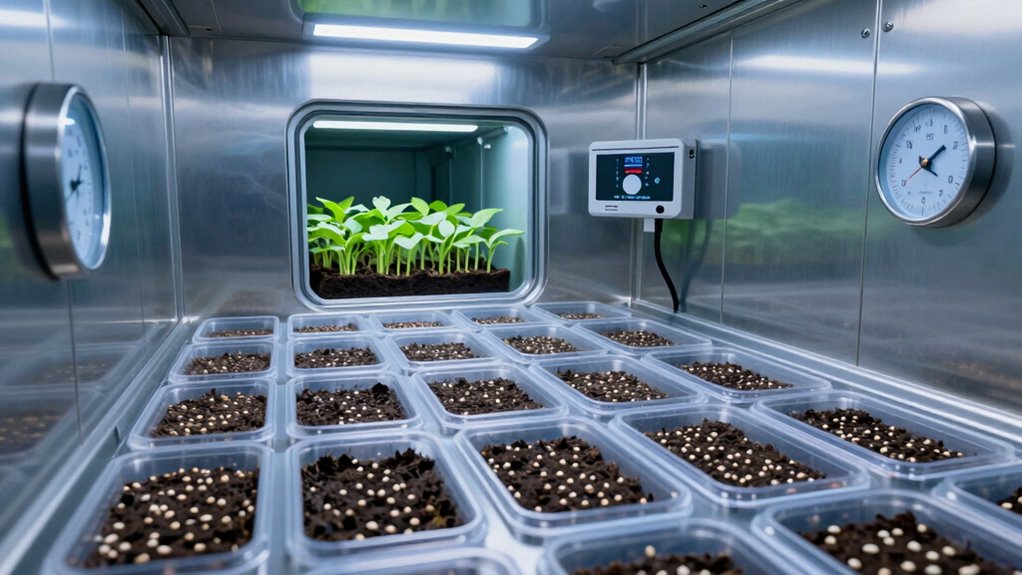
Have you ever wondered how scientists guarantee seeds remain viable for future planting seasons? It’s a vital question because seed viability—the ability of a seed to germinate successfully—is essential for agriculture, conservation, and food security. To guarantee seeds stay healthy and capable of sprouting when needed, experts rely heavily on advanced storage technology. Traditional methods, like storing seeds in cool, dark places, once seemed enough, but they aren’t always reliable. Seeds can lose their germination potential over time due to environmental factors, which is why climate-controlled seed storage has become a game-changer.
Climate-controlled storage isn’t just about keeping seeds in a cool, dry environment; it involves precise regulation of temperature, humidity, and oxygen levels. This careful balance minimizes the seed’s metabolic activity, effectively slowing down aging processes and preventing deterioration. When storage technology is optimized, seeds remain viable for much longer periods, saving valuable genetic material and ensuring a steady supply for future planting. Without such control, seeds are vulnerable to spoilage, mold, or loss of germination ability—risks that can threaten entire crops or conservation efforts.
You might think that keeping seeds in a refrigerator or a freezer would be enough, but it’s more complex. Modern storage facilities use sophisticated technology that monitors and adjusts conditions continuously. For example, seed banks often operate at temperatures just above freezing, with humidity tightly maintained to prevent mold or desiccation. Oxygen levels are sometimes reduced to slow respiration, further extending seed life. This level of precision is essential because even slight deviations can cause a decline in seed quality. The goal is to replicate the ideal conditions that keep seeds dormant yet preserved, ready to sprout when the time comes. Additionally, precise environmental control is crucial for maintaining seed quality over extended periods.
You should appreciate how this technology directly impacts agriculture and biodiversity. By maintaining high seed viability, farmers can access high-quality planting material year after year. Conservationists can preserve rare or endangered plant species without fear of genetic loss over time. The investment in climate-controlled storage reflects an understanding that seed longevity isn’t just about keeping seeds cold; it’s about creating stable environments that mimic the conditions best suited for preservation. As germination rates drop with poor storage, the importance of these advanced systems becomes clear—they’re indispensable tools that protect our future food supply and natural heritage.
In essence, climate-controlled seed storage sounds extreme, but once you understand the science behind it, it’s clear that it’s all about safeguarding the future. With the right storage technology, seeds can stay viable far longer than ever before, ensuring that when you plant them, they’ll grow strong and healthy.
climate-controlled seed storage container
As an affiliate, we earn on qualifying purchases.
As an affiliate, we earn on qualifying purchases.
Frequently Asked Questions
How Do Climate-Controlled Facilities Differ From Traditional Seed Banks?
Climate-controlled facilities differ from traditional seed banks by using advanced storage technology to maintain ideal conditions like temperature, humidity, and light. You benefit from improved seed preservation, ensuring higher viability over time. Unlike traditional methods, these facilities actively regulate variables, preventing deterioration. This approach reduces germination drops and extends seed lifespan, giving you more reliable seed storage and better chances for successful germination, especially in challenging environments.
What Are the Costs Associated With Maintaining Climate-Controlled Seed Storage?
You’ll find that maintaining climate-controlled seed storage costs can range from a few thousand to hundreds of thousands annually, depending on size and technology. A detailed cost analysis shows energy bills, equipment upkeep, and security contribute most. While it’s expensive, these investments protect seed viability and genetic diversity, ensuring successful germination and long-term conservation. Balancing costs with benefits is key to effective seed storage management.
Can Climate-Controlled Storage Extend Seed Viability Indefinitely?
Climate-controlled storage can substantially extend seed viability, but it can’t make storage indefinite. You can preserve genetic diversity and boost storage longevity by maintaining ideal temperature and humidity levels. However, over long periods, seed quality may still decline due to natural aging processes. So, while you prolong viability, you can’t achieve perpetual preservation. Regular regeneration or replanting remains essential for maintaining genetic preservation over time.
What Types of Seeds Benefit Most From Climate-Controlled Conditions?
They say, “A stitch in time saves nine,” and that’s true for seeds too. You’ll find that seeds with strong dormancy or sensitive to storage humidity benefit most from climate-controlled conditions. By controlling temperature and humidity, you prevent premature sprouting or deterioration. These conditions help maintain seed viability longer, especially for rare or valuable seeds, ensuring they stay healthy and ready for germination when you need them most.
Are There Environmental Impacts of Using Climate-Controlled Storage Systems?
Using climate-controlled storage systems impacts the environment by increasing energy consumption, which can elevate your ecological footprint. While they help preserve seed viability, they often require constant power, contributing to greenhouse gas emissions depending on your energy source. To minimize environmental impacts, you can consider energy-efficient systems, renewable energy options, or optimizing storage conditions to reduce energy use while maintaining seed quality.
seed vault temperature and humidity monitor
As an affiliate, we earn on qualifying purchases.
As an affiliate, we earn on qualifying purchases.
Conclusion
Without climate-controlled storage, you risk losing up to 90% of your seeds, leaving your future crops uncertain. Imagine a world where nearly all your precious seeds fail to germinate, just because of temperature or humidity swings. By investing in climate control, you’re safeguarding your seeds, ensuring a vibrant and resilient harvest. It’s an extreme measure, but it’s the difference between hope and heartbreak in your farming journey.
As an affiliate, we earn on qualifying purchases.
oxygen control seed storage system
As an affiliate, we earn on qualifying purchases.
As an affiliate, we earn on qualifying purchases.
Halloween Picks
halloween
As an affiliate, we earn on qualifying purchases.