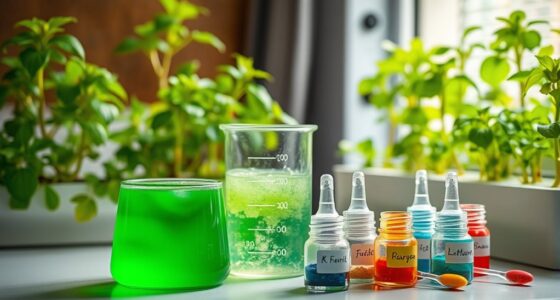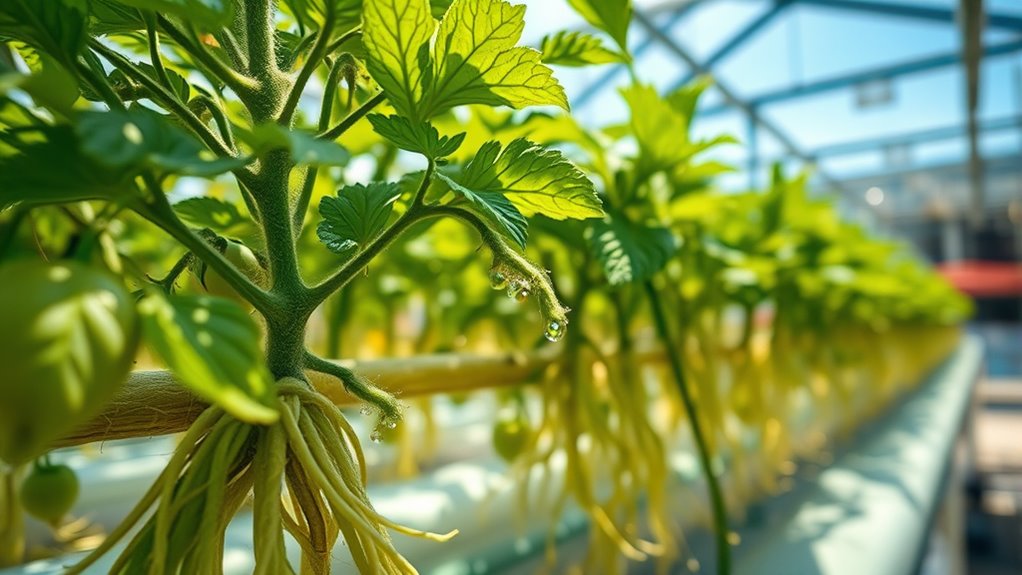

Chelated nutrients play a crucial role in improving iron uptake in hydroponics by keeping iron dissolved and bioavailable, even when pH levels fluctuate. These organic-bound minerals prevent nutrient lockout and precipitation, ensuring your plants receive essential micronutrients consistently. Using chelated forms enhances overall plant health, supports chlorophyll production, and promotes vigorous growth. To realize the full potential of your hydroponic system, explore how chelated nutrients can optimize your nutrient management strategies.
Key Takeaways
- Chelated nutrients bond iron with organic ligands, enhancing solubility and preventing precipitation in hydroponic solutions.
- Chelation maintains iron bioavailability across a wide pH range, ensuring consistent plant absorption.
- Chelated forms bypass chemical barriers, allowing roots to readily uptake iron even in challenging conditions.
- Using chelated iron reduces nutrient lockout and extends solution stability, promoting healthy plant growth.
- Incorporating chelated nutrients optimizes iron availability, supporting chlorophyll synthesis and overall plant vigor.
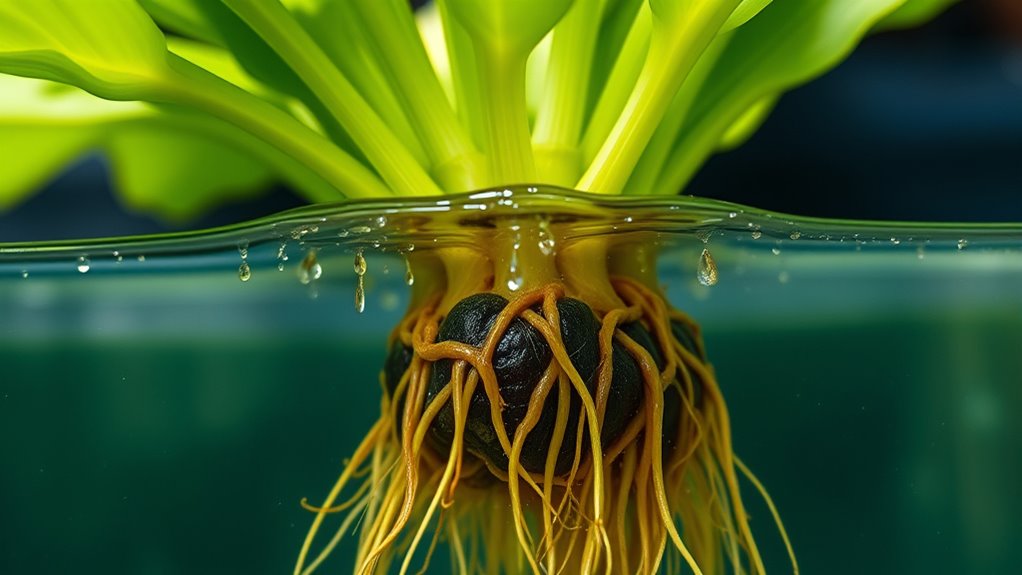
Chelated nutrients are minerals bonded to organic molecules, which help your plants absorb essential elements more efficiently. When it comes to hydroponics, where nutrients are delivered directly to the roots in a water-based solution, the form of these nutrients can make all the difference. Chelated nutrients are particularly effective because they enhance micronutrient absorption, especially for elements like iron that are prone to be locked out or rendered unavailable in certain pH ranges. The chelation process involves wrapping the mineral in an organic ligand, creating a more stable complex that resists degradation in the solution and within the plant’s root zone. This stability is *crucial* because it prevents nutrients from precipitating out or reacting with other compounds, ensuring a steady supply of *vital* micronutrients.
Chelated nutrients ensure stable, efficient absorption of vital micronutrients in hydroponic systems.
In hydroponic systems, maintaining *optimal* iron uptake can be challenging, especially as pH levels fluctuate. Iron tends to form insoluble compounds under alkaline conditions, making it unavailable to your plants. Here, chelated forms of iron shine because they maintain chelation stability even in less-than-ideal pH environments. The organic molecules attached to the iron keep it dissolved and bioavailable, increasing the chances that your plants will absorb it efficiently. This stability also extends the shelf life of your nutrient solution, reducing the need for frequent adjustments and making your operation more reliable. Additionally, chelated nutrients help prevent nutrient lockout caused by chemical reactions in the solution, further supporting consistent plant health.
You’ll notice that chelated nutrients improve micronutrient absorption because they bypass the typical chemical barriers that hinder uptake. Instead of relying solely on the plant’s ability to convert or extract nutrients from complex forms, chelated minerals are already in a form that the plant can readily utilize. This is especially valuable for iron, manganese, zinc, and copper, which are essential for processes like chlorophyll synthesis and enzyme function. When these nutrients are properly chelated, they stay available longer in the solution, ensuring your plants aren’t deprived during critical growth stages.
Furthermore, chelation stability helps prevent nutrient lockout, which occurs when certain minerals react with other compounds in the solution, forming insoluble precipitates. By maintaining stable complexes, chelated nutrients stay in solution and are accessible when the roots need them. As a result, your plants experience fewer deficiencies and grow more vigorously. Overall, using chelated nutrients in hydroponics maximizes micronutrient absorption, promotes consistent nutrient availability, and fosters healthier, more productive plants. This makes chelated forms an essential tool for any hydroponic grower aiming for *optimal* nutrient uptake and plant health. Incorporating chelating agents into your nutrient strategy can further enhance stability and uptake efficiency, especially in challenging growing conditions.

Humboldts Secret CalMag & Iron | Calcium, Magnesium & Chelated Iron Nutrient Fertilizer | Hydroponic Supplies for Vegetative & Flowering Growth in Soil, Coco, Hydroponics or RO Water | 32 Ounce
- Packaging Update: Same formula, different packaging
- Supports All Growth Stages: Provides calcium, magnesium, chelated iron
- Enhances Plant Health: Strengthens stems and improves leaf color
As an affiliate, we earn on qualifying purchases.
As an affiliate, we earn on qualifying purchases.
Frequently Asked Questions
How Do Chelated Nutrients Compare to Inorganic Forms for Root Absorption?
Chelated nutrients generally outperform inorganic forms in root absorption because metal chelation enhances nutrient solubility and prevents metal precipitation. When you use chelated nutrients, the chelation process keeps essential minerals, like iron, more available and easier for roots to absorb, especially in challenging conditions like hydroponics. This improved solubility means plants get nutrients more efficiently, reducing deficiencies and promoting healthier growth overall.
Are There Environmental Concerns With Overusing Chelated Iron?
Overusing chelated iron can raise environmental concerns, especially regarding nutrient runoff. When you apply too much, excess chelated iron may leach into soil and water systems, impacting aquatic life and disrupting ecosystems. To minimize environmental impact, monitor your application rates carefully, avoid over-fertilizing, and use efficient delivery methods. Responsible use guarantees plants receive necessary nutrients without harming the environment or contributing to pollution.
Can Chelated Nutrients Be Used in Organic Hydroponic Systems?
Did you know that up to 70% of consumers prefer organic produce? You can use chelated nutrients in organic hydroponic systems, but only if they’re approved for organic farming. These nutrients support organic compatibility and enhance nutrient cycling, ensuring your plants get essential minerals without compromising organic standards. Just make sure to choose chelated nutrients labeled as organic to keep your system compliant and eco-friendly.
What Are the Signs of Iron Deficiency in Hydroponic Plants?
You’ll notice signs of iron deficiency in your hydroponic plants as leaf chlorosis, where the new leaves turn yellow while veins stay green. Stunted growth is another indicator, showing your plants aren’t developing properly. If you see these symptoms, it’s a sign to check your nutrient levels and possibly add chelated iron, which helps improve iron uptake and restores healthy, vibrant foliage.
How Often Should Chelated Nutrients Be Reapplied in Hydroponic Setups?
You should reapply chelated nutrients every 1 to 2 weeks, depending on your hydroponic system’s nutrient levels and plant growth stage. Consistent nutrient timing is vital to maintain ideal iron availability and prevent deficiencies. Regularly check your plants for signs of nutrient imbalance, and adjust reapplication frequency accordingly. This guarantees your plants get a steady supply of chelated nutrients, promoting healthy growth and maximizing yield.

Boca Hydro Iron DTPA 12% Chelated Micronutrient for Hydroponics Fertigation and Soil – Highly Soluble Iron Supplement for Nutrient Solutions pH up to 7.5 – Corrects Light Colored Leaves (1 Lb)
- Suitable for Hydroponic Systems: Ideal for hydroponics, coco coir, soilless cultivation
- Stable in High pH: Remains stable up to pH 7.5
- Corrects Iron Deficiency: Rapidly addresses iron chlorosis
As an affiliate, we earn on qualifying purchases.
As an affiliate, we earn on qualifying purchases.
Conclusion
By embracing chelated nutrients, you empower your plants to efficiently absorb essential elements like iron. This simple yet strategic step ensures healthier, more vibrant growth, helping you conquer common crop concerns. With wise watering and well-chosen chelates, you’ll witness wonderful, vigorous results. So, strengthen your solution, streamline your soil, and set the stage for spectacular, steadfast success in your hydroponic harvest. Chelated nutrients truly champion your cultivation, creating a cycle of consistent, enthralling crops.

Liquid Plant Food for use in AeroGarden, IDOO and Hydroponic Growing Systems, Liquid Fertilizer 8 oz (250mL)
- Compatible with AeroGarden systems: Supports AeroGarden and similar units
- Promotes healthy plant growth: Encourages steady growth and strong roots
- Balanced hydroponic nutrients: Provides essential nutrients for indoor hydroponic plants
As an affiliate, we earn on qualifying purchases.
As an affiliate, we earn on qualifying purchases.

Hapxalie Hydroponic Nutrients, Comprehensive Nutrient Solution, Hydroponic Fertilizer, Hydroponics Solution, Universal Compatibility, User-Friendly 1000ml Liquid, Indoor/Outdoor Use, Green
- Complete Nutrient System: Includes A & B nutrients for lush growth
- Universal Compatibility: Suitable for all indoor hydroponic systems
- Easy to Use: Mix 5ml A and B per liter of water
As an affiliate, we earn on qualifying purchases.
As an affiliate, we earn on qualifying purchases.