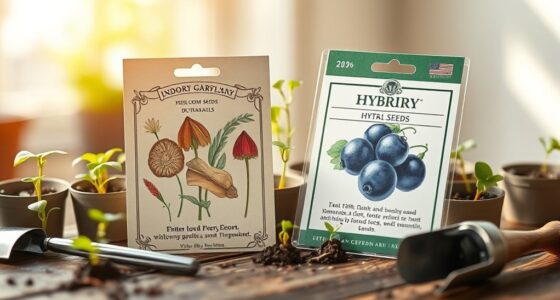
Organizing your seeds carefully helps you plan crop rotations more effectively. When seeds are labeled and sorted by type and planting time, you can easily follow rotation schedules that improve soil health. This reduces soil depletion and decreases pest risks, leading to healthier plants and less chemical use. A well-structured seed system makes crop planning simpler, supporting diverse plantings. Keep exploring how proper seed management can transform your farming practices and boost your harvests even further.
Key Takeaways
- Organized seed storage simplifies planning and scheduling for effective crop rotation.
- Proper labeling and separation reduce cross-contamination, supporting diverse crop cycles.
- Systematic seed management enables better tracking of crop performance and soil health.
- Clear seed organization facilitates early pest detection and targeted pest management.
- Maintaining seed viability through organization promotes resilient, nutrient-diverse crop rotations.

Organizing your seeds more effectively can naturally lead to improved crop rotation practices. When you keep your seeds well-arranged and easy to access, you can plan your planting schedule more thoughtfully, ensuring that each crop is rotated appropriately. This method not only streamlines your workflow but also benefits your soil health. By knowing exactly what seeds you have and when to plant them, you can better manage crop diversity, which is essential for maintaining soil nutrients and structure. Healthy soil supports robust plant growth and reduces the need for chemical inputs, making your farm more sustainable.
Effective seed organization enhances crop rotation, soil health, and farm sustainability through better planning and management.
A well-organized seed system also plays a key role in pest management. When you clearly label and separate different seed varieties, you minimize the risk of cross-contamination, which can spread pests and diseases from one crop to another. Proper organization allows you to identify vulnerable crops early and implement targeted pest control strategies. For example, if you notice pests appearing in one seed batch, you can take measures before they spread, reducing the reliance on broad-spectrum pesticides. This proactive approach keeps pest populations in check and promotes healthier plants, contributing to a more resilient cropping system.
Additionally, having your seeds sorted according to their planting times and crop types makes it easier to plan a crop rotation cycle that naturally minimizes pest buildup and soil depletion. When you rotate crops properly, you break pest and disease cycles, which often persist when the same crop is grown repeatedly in the same spot. Effective seed organization means you can quickly see where gaps exist in your rotation schedule and fill them with appropriate crops, ensuring a diverse planting plan that supports soil vitality. This diversity also discourages pests that prefer specific hosts, reducing infestations without excessive chemical use.
Furthermore, a systematic seed storage setup encourages better record-keeping. You can track which seeds perform best in your soil conditions, allowing you to refine your crop choices over seasons. This ongoing feedback loop enhances soil health by selecting crops that naturally enrich the soil or require fewer inputs. In addition, understanding the importance of biodiversity can help you select a variety of crops that contribute to a balanced ecosystem on your farm. As your seed inventory becomes more manageable, you’ll find it easier to implement crop rotation strategies that improve soil structure and fertility, ultimately leading to healthier crops and higher yields. Recognizing how soil health directly impacts crop productivity emphasizes the importance of organized seed systems in sustainable farming. Additionally, understanding seed viability can help ensure that stored seeds remain healthy and productive over time. Incorporating seed testing methods can further optimize your seed storage and use, contributing to long-term farm success. A focus on seed conservation can also help preserve heirloom and local varieties, enriching your farm’s biodiversity and resilience.
seed storage containers with labels
As an affiliate, we earn on qualifying purchases.
As an affiliate, we earn on qualifying purchases.
Frequently Asked Questions
How Does Seed Organization Impact Soil Health Long-Term?
You impact soil health long-term through seed organization by promoting seed diversity, which supports a resilient ecosystem and reduces pest issues. Proper seed organization also enhances soil structure by ensuring compatible crop rotations, preventing soil compaction, and maintaining nutrient balance. When you select and organize seeds thoughtfully, you foster healthier soil, leading to better crop yields and sustainability over time, ultimately creating a more productive and resilient farming system.
What Are the Cost Implications of Improved Seed Organization?
Improved seed organization can lower your costs by streamlining seed storage and reducing waste. With an efficient cataloging system, you’ll easily track seed varieties and avoid buying duplicates, saving money. Better seed storage minimizes spoilage and seed loss, which also cuts expenses. While upfront investments in organization tools may be needed, the long-term savings from reduced waste and improved crop yields make it a worthwhile investment.
Can Small Farms Implement Better Seed Organization Easily?
Did you know that small farms can improve their seed storage and organization systems with minimal effort? You can implement better seed organization by designating specific storage areas and using simple labeling methods. This helps prevent seed mix-ups and extends seed viability. Small farms can easily adopt these practices, making seed organization more manageable and efficient, ultimately leading to healthier crops and better yields without significant investment.
How Does Seed Organization Influence Pest and Disease Management?
Seed organization directly impacts pest and disease management by promoting seed diversity, which helps break pest cycles and reduces reliance on chemicals. When you organize seeds effectively, you can select varieties with natural pest resistance, making your crops more resilient. This strategic approach minimizes pest outbreaks and disease spread, leading to healthier plants and better yields. Proper seed management consequently becomes a key tool in sustainable pest and disease control.
What Training Is Needed to Optimize Seed Organization Practices?
Think of your seed organization as a well-orchestrated symphony—each part must be precise. To optimize practices, you need training in seed storage techniques to maintain seed viability and prevent spoilage. Equally important is mastering labeling accuracy, so each seed type is correctly identified and easily accessible. This training guarantees efficient seed handling, reduces waste, and supports better crop rotation, making your farm more productive and sustainable.
As an affiliate, we earn on qualifying purchases.
Conclusion
By organizing your seeds better, you set the foundation for smarter crop rotation, fostering healthier soil, reducing pests, and increasing yields. When you prioritize seed organization, you streamline planting, simplify management, and amplify productivity. Better seed organization isn’t just about order; it’s about creating a cycle of success, a pattern of growth, and a future of thriving crops. In organizing your seeds, you cultivate more than just plants—you cultivate resilience, efficiency, and sustainability.
As an affiliate, we earn on qualifying purchases.
As an affiliate, we earn on qualifying purchases.