Growing hydroponic dill is an easy way to get fresh herbs year-round. Keep the water pH between 5.5 and 6.5, and guarantee your plants get 12-16 hours of light daily. Regularly prune to encourage bushy growth, and harvest above the roots for maximum flavor. This method accelerates growth and produces aromatic leaves perfect for pickling recipes. To discover more tips on cultivation and delicious pickling ideas, continue exploring how hydroponic dill can enhance your kitchen.
Key Takeaways
- Maintain water pH between 5.5 and 6.5 and regularly monitor nutrient levels for healthy dill growth.
- Provide 12-16 hours of light daily and ensure proper environmental conditions for optimal foliage development.
- Regularly prune and harvest dill to encourage bushier growth and continuous fresh herb supply.
- Use dill in pickling recipes by harvesting at peak flavor and combining with vinegar, salt, and spices.
- Keep the hydroponic system clean and pest-free to ensure high-quality, aromatic dill for culinary use.
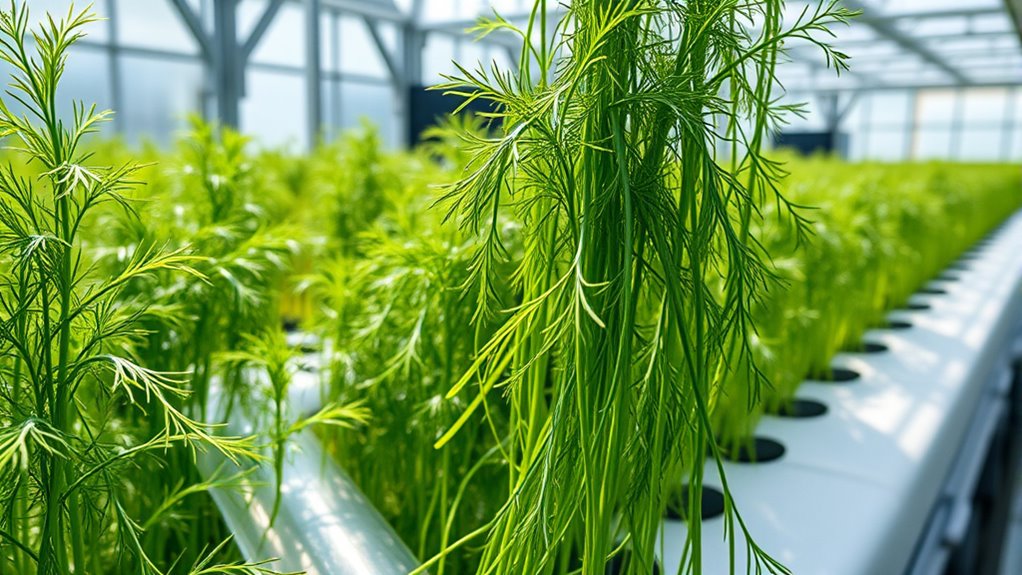
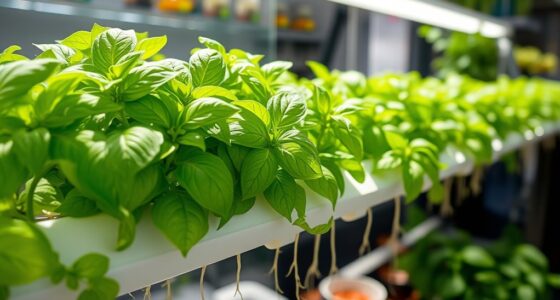
Hydroponic dill offers a fresh, flavorful way to grow this aromatic herb right in your home or garden. Unlike traditional soil planting, hydroponics allows you to cultivate dill using water nutrient solutions that deliver essential minerals directly to the roots. This method not only accelerates growth but also offers better control over the plant’s environment, resulting in a robust and healthy herb. When setting up your hydroponic dill system, ensure your water nutrient solutions are balanced with the right levels of nitrogen, phosphorus, and potassium. Regularly monitor these nutrients to prevent deficiencies or toxicities, which could compromise the plant’s health or flavor. Since dill is sensitive to pests, integrating pest management into your hydroponic setup is vital. Employ organic pest control methods like neem oil or introducing beneficial insects such as ladybugs to keep pests at bay without harming your dill. Maintaining a clean system also helps prevent fungal and bacterial issues, which can be particularly troublesome in a closed hydroponic environment.
To keep your dill thriving, maintain proper water pH levels, ideally between 5.5 and 6.5. This range ensures ideal nutrient uptake, promoting lush, green growth. Change the water and nutrient solutions regularly—about every two weeks—to prevent nutrient imbalances and keep the environment fresh. Additionally, aerating the water with air stones helps supply oxygen to the roots, fostering healthy development. Since pests can sometimes find their way into hydroponic systems, inspect your setup frequently. Look for common pests like aphids or spider mites and act promptly if you notice any signs of infestation. Using physical barriers or sticky traps can also help catch pests before they spread.
Lighting plays a significant role in hydroponic dill cultivation, so ensure your plants receive ample light—around 12-16 hours daily—using grow lights if natural sunlight is limited. Proper lighting encourages vigorous foliage and aromatic leaf production, which is perfect for culinary uses or pickling. As your dill matures, prune regularly to promote bushier growth and prevent legginess. When it’s time to harvest, cut the dill just above the soil line or root zone, and enjoy fresh herbs or incorporate them into your pickling recipes. With careful management of water nutrient solutions, pest control, and environmental factors, your hydroponic dill will flourish, providing an abundant supply of fragrant herbs year-round.
Frequently Asked Questions
How Long Does Hydroponic Dill Typically Take to Mature?
You can expect hydroponic dill to take about 30 to 40 days to mature during its growth cycle. For ideal harvest timing, monitor the plant for feathery, fragrant leaves, which indicate it’s ready. Regularly check the growth, and you’ll be able to harvest fresh dill sooner. Keep in mind that environmental factors like light and nutrients can influence the exact timing, but generally, this window applies.
Can Hydroponic Dill Be Grown Indoors Year-Round?
Yes, you can grow hydroponic dill indoors year-round, turning your space into a lush herb garden. Think of your indoor garden as a green oasis where dill thrives under proper indoor lighting. Keep plant spacing in mind to prevent overcrowding and guarantee healthy growth. With consistent light, warmth, and good airflow, your dill will flourish regardless of the season, providing fresh herbs whenever you need them.
What Are Common Pests or Diseases Affecting Hydroponic Dill?
You should watch out for pests like aphids and spider mites that can affect your hydroponic dill. To prevent these pests, practice pest prevention by maintaining good hygiene and inspecting plants regularly. Diseases like root rot and powdery mildew can also occur, so effective disease management involves proper airflow and avoiding overwatering. Staying vigilant and implementing these strategies helps keep your dill healthy and productive year-round.
How Do I Harvest Dill Without Damaging the Plant?
To harvest dill without damaging the plant, use proper dill pruning and harvesting techniques. Grab a pair of sharp scissors or garden shears, and cut the stems about 1-2 inches above the base, avoiding the woody parts. This encourages healthy growth. Always harvest in the morning for the freshest flavor, and don’t take more than one-third of the plant at a time, ensuring it stays healthy and productive.
Are There Specific Nutrients Best Suited for Dill in Hydroponic Systems?
You should provide dill in your hydroponic system with a balanced nutrient mix that emphasizes nitrogen, phosphorus, and potassium. Guarantee the nutrient balance supports healthy leaf growth and aroma development. Regularly monitor and adjust pH levels to stay around 6.0 to 6.5 for ideal nutrient uptake. Consistent pH optimization and a tailored nutrient solution help your dill thrive, producing lush, flavorful leaves perfect for harvest and pickling.
Conclusion
Now that you’ve discovered how to grow hydroponic dill, you’re like a gardener with a magic wand, effortlessly nurturing fresh herbs indoors. With a little care and attention, your dill will flourish just like a lush, green forest in miniature. So go ahead, experiment with your new skills, and enjoy the vibrant aroma and flavors it brings to your dishes and pickles. Your garden of dill is ready to bloom—just like your culinary creations!