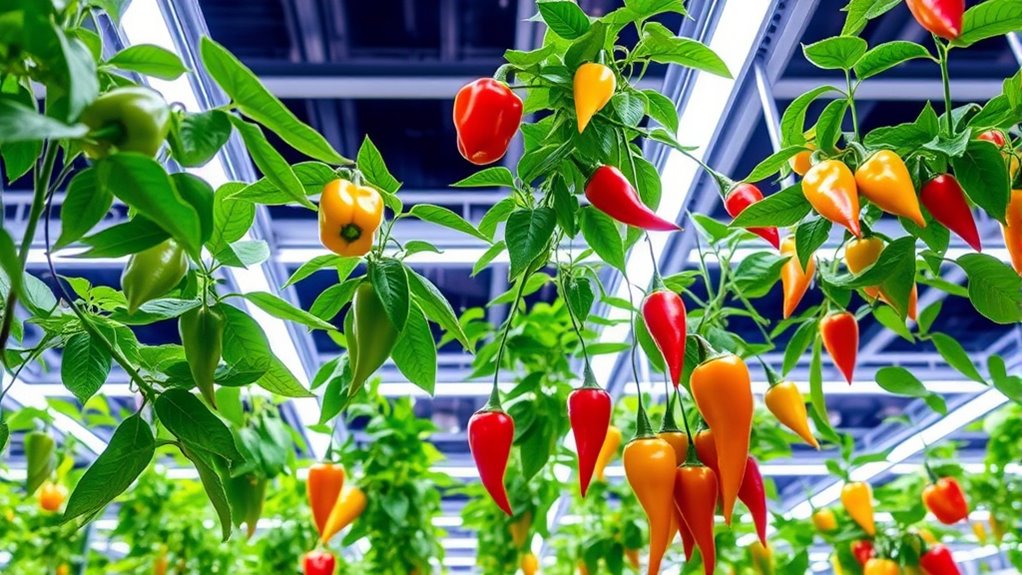
Growing bell and hot peppers indoors with hydroponics is a great way to get fresh peppers year-round while saving space. You’ll need to monitor pests, maintain proper nutrient levels, and prune regularly to keep plants healthy and productive. Proper pruning helps promote good airflow and prevents diseases. By creating an ideal environment, you can enjoy abundant, vibrant peppers. Keep exploring to learn essential tips for thriving hydroponic pepper plants and maximizing your harvest.

Get garden gear delivered free with Prime
- Fast, free delivery on millions of items
- Prime Video, Amazon Music and more included
- Member-only deals all year
Key Takeaways
- Hydroponic systems enable soil-free indoor cultivation of bell and hot peppers, suitable for small spaces and year-round growing.
- Regular pruning maintains airflow, controls plant size, and encourages fruit production for healthier, more productive peppers.
- Proper pest management involves monitoring, organic treatments, and cleanliness to prevent infestations without chemicals.
- Ensuring optimal nutrient balance, pH levels, and adequate lighting promotes vigorous plant growth and high yields.
- Maintaining a clean environment and adjusting pruning techniques based on growth stages support healthy, abundant pepper production indoors.
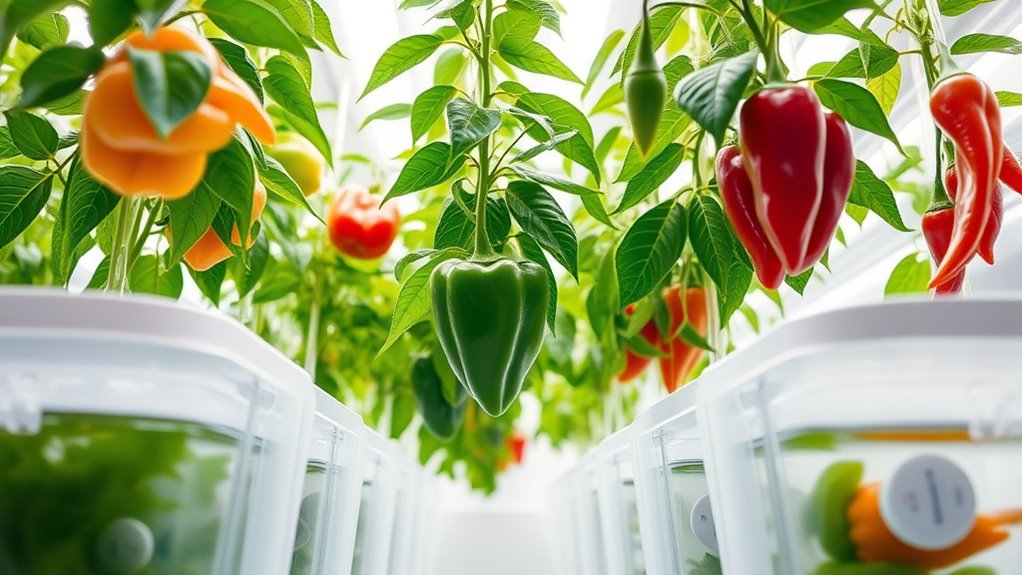
Have you ever wondered how to grow peppers without soil? Hydroponic systems make it possible, allowing you to cultivate vibrant bell and hot peppers indoors with minimal space and effort. To succeed, you need to understand key practices like pruning techniques and pest management, which are essential for healthy, productive plants. Pruning is vital in hydroponic setups because it helps maintain airflow, control plant size, and encourage better fruit production. You should regularly trim away dead or yellowing leaves and remove any weak or overcrowded stems. This not only prevents disease but also guarantees that your peppers receive adequate light and nutrients. When pruning, focus on shaping your plants to promote strong, vigorous growth—cutting just above a leaf node encourages new branches and fruiting sites. Be careful not to over-prune, as this can stress the plant, but consistent, strategic trimming keeps your peppers healthy and productive throughout the season.
Pest management is another essential aspect of hydroponic pepper cultivation. Unlike traditional soil gardening, pests in hydroponic systems can spread quickly if not controlled early. Keep a close eye on your plants for signs of common pests such as aphids, spider mites, or whiteflies. Since your plants are grown in a controlled environment, you have the advantage of easier monitoring, but you still need to act promptly if pests appear. Use integrated pest management methods like introducing beneficial insects or applying organic insecticidal soaps to keep pests at bay. Maintaining cleanliness around your hydroponic setup is also necessary—remove fallen leaves and debris regularly to prevent pest habitats. Proper pest management not only protects your plants but also minimizes the need for chemical interventions, which can be harmful in a closed indoor environment.
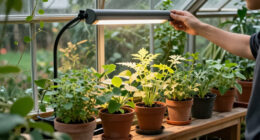
Additionally, guarantee your hydroponic system provides ideal conditions—balanced nutrients, proper pH levels, and adequate lighting—to support vigorous growth and fruit development. Combining these practices with regular pruning and vigilant pest management creates a thriving environment for your peppers. As your plants grow, you might find that adjusting your pruning techniques based on their development stage yields better results. Remember, consistent attention to these details will lead to a plentiful harvest of delicious peppers, all grown indoors without soil. With patience and care, your hydroponic peppers will flourish, offering fresh produce year-round and transforming your indoor gardening experience into a rewarding venture.
Frequently Asked Questions
What Are the Best Pepper Varieties for Hydroponic Growing?
You should try varieties like Jalapeños, Cayenne, and Bell peppers for hydroponic growing. These peppers have diverse flavor profiles, from spicy to sweet, making them perfect for your system. They also adapt well to different hydroponic system types, such as NFT or deep water culture, ensuring healthy growth. Picking these varieties allows you to enjoy a range of flavors while optimizing your indoor setup.
How Long Does It Take to Harvest Hydroponic Peppers?
Like waiting for a good story to unfold, your hydroponic peppers typically reach harvest timing in 60 to 90 days, depending on the variety. From seedling to harvest, growth duration varies, but with ideal conditions, you’ll see peppers ready sooner. Keep an eye on color and size, as these clues tell you it’s time to pick. Patience and attentive care ensure a rewarding, flavorful bounty.
Can Hydroponic Peppers Be Grown Outdoors Seasonally?
Yes, you can grow hydroponic peppers outdoors seasonally, but you need to take into account your climate. They thrive in warm, frost-free conditions, so plant them after the last frost and harvest before the first freeze. Make sure you provide adequate sunlight, proper temperature, and protection from extreme weather. Monitoring your local weather and adjusting your setup accordingly will help you succeed in seasonal outdoor growth.
What Are Common Pests Affecting Hydroponic Peppers?
You’ll likely face pests like aphids, whiteflies, and spider mites on your hydroponic peppers. To manage them effectively, focus on pest management strategies such as regular inspection and removal. Organic control methods, like introducing beneficial insects or applying neem oil, work well without harming your plants. Stay vigilant, act quickly at the first sign of pests, and maintain a clean environment to keep your peppers healthy and pest-free.
How Do I Troubleshoot Nutrient Deficiencies in Hydroponic Peppers?
If you notice nutrient deficiencies in your hydroponic peppers, first check for nutrient imbalances by testing your nutrient solution. Look for yellowing leaves or stunted growth as signs. Adjust the pH levels to guarantee ideal nutrient uptake, typically between 5.5 and 6.5. Make sure your system delivers a balanced mix of essential nutrients, and regularly monitor and correct pH and nutrient levels to prevent deficiencies.
Conclusion
Now that you’ve learned how to grow peppers indoors hydroponically, imagine the vibrant peppers thriving under your care, bursting with flavor and color. With patience and attention, you’ll turn your space into a lush oasis of spicy and sweet peppers. It’s a journey of growth, a dance between science and nature, where your hands cultivate life. So go ahead—plant, nurture, and enjoy the exhilarating reward of homegrown peppers, a true demonstration of your green thumb.
Halloween Picks
halloween
As an affiliate, we earn on qualifying purchases.