For hydroponic systems, you’ll want basil varieties that grow well indoors, resist pests, and offer strong flavors. Popular choices include Genovese for its classic aroma, Thai basil for a spicy note, Purple basil for visual appeal, Lemon basil for a citrus twist, and Large Leaf basil for bigger harvests. These varieties adapt well to controlled environments and require less pest control. Keep exploring to discover tips on optimizing growth and ensuring a healthy, flavorful harvest.

Get garden gear delivered free with Prime
- Fast, free delivery on millions of items
- Prime Video, Amazon Music and more included
- Member-only deals all year
Key Takeaways
- Resilient varieties like Genovese, Thai basil, and Lemon basil perform well in controlled hydroponic environments.
- Compact types such as Sweet Basil are suitable for smaller systems, maximizing space efficiency.
- Basil varieties with strong aroma and flavor, like Purple basil, thrive with proper nutrient and pest management.
- Selecting basil types with vigorous growth habits ensures higher yields in hydroponic setups.
- Basil varieties adaptable to pH and nutrient adjustments optimize growth and culinary quality indoors.
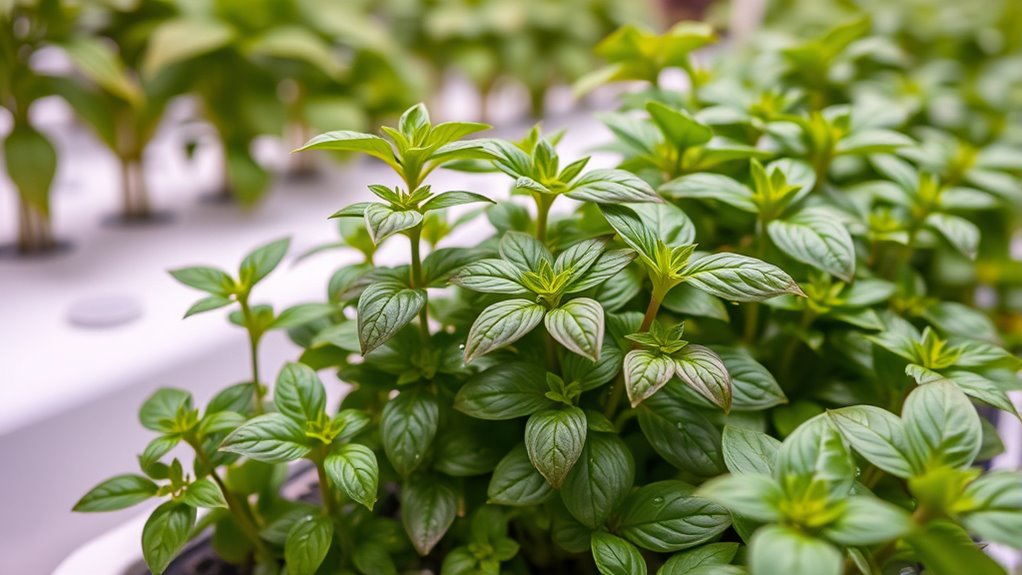
If you’re growing basil in a hydroponic system, choosing the right variety can make all the difference in your harvest. Not all basil types thrive equally in soilless environments, so selecting a variety suited for hydroponics helps maximize yield, flavor, and overall plant health. One critical aspect to consider is pest management. Hydroponic systems tend to have fewer pests than traditional soil gardening, but pests like aphids, spider mites, and whiteflies can still pose problems. Certain basil varieties, such as Genovese or Thai basil, tend to be more resilient against pests when grown in controlled environments, especially if you implement proper pest management strategies. Regular inspection, introducing beneficial insects, and maintaining cleanliness can help keep pests at bay, reducing the need for chemical interventions that might disrupt your nutrient solutions.
Speaking of nutrient solutions, selecting a basil variety that responds well to hydroponic nutrient regimes is essential. Basil is a fast-growing herb that requires a balanced supply of nitrogen, phosphorus, and potassium. Varieties like Lemon basil or Globe basil often show vigorous growth when provided with optimal nutrient solutions, leading to lush foliage and vibrant aroma. To ensure healthy development, you should monitor your nutrient levels carefully and adjust your solution to match the specific needs of the basil variety you choose. Proper pH levels, typically between 5.5 and 6.5, are crucial for nutrient uptake, so keeping an eye on these parameters guarantees your plants get what they need. Additionally, understanding the growth habit of each basil variety can help tailor your hydroponic setup for maximum efficiency and yield.
Another factor to consider is the growth habit and flavor profile of the basil variety. Some varieties, like Sweet Basil, are more compact and bushy, making them ideal for smaller hydroponic setups, while others, like Large Leaf Basil, grow larger and may require more space. If you’re interested in unique flavors, Thai basil or Purple basil can add variety to your culinary uses, and they tend to adapt well to hydroponic systems. Their distinct aroma and taste can elevate your dishes, and they often grow faster and produce more leaves when you optimize pest management and nutrient solutions.
As an affiliate, we earn on qualifying purchases.
Frequently Asked Questions
How Do Basil Varieties Differ in Nutrient Requirements?
You’ll notice basil varieties differ in nutrient absorption and growth rate differences. Some, like Genovese basil, absorb nutrients quickly and grow fast, requiring more frequent feeding. Others, like Thai basil, absorb nutrients more slowly and grow at a steadier pace. Understanding these differences helps you adjust your nutrient solution to optimize growth, ensuring each variety gets what it needs without overfeeding or nutrient deficiencies.
Which Basil Types Are Most Resistant to Pests in Hydroponics?
You should choose pest-resistant cultivars like Genovese or Thai basil, as they tend to defend against common pests better. Incorporate pest management strategies such as regular monitoring, introducing beneficial insects, and maintaining proper hygiene in your hydroponic system. These practices help keep pests at bay and ensure healthy growth. Selecting pest-resistant varieties combined with proactive management gives you a stronger defense against infestations and promotes a thriving basil crop.
Can Basil Varieties Be Crossbred for Better Hydroponic Growth?
Yes, you can crossbreed basil varieties to enhance hydroponic growth. Using crossbreeding techniques, you combine desirable traits from different basil types, increasing basil genetic diversity. This process can improve pest resistance, flavor, and growth rate, making your hydroponic system more productive. Keep in mind, successful crossbreeding requires patience and careful selection to guarantee the new variety maintains vigor and suits your specific hydroponic environment.
What Is the Ideal Harvesting Time for Each Basil Variety?
You should harvest basil when it reaches its ideal harvesting window, typically when the plant is about 6-8 inches tall and has plenty of healthy leaves. Look for maturity indicators like vibrant color, strong aroma, and well-developed leaves. For most varieties, this is around 60-75 days after planting. Regular harvesting encourages new growth, so pick leaves early and often for the best flavor and yield.
How Do Basil Flavors Vary Among Different Hydroponic Strains?
Did you know basil flavor profiles can differ markedly even within hydroponic strains? You’ll notice some varieties, like Thai basil, offer a spicy, peppery aroma, while Genovese delivers a sweet, fragrant taste. The aroma diversity is impressive, allowing you to select strains that match your culinary needs. These subtle flavor variations can elevate your dishes and make your hydroponic garden uniquely flavorful and aromatic.
best basil varieties for hydroponics
As an affiliate, we earn on qualifying purchases.
As an affiliate, we earn on qualifying purchases.
Conclusion
Choosing the right basil variety transforms your hydroponic garden into a lush paradise. Each variety offers unique flavors and growth habits, so select the one that best suits your culinary dreams. Remember, your garden’s potential is only limited by your imagination—like a blank canvas awaiting your brushstrokes. With patience and care, you’ll cultivate a vibrant basil bounty that delights your senses and elevates your dishes, proving that even in a small space, greatness can flourish.
As an affiliate, we earn on qualifying purchases.
hydroponic herb nutrient solution
As an affiliate, we earn on qualifying purchases.
As an affiliate, we earn on qualifying purchases.
Fall Picks
fall essentials
As an affiliate, we earn on qualifying purchases.