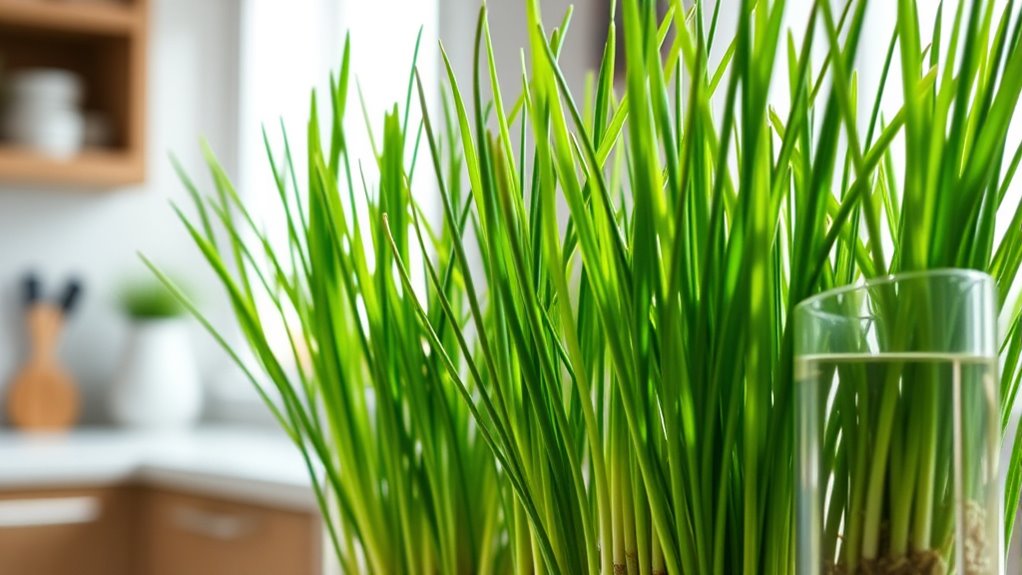
Growing hydroponic chives indoors makes them a perfect year-round kitchen staple. To keep them healthy, provide plenty of bright, direct or indirect light, and supplement with energy-efficient LED grow lights during darker months. Use a nutrient-rich solution, monitor pH levels, and guarantee water aeration to support strong root development. Proper care and environment help you enjoy fresh, flavorful chives anytime, no matter the season—discover more tips to perfect your indoor herb garden.
Key Takeaways
- Indoor hydroponic systems enable year-round cultivation of fresh, flavorful chives regardless of outdoor weather conditions.
- Proper lighting, including adjustable LED grow lights, ensures healthy chive growth throughout all seasons.
- Nutrient-rich solutions tailored for herbs support continuous, vigorous chive development indoors.
- Maintaining optimal water quality and aeration prevents root issues and promotes consistent harvests.
- Regular care and controlled environment conditions make hydroponic chives a reliable, convenient kitchen staple year-round.
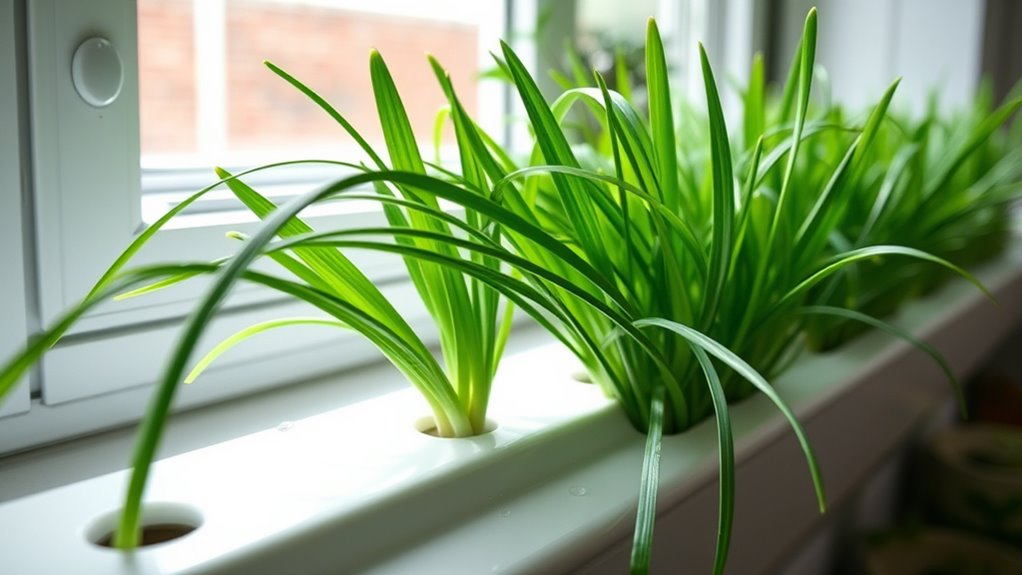
Hydroponic chives offer a convenient and efficient way to grow fresh herbs indoors without soil. When starting your hydroponic setup, one of the most important factors is providing adequate indoor lighting. Chives need enough light to thrive, so you’ll want to position your system where it can receive several hours of direct or bright indirect light daily. If natural sunlight is limited, especially during winter months, consider investing in grow lights. LED grow lights are energy-efficient and can be adjusted to provide the ideal spectrum for herb growth. Proper indoor lighting ensures your chives grow strong, healthy, and flavorful, making them readily available whenever you need them for cooking.
Hydroponic chives thrive with proper indoor lighting and energy-efficient grow lights.
In hydroponic systems, nutrient solutions play a crucial role in maintaining your chives’ health. Unlike soil-based gardening, where nutrients are naturally present, hydroponic chives depend entirely on the solutions you provide. You’ll need to prepare a balanced nutrient mix specifically designed for herbs or leafy greens. These solutions typically contain essential macro and micronutrients like nitrogen, phosphorus, potassium, calcium, magnesium, and trace elements. Regularly monitoring and adjusting the nutrient solution’s pH and electrical conductivity ensures your chives absorb nutrients efficiently. A stable environment with consistent nutrient delivery promotes rapid growth and prevents deficiencies or nutrient lockout. Proper nutrient management is essential for optimal herb development in a hydroponic setup.
As your chives grow, you’ll notice the importance of maintaining clean, well-aerated water. Stagnant or poorly oxygenated nutrient solutions can lead to root issues or disease. Using an air stone or small pump helps oxygenate the solution, supporting healthy root development. Keep an eye on the nutrient concentration; too high can cause nutrient burn, while too low might stunt growth. Testing kits are handy for keeping track of these levels, allowing you to fine-tune your solutions as your chives mature. Remember, consistency is key—regularly replacing or replenishing the nutrient solution prevents buildup of salts and other residues.
Growing hydroponic chives indoors offers the flexibility to harvest fresh herbs year-round. By paying close attention to indoor lighting and providing appropriate nutrient solutions, you create an ideal environment for your chives to flourish. With proper care, you’ll enjoy a continuous supply of vibrant, flavorful chives without the hassle of soil or outdoor gardening. Whether you’re seasoning salads, soups, or garnishing dishes, your home-grown hydroponic chives will elevate your culinary creations while giving you the satisfaction of growing your own herbs effortlessly.

Black Grow Lights for Indoor Plants, 168 LEDs Clip Plant Lights, Full Spectrum LED Plant Growing Lamps with Flexible Gooseneck 4/8/12/18H Timer, 3 Spectral Modes, 10 Dimmable Levels, 2Head x 2 Pack
- Full Spectrum LED Lighting: 5 Red + 37 White LEDs for optimal growth
- Auto Cycle Timer: Sets 4/8/12/18-hour automatic on/off
- Multiple Lighting Modes: Switchable modes with separate control
As an affiliate, we earn on qualifying purchases.
As an affiliate, we earn on qualifying purchases.
Frequently Asked Questions
How Long Does It Take for Hydroponic Chives to Mature?
You can expect hydroponic chives to mature in about 3 to 4 weeks. During this time, chive propagation involves healthy root development, which is essential for strong, vibrant plants. To speed up growth, verify your chives receive adequate light, proper nutrient levels, and consistent watering. With patience and care, you’ll soon have fresh, flavorful chives ready to harvest, making them a reliable year-round kitchen staple.
Can Hydroponic Chives Be Grown Outdoors?
Yes, you can grow hydroponic chives outdoors, but you need to take into account your climate. They thrive in mild temperatures and need protection from extreme heat or cold. Make sure your outdoor growing environment has good sunlight and stable conditions. If your climate isn’t ideal, you might want to bring them inside or use a greenhouse. Monitoring temperature and humidity helps ensure healthy, year-round growth.
What Are Common Pests Affecting Hydroponic Chives?
Pests are like uninvited guests crashing your garden party. Common pests affecting hydroponic chives include aphids, spider mites, and fungus gnats. To keep them at bay, focus on pest prevention by maintaining cleanliness and proper airflow. Use organic treatments like neem oil or insecticidal soap when needed, ensuring you protect your chives naturally. Staying vigilant helps your herbs thrive without the chaos pests bring.
How Often Should I Harvest My Hydroponic Chives?
You should harvest your hydroponic chives every 2 to 3 weeks to encourage healthy growth. Regular harvesting involves chive trimming, where you cut the outer leaves about an inch above the base. This harvesting frequency prevents the chives from becoming too tall or woody and promotes fresh, tender leaves. Keep up with consistent chive trimming, and you’ll enjoy a continuous supply of vibrant, flavorful chives year-round.
What Are the Best Nutrient Solutions for Hydroponic Chives?
You should use a balanced nutrient solution rich in nitrogen, phosphorus, and potassium for your hydroponic chives. Opt for pre-mixed hydroponic nutrient solutions designed specifically for leafy greens, ensuring they contain essential trace minerals. Additionally, consider lighting requirements and supplement with proper soil amendments if necessary, to promote healthy growth. Regularly monitor and adjust nutrient levels to keep your chives vibrant and flavorful year-round.

Ahopegarden Indoor Garden Hydroponics Growing System: 10 Pods Plant Germination Kit Herb Vegetable Growth Lamp Countertop with LED Grow Light – Hydrophonic Planter Grower Harvest Lettuce
- High Planting Efficiency: Faster, healthier growth with hydroponic system
- 10 Pods & Water Level Window: Includes 10 planting stations and water indicator
- Dual Growing Modes: Switch between vegetable and flower/fruit lighting
As an affiliate, we earn on qualifying purchases.
As an affiliate, we earn on qualifying purchases.
Conclusion
With hydroponic chives, you can enjoy fresh, vibrant herbs all year round, regardless of outdoor conditions. Some might worry about the complexity, but once you set up your system, it’s surprisingly easy and low-maintenance. Plus, you’ll elevate your cooking with consistently fresh flavors that store-bought herbs can’t match. Incorporate hydroponic chives into your kitchen routine, and you’ll experience the convenience and sophistication of having garden-fresh herbs anytime you desire.
Ahopegarden Indoor Garden Hydroponics Growing System: 10 Pods Plant Germination Kit Herb Vegetable Growth Lamp Countertop with LED Grow Light – Hydrophonic Planter Grower Harvest Lettuce
- High Planting Efficiency: Faster, healthier growth with hydroponic system
- 10 Pods & Water Level Window: Includes 10 planting stations and water indicator
- Dual Growing Modes: Switch between vegetable and flower/fruit lighting
As an affiliate, we earn on qualifying purchases.
As an affiliate, we earn on qualifying purchases.

Liquid Plant Food for use in AeroGarden, IDOO and Hydroponic Growing Systems, Liquid Fertilizer 8 oz (250mL)
- Compatible with AeroGarden systems: Supports AeroGarden and similar units
- Promotes healthy plant growth: Encourages steady growth and strong roots
- Balanced hydroponic nutrients: Provides essential nutrients for indoor hydroponic plants
As an affiliate, we earn on qualifying purchases.
As an affiliate, we earn on qualifying purchases.