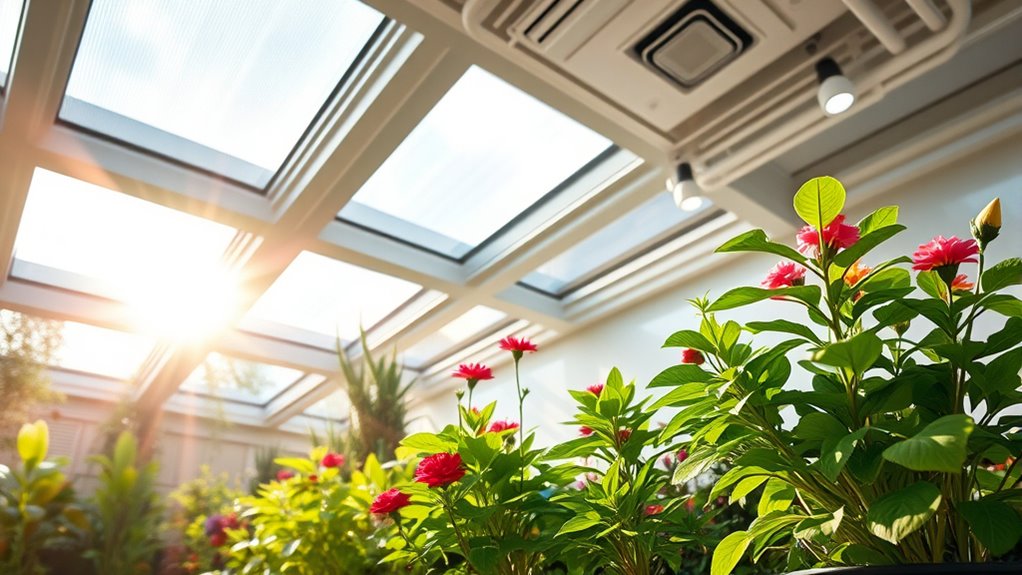

To make your indoor garden more sustainable and energy-efficient, focus on using water-saving techniques like drip irrigation and drought-tolerant plants. Install solar panels to power your grow lights and climate controls, choosing LED lighting for even greater efficiency. Use eco-friendly materials such as organic soil and recycled containers, and consider smart technologies like automation and sensors to optimize resources. Staying mindful of these practices helps create a healthier environment—and there’s more to discover if you continue exploring.
Key Takeaways
- Utilize energy-efficient LED grow lights and solar panels to lower energy consumption and reduce environmental impact.
- Implement smart watering systems and climate sensors to optimize water use and minimize waste.
- Choose native or drought-tolerant plants to decrease watering needs and promote water conservation.
- Use recycled materials and organic soil to support eco-friendly practices and reduce resource waste.
- Integrate renewable energy sources and sustainable materials to enhance overall indoor garden sustainability.

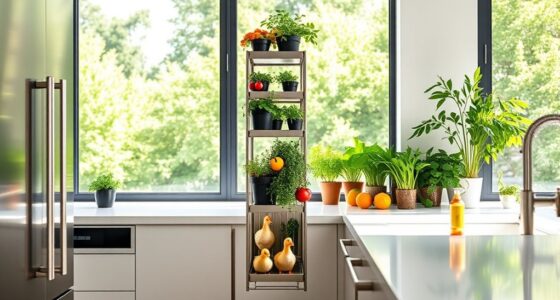
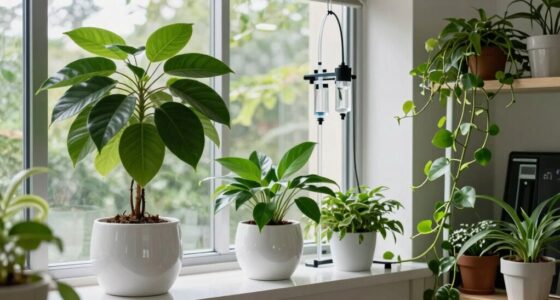
Indoor gardens are becoming an increasingly popular way to bring nature inside while promoting sustainability and energy efficiency. As you create your indoor oasis, you’ll discover that thoughtful planning can notably reduce your ecological footprint. One of the key benefits is water conservation. Unlike traditional outdoor gardening, indoor gardens allow you to control water use precisely, minimizing waste. You can implement drip irrigation systems or self-watering planters that deliver just the right amount of water directly to your plants’ roots. This targeted approach not only conserves water but also ensures your plants stay healthy and vibrant. Additionally, incorporating native or drought-tolerant plants into your indoor garden reduces the need for frequent watering, further supporting water conservation efforts.
Indoor gardens conserve water through targeted irrigation and native, drought-tolerant plants.
Harnessing renewable energy sources is another effective way to make your indoor garden more sustainable. If you have the space and resources, installing solar panels can provide clean energy to power grow lights, climate control systems, and other electronic devices you use for your garden. By relying on renewable energy, you decrease dependence on fossil fuels, reducing greenhouse gas emissions. Even small-scale solar setups can make a noticeable difference, especially if you’re cultivating a variety of plants that require consistent light and temperature regulation. Many indoor gardeners also opt for energy-efficient LED grow lights, which consume less power and last longer than traditional lighting options. Combining these lights with solar energy maximizes your garden’s energy efficiency and minimizes environmental impact.
Furthermore, sustainable practices extend beyond water and energy use. Using organic soil and composting kitchen scraps can enrich your indoor garden without harmful chemicals. Incorporating recycled containers and materials in your setup reduces waste and promotes resourcefulness. Proper ventilation and humidity control are also crucial, as they help prevent mold and pests, reducing the need for chemical interventions. When you prioritize these eco-friendly strategies, you create a healthier environment for your plants, yourself, and the planet. Additionally, integrating smart gardening technology such as automated watering systems and climate sensors can optimize resource use and further boost sustainability.
Ultimately, your indoor garden can serve as a model of sustainability and energy efficiency. By consciously conserving water, utilizing renewable energy, and adopting eco-friendly materials and practices, you not only enhance your space but also contribute to a greener future. Small changes—like adjusting watering habits or switching to solar-powered systems—can have a large cumulative impact. Your efforts to integrate sustainability into your indoor garden showcase how individual actions can align with larger environmental goals. With mindful choices, your indoor garden becomes more than just a beautiful space; it transforms into a sustainable sanctuary that supports energy efficiency and water conservation for years to come.
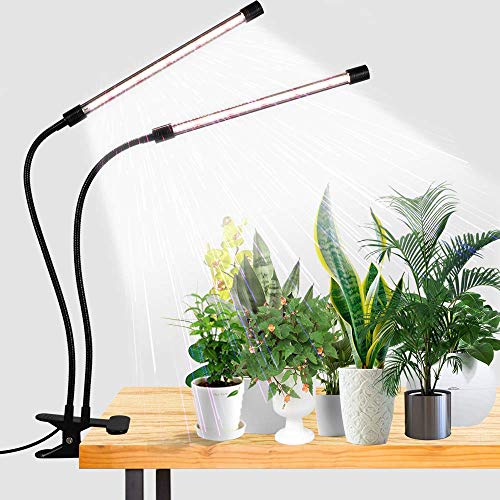
GooingTop Grow Light,6000K Full Spectrum Indoor Plant Growing Lamp
- Full Spectrum White and Red LEDs: 6000K sunlight-like illumination with high CRI
- Dimmable and Timer Settings: 5-level dimming with 4/8/12-hour cycle options
- Flexible Gooseneck and Clamp: Adjustable positioning for optimal plant lighting
As an affiliate, we earn on qualifying purchases.
As an affiliate, we earn on qualifying purchases.
Frequently Asked Questions
How Do Indoor Gardens Impact Indoor Air Quality Long-Term?
Indoor gardens improve your indoor air quality long-term by actively purifying the air through plants’ natural processes. They help reduce allergens and airborne toxins, creating a healthier environment for you. As your indoor garden thrives, it continues to filter pollutants, boosting air purification and allergen reduction over time. This ongoing benefit supports your well-being, making your space fresher and more comfortable to breathe in every day.
What Are the Most Sustainable Materials for Indoor Garden Construction?
Did you know that using recyclable substrates can cut waste by up to 80%? For your indoor garden, opt for sustainable materials like recycled plastics, bamboo, or reclaimed wood. Pair these with eco-friendly lighting options, such as LED fixtures, to reduce energy consumption. These choices not only benefit the environment but also create a healthier, more sustainable indoor space that minimizes your carbon footprint and supports long-term growth.
Can Indoor Gardens Reduce Overall Household Energy Consumption?
Yes, indoor gardens can reduce your household energy consumption by promoting energy savings and water conservation. They help regulate indoor temperatures, reducing heating and cooling needs, and their efficient irrigation systems minimize water use. By integrating smart lighting and climate controls, you optimize energy efficiency further. As a result, your household benefits from lower utility bills and a smaller ecological footprint while enjoying fresher air and a healthier living space.
How Often Should Indoor Garden Systems Be Maintained for Optimal Efficiency?
Think of your indoor garden as a living symphony that needs regular tuning. You should check and maintain your system at least once a week to keep it ideal. Adjust your watering schedule based on plant needs, and keep pest control measures in place to prevent issues before they start. Regular inspections ensure your garden stays vibrant, healthy, and energy-efficient, turning your space into a lush, sustainable oasis.
What Are the Latest Innovations in Energy-Efficient Indoor Gardening Technologies?
You should explore the latest innovations like LED lighting and automated watering systems. LED lighting offers energy-efficient illumination that reduces power consumption while promoting healthy plant growth. Automated watering ensures consistent hydration, saving water and energy. These technologies work together to maximize indoor garden efficiency, cut costs, and minimize environmental impact. By adopting these advancements, you’ll create a sustainable, low-energy indoor garden that thrives with minimal effort and resource use.

SOLPEX Mini Solar Ground Lights, 10 Pack Solar Lights Outdoor Waterproof, Pathway Lights Solar Powered, Solar Garden Light, Landscape Lighting for Yard Driveway Walkway (Cool White)
- Size and Material: Compact stainless steel and plastic design
- Automatic Operation: Lights turn on/off automatically at night
- Long Illumination: 8-10 hours of light after 4-6 hours charge
As an affiliate, we earn on qualifying purchases.
As an affiliate, we earn on qualifying purchases.
Conclusion
As you embrace sustainable indoor gardening, you’ll notice how energy-efficient choices often align with your desire for a greener world. It’s almost like nature’s own coincidence—by tending to your garden thoughtfully, you’re also nurturing the planet. Small steps, like using eco-friendly lighting or water-saving systems, make a big difference. So, as you cultivate your indoor oasis, remember that sustainability and energy efficiency aren’t just goals—they’re a natural part of your journey toward harmony with the environment.

Automatic Drip Irrigation System for Indoor Plants, 2026 Automatic Plant Waterer for 15 Potted Plants Watering with Anti-Siphon and Humidity Mode, Timer, Rechargeable Vacation Self-Watering Pump
- Vacation Self-Watering System: Supports 15 pots with 33 FT tube
- Long Battery Life: Fully charged lasts over 30 days
- Smart LED Display: Shows watering, humidity, and battery status
As an affiliate, we earn on qualifying purchases.
As an affiliate, we earn on qualifying purchases.

RooTrimmer 5 Gallon 12 Inch Plastic Nursery Pots, Plant Containers with Drainage Holes, Round Sturdy Garden Planters for Indoor/Outdoor Greenery, Gardening Gifts for Women (5-Pack, Black)
- Capacity: 5-gallon, 12-inch diameter pots
- Package Quantity: Set of 5 pots
- Material: Durable plastic construction
As an affiliate, we earn on qualifying purchases.
As an affiliate, we earn on qualifying purchases.