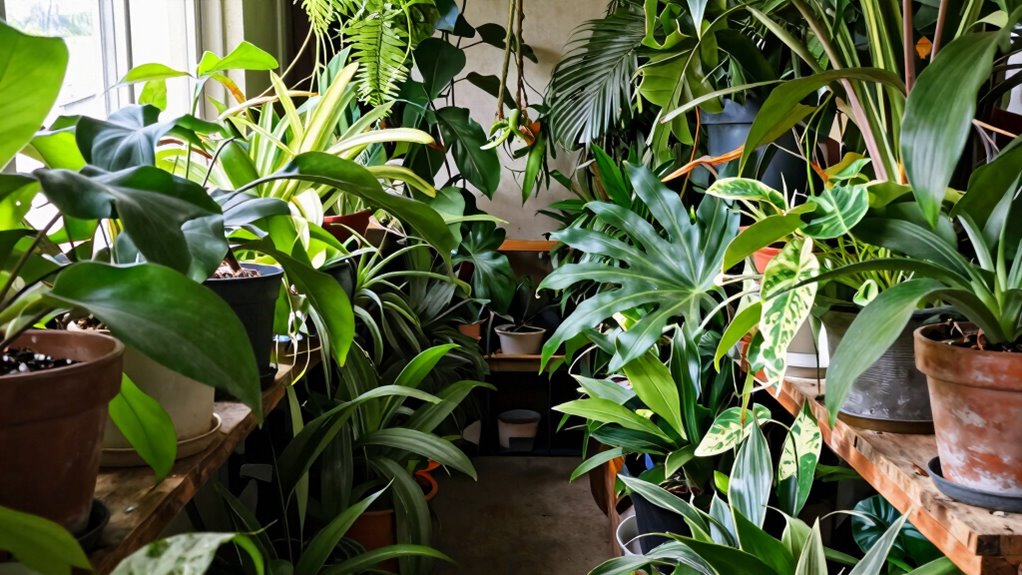

Adding too many plants indoors can lead to poor air circulation, making it harder to spot pests and diseases. Overcrowding can also cause competition for light and nutrients, which stunts growth. Excess plants increase maintenance, making watering, pruning, and cleaning overwhelming. For healthier, thriving plants, it’s better to focus on proper spacing and care. Keeping your garden balanced guarantees each plant gets what it needs. Want to discover more tips for a successful indoor garden?

Get garden gear delivered free with Prime
- Fast, free delivery on millions of items
- Prime Video, Amazon Music and more included
- Member-only deals all year
Key Takeaways
- Overcrowding reduces air circulation, increasing disease risk and making pest detection more difficult.
- Excess plants can lead to inconsistent watering, risking root rot or dehydration.
- Limited space hampers proper growth, causing stress and health issues for individual plants.
- Managing many plants simultaneously becomes overwhelming, leading to neglect and decreased overall care quality.
- Proper spacing and selection ensure each plant receives adequate light, nutrients, and attention for healthier growth.

Have you ever considered transforming a blank indoor space into a lush, thriving garden? It’s tempting to think that filling every inch with plants will automatically create a vibrant oasis, but more isn’t always better. A crowded space can lead to problems like poor air circulation, competition for nutrients, and increased maintenance. Instead, focus on strategic plant placement. When you place your plants thoughtfully, you give each one the space and conditions it needs to flourish. Consider the light each plant requires and position them accordingly—taller plants near windows that get plenty of sunlight, while smaller or shade-loving varieties can settle in less light. Grouping plants with similar needs helps you manage watering techniques more effectively, avoiding over- or under-watering. Proper watering techniques are vital in maintaining a healthy indoor garden, especially when you have multiple plants. Overwatering is one of the most common mistakes. When you water excessively, you risk root rot and other moisture-related issues. Conversely, underwatering can cause stress and stunt growth. To avoid these pitfalls, develop a consistent watering schedule tailored to each plant’s needs. Use your finger or a moisture meter to check soil moisture before watering, *making certain* you only give plants what they need at the right time. When you water, do so slowly and evenly, allowing the water to penetrate deeply into the soil. This encourages healthy root development and prevents water from pooling on the surface. Remember, different plants have varying watering requirements; some prefer to dry out between waterings, while others like consistently moist soil. Adjust your watering techniques accordingly, and avoid the temptation to give all your plants the same amount of water. Having too many plants can also make maintenance overwhelming, leading to neglect or inconsistent care. When your space is packed with greenery, it’s difficult to monitor each plant for signs of pests or disease. It becomes a chore just to keep up with watering, pruning, and cleaning. Implementing proper plant spacing can help mitigate these issues and improve overall health. Additionally, understanding light requirements for each plant can help you optimize growth and health by placing them in the most suitable spots. Creating awareness of plant health indicators can significantly enhance your ability to maintain a thriving indoor garden. By limiting the number of plants and focusing on quality over quantity, you can give each one the attention it deserves. This approach *guarantees* healthier plants that are more likely to thrive, rather than a cluttered collection that struggles to survive. Remember, a well-curated indoor garden isn’t about filling every inch—it’s about creating a balanced, manageable, and thriving environment where each plant can reach its full potential.
Products Worth Considering

Orbit B-hyve XR 16-Zone Indoor/Outdoor Smart Sprinkler Timer

Orbit B-hyve Smart Indoor/Outdoor 12-Zone Sprinkler Controller
Orbit B-hyve XR 8-Zone Indoor/Outdoor Smart Sprinkler Controller
As an affiliate, we earn on qualifying purchases.
Frequently Asked Questions
How Do I Choose the Right Plants for My Indoor Space?
To choose the right plants for your indoor space, consider your plant arrangement and the plant selection factors like light, humidity, and space. Assess your room’s natural light and pick plants that thrive there. Think about your ability to care for them and their size. Opt for a variety of plants that complement each other and fit well in your space, creating a balanced and healthy indoor garden.
What Are Common Mistakes in Indoor Gardening?
You might be shooting yourself in the foot if you neglect proper soil composition and fertilization schedules. Common mistakes include overwatering, which drowns roots, and under-fertilizing, leaving plants hungry. Don’t forget to check if your soil offers proper drainage and nutrients. Overcrowding your space can also lead to poor air circulation. Remember, a little attention to detail helps your indoor garden thrive instead of just survive.
How Often Should I Water Indoor Plants?
You should water indoor plants when their soil moisture drops, typically once a week, but it varies depending on the plant and environment. Check your watering schedule by feeling the top inch of soil—if it feels dry, it’s time to water. Avoid overwatering, as it can lead to root rot. Adjust your routine based on each plant’s needs and the humidity levels in your space.
What Lighting Conditions Do Different Plants Need?
Different plants need varying lighting conditions. Some thrive in natural sunlight, so place them near windows with direct or indirect light. Others prefer artificial lighting, like grow lights, especially if natural sunlight is limited. For low-light plants, keep them away from direct sun, while high-light plants require plenty of natural sunlight or strong artificial light. Adjust your lighting setup based on each plant’s specific needs to keep your indoor garden healthy.
How Can I Prevent Pests Indoors?
Imagine your indoor garden as a peaceful sanctuary, free from pesky intruders. To prevent pests indoors, you should regularly check your plants for signs of trouble, keep the area clean, and avoid overwatering. Use natural repellents like neem oil or garlic spray to deter pests without harsh chemicals. Good airflow and proper watering habits also help, creating an environment that pests find uninviting, keeping your plants healthy and thriving.
Conclusion
So, next time you’re tempted to turn every inch of your home into a jungle, remember: more plants aren’t always better. Sure, a verdant chaos might seem charming, but it’s just a fancy way of saying you’ve ignored the basics. Quality over quantity still applies—unless you enjoy playing indoor botanist and houseplant hoarder. Sometimes, less truly is more, especially when it keeps your space stylish, manageable, and actually livable. Happy gardening—minus the plant avalanche!