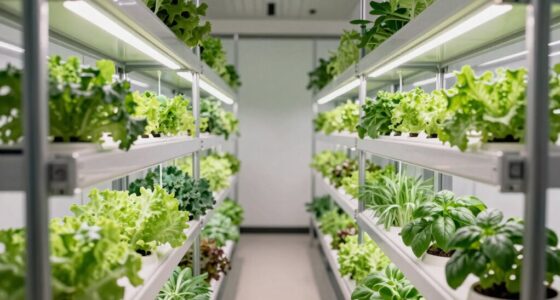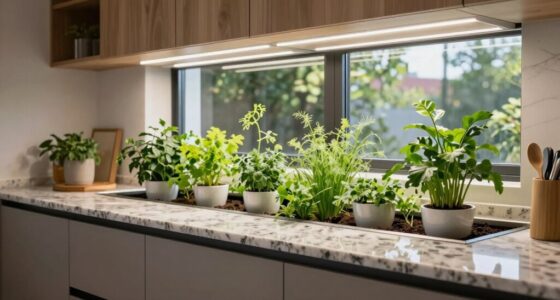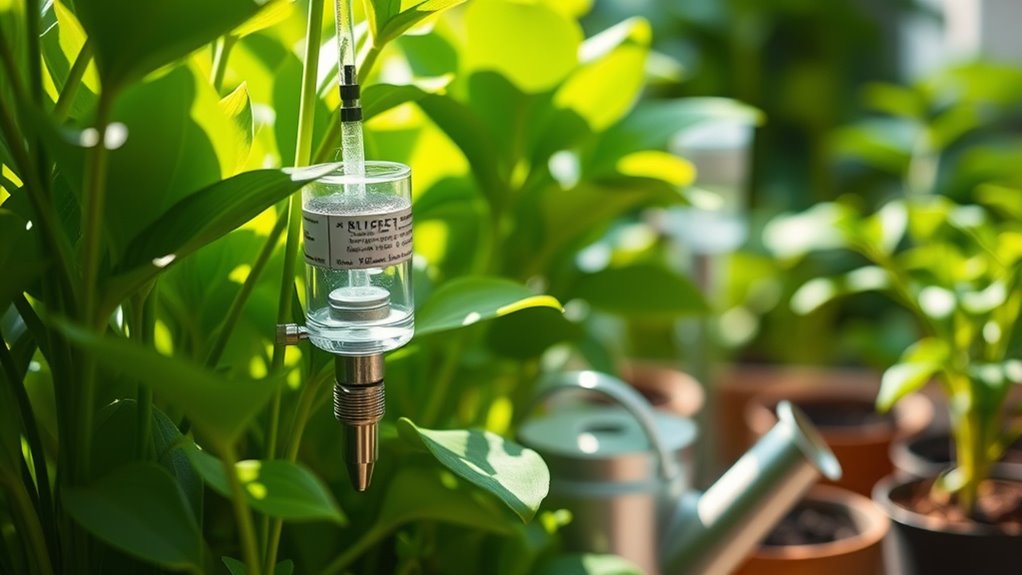

To conserve water in your indoor garden, use drip irrigation systems that deliver water directly to plant roots, minimizing waste. Combine this with mulch like wood chips or compost around your plants to reduce evaporation and retain moisture longer. Regularly monitor soil moisture with meters to avoid over or under-watering. These combined strategies will help you save resources and keep your plants healthy—it’s easier than you might think, and you’ll discover more effective tips along the way.

Get garden gear delivered free with Prime
- Fast, free delivery on millions of items
- Prime Video, Amazon Music and more included
- Member-only deals all year
Key Takeaways
- Implement drip irrigation systems for precise, slow watering that minimizes runoff and evaporation.
- Use organic mulch to retain soil moisture and reduce watering frequency.
- Combine drip irrigation with mulch for maximum water efficiency and healthier plants.
- Regularly monitor soil moisture levels with sensors to prevent over- or under-watering.
- Stay informed about water-saving regulations and incentives to support sustainable indoor gardening.

Have you ever considered how much water you use daily and the impact it has on the environment? Managing indoor garden watering efficiently can make a significant difference, especially when you adopt smart strategies. One effective method is using drip irrigation systems. These systems deliver water directly to the roots of your plants in a slow, controlled manner, minimizing waste. Unlike traditional watering methods, drip irrigation reduces runoff and evaporation, ensuring your plants get the precise amount of water they need. Installing a drip system might seem like an investment upfront, but it pays off by conserving water over time and maintaining healthier plants with less effort.
Using drip irrigation saves water and keeps your indoor garden healthy with less effort.
In addition to using drip irrigation, incorporating mulch techniques can drastically improve water retention. Mulch acts as a protective layer over the soil, reducing evaporation and keeping moisture locked in longer. Organic mulches like wood chips, straw, or composted leaves are excellent choices for indoor gardens because they are sustainable and help improve soil health. When you apply mulch around your potted plants or garden beds, you create a barrier that slows water loss, meaning you don’t have to water as frequently. This not only conserves water but also prevents the soil from drying out too quickly, which can stress your plants.
Combining drip irrigation with proper mulch techniques offers a synergistic effect that maximizes water efficiency. As your drip system supplies water directly to the roots, mulch ensures that this moisture stays in the soil longer, reducing the need for frequent watering. You’ll notice healthier, more vigorous plants with less water used overall. This approach is particularly helpful if you’re growing sensitive or drought-prone species, as it provides a steady moisture supply without overwatering.
Furthermore, you can enhance your water-saving efforts by monitoring soil moisture levels regularly. Using simple soil moisture meters allows you to determine exactly when your plants need water, preventing over- or under-watering. Combining these measurements with your drip irrigation setup ensures you only use water when necessary. Remember, small adjustments in your watering routine can lead to significant conservation benefits over time.
Adopting drip irrigation and mulch techniques isn’t just about saving water; it’s about creating a sustainable indoor garden that thrives with minimal environmental impact. By being mindful of how you water and employing these efficient strategies, you contribute to reducing water waste and preserving essential resources for future generations. Your indoor garden can flourish while you do your part in conserving water, making your green space both beautiful and eco-friendly. Additionally, understanding the importance of regulatory compliance in water management can help you stay informed about any local restrictions or incentives related to water conservation efforts.
drip irrigation system for indoor plants
As an affiliate, we earn on qualifying purchases.
As an affiliate, we earn on qualifying purchases.
Frequently Asked Questions
How Often Should I Water My Indoor Garden During Winter?
During winter, you should water your indoor garden when the soil moisture drops about 50% to 70%. Typically, this means watering every 7 to 10 days, but it varies based on your plant type and environment. Check the soil moisture regularly by feeling the top inch; if it feels dry, it’s time to water. Avoid overwatering to prevent root rot and conserve water effectively.
Are Drought-Tolerant Plants Suitable for Indoor Gardens?
Are drought-tolerant plants suitable for indoor gardens? Absolutely! Succulent varieties like aloe and jade thrive indoors, requiring minimal water and care. Wouldn’t you want plants that adapt easily? Native plant adaptation makes these species ideal, as they’re naturally suited to low water conditions. Incorporating drought-tolerant plants helps conserve water and adds unique texture to your indoor space, making your garden both sustainable and stunning.
What Are Eco-Friendly Ways to Reduce Indoor Water Use?
You can reduce indoor water use eco-friendly by harvesting rainwater to water your plants, cutting down on tap water. Using soil moisture sensors helps you water only when necessary, preventing waste. Additionally, consider installing low-flow watering devices and collecting greywater where appropriate. These methods work together to conserve water, lower your utility bills, and support sustainable gardening practices, all while keeping your indoor plants healthy and thriving.
How Can I Recycle Gray Water for Indoor Gardening?
Did you know that about 50% of household water is gray water? You can recycle gray water for indoor gardening by installing a simple gray water reuse system connected to your indoor plumbing. Collect water from sinks, showers, or laundry, and direct it safely to your plants. Just make certain you avoid harmful chemicals, and use eco-friendly soaps to keep your indoor garden healthy and conserve water effectively.
Do Humidity Levels Affect Water Conservation in Indoor Gardens?
Humidity levels notably impact water conservation in your indoor garden. Higher humidity reduces evaporation, meaning plants need less frequent watering, which conserves water. Conversely, low humidity increases moisture loss, prompting more watering and potential waste. By maintaining ideal humidity, you improve moisture control, reducing water usage overall. Adjusting your indoor environment to stabilize humidity not only supports plant health but also helps you save water efficiently.
indoor plant soil moisture meter
As an affiliate, we earn on qualifying purchases.
As an affiliate, we earn on qualifying purchases.
Conclusion
By implementing these water conservation strategies, you can make your indoor garden thrive while saving water like a savvy gardener preserves every drop. Remember to water only when needed, use efficient watering techniques, and collect rainwater or reuse greywater when possible. Your efforts will not only benefit your plants but also contribute to a healthier planet. Think of your indoor garden as a delicate oasis—you hold the power to nurture it wisely and sustainably.
As an affiliate, we earn on qualifying purchases.
indoor garden water conservation tools
As an affiliate, we earn on qualifying purchases.
As an affiliate, we earn on qualifying purchases.
Halloween Picks
halloween
As an affiliate, we earn on qualifying purchases.