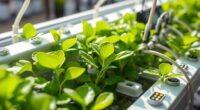
To guarantee electrical and water safety in your hydroponic kit, make sure all outlets and power strips are properly grounded and use GFCI outlets to prevent shocks. Keep electrical components elevated and away from water sources, and regularly inspect wiring for damage. Use waterproof connectors and seal exposed wiring to prevent corrosion. Always turn off and unplug equipment before maintenance. Follow these safety steps to protect your system, and you’ll learn how to keep your setup safe and efficient.
Key Takeaways
- Always use properly grounded outlets and GFCI protection to prevent electrical shocks.
- Keep electrical components elevated and away from water sources to avoid moisture contact.
- Regularly inspect wiring and connections for damage, replacing any frayed or corroded parts promptly.
- Turn off and unplug equipment before maintenance to ensure safety and prevent water contact.
- Use waterproof connectors and seal exposed wiring to prevent water ingress and electrical hazards.

Setting up a hydroponic kit can be an exciting way to grow plants indoors, but it’s essential to prioritize electrical and water safety from the start. One of the most critical steps is ensuring proper grounding practices. Grounding helps protect you from electrical shocks if a device malfunctions or if there’s a short circuit. Always check that your power strips, outlets, and equipment are properly grounded before plugging in any components. Use grounded outlets and, if necessary, install a Ground Fault Circuit Interrupter (GFCI) outlet to cut power immediately if a leak or fault occurs. This simple step can prevent serious accidents and protect your plants and household wiring.
Ensure proper grounding and use GFCI outlets for safety in your hydroponic setup.
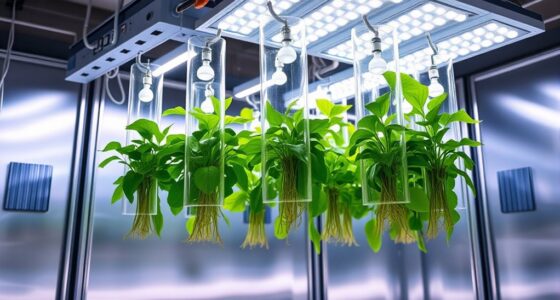
Moisture prevention is equally indispensable in a hydroponic setup. Water and electricity don’t mix well, so you want to minimize the risk of water reaching electrical parts. Keep all electrical connections elevated and away from water sources. Use waterproof connectors or seal any exposed wiring with appropriate insulation to prevent moisture intrusion. Regularly inspect your setup for leaks or spills and promptly clean up any water that escapes. Employ drip trays or waterproof mats under your equipment to catch accidental spills, which helps keep moisture where it belongs—away from your electrical devices.
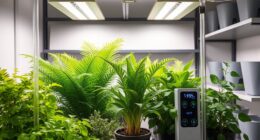
When setting up your hydroponic system, be mindful of the placement of electrical components. Position power supplies, timers, and controllers in dry, elevated areas, away from humidity and water splashes. Use cable management tools to keep cords organized and prevent accidental disconnections or damage. Never force cords into tight spaces, and avoid running electrical wires through water or damp areas. If you notice any signs of moisture on plugs or outlets, unplug immediately and dry the area thoroughly before reconnecting. Incorporating equipment with high contrast ratios can improve visibility and reduce setup errors in dimly lit environments.
To further enhance safety, always turn off and unplug your equipment before performing maintenance or adjustments. Regularly check wiring, connections, and equipment for signs of wear or damage, replacing anything frayed or corroded. Staying vigilant about grounding practices and moisture prevention not only keeps you safe but also extends the lifespan of your hydroponic system. By taking these precautions, you create a secure environment that allows you to enjoy growing healthy plants indoors without risking electrical hazards or water-related accidents.
Frequently Asked Questions
Can I Use Regular Household Outlets for My Hydroponic Setup?
Yes, you can use regular household outlets for your hydroponic setup if they comply with electrical code regulations. Make sure to follow grounding best practices by using grounded outlets and proper wiring to prevent electrical hazards. Avoid overloading circuits, and ensure all connections are secure and waterproof. Always check local electrical codes and consider consulting an electrician to ensure safety and conformity for your hydroponic system.
How Often Should I Inspect Electrical Connections for Safety?
You should inspect your electrical connections at least once a month to guarantee safety. Regular inspections help catch potential issues early, preventing hazards. Keep a detailed inspection schedule and use safety checklists to stay organized. Don’t wait until something goes wrong—stay vigilant. Unexpected problems can lurk behind the scenes, so consistent checks protect you and your hydroponic system from dangerous electrical faults.
What Are the Best Water-Resistant Electrical Components for Hydroponics?
For your hydroponic system, use waterproof connectors and corrosion-resistant wiring to guarantee safety and durability. These components prevent water damage and reduce the risk of electrical short circuits. Look for IP-rated connectors, like IP67 or higher, which are designed specifically for water exposure. Choosing high-quality, water-resistant electrical parts helps protect your setup and ensures reliable operation over time.
Is It Safe to Run Pumps and Lights on a Timer?
Yes, running pumps and lights on a timer is generally safe if you use proper timing control and follow safety precautions. Make certain your timer is rated for the electrical load and waterproof if necessary. Keep cords and connections dry and off the ground. Regularly inspect your setup for signs of wear or damage. By implementing these safety precautions, you can automate your hydroponic system confidently and safely.
How Do I Prevent Electrical Shocks During Water Spills?
Imagine your hydroponic setup as a delicate dance, where water and electricity must move in harmony. To prevent shocks during spills, make sure your system has a ground fault circuit interrupter (GFCI) and use waterproof connectors. These act like protective shields, cutting power instantly if a spill creates a short. Regularly inspect connections, keep water away from outlets, and maintain a safe space, so your garden thrives safely and smoothly.
Conclusion
By prioritizing electrical and water safety, you protect your hydroponic setup like a shield guarding treasure. Always double-check connections, keep water away from electrical parts, and use proper equipment. Remember, safety isn’t just a rule; it’s your best friend in preventing accidents and ensuring healthy plants. Think of it as planting a strong foundation—without it, everything else could topple. Stay vigilant, and your hydroponic journey will flourish safely and successfully.