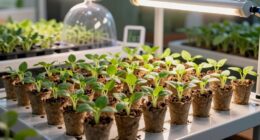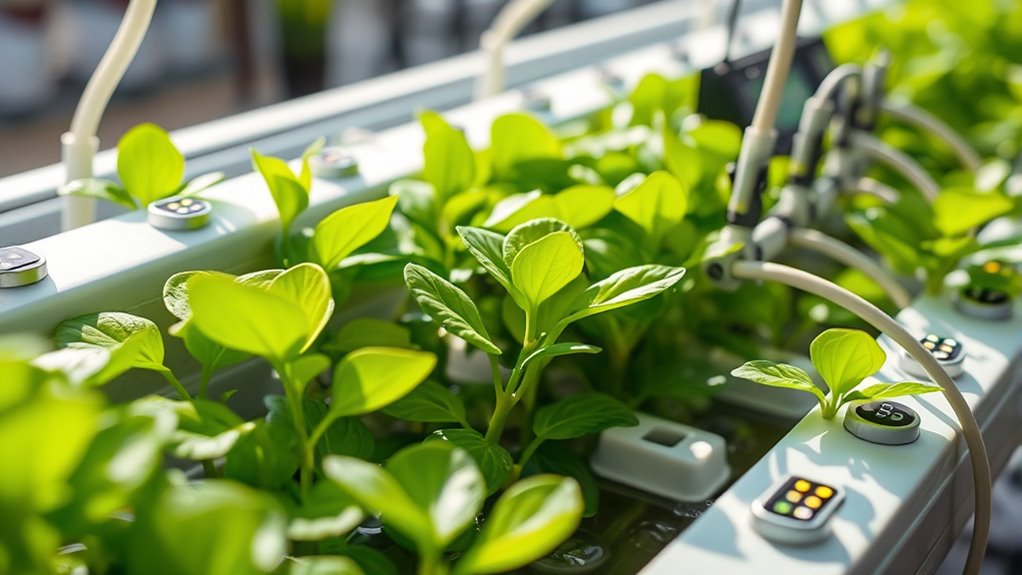

Using sensors in your hydroponic kit allows you to monitor essential factors like nutrient levels, pH, temperature, and humidity in real time. This helps you spot issues early and make immediate adjustments, ensuring your plants stay healthy and grow efficiently. Regular calibration of your sensors keeps data accurate over time, preventing problems from unnoticed environmental changes. Keep exploring to discover how to optimize your system and achieve the best results effortlessly.
Key Takeaways
- Sensors provide real-time data on pH, nutrient levels, temperature, and humidity to optimize plant growth conditions.
- Regular calibration of sensors ensures accurate readings, preventing misinterpretation and maintaining system reliability.
- Continuous monitoring detects early signs of environmental stress, enabling timely interventions for healthier plants.
- Sensor data guides precise adjustments in nutrient delivery, temperature, and humidity for optimal hydroponic performance.
- Well-maintained sensors improve crop yields and reduce crop loss by maintaining stable and ideal growing environments.

Monitoring plant growth in hydroponic kits has become easier and more accurate thanks to sensor technology. When you use sensors to track essential parameters like nutrient levels, pH, temperature, and humidity, you gain real-time insights into your plants’ health. This continuous data helps you identify issues early, guaranteeing your plants stay healthy and thrive. But to truly benefit from these advanced tools, proper sensor calibration is indispensable. If your sensors aren’t calibrated correctly, the readings might be off, leading you to make unnecessary adjustments or overlook problems. Regular calibration ensures that the data you receive accurately reflects the actual conditions of your hydroponic system, enabling you to make informed decisions quickly.
Sensor calibration involves comparing your sensor readings against a known standard or reference solution. For example, if you’re measuring pH, you should calibrate your pH sensor using standard buffer solutions to guarantee accuracy. Similarly, nutrient sensors need to be calibrated with solutions of known concentration. This process might seem tedious at first, but it’s essential for maintaining ideal plant health. When your sensors are correctly calibrated, you can trust the data to guide your actions—whether it’s adjusting nutrient concentration, modifying water temperature, or tweaking humidity levels. Over time, sensors may drift or become less accurate, so routine calibration is key to maintaining consistent monitoring. Regular calibration is part of good home maintenance practices that ensure your hydroponic system functions optimally.
Using calibrated sensors allows you to detect subtle changes in your hydroponic environment that could impact plant health. For instance, a slight drop in pH or nutrient levels might not be immediately visible to the naked eye, but sensors will catch these variations early. This early detection gives you the chance to intervene before your plants show signs of stress or disease. As a result, you’ll reduce crop loss, improve yields, and guarantee your plants are growing under ideal conditions. Furthermore, sensor calibration can help you create a stable environment, which is essential in hydroponics where plants are directly affected by precise nutrient and climate control.

WZQH Leather Work Gloves for Men or Women.Gardening,Welding,Coffee-grey L
- Material and Design: 100% split cowhide leather with soft cotton lining
- Protection Features: High abrasion, puncture, cut, and heat resistance
- Reinforced Palm: Extra protection for hands during heavy work
As an affiliate, we earn on qualifying purchases.
Frequently Asked Questions
What Types of Sensors Are Most Accurate for Hydroponic Monitoring?
You should choose digital pH and EC sensors for the most accurate hydroponic monitoring. These sensors offer high precision, durability, and quick responses, ensuring reliable data over time. They also facilitate data integration with your control system, making it easier to optimize nutrient levels. Look for sensors with proven durability to minimize calibration needs and maintain consistent measurements, helping you keep your hydroponic system thriving.
How Often Should Sensor Calibrations Be Performed?
Did you know that improper calibration can reduce sensor accuracy by up to 15%? You should calibrate your sensors at least once every 2 to 4 weeks, depending on their sensor lifespan and usage conditions. Regular calibration guarantees your readings stay reliable, preventing issues with nutrient levels or pH imbalance. Keep track of calibration dates and follow manufacturer guidelines to maintain peak sensor performance and healthy plant growth.
Can Sensors Detect Nutrient Deficiencies in Plants?
Yes, sensors can detect nutrient deficiencies in plants by monitoring factors like pH, electrical conductivity, and oxygen levels. Proper sensor placement is vital for accurate data, typically near the root zone or nutrient solution. You interpret this data to identify deficiencies early, allowing you to adjust nutrient solutions accordingly. Regular calibration guarantees dependable readings, helping you maintain ideal plant health and prevent deficiencies before they become severe.
What Are the Cost Differences Between Sensor Types?
Ever wondered if you’re overspending on sensors? Cost differences vary: basic pH and moisture sensors are affordable, while advanced nutrient sensors cost more upfront. You’ll find that sensor lifespan impacts value—longer-lasting sensors might cost more initially but save money over time. Installation challenges can also influence costs; easier-to-install sensors reduce labor expenses. Are you prepared to balance initial investment with long-term benefits when choosing sensor types?
How Do Environmental Changes Affect Sensor Readings?
Environmental changes can substantially impact your sensor readings by causing sensor drift and environmental interference. Sudden temperature shifts, humidity fluctuations, and exposure to light can lead sensors to provide inaccurate data over time. You should regularly calibrate your sensors and protect them from extreme conditions to ensure accurate measurements. By managing these environmental factors, you improve the reliability of your sensor data and optimize your hydroponic system’s performance.

COOLJOB 6 Pairs Gardening Gloves for Women Ladies, Breathable Rubber Coated for Yard Garden, Outdoor Indoor Protective Work with Grip, Medium Size, Red & Green
- Designed for Women: Lightweight, breathable, comfortable fit
- Protective and Durable: Thick fingertips and flexible cuffs
- Multi-Purpose Use: Suitable for gardening, yard work, repairs
As an affiliate, we earn on qualifying purchases.
Conclusion
Just as Da Vinci studied the secrets of nature, using sensors in your hydroponic kit unlocks the hidden language of your plants. By monitoring nutrients, pH, and moisture levels, you become the artist shaping a thriving masterpiece. Embrace this high-tech approach, and watch your garden flourish like a Renaissance painting—vivid, balanced, and full of life. With sensors guiding you, you’re not just growing plants; you’re cultivating a living work of art.

COOLJOB Gardening Gloves for Men, 2 Pairs Breathable Rubber Coated for Garden Weeding Landscaping, Outside Work for Lawn Yard, Men's Large Size, Black & Red
- Breathable and Comfortable Material: Red and black polyester base keeps hands dry
- Flexible and Dexterous Fit: Stretchy seamless knitted design with long cuff
- Durable Rubber Coating: Non-slip latex palm protects and extends glove life
As an affiliate, we earn on qualifying purchases.

PALMORRA Work Gloves for Men Women, Touchscreen Utility Mechanic Gloves, Flexible Grip General Working Gardening Gloves, Yellow, XL
- All-Day Comfort: Breathable stretch fabric for comfort
- Flexible Fit: Ergonomic design for natural movement
- Enhanced Grip: Premium synthetic leather palms
As an affiliate, we earn on qualifying purchases.