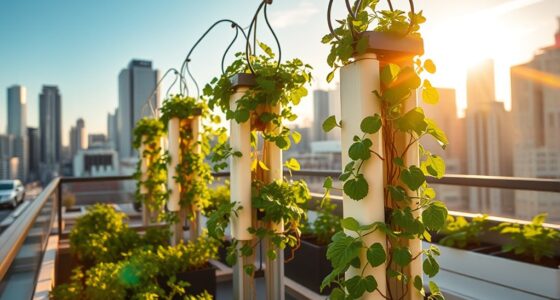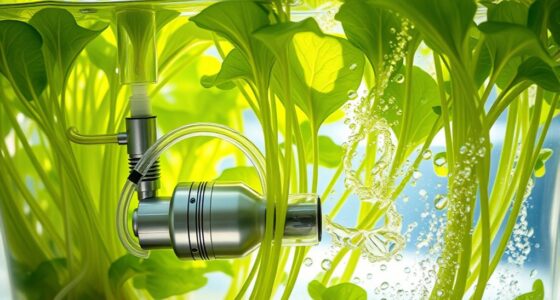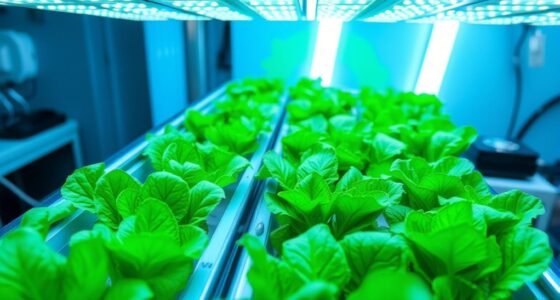
When choosing between plastic and metal for your hydroponic kit, consider how each material performs. Plastic is lightweight, versatile, and typically more affordable, making it easy to handle and mold into various parts, especially for small setups. Metal offers superior strength and durability, ideal for structural components but may require maintenance to prevent corrosion. To make an informed decision on which material suits your needs best, explore the detailed benefits and drawbacks of each option.
Key Takeaways
- Plastic is lightweight, versatile, and cost-effective, ideal for small-scale hydroponic components like reservoirs and tubing.
- Metal offers high strength and durability, suitable for support structures and frames exposed to physical stress.
- Plastic resists corrosion and is easier to clean, while metal requires protective coatings to prevent rust in moist environments.
- UV-resistant plastics extend lifespan, whereas corrosion-resistant metals are better for long-term, high-impact applications.
- Combining plastic and metal components can optimize durability, weight, cost, and maintenance in hydroponic systems.
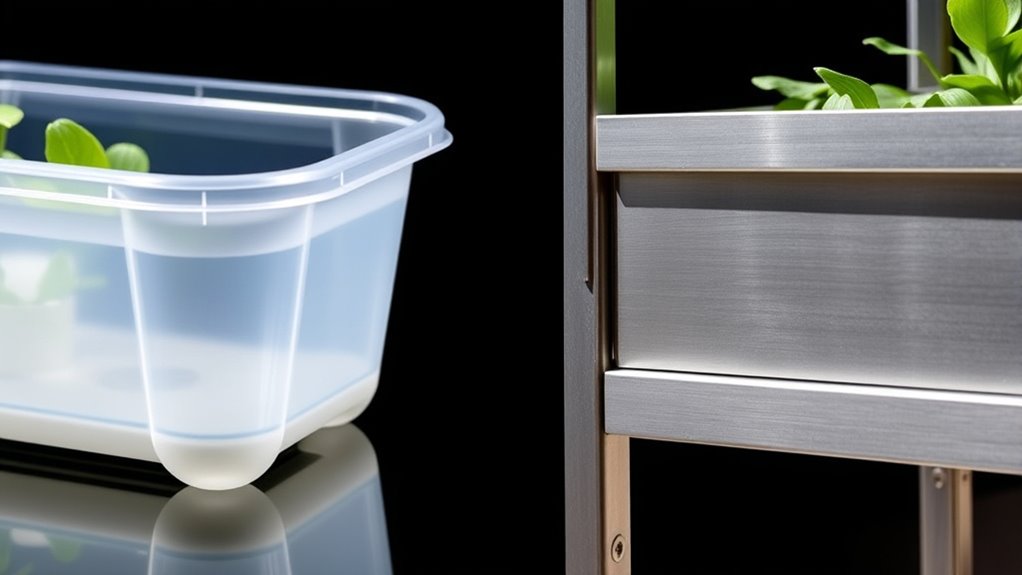
Hydroponic kits contain a variety of materials designed to support soilless plant growth efficiently. When choosing between plastic and metal components, it’s important to understand the advantages and potential drawbacks of each material. Plastic, for instance, is favored for its high plastic durability. It’s lightweight, resistant to impacts, and generally easy to mold into various shapes and sizes. This makes plastic components versatile and cost-effective, especially for home growers or small-scale setups. However, not all plastics are created equal; some may degrade over time when exposed to UV rays or certain chemicals, which can compromise the integrity of your hydroponic system. Choosing high-quality, UV-resistant plastics can mitigate these concerns, ensuring your kit remains sturdy over extended use.
Plastic components in hydroponic kits are lightweight, versatile, and cost-effective, but choosing UV-resistant plastics ensures long-term durability.
On the other hand, metal components bring their own set of benefits and challenges. Metals like stainless steel or aluminum are often used for their strength and aesthetic appeal. They’re highly durable and can withstand significant physical stress without cracking or breaking. Nevertheless, metal corrosion remains a key issue to think about. In a moist, nutrient-rich environment typical of hydroponic setups, many metals are prone to rust and deterioration over time. This corrosion not only affects the appearance but can also lead to system failures if critical parts weaken or fail. To counter this, many manufacturers opt for corrosion-resistant metals or apply protective coatings, but these solutions can add to the cost and maintenance requirements.
When comparing plastic and metal in hydroponic kits, you should consider the intended use and environment. Plastic is generally better for parts that require lightness and flexibility, such as reservoirs, tubing, or support structures. Metal, especially stainless steel, is preferable for components that need to bear weight or endure frequent handling, like frames or mounting brackets. Durability plays a key role in your decision; plastic’s resistance to cracking and shattering makes it suitable for long-term use if you select quality materials. Conversely, metal’s resistance to impact can be advantageous in high-traffic or industrial settings, but you must weigh the risk of corrosion and the need for maintenance. Additionally, understanding lifestyle factors can influence your choice, such as ease of cleaning and maintenance routines that fit into your schedule.
Ultimately, understanding the balance between plastic durability and metal corrosion will guide you toward making the right choices for your hydroponic system. Both materials have their strengths and weaknesses, and your specific needs—such as longevity, cost, and environmental exposure—will determine the best fit. By carefully evaluating these factors, you can ensure your hydroponic setup remains efficient, durable, and productive for years to come.

BLUASPAY 12 Pack Transparent Hydroponic Cups with Humidity Domes, 5in1 Hydroponics Growing System Kit, Clear Self Watering Planters for Indoor Plants, Herbs, Seed Starting, Root Monitoring
(Visual Root Health & Education): Crystal Clear Design for Root Observation: Unlike opaque pots, our high-transparency hydroponic cups…
As an affiliate, we earn on qualifying purchases.
As an affiliate, we earn on qualifying purchases.
Frequently Asked Questions
Which Material Is More Environmentally Sustainable for Hydroponic Kits?
You should choose metal for a more environmentally sustainable hydroponic kit since it has fewer recyclability concerns and generally involves lower manufacturing impacts over time. Metal is durable, can be recycled without quality loss, and reduces waste. Plastic, on the other hand, often faces recycling challenges and contributes to pollution. By opting for metal, you support a greener choice that minimizes environmental harm and promotes sustainability.
How Do Plastic and Metal Affect Nutrient Solution Ph Levels?
Plastic tends to be less stable in maintaining pH levels because it can leach chemicals that affect nutrient solution pH stability, especially over time or with exposure to sunlight. Metal, on the other hand, generally offers better pH stability but may corrode, releasing ions that alter pH. Your choice depends on balancing chemical leaching risks and pH consistency to keep your hydroponic system ideal.
Are Metal Kits Prone to Corrosion in Hydroponic Systems?
You might find it surprising, but metal kits can be prone to corrosion if they’re not made from corrosion-resistant materials. Over time, exposure to nutrient solutions and moisture can weaken their durability, leading to rust and contamination risks. To guarantee longevity, choose metal kits specifically designed for hydroponic systems, emphasizing corrosion resistance and material durability. This way, you protect your plants and keep your system running smoothly.
Can Plastic Kits Leach Chemicals Into the Nutrient Solution?
Yes, plastic kits can leach chemicals into your nutrient solution, especially if made from low-quality or unstable plastics. You should check the plastic’s stability to guarantee it won’t break down easily. To minimize chemical leaching, opt for food-grade or UV-resistant plastics, and avoid exposing your kit to excessive heat or sunlight. Properly selected plastics help keep your hydroponic system safe and your plants healthy.
Which Material Offers Better Insulation for Maintaining Water Temperature?
You should choose metal for better insulation and heat retention because it offers superior thermal efficiency. Metal conducts heat well, helping you keep water temperature stable, especially in colder environments. Plastic, on the other hand, has lower thermal efficiency and tends to lose heat quickly, making it less effective for maintaining consistent water temperature. If maintaining ideal water temperature is your priority, metal is the better choice for insulation.

Grow Tent Trellis Netting 2×4', Elastic Netting with Steel Hooks, Flexible Hydroponics Scrog Support for Grow Tents, Gardening, and Horticulture(2 Pack)
Grow tent net designed to improve lateral plant growth and support heavy yields like fruit and buds
As an affiliate, we earn on qualifying purchases.
As an affiliate, we earn on qualifying purchases.
Conclusion
Ultimately, choosing between plastic and metal for your hydroponic kit depends on your needs. Plastic offers affordability and versatility, while metal provides durability and a sleek look. Remember, “a chain is only as strong as its weakest link,” so pick materials that suit your environment and goals. By weighing these factors, you’ll set yourself up for success in your hydroponic journey. Whatever you choose, stay committed—your plants will thank you.

Eastrans 10ft x 1/4" ID Clear Vinyl Tubing, Flexible Hybrid PVC Tubing Hose, Lightweight Plastic Tube UV Chemical Resistant Vinyl Hose, BPA Free and Non Toxic
PVC Material – Tubing is made of high quality PVC material, lightweight and flexible, can withstand rough handling…
As an affiliate, we earn on qualifying purchases.
As an affiliate, we earn on qualifying purchases.
corrosion resistant metal hydroponic components
As an affiliate, we earn on qualifying purchases.
As an affiliate, we earn on qualifying purchases.