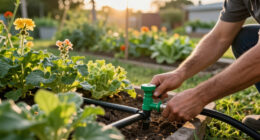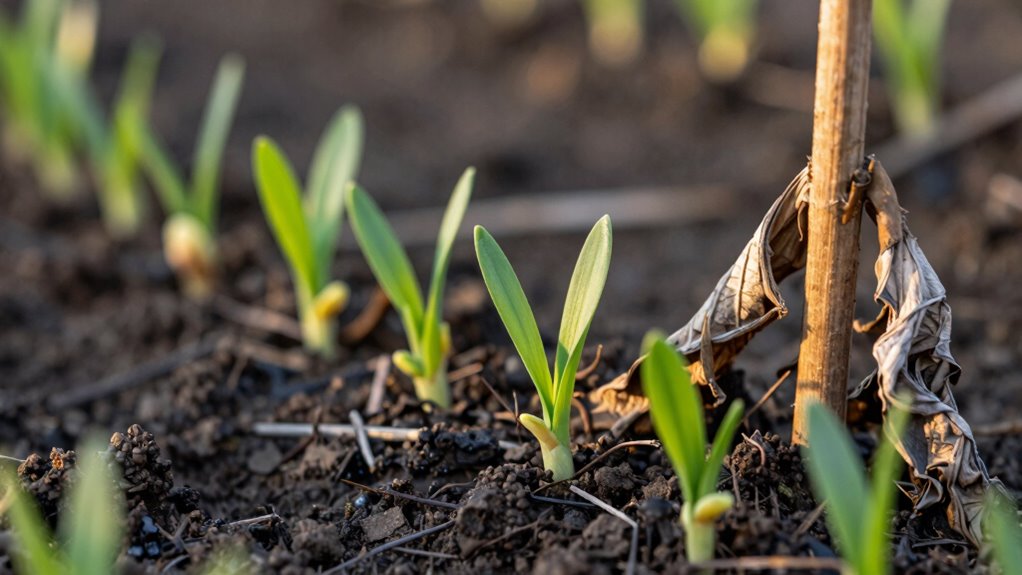

In spring, your crops need gentler feeding because they’re still recovering from winter’s cold. The soil microbes are less active, limiting nutrient release, and young roots are more sensitive to excess nutrients, which can cause damage. Over-fertilizing risks nutrient runoff and disrupting beneficial soil organisms. Using moderate feeding helps protect your plants and supports microbial health, ensuring healthy growth. Keep exploring to understand how maintaining balance benefits your crops even more.

Get garden gear delivered free — and shop member deals
- Fast, free delivery on millions of items
- Access to Prime Big Deal Days deals on October 6–7
- Prime Video, Amazon Music and more included
Key Takeaways
- Spring soils are still recovering from winter, with lower microbial activity limiting nutrient availability.
- Young spring crops are more sensitive to excess nutrients, risking root damage and nutrient runoff.
- Cooler temperatures slow microbial breakdown of organic matter, requiring cautious fertilization.
- Proper soil pH balance in spring enhances nutrient uptake and prevents leaching.
- Gentle feeding supports soil microbial health, promoting long-term soil fertility and crop resilience.

Spring crops offer a gentler feeding option compared to their winter counterparts. During this season, the soil is often still recovering from the colder months, making it essential to approach fertilization with care. Instead of heavy feeding, you focus on maintaining the soil pH balance, ensuring the nutrients are available in the right proportions for healthy plant growth. Spring crops are generally more sensitive to excess nutrients, so over-fertilizing can do more harm than good, leading to nutrient runoff or root damage. By testing your soil early, you can tailor your feeding strategy, providing only what’s necessary to support strong, vigorous growth without overwhelming the plants or disrupting the soil’s natural balance. Additionally, understanding the soil’s natural recovery process can help you time your fertilization more effectively and avoid unnecessary nutrient loss. Recognizing the importance of microbial activity in soil health can further enhance your fertilization approach, promoting better nutrient uptake and plant resilience.
In spring, pest management strategies also play a role in how you feed your crops. Since pests tend to be less active or less damaging at this time, you can adopt more subtle and eco-friendly pest control methods. Using organic or integrated pest management techniques reduces the need for heavy chemical applications, which can upset the soil pH balance and harm beneficial soil microbes. When pests are kept in check, your plants don’t need excessive fertilization to recover from pest damage, so a lighter feeding approach remains effective. This not only protects your crops but also preserves the integrity of the soil ecosystem, making it easier to grow healthy plants throughout the season.
Another reason for gentler feeding in spring is the soil’s natural state after winter. Cold temperatures slow microbial activity, which in turn limits nutrient availability. Applying too much fertilizer too early can cause nutrients to leach away before plants can absorb them, especially if the soil pH isn’t optimized. By carefully managing soil pH and applying modest amounts of fertilizer, you allow beneficial microbes to flourish, breaking down organic matter into nutrients your crops can readily use. This balanced approach promotes stronger root systems and reduces the risk of disease, which can be more prevalent when plants are stressed by excess nutrients or improper pH levels. Furthermore, supporting soil microbial health can lead to improved soil fertility and long-term crop yields.
As an affiliate, we earn on qualifying purchases.
Frequently Asked Questions
How Does Soil Temperature Affect Feeding Needs for Spring Crops?
Soil temperature influences how you feed spring crops because warmer soil boosts microbial activity, which helps break down nutrients more efficiently. If the soil is too cold, microbial activity slows, and nutrients don’t get absorbed well, so you should feed more gently to prevent nutrient leaching. Conversely, in warmer soil, you can give a slightly richer feed, but always monitor moisture levels to avoid leaching.
What Are Common Signs of Overfeeding in Spring Crops?
You’ll notice overfeeding in spring crops through yellowing leaves, leaf burn, or stunted growth. If you see these signs, it’s a sign your plants are getting too much fertilizer, especially from foliar feeding or excess root absorption. To prevent damage, reduce feeding frequency and strength. Monitor soil and leaf health closely, and always water thoroughly afterward to help plants process nutrients effectively without overloading them.
Can Organic Fertilizers Be Used More Aggressively Than Synthetic Ones?
You can often apply organic fertilizers more aggressively than synthetic ones because organic options release nutrients slowly, reducing the risk of overfeeding. Organic versus synthetic fertilizers differ mainly in their nutrient release timing; organic fertilizers are slower but safer. For spring crops, timing is vital—apply organic fertilizers early and gradually build nutrients, avoiding overfeeding. Synthetic fertilizers, with quick nutrient release, require more precise timing to prevent damage.
How Do Pest Pressures Influence Fertilization Strategies in Spring?
Coincidentally, pest pressures heavily influence your fertilization approach in spring. When insect control becomes a priority, you might opt for gentler feeds to avoid attracting pests or stressing plants. Using pest-resistant varieties can also reduce the need for aggressive fertilization. This strategy helps maintain healthy crops while minimizing pest issues, ensuring your plants grow strong without inviting unwanted insects.
Are There Specific Nutrients More Critical for Spring Crop Development?
You should prioritize nutrients that support root development, like phosphorus and potassium, as spring crops need strong roots to establish quickly. Keep in mind, lighter feeding helps prevent nutrient leaching caused by spring rains, ensuring nutrients stay available for plants. Nitrogen is also essential but should be applied carefully to avoid over-fertilization, which can harm young plants and lead to nutrient runoff.
As an affiliate, we earn on qualifying purchases.
Conclusion
So, don’t assume all crops need heavy feeding right away. Spring crops actually thrive with gentler nutrients because their roots are still establishing, and overfeeding can do more harm than good. You might worry they’ll grow slower, but patience pays off. By giving them just enough, you’ll encourage healthy, resilient plants that can handle the season’s ups and downs. Trust the process—you’ll enjoy a richer, more productive harvest in the end.
soil microbial activity test kit
As an affiliate, we earn on qualifying purchases.
As an affiliate, we earn on qualifying purchases.
garden nutrient runoff prevention products
As an affiliate, we earn on qualifying purchases.
As an affiliate, we earn on qualifying purchases.
Fall yard work Picks
leaf blowers
As an affiliate, we earn on qualifying purchases.