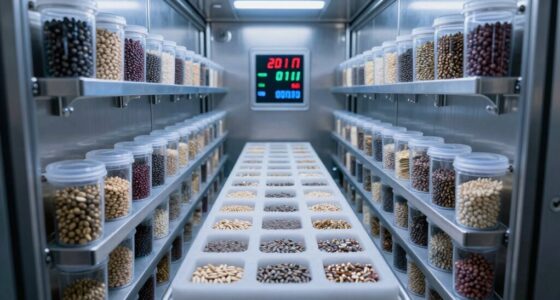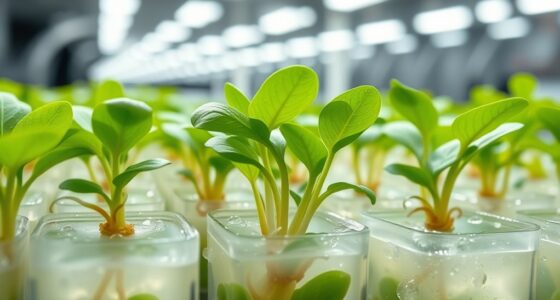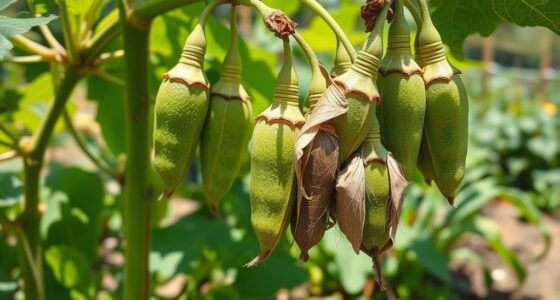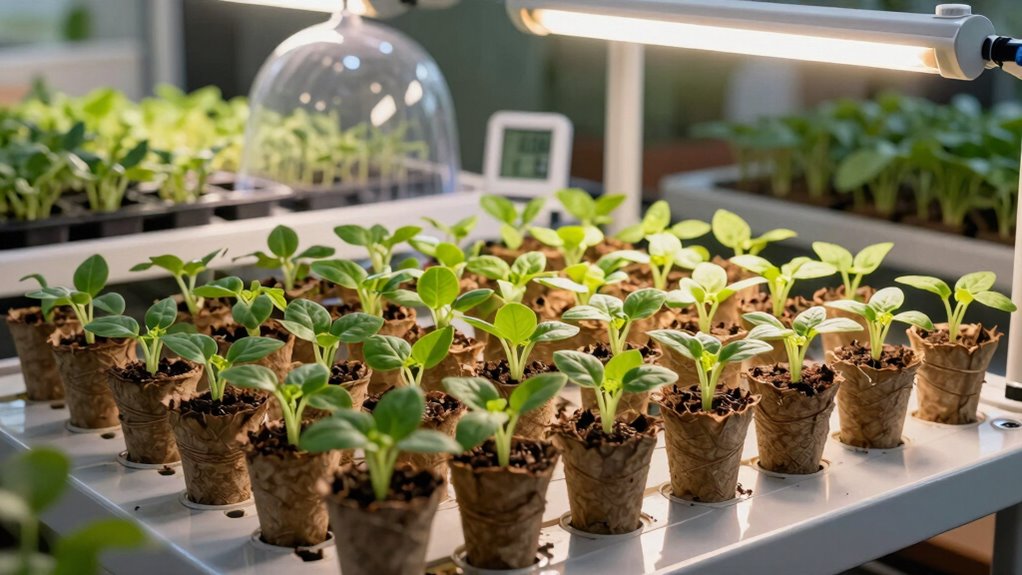

If you want quick wins in your indoor garden, start with fast-germinating seeds like radishes, lettuce, basil, and cilantro. These sprouts come up rapidly, need minimal fuss, and are easy for beginners. Use quality soil, keep your environment consistent, and provide enough light and moisture. These seeds grow quickly and give you satisfying results early on. Keep going, and you’ll discover even more tips to grow a successful indoor garden.
Key Takeaways
- Choose fast-germinating seeds like radishes, lettuce, basil, and cilantro for quick indoor success.
- Use quality soil, proper watering, and optimal light to accelerate seedling growth.
- Start with small containers to promote rapid germination and easy management.
- Incorporate companion planting to boost seedling health and yield indoors.
- Focus on maintaining consistent temperature and humidity for faster sprouting and growth.

Have you ever wondered which seeds are best suited for indoor gardening? If you’re just starting out, choosing the right seed types can make all the difference in achieving quick success. Some seeds germinate faster and grow more reliably indoors, giving you those satisfying “wins” early on. When selecting seeds, consider those that respond well to simple seed starting techniques and benefit from companion planting, which can help protect young plants and boost growth. Fast-germinating seeds like radishes, lettuce, and herbs such as basil and cilantro are excellent choices. They sprout quickly and usually require minimal fuss, making them ideal for beginners. These seeds typically have high germination rates when you follow basic seed starting techniques—like maintaining consistent moisture, providing adequate light, and maintaining proper temperature.
Using companion planting indoors can also enhance your success rate. For example, planting basil near tomatoes or peppers can improve flavor and ward off pests, even in small containers. Companion planting isn’t just for outdoor gardens; it works indoors too, helping your seedlings thrive and reducing the need for chemical interventions. When starting seeds indoors, you want to pay close attention to seed starting techniques—using quality seed-starting soil, ensuring proper drainage, and maintaining the right humidity levels. This creates an ideal environment for rapid germination and healthy growth. Smaller seeds like lettuce and herbs are forgiving, as they don’t require deep planting; just sprinkle them on the surface and lightly cover with soil. Additionally, understanding seed germination requirements can significantly increase your success rate. Recognizing the importance of seedling care techniques can help prevent common issues like damping-off disease and weak stems.
Incorporating proper watering practices is essential to keep seedlings healthy without overwatering, which can lead to problems. Fast-growing seeds also give you a sense of accomplishment sooner, encouraging you to keep expanding your indoor garden. Consistent maintenance and attention to environmental factors, such as temperature and humidity, are vital for speedy growth. Keep in mind that some seeds, like beans or peas, can also be quick to sprout and produce edible harvests in a relatively short period. The key to success with these types is consistency—watering appropriately, providing sufficient light, and using seed starting containers that retain moisture without becoming waterlogged. You’ll find that a good routine and understanding seed starting techniques make the process smoother and more rewarding.
As an affiliate, we earn on qualifying purchases.
Frequently Asked Questions
What Is the Best Time of Year to Start Indoor Gardening?
You should start indoor gardening in early spring or whenever you have sufficient light and warmth. This timing helps your seedlings develop quickly with proper seedling nutrition and minimizes pests. Use indoor gardening tools like grow lights, humidifiers, and small fans to create an ideal environment. Starting at the right time ensures faster growth, healthier plants, and more rewarding harvests, especially if you focus on seedlings that thrive indoors.
How Do I Prevent Pests in My Indoor Garden?
To prevent pests in your indoor garden, start with pest prevention by keeping your space clean and avoiding overwatering. Use natural repellents like neem oil or insecticidal soap to deter common pests safely. Regularly inspect your plants for signs of trouble, and isolate infected plants immediately. Keeping humidity levels balanced and ensuring good airflow also helps prevent pest infestations, so stay vigilant and proactive for a healthy, thriving indoor garden.
Can I Grow Multiple Seed Types Together Indoors?
Yes, you can grow multiple seed types together indoors, but you need to take into account companion planting and seed compatibility. Some plants grow well side-by-side, helping each other with pests or nutrients. Research which seeds are compatible, and group them accordingly to maximize growth and health. Keep an eye on their water and light needs, and make sure each plant has enough space to thrive, preventing competition and promoting faster wins.
What Lighting Is Ideal for Indoor Seed Germination?
You should use grow lights with full-spectrum or LED bulbs designed for seedlings to guarantee healthy germination. Before planting, prepare your soil with proper drainage and nutrients, and select seeds suited for indoor growth. Keep the lights 2-3 inches above the soil, adjusting as plants grow. This setup provides the ideal conditions for seed germination, promoting faster sprouting and strong initial growth, especially for beginner gardeners.
How Often Should I Water Indoor Seedlings?
You should water your indoor seedlings whenever the soil moisture feels dry to the touch, typically every 2-3 days. Maintain consistent water frequency to keep the soil evenly moist, but avoid overwatering, which can lead to root rot. Check daily, especially in warm or dry environments, and adjust your watering schedule based on the moisture levels. Proper water frequency guarantees healthy growth and faster germination.
fast-germinating herb seeds for indoor gardening
As an affiliate, we earn on qualifying purchases.
As an affiliate, we earn on qualifying purchases.
Conclusion
Starting with fast-growing seeds like lettuce, radishes, or herbs can boost your confidence and keep you motivated. Did you know that radishes can mature in just 25 to 30 days? That quick turnaround means you’ll enjoy fresh produce sooner and stay encouraged as you develop your indoor gardening skills. So, choose seeds that give you quick wins, and watch your green thumb grow with each small success!
As an affiliate, we earn on qualifying purchases.
As an affiliate, we earn on qualifying purchases.