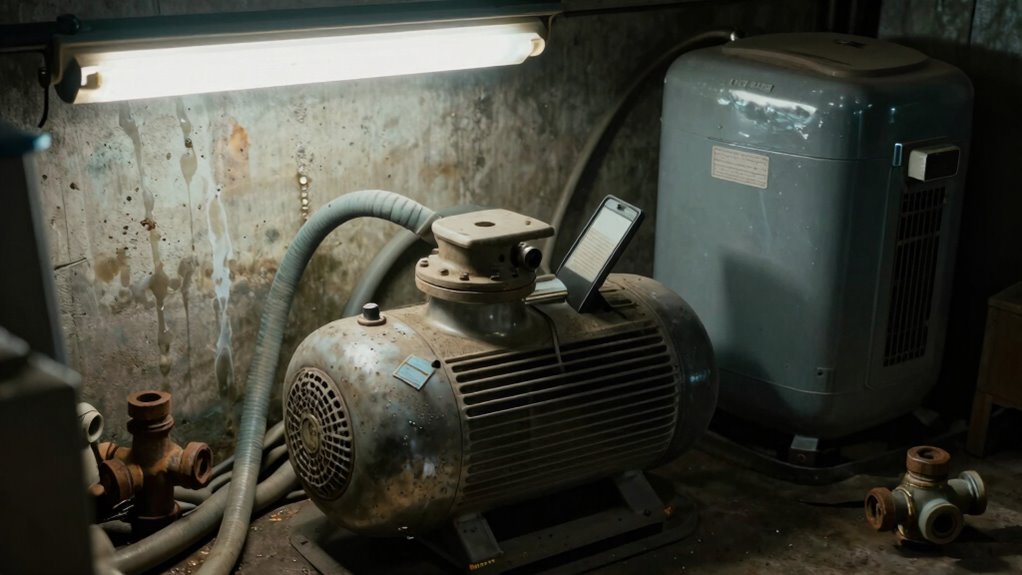

Backup pumps might seem dull or unimportant until the main pump suddenly fails when you least expect it. During emergencies, they’re essential for keeping systems running and avoiding hazards. Proper maintenance, testing, and clear procedures guarantee these backup systems activate seamlessly when needed. Skipping upkeep can lead to failures that cause costly downtime or safety issues. Stay with us to discover how regular checks and planning keep your backup pumps ready for action when it really counts.
Key Takeaways
- Backup pumps are often overlooked until the main pump fails unexpectedly, highlighting their critical role during emergencies.
- Proper maintenance ensures backup pumps operate reliably when main pumps fail unexpectedly.
- Regular testing and drills prepare personnel for swift response when backup systems are needed.
- Neglecting backup pump upkeep can lead to system failures during critical moments.
- Seamless integration and understanding of backup system requirements prevent failures during emergencies.
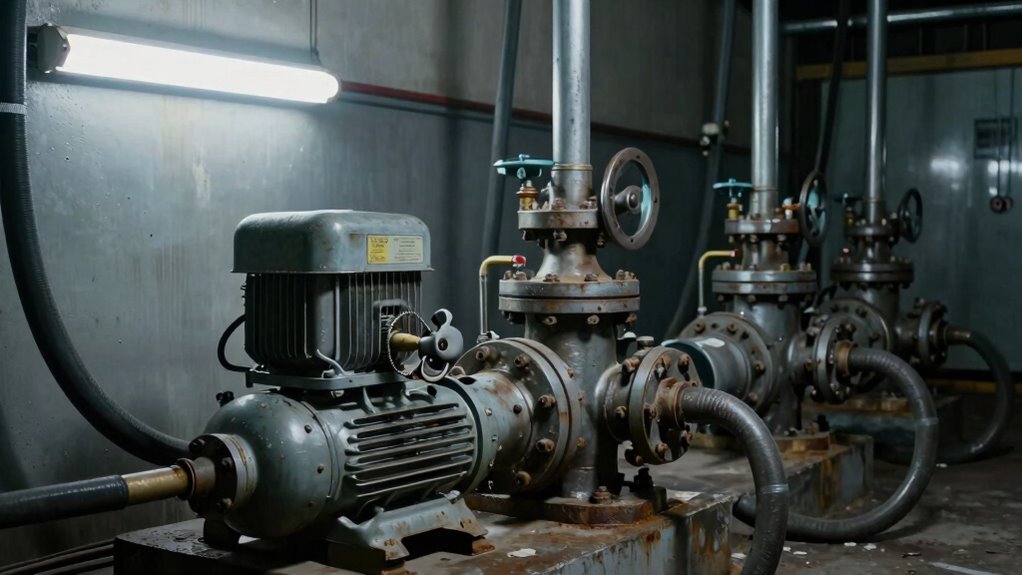
Backup pumps often seem like dull, background equipment—until the main pump fails at the worst possible moment. When that happens, you quickly realize how essential these seemingly boring devices truly are. You might have overlooked their importance during routine operations, but in an emergency, they become your lifeline. The challenge lies in guaranteeing they’re ready when needed, which involves tackling maintenance challenges head-on. Regular inspections, testing, and preventative upkeep may seem tedious, but neglecting these tasks increases the risk of failure when it counts most. You need to stay vigilant, checking for wear and tear, corrosion, or any signs of malfunction that could compromise their performance. Skipping scheduled maintenance might save time now, but it can lead to catastrophic failures later—failures that could disrupt operations or cause safety hazards. Proper lubrication and maintenance systems are critical for ensuring backup pump reliability under demanding conditions. Ensuring system redundancy is part of a comprehensive approach to minimize downtime during emergencies. Additionally, understanding the operational conditions that your backup pumps face helps you tailor maintenance and response strategies for maximum effectiveness.
Regular maintenance of backup pumps is vital to prevent failure during emergencies and ensure system reliability.
When your main pump stops working unexpectedly, swift action is essential. That’s where well-defined emergency procedures come into play. You should have a clear, practiced plan in place—knowing exactly who to call, what steps to take, and how to quickly activate backup systems. Regular drills and training help ensure everyone knows their role, reducing chaos when real emergencies occur. It’s also important to keep detailed records of maintenance and testing to quickly identify any issues before they become critical. The moment the primary pump fails, hesitation costs valuable time. Your team must be prepared to respond immediately, switching to backup pumps seamlessly to avoid flooding, overheating, or system shutdowns. Regular drills and training help ensure everyone knows their role, reducing chaos when real emergencies occur. It’s also crucial to verify that backup pumps are correctly integrated into your overall system, so they activate automatically if needed, without delay.
Additionally, understanding the specific requirements of your backup pumps helps streamline emergency procedures. Different systems may demand different responses, and knowing the nuances can prevent mistakes under pressure. For example, some backup pumps require manual activation, while others are designed for automatic operation. Familiarity with these details allows you to customize your emergency procedures, making them more efficient and reliable. Remember, the goal isn’t just to keep backup pumps operational but to ensure they function flawlessly when the main system fails. Proper maintenance and well-drilled emergency procedures are the foundation of that reliability.

SumpJet® Water Powered Backup Emergency Sump Pump
- Inlet Pressure Range: 20 to 100 psi
- Automatic Operation: Fully automatic system
- Flow Rate: High-output flow rates
As an affiliate, we earn on qualifying purchases.
As an affiliate, we earn on qualifying purchases.
Frequently Asked Questions
How Often Should Backup Pumps Be Tested for Reliability?
You should test your backup pumps at least quarterly to guarantee reliability. Regular testing is essential for effective pump installation and maintenance scheduling, preventing unexpected failures. By actively monitoring performance, you catch issues early and keep your backup system ready for emergencies. Schedule these tests consistently, document results, and perform maintenance as needed. This proactive approach helps avoid costly downtime and keeps your operations running smoothly when the main pump fails.
What Are Common Signs Indicating a Backup Pump Needs Maintenance?
When your backup pump starts acting up, it’s a red flag that maintenance is overdue. Look for strange noises, slow response times, or leaks, which all signal trouble. Regular pump installation checks and sticking to maintenance schedules help catch issues early. Don’t wait until it’s too late—address these signs promptly to keep everything running smoothly and avoid costly surprises when you least expect them.
Can Backup Pumps Handle Sudden Power Failures Effectively?
Backup pumps can handle sudden power failures effectively if they have emergency power sources like batteries or generators. Their pump capacity is vital; it must match or exceed the main pump to handle the flow during an outage. Regular testing ensures they kick in seamlessly. Without proper emergency power and adequate capacity, backup pumps might struggle, risking system failure when you need them most.
What Is the Average Lifespan of a Typical Backup Pump?
On average, a backup pump lasts about 10-15 years, but neglecting maintenance schedules can shorten that lifespan dramatically. You might think it’s reliable until a critical moment, when pump efficiency drops unexpectedly. Regular checks guarantee your backup pump remains ready, and catching wear early keeps it functioning smoothly. Stay vigilant—proper maintenance is your best defense against sudden failures, especially when you need it most.
Are There Different Types of Backup Pumps Suitable for Various Applications?
Yes, there are different types of backup pumps suitable for various applications. You might consider electric, battery-powered, or diesel-driven pumps, depending on your needs. Alternative power sources, like solar or generator backup, can enhance reliability. Pump installation methods vary, from submersible to pedestal designs, ensuring peak performance in specific environments. Choosing the right type involves evaluating your system’s requirements, space constraints, and available power options for seamless operation when the main pump fails.

GPI Overhaul Kit for EZ-8 Fuel Transfer Pump Manufactured on or Before Jan. 8, 2016, Motor Shaft Key, Two Gears, and Replacement Seals (13750005)
- Compatibility: For EZ-8 pumps made before Jan 8, 2016
- Includes Genuine Parts: Motor shaft key, gears, and seals
- Made in USA: Designed and manufactured in Wichita, Kansas
As an affiliate, we earn on qualifying purchases.
As an affiliate, we earn on qualifying purchases.
Conclusion
So, next time your backup pump seems dull and unassuming, remember it’s quietly waiting in the wings—like a dependable sidekick—ready to save the day when your main pump throws in the towel. Don’t ignore it, or you might find yourself caught in a flood of trouble when you least expect it. Keep an eye on your backup; it’s the unsung hero that keeps things flowing smoothly—until it’s needed most.
SumpJet® Water Powered Backup Emergency Sump Pump
- Inlet Pressure Range: 20 to 100 psi
- Automatic Operation: Fully automatic system
- Flow Rate: High-output flow rates
As an affiliate, we earn on qualifying purchases.
As an affiliate, we earn on qualifying purchases.

2500 Watt Sump Pump Backup Battery System, Automatic Switching to Battery Inverter Power, Professional Backup System in Case of Power Failure, Pure Sine Wave Output Remote Controller with LCD Screen
- Pure Sine Wave Output: 2500W seamless, interference-resistant power
- Fast Charging Support: Built-in 25A charger for deep-cycle batteries
- Enhanced Safety Features: LCD remote, cooling, overload, and protection functions
As an affiliate, we earn on qualifying purchases.
As an affiliate, we earn on qualifying purchases.