
The best organic garden pest control depends on which pest is damaging your plants, since soaps, neem oil, spinosad, and B.t. do not work the same way. I rank Monterey Spinosad Insecticide Concentrate as the best overall for gardeners who want a concentrate for targeted use, while Garden Safe Insecticidal Soap is a straightforward choice for soft-bodied pests and Bonide Captain Jack’s BT is more focused on caterpillars. The main tradeoff is between broad convenience and choosing a treatment that targets the pest without unnecessary exposure to other insects. Application effort, plant coverage, and label directions also matter as much as the ingredient. Read on for the full breakdown and guidance on matching a product to your garden.

Get garden gear delivered free with Prime
- Fast, free delivery on millions of items
- Prime Video, Amazon Music and more included
- Member-only deals all year
Complete the kit


Key Takeaways
- Target pest matters more than a broad ‘organic’ label: the lineup includes distinct options for caterpillars, soft-bodied insects, and crawling pests, so a treatment aimed at the wrong pest may not help.
- Spinosad options dominate the lineup: several products offer this active ingredient in concentrate or ready-to-use formats, making package size and mixing preferences key points of difference.
- B.t. is the more focused caterpillar choice: both Bonide and Monterey offer B.t. products, a narrower fit than spinosad but a clearer match when caterpillars are the identified problem.
- Ready-to-use bottles trade flexibility for simplicity: they reduce measuring and mixing, while concentrates can suit repeated or larger-area applications when label directions and storage are manageable.
- Not every product is a general garden spray: the diatomaceous-earth product is a crawling-insect option, while systemic concentrate and outdoor spray products call for careful attention to where and how they may be used.
| Wondercide Outdoor Pest Control Spray with Natural Essential Oils – 32 oz |  | Best for Broad Yard Coverage | Volume: 32 oz | Active ingredient: Steam-distilled cedarwood essential oil | Application method: Hose attachment | VIEW LATEST PRICE | See Our Full Breakdown |
| Monterey Spinosad Insecticide Concentrate, 1 Gallon with Spoon |  | Best for Large Gardens and Repeat Treatments | Brand: Monterey | Volume: 128 fluid ounces (1 gallon) | Model number: LG 6155 | VIEW LATEST PRICE | See Our Full Breakdown |
| Bonide Captain Jack’s BT Worm and Caterpillar Control Spray, 32 oz |  | Best for Targeted Caterpillar Control | Brand: Bonide | Volume: 32 fluid ounces | Item weight: 2.3 pounds | VIEW LATEST PRICE | See Our Full Breakdown |
| Bonide Captain Jack’s Deadbug Brew Ready-to-Use Insecticide Spray, 32 oz |  | Best Ready-to-Use Pick for Listed Chewing Pests | Brand: Bonide | Volume: 32 fluid ounces | Item form: Ready-to-use spray | VIEW LATEST PRICE | See Our Full Breakdown |
| Sierra Natural Science SNS-209 Systemic Pest Control Concentrate, 1 Pint |  | Best Botanical Systemic Option | Brand: Sierra Natural Science | Volume: 16 fluid ounces (1 pint) | Item form: Concentrate | VIEW LATEST PRICE | See Our Full Breakdown |
| Bonide Captain Jack’s Deadbug Brew Concentrate, 16 oz |  | Best for Flexible Sprayer Setups | Brand: Bonide | Product type: Concentrated insecticide and mite killer | Volume: 16 fluid ounces | VIEW LATEST PRICE | See Our Full Breakdown |
| Bonide Captain Jack’s Neem Oil Spray for Plants, 32 oz Ready-to-Use |  | Best for Multi-Problem Plant Care | Brand: Bonide | Volume: 32 fluid ounces | Form: Ready-to-use liquid spray | VIEW LATEST PRICE | See Our Full Breakdown |
| Garden Safe Insecticidal Soap Insect Killer Spray, 32 oz |  | Best for Harvest-Day Applications | Brand: Garden Safe | Volume: 32 fluid ounces | Form: Ready-to-use spray | VIEW LATEST PRICE | See Our Full Breakdown |
| Fertilome Spinosad Insecticide, Bagworm, Tent Caterpillar & Chewing Insect Killer, OMRI Listed (16 oz.) | 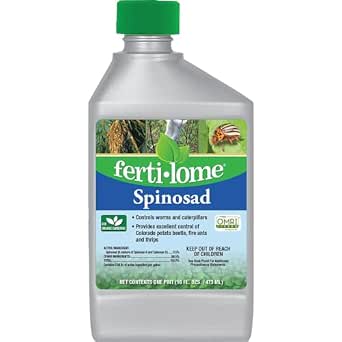 | Best for Outdoor Chewing Pests | Brand: ferti-lome | Volume: 16 fluid ounces | Active ingredient: Spinosad | VIEW LATEST PRICE | See Our Full Breakdown |
| Monterey Spinosad Insecticide, 32 oz with Measuring Spoon |  | Best for Larger Spray Batches | Brand: Monterey | Volume: 32 fluid ounces | Active ingredient: Spinosad | VIEW LATEST PRICE | See Our Full Breakdown |
| Garden Safe Crawling Insect Killer with Diatomaceous Earth, 4 lb |  | Best for Dry, Targeted Treatment | Brand: Garden Safe | Item form: Powder | Target: Listed crawling insects | VIEW LATEST PRICE | See Our Full Breakdown |
| Fertilome Spinosad Soap Insecticide, Ready to Use, 32 oz |  | Best Ready-to-Use Broad-Coverage Spray | Brand: Fertilome | Volume: 32 fluid ounces | Weight: 2 pounds | VIEW LATEST PRICE | See Our Full Breakdown |
| Monterey B.t. Bacillus Thuringiensis Insect Killer – 32 oz with Spoon |  | Best for Caterpillar and Worm Pests | Volume: 32 oz | Active ingredient: Bacillus thuringiensis (Bt) | Organic certification: OMRI listed | VIEW LATEST PRICE | See Our Full Breakdown |
| Monterey Spinosad Garden Insecticide Spray, 8 oz |  | Best for Flexible Sprayer Setups | Brand: Monterey | Volume: 8 fluid ounces | Active ingredient: Spinosad | VIEW LATEST PRICE | See Our Full Breakdown |
| BioAdvanced Organics Neem Oil Spray, Ready-to-Use, 24 fl oz |  | Best Multi-Action Neem Option | Volume: 24 fl oz | Form: Ready-to-use spray | Active ingredient: Clarified hydrophobic extract of neem oil, 0.9% | VIEW LATEST PRICE | See Our Full Breakdown |
| organic garden pest control | Volume | Brand | Active ingredient |
|---|---|---|---|
| Wondercide Outdoor Pest Contro | 32 oz | — | Steam-distilled cedarwood essential oil |
| Monterey Spinosad Insecticide | 128 fluid ounces (1 gallon) | Monterey | — |
| Bonide Captain Jack’s BT Worm | 32 fluid ounces | Bonide | Bacillus thuringiensis |
| Bonide Captain Jack’s Deadbug | 32 fluid ounces | Bonide | Spinosad (spinosyn A and spinosad D), 0.5% |
| Sierra Natural Science SNS-209 | 16 fluid ounces (1 pint) | Sierra Natural Science | — |
| Bonide Captain Jack’s Deadbug | 16 fluid ounces | Bonide | Spinosad |
| Bonide Captain Jack’s Neem Oil | 32 fluid ounces | Bonide | Clarified hydrophobic extract of neem oil |
| Garden Safe Insecticidal Soap | 32 fluid ounces | Garden Safe | — |
| Fertilome Spinosad Insecticide | 16 fluid ounces | ferti-lome | Spinosad |
| Monterey Spinosad Insecticide | 32 fluid ounces | Monterey | Spinosad |
| Garden Safe Crawling Insect Ki | — | Garden Safe | Silicon dioxide |
| Fertilome Spinosad Soap Insect | 32 fluid ounces | Fertilome | — |
| Monterey B.t. Bacillus Thuring | 32 oz | — | Bacillus thuringiensis (Bt) |
| Monterey Spinosad Garden Insec | 8 fluid ounces | Monterey | Spinosad |
| BioAdvanced Organics Neem Oil | 24 fl oz | — | Clarified hydrophobic extract of neem oil, 0.9% |
More Details on Our Top Picks
Wondercide Outdoor Pest Control Spray with Natural Essential Oils – 32 oz
For gardeners who want to treat a wider yard without mixing concentrate, Wondercide’s hose attachment is the most convenient fit in this group. Its cedarwood-oil formula is described as killing and repelling several common outdoor pests, with coverage up to 5,000 square feet for the listed insects; the stated tick coverage is lower, at 2,500 square feet. That makes it more of a broad-area option than Bonide Captain Jack’s BT, which targets worms and caterpillars on plants rather than general yard pests. The tradeoff is that hose pressure and walking speed can change how much ground a bottle treats, and larger yards require refills. I’d choose it for perimeter and lawn coverage, not as a precise treatment for a specific caterpillar infestation.
Pros:- Hose attachment avoids hand-mixing and makes broad-area application more convenient.
- Cedarwood essential oil is the listed active ingredient.
- Coverage is stated up to 5,000 square feet for several listed pests.
- The product is described as suitable for use around pets and families.
Cons:- Coverage varies with water pressure and application speed.
- Tick coverage is limited to a stated 2,500 square feet, less than the coverage for other listed pests.
- Large areas require refilling or additional bottles.
Best for: Gardeners with medium-to-large yards who want a hose-applied, plant-based option for several common outdoor pests.
Not ideal for: Gardeners targeting a specific chewing pest on edible plants or anyone who needs predictable coverage in a yard with inconsistent hose pressure.
- Volume:32 oz
- Active ingredient:Steam-distilled cedarwood essential oil
- Application method:Hose attachment
- Coverage for listed non-tick pests:Up to 5,000 sq ft
- Coverage for ticks:Up to 2,500 sq ft
- Listed pests:Mosquitoes, ants, gnats, fleas, Japanese beetles, no-see-ums, crickets, and ticks
Our verdict“Choose Wondercide for convenient, broad yard application; choose a targeted product such as Bonide Captain Jack’s BT when worms and caterpillars are the main problem.”
Monterey Spinosad Insecticide Concentrate, 1 Gallon with Spoon
Among these picks, Monterey’s one-gallon concentrate is the strongest fit for gardeners treating many plants or returning to the same pest problem over a season. The concentrate is OMRI listed and can be applied with trigger, backpack, or hose-end sprayers, so buyers can match the application tool to a small bed or a broader planting. Its spinosad-based control is described for a wide range of insects, including caterpillars, leafminers, codling moths, and fire ants. Compared with Bonide Captain Jack’s ready-to-use Deadbug Brew, this gallon requires preparation but offers a larger supply and more application flexibility. That scale comes with a responsibility: the label directions need careful attention, and this is not the simplest pick for a gardener who wants to spray straight from the bottle.
Pros:- OMRI listed for organic gardening.
- One-gallon container suits repeated applications across larger growing areas.
- Compatible with trigger, backpack, and hose-end sprayers.
- Described for a broad set of garden insects, including caterpillars and leafminers.
Cons:- Requires dilution and careful label reading before application.
- The gallon container may be more product than a small garden needs.
- A sprayer is needed; it is not a ready-to-use spray.
Best for: Organic gardeners with large vegetable plots, orchards, or recurring listed insect problems who already use a sprayer and can follow dilution directions.
Not ideal for: Small-space gardeners or beginners who want a ready-to-use spray without measuring, mixing, or managing a large concentrate container.
- Brand:Monterey
- Volume:128 fluid ounces (1 gallon)
- Model number:LG 6155
- Target species:Insects
- Active ingredient type:Spinosad
- Organic listing:OMRI listed
- Application options:Trigger, backpack, or hose-end sprayer
- Listed target pests:Caterpillars, leafminers, codling moths, fire ants, and other listed insects
Our verdict“Pick Monterey’s gallon concentrate for larger gardens and repeat use, but choose Bonide Deadbug Brew if you prefer a ready-to-use format.”
Bonide Captain Jack’s BT Worm and Caterpillar Control Spray, 32 oz
When worms and caterpillars are the clear problem, Bonide Captain Jack’s BT offers a narrower, more focused choice than Monterey Spinosad Concentrate. This ready-to-use spray contains Bacillus thuringiensis and works when target pests ingest treated foliage, making it a fit for fruits, vegetables, trees, and ornamentals without requiring the gardener to mix a concentrate. The specificity is also its main limitation: it is not a general-purpose answer for beetles, mites, or unrelated yard pests. Because the pests must feed on the treated plant, results are not immediate; the description says they may take two to three days to die after ingestion. I’d favor it for a defined caterpillar problem and skip it when a mixed pest outbreak calls for broader listed coverage.
Pros:- Ready-to-use trigger spray requires no dilution.
- Targets worms and caterpillars with Bacillus thuringiensis.
- Suitable for fruits, vegetables, trees, and ornamentals.
- Approved for organic gardening and described as compatible with birds, earthworms, and beneficial insects when used as directed.
Cons:- Works only when target pests ingest treated plant material.
- Pests may take two to three days to die after ingestion.
- Its narrow target makes it less useful for mixed infestations than Monterey Spinosad Concentrate.
Best for: Edible-garden growers and home gardeners who need a ready-to-use, organic-approved treatment for worms or caterpillars on listed plants.
Not ideal for: Gardeners facing beetles, mites, or a mix of unrelated pests, or anyone seeking fast knockdown without waiting for pests to ingest treated foliage.
- Brand:Bonide
- Volume:32 fluid ounces
- Item weight:2.3 pounds
- Form:Ready-to-use spray
- Active ingredient:Bacillus thuringiensis
- Target pests:Worms and caterpillars
- Application:Trigger sprayer
- Listed plant uses:Fruits, vegetables, trees, and ornamentals
Our verdict“Choose this BT spray for a focused caterpillar problem on garden plants, not for broad-spectrum pest control.”
Bonide Captain Jack’s Deadbug Brew Ready-to-Use Insecticide Spray, 32 oz
Deadbug Brew’s ready-to-use spinosad spray suits gardeners who want a broader listed-pest option than BT without mixing a concentrate. The product is described for caterpillars, beetles, borers, and spider mites on vegetables, fruits, flowers, and ornamentals. That gives it a different role from Bonide Captain Jack’s BT: BT is the more focused choice for worms and caterpillars, while Deadbug Brew covers additional listed pest types in a single premixed bottle. Its convenience has limits. The 32-ounce format may be less practical for extensive gardens than Monterey’s gallon concentrate, and the product does not claim control of every insect. Spinosad is approved for organic gardening, but I would still match the label to the target pest and plant rather than assume it is a universal garden spray.
Pros:- Ready-to-use bottle avoids measuring and dilution.
- Spinosad active ingredient is approved for organic gardening.
- Listed for caterpillars, beetles, borers, and spider mites.
- Can be used on vegetables, fruits, flowers, and ornamental plants.
Cons:- The 32-ounce ready-to-use format may be limiting for large gardens compared with Monterey’s gallon concentrate.
- The description lists specific target insects rather than claiming control of all pests.
- The product should be matched to the label’s listed pests and plants.
Best for: Home gardeners who want a premixed spray for listed pests across vegetables, fruit plants, flowers, and ornamentals.
Not ideal for: Large-scale growers who need a high-volume concentrate, or gardeners whose pest is not among the product’s listed targets.
- Brand:Bonide
- Volume:32 fluid ounces
- Item form:Ready-to-use spray
- Weight:2.4 pounds
- Active ingredient:Spinosad (spinosyn A and spinosad D), 0.5%
- Listed target pests:Caterpillars, beetles, borers, and spider mites
- Listed plant uses:Vegetables, fruits, flowers, and ornamentals
- Organic gardening status:Approved for organic gardening
Our verdict“Choose Deadbug Brew for convenient, listed-pest coverage across several plant types; use BT instead when caterpillars alone are the target.”
Sierra Natural Science SNS-209 Systemic Pest Control Concentrate, 1 Pint
SNS-209’s rosemary-derived botanical concentrate stands apart from the contact-style ready-to-use sprays in this roundup: it is described as a systemic treatment that helps protect plants from insects that feed by sucking or chewing. Its water-soluble, biodegradable ingredients and use across a variety of plants, fruits, and vegetables may appeal to gardeners looking for a botanical approach rather than a spinosad or BT product. The key tradeoff is that protection depends on insects feeding on the treated plant, so it is not a direct solution for pests that do not feed on treated growth. Compared with Wondercide, which is applied across outdoor areas, SNS-209 is oriented around plant protection. I’d choose it for a botanical plant-focused approach, while checking the product directions for application details not specified here.
Pros:- Uses rosemary-derived botanical extracts as its active botanical.
- Water-soluble and described as biodegradable.
- Suitable for a variety of plants, fruits, and vegetables.
- A plant-focused alternative to yard-wide sprays such as Wondercide.
Cons:- Effectiveness depends on insects feeding on the treated plant.
- The supplied product details do not specify dilution rates or application methods.
- Less suited to immediate control of pests that are not feeding on treated growth.
Best for: Gardeners seeking a rosemary-derived botanical concentrate for varied plants and willing to use a feeding-dependent systemic approach.
Not ideal for: Buyers who need immediate contact control, have pests that are not feeding on treated plants, or want a product with clearly stated dilution and application instructions in the supplied details.
- Brand:Sierra Natural Science
- Volume:16 fluid ounces (1 pint)
- Item form:Concentrate
- Target species:Insects
- Active botanical:Rosemary extract
- Included components:1 bottle
- Model number:746048
- Listed plant uses:Plants, fruits, and vegetables
Our verdict“Choose SNS-209 for a botanical, plant-focused systemic approach, but skip it if you need direct contact treatment or precise application details.”
Bonide Captain Jack’s Deadbug Brew Concentrate, 16 oz
A versatile spinosad concentrate earns this pick for gardeners who already own a sprayer and want to treat several kinds of listed outdoor plants. Diluting it lets buyers prepare a batch for a trigger, handheld, backpack, or hose-end sprayer, unlike Garden Safe Insecticidal Soap, which comes ready to use but depends on direct contact with each pest. The listed targets include caterpillars, beetles, leaf miners, thrips, and spider mites, giving it a broader pest mix than a worm-focused treatment. The tradeoff is extra preparation: you must measure, mix, and follow the label for both plant and pest eligibility. Its organic-gardening approval and described limited impact on some beneficial predators may appeal to gardeners seeking a targeted option, but it is not a blanket treatment for every garden problem.
Pros:- Approved for organic gardening.
- Concentrate can be applied with trigger, handheld, backpack, or hose-end sprayers.
- Listed for vegetables, fruits, flowers, and ornamentals.
- Targets several listed insect and mite groups.
Cons:- Requires dilution and careful label-based measuring before application.
- Use is restricted to listed pests and plants.
Best for: Outdoor vegetable and ornamental gardeners who own a compatible sprayer and want one concentrate for several listed pest types.
Not ideal for: Beginners seeking a no-mix bottle, or gardeners whose pest or plant is not listed on the label.
- Brand:Bonide
- Product type:Concentrated insecticide and mite killer
- Volume:16 fluid ounces
- Active ingredient:Spinosad
- Application:Mix with water; use a compatible sprayer
- Sprayer types:Trigger, handheld, backpack, or hose-end
- Target pests:Listed insects and mites, including caterpillars, beetles, moths, leaf miners, thrips, and spider mites
- Use:Outdoor listed vegetables, fruits, flowers, and ornamentals
Our verdict“Choose this concentrate if you have a sprayer and want flexible application across eligible outdoor crops and ornamentals.”
Bonide Captain Jack’s Neem Oil Spray for Plants, 32 oz Ready-to-Use
Neem oil’s three-in-one role makes this a useful fit when a gardener is dealing with both listed insects or mites and fungal diseases. The ready-to-use trigger bottle skips the mixing step required by Bonide Captain Jack’s Deadbug Brew Concentrate, and the product is described for indoor and outdoor plants, from vegetables to houseplants. It targets insects at egg, larval, and adult stages, which can suit gardeners managing several phases of an infestation. That breadth comes with a coverage burden: affected plant surfaces need a complete coating, and repeat applications may be needed every 7–14 days. Compared with contact-only insecticidal soap, its stated fungal-disease use broadens its purpose; compared with a spinosad concentrate, it is less centered on the listed chewing-pest targets. Follow the label for plant-specific use.
Pros:- Three-in-one fungicide, insecticide, and miticide use.
- Ready-to-use trigger spray needs no dilution.
- Suitable for a range of indoor and outdoor plants.
- Targets insects at egg, larval, and adult stages.
Cons:- Complete coverage of affected plants is required.
- May need reapplication every 7–14 days.
- A ready-to-use bottle is less suited to preparing larger spray batches than a concentrate.
Best for: Gardeners caring for mixed indoor and outdoor plants who want one ready-to-use product for listed insect, mite, and fungal problems.
Not ideal for: People treating a large garden who prefer a concentrate, or anyone unable to coat affected plant surfaces and repeat applications as directed.
- Brand:Bonide
- Volume:32 fluid ounces
- Form:Ready-to-use liquid spray
- Active ingredient:Clarified hydrophobic extract of neem oil
- Use:Fungicide, insecticide, and miticide
- Target pests:Spider mites, aphids, whiteflies, and other listed insects
- Application:Shake well, coat affected plants, and reapply every 7–14 days as needed
- Organic gardening:Approved
Our verdict“Pick this ready-to-use neem spray when your plant-care needs include fungal issues as well as listed insects and mites.”
Garden Safe Insecticidal Soap Insect Killer Spray, 32 oz
Harvest-day flexibility is the clearest reason to choose this ready-to-use soap: the product data says it may be applied to edible crops through the day of harvest. It also works indoors, outdoors, and in greenhouses, while Fertilome Spinosad Insecticide is intended for outdoor use only. There is no dilution step, which keeps routine spot treatment simple across vegetables, fruit trees, flowers, and ornamentals. Its defining limitation is the contact method: pests must be sprayed directly, so it is less practical for insects hidden in dense foliage or outside the spray’s reach. Unlike the neem spray, its stated use is insect control rather than a combination of insect, mite, and fungal-disease treatment. This is a focused choice for accessible listed pests, not a broad preventive application.
Pros:- Ready to use without mixing.
- May be applied to edible crops through the day of harvest.
- Suitable for indoor, outdoor, and greenhouse locations.
- Can be used on vegetables, fruit trees, ornamentals, shrubs, and flowers.
Cons:- Pests must be sprayed directly for control.
- May be less effective as a practical choice when pests are difficult to reach within dense foliage.
Best for: Edible-garden growers who need a ready-to-use spray for accessible listed pests and want the stated option to apply through harvest day.
Not ideal for: Gardeners dealing with pests tucked out of sight in dense growth, since direct spraying is required for control.
- Brand:Garden Safe
- Volume:32 fluid ounces
- Form:Ready-to-use spray
- Active ingredients:Potassium salts of fatty acids
- Application:Spray pests directly
- Use locations:Indoors, outdoors, and greenhouses
- Suitable plants:Vegetables, fruit trees, ornamentals, shrubs, and flowers
- Harvest timing:May be applied to edibles through the day of harvest
Our verdict“Choose this soap spray for reachable listed pests on edible crops when ready-to-use application and harvest-day use matter most.”
Fertilome Spinosad Insecticide, Bagworm, Tent Caterpillar & Chewing Insect Killer, OMRI Listed (16 oz.)
Outdoor foliage-feeding pests are this spinosad product’s focus, with listed targets that include leafminers, caterpillars, bagworms, tent caterpillars, and other chewing insects. That makes it a stronger match for gardeners seeing damage on trees, shrubs, fruits, citrus, or vegetables than Garden Safe Insecticidal Soap, whose listed use relies on spraying pests directly. The OMRI listing is relevant to buyers following certified organic production practices, while the water-soluble concentrate format allows mixing according to label directions. The tradeoff is narrower setting flexibility: this product is intended for outdoor use, unlike Bonide Captain Jack’s Neem Oil Spray, which is described for indoor and outdoor plants. Product data also mentions concentrate and ready-to-spray formats, so buyers should check the specific package and label rather than assume both application styles come in this bottle.
Pros:- OMRI listed for certified organic gardening.
- Targets a range of listed chewing insects and larvae.
- Water-soluble formulation mixes according to label directions.
- Described for outdoor vegetables, fruits, citrus, trees, shrubs, and flowers.
Cons:- Intended for outdoor use only.
- Requires mixing when using the concentrate format.
- Buyers should verify the exact format and follow label directions for listed uses.
Best for: Outdoor gardeners managing listed chewing insects or larvae on vegetables, fruit, citrus, trees, shrubs, or flowers, especially those seeking an OMRI-listed option.
Not ideal for: Indoor growers or buyers who need a product explicitly suited to indoor use.
- Brand:ferti-lome
- Volume:16 fluid ounces
- Active ingredient:Spinosad
- Form:Product data describes concentrate and ready-to-spray formats
- Target pests:Leafminers, caterpillars, bagworms, tent caterpillars, foliage-feeding worms, thrips, and other listed pests
- Suitable plants:Outdoor vegetables, trees, shrubs, flowers, fruits, and citrus
- Organic status:OMRI listed for certified organic gardening
- Special feature:Water-soluble
Our verdict“Choose Fertilome for outdoor, listed chewing-pest problems when OMRI listing and a mixable spinosad formula fit your gardening routine.”
Monterey Spinosad Insecticide, 32 oz with Measuring Spoon
A 32-ounce spinosad format with a measuring spoon suits gardeners preparing applications for multiple areas, while its stated compatibility with trigger, handheld, backpack, and hose-end sprayers offers more setup flexibility than a fixed-use applicator. The product is OMRI listed and described as fast-acting and odorless, qualities that may matter when choosing a treatment for routine garden work. Compared with Bonide Captain Jack’s Deadbug Brew Concentrate, this listing provides a larger stated volume, though the available product data gives fewer details about its exact target-pest list and application directions. It is described for a wide variety of pests, including caterpillars, leafminers, and fire ants, but buyers should use the label to confirm each pest and plant before spraying. Its main tradeoff is the need to read and follow those directions carefully.
Pros:- OMRI listed for organic gardening.
- 32-fluid-ounce size includes a measuring spoon.
- Described as fast-acting and odorless.
- Compatible with trigger, handheld, backpack, and hose-end sprayers.
Cons:- Requires careful label reading for application directions.
- Available product data does not specify a detailed plant-use list.
- Measuring and sprayer setup add steps compared with a ready-to-use spray.
Best for: Gardeners preparing larger spray batches who want an OMRI-listed spinosad product and already use compatible spray equipment.
Not ideal for: Buyers who need a clearly detailed pest-and-plant list before selecting a treatment, or who want a ready-to-use spray with no measuring.
- Brand:Monterey
- Volume:32 fluid ounces
- Active ingredient:Spinosad
- Organic status:OMRI listed
- Included accessory:Measuring spoon
- Target pests:Described for many insects, including caterpillars, leafminers, and fire ants
- Sprayer compatibility:Trigger, handheld, backpack, or hose-end sprayers
- Model number:LG 6135
Our verdict“Pick Monterey when a larger spinosad supply and flexible sprayer compatibility matter more than a ready-to-use format or detailed product data in the listing.”
Garden Safe Crawling Insect Killer with Diatomaceous Earth, 4 lb
I’d choose this diatomaceous earth powder when crawling insects are the problem and I want a treatment that can be placed directly on plants or nearby soil. Its contact action works by coating insects and absorbing oils and fats, which helps dehydrate them; it does not offer the broad, ready-to-spray coverage of Fertilome Spinosad Soap. That makes it a more targeted fit for dry outdoor treatment, rather than a flexible option for many pest types or settings. The 4.1-pound package gives gardeners material for repeated applications, but the powder format can be less convenient to distribute evenly than a spray. I’d also keep the label’s limits in view: it is for outdoor use and works only on listed crawling insects.
Pros:- Diatomaceous earth-based formula intended for organic gardening
- Contact action targets listed crawling insects
- Can be applied to plants and surrounding soil
- Large 4.1-pound package supports multiple applications
Cons:- Limited to outdoor use
- Only targets crawling insects listed on the label
- Powder can be less convenient to distribute evenly than a ready-to-use spray
Best for: Outdoor organic gardeners targeting listed crawling insects on plants or surrounding soil who prefer a dry, contact-action treatment.
Not ideal for: Gardeners treating flying or unlisted pests, or anyone who needs an indoor product or an easy-to-cover spray.
- Brand:Garden Safe
- Item form:Powder
- Target:Listed crawling insects
- Item weight:4.1 pounds
- Active ingredient:Silicon dioxide
- Use:Outdoors, on plants and surrounding soil
- EPA specification:Meets EPA specification
Our verdict“Pick this for dry, outdoor treatment of listed crawling insects, but choose Fertilome Spinosad Soap for broader spray coverage.”
Fertilome Spinosad Soap Insecticide, Ready to Use, 32 oz
For gardeners who want to skip measuring and mixing, I’d put Fertilome Spinosad Soap ahead of Monterey’s 8-ounce Spinosad Garden Insecticide: this one arrives ready to spray and combines spinosad with potassium salts of fatty acids. Its label covers listed pests across vegetables, fruits, citrus, trees, shrubs, and flowers, giving it a wider plant-use range than Monterey B.t., which is aimed at caterpillars and worm-type pests. The tradeoff is that broad plant coverage still takes care: the product directions call for spraying plant parts, including leaf undersides, and restrict use to listed pests and plants. I’d choose it for varied garden beds where convenience matters, but not for someone seeking a selective caterpillar-only treatment or a concentrate for mixing.
Pros:- Ready-to-use spray avoids measuring and mixing
- Combines spinosad with potassium salts of fatty acids
- Labeled for vegetables, trees, shrubs, flowers, fruits, and citrus
- OMRI listed for organic gardening
Cons:- Use is limited to pests and plants listed on the label
- Thorough coverage, including leaf undersides, is required
- Ready-to-use format offers less flexibility than a concentrate
Best for: Home gardeners managing listed pests across several edible and ornamental plant types who want a ready-to-use bottle rather than a mix-your-own product.
Not ideal for: Gardeners who need a caterpillar-specific treatment, want a concentrate, or cannot provide thorough coverage of leaf undersides.
- Brand:Fertilome
- Volume:32 fluid ounces
- Weight:2 pounds
- Form:Oil
- Active ingredients:Spinosad 0.005%; potassium salts of fatty acids 0.940%
- Application:Ready-to-use spray
- Target:Listed insects and pests
- Organic listing:OMRI listed
Our verdict“Choose this for convenient, ready-to-spray treatment across multiple listed plant types, provided you can cover foliage thoroughly.”
Monterey B.t. Bacillus Thuringiensis Insect Killer – 32 oz with Spoon
I’d rank this as the clearest specialist choice for gardeners facing caterpillars and worm-type pests. Bacillus thuringiensis (Bt) gives it a narrower job than Fertilome Spinosad Soap, which is labeled for a broader range of insects and plant types; that focus is useful when caterpillars are the main concern and beneficial insects matter. The product description says it is safe for earthworms, bees, birds, and other beneficial insects when used as directed, and it is OMRI listed for organic gardening. Unlike a ready-to-use spray, this formula must be mixed with water before application, so it requires a sprayer and an extra preparation step. I’d skip it for pests outside its caterpillar and worm target, since its narrower scope is also its main limitation.
Pros:- Targets a range of caterpillar and worm-type pests
- Described as safe for beneficial insects, birds, and earthworms when used as directed
- OMRI listed for organic gardening
- Mixes with water for use in standard sprayers
Cons:- Requires mixing with water before application
- Its target is narrower than broader-use options such as Fertilome Spinosad Soap
- Requires access to a sprayer
Best for: Organic vegetable gardeners dealing with listed caterpillars or worm-type pests who want a targeted treatment and can mix a spray.
Not ideal for: Gardeners treating a mix of unrelated insect pests or those who want a ready-to-use bottle with no mixing.
- Volume:32 oz
- Active ingredient:Bacillus thuringiensis (Bt)
- Organic certification:OMRI listed
- Target pests:Caterpillars and worm-type pests
- Application:Mix with water and apply as a spray
- Example listed targets:Cabbage looper, bagworm, and gypsy moth
- Included accessory:Spoon
Our verdict“Choose this for listed caterpillars and worm pests when targeted coverage and care for beneficial species matter more than ready-to-use convenience.”
Monterey Spinosad Garden Insecticide Spray, 8 oz
This is the flexible-format pick for gardeners who already own spraying equipment. The 8-ounce spinosad product can be applied with trigger, handheld, backpack, or hose-end sprayers, so it suits different garden sizes and setups better than the fixed ready-to-use format of Fertilome Spinosad Soap. It is OMRI listed, odorless, and labeled for listed pests on ornamentals, lawns, vegetables, citrus, and fruit trees. The tradeoff is that the supplied product information does not describe it as ready to use, and application depends on following the label directions; buyers should check those instructions to confirm the dilution and use pattern for their equipment. Compared with the more targeted Monterey B.t., this is the broader spinosad option, but it is not a specialist caterpillar-only treatment.
Pros:- Compatible with several sprayer types
- Labeled for ornamentals, lawns, vegetables, citrus, and fruit trees
- OMRI listed for organic gardening
- Odorless
Cons:- Label directions must be followed for application
- The 8-ounce volume may be less suited to extensive garden coverage
- Not presented as a ready-to-use spray
Best for: Gardeners with trigger, handheld, backpack, or hose-end sprayers who want an OMRI-listed spinosad option for multiple outdoor plant settings.
Not ideal for: Buyers who want a clearly ready-to-use spray, do not own suitable application equipment, or need a treatment focused specifically on caterpillars.
- Brand:Monterey
- Volume:8 fluid ounces
- Active ingredient:Spinosad
- Form:Oil
- Target:Insects
- Application methods:Trigger, handheld, backpack, or hose-end sprayers
- Suitable settings:Outdoor ornamentals, lawns, vegetables, citrus, and fruit trees
- Organic gardening:OMRI listed
Our verdict“Pick this if you already have spraying equipment and want flexible application across listed outdoor plants; choose Fertilome for a ready-to-use bottle.”
BioAdvanced Organics Neem Oil Spray, Ready-to-Use, 24 fl oz
I’d favor this neem spray when a gardener wants one ready-to-use product labeled for both listed pests and plant diseases. Its three-way fungicide, insecticide, and miticide action sets it apart from Monterey Spinosad Garden Insecticide, which is presented as an insect-control option rather than a combined disease and pest treatment. The label also covers ornamental and edible plants, and application is allowed up to the day of harvest, a practical fit for active food gardens when label directions are followed. The tradeoff is maintenance: fungal disease control calls for repeat applications every 7–14 days, and the product is limited to listed pests and diseases. Compared with the broader, multi-ingredient Fertilome spray, this is the more distinct choice for gardeners who also want neem-based disease and mite coverage.
Pros:- Combines fungicide, insecticide, and miticide action
- Targets listed insect and mite life stages, including eggs and larvae
- Labeled for ornamentals, fruits, nuts, and vegetables
- Can be applied up to the day of harvest
Cons:- Fungal disease control requires applications every 7–14 days
- Effectiveness is limited to listed pests and diseases
- Ready-to-use format offers less mixing flexibility than a concentrate
Best for: Edible and ornamental gardeners who want a ready-to-use neem spray covering listed insects, mites, and plant diseases, including near harvest.
Not ideal for: Gardeners seeking a one-time disease treatment, broad control beyond label-listed targets, or a product with no repeat-application schedule.
- Volume:24 fl oz
- Form:Ready-to-use spray
- Active ingredient:Clarified hydrophobic extract of neem oil, 0.9%
- Other ingredients:99.1%
- Item weight:1.5 lb
- Fungal disease application interval:Every 7–14 days
- OMRI specification:Met
- Harvest timing:Can be applied up to the day of harvest
Our verdict“Choose this ready-to-use neem option when you want listed pest, mite, and disease coverage in one spray and can follow its repeat schedule.”

How We Picked
I compared the 15 products by active ingredient and target pest, application format, and how readily a gardener can match the label directions to a specific problem. I gave more weight to clear, targeted use and practical handling than to broad claims: a focused treatment can be a better garden choice than a product that sounds more versatile but does not fit the pest at hand.
The ranking favors useful combinations of target fit, usability, and format flexibility. Monterey Spinosad Concentrate leads because it offers a concentrate format for deliberate, label-directed use; focused alternatives such as B.t. and insecticidal soap rank well for the pests they suit. Ready-to-use options remain appealing for smaller jobs, while products with narrower application contexts or more careful handling needs rank lower for general garden use. I do not treat “organic” as a guarantee of harmlessness: label directions, plant suitability, and effects on beneficial insects remain part of the comparison.
| organic garden pest control | Brand |
|---|---|
| Wondercide Outdoor Pest Contro | — |
| Monterey Spinosad Insecticide | Monterey |
| Bonide Captain Jack’s BT Worm | Bonide |
| Bonide Captain Jack’s Deadbug | Bonide |
| Sierra Natural Science SNS-209 | Sierra Natural Science |
| Bonide Captain Jack’s Deadbug | Bonide |
| Bonide Captain Jack’s Neem Oil | Bonide |
| Garden Safe Insecticidal Soap | Garden Safe |
| Fertilome Spinosad Insecticide | ferti-lome |
| Monterey Spinosad Insecticide | Monterey |
| Garden Safe Crawling Insect Ki | Garden Safe |
| Fertilome Spinosad Soap Insect | Fertilome |
| Monterey B.t. Bacillus Thuring | — |
| Monterey Spinosad Garden Insec | Monterey |
| BioAdvanced Organics Neem Oil | — |
Factors to Consider When Choosing Best Organic Garden Pest Control
Before choosing a bottle, identify the pest and the part of the plant it is damaging. Ingredient, contact method, and application format determine whether a product fits the problem; the word “organic” alone does not. These factors help prevent wasted treatments and avoidable exposure.
Match the treatment to the pest
Start with the insect or feeding pattern, not the product category label. Caterpillars chewing leaves call for a different approach from aphids or mites clustered on tender growth, and crawling pests near soil may need a different application altogether. Misidentification is a common reason a spray appears ineffective: a treatment can be legitimate and still be wrong for the target. Check the product label for listed pests and the plants or locations where use is allowed. If you cannot identify the insect, take a clear photo and consult a local extension service before spraying. A narrow match often means less unnecessary treatment across the garden.
Understand how the active ingredient works
Products in this lineup include spinosad, B.t., neem oil, insecticidal soap, and diatomaceous earth, and they are not interchangeable. Some treatments need to reach the insect directly or be eaten by a feeding pest, while others are intended for particular placement or pest groups. That difference affects timing: a spray may be less useful after insects have moved on or damage has already occurred. Do not assume that two products with similar names or formats act on the same pests. Read the active ingredient and label instructions, including any limits on repeat applications. For a persistent problem, changing the treatment blindly can add work without addressing the cause.
Choose ready-to-use or concentrate based on your routine
Ready-to-use bottles simplify small, occasional jobs because they avoid dilution and separate measuring tools. Concentrates can be more practical when you need to treat a larger area or expect repeated applications, but they require accurate mixing and safe storage. A common mistake is choosing a large concentrate for a single small planting and then letting it sit unused, or buying a small ready-to-use bottle for many beds. Think about the area you will treat, how often the label permits use, and whether you can follow mixing directions consistently. Never use a household estimate in place of the labeled dilution. The easier format is the one you can apply correctly and on schedule.
Protect pollinators and other beneficial insects
Organic status does not mean a product affects only the pest. Spraying flowering plants, applying at the wrong time, or treating areas where beneficial insects are active can create avoidable harm. Read the label for pollinator cautions, application timing, and restrictions around edible crops or water. When permitted, targeted application to affected leaves can limit exposure compared with treating an entire bed. Avoid spraying simply because insects are present; many are harmless or help control pests naturally. If the damage is limited, monitoring and removing affected material may be preferable to a broad application.
Check plant, harvest, and location directions
Garden products can have different directions for vegetables, ornamentals, lawns, and outdoor surfaces, even when their names sound broadly applicable. Confirm that the label covers the plant and use site you have in mind before buying. For edible crops, check any harvest interval and washing guidance, and keep the product away from areas excluded by the label. Do not infer that a product is safe for every plant because it is described as natural or organic. A small-area test can help reveal plant sensitivity when the label permits it, but it does not replace label directions. The right product is one whose permitted use matches your garden setup.
Pay for fit and repeatability, not just package size
A larger container is not automatically the better choice if the pest is seasonal or confined to a few plants. Compare the amount you can reasonably use, storage needs, application tools, and whether the product suits the likely pest. Paying more attention to a concentrate can make sense for a gardener with recurring, clearly identified problems and room to store it safely. A beginner with one small infestation may benefit more from a simple ready-to-use format and a focused label. Avoid keeping multiple overlapping products without a plan; unused treatments can expire or create confusion when problems return. Build a small, targeted approach around observation rather than stocking every type of spray.
Frequently Asked Questions
Which type of organic pest control should I choose if I cannot identify the insect?
Pause before spraying and identify the insect or at least the pattern of damage. Photograph the pest and the affected plant, then compare those details with a reliable local gardening resource or extension service. The products here target different groups, so guessing can leave the real pest untouched while exposing other insects. If damage is minor, monitor the plant and remove visibly affected leaves when appropriate. Choose a product only after its label lists the pest and the plant or use site.
Are organic garden insecticides safe to use around bees and other beneficial insects?
Organic does not mean harmless to bees, predators, or other non-target insects. Risk depends on the ingredient, where it is applied, timing, and the product’s label directions. Check pollinator warnings and avoid treating flowering plants or active foraging areas unless the label specifically permits the use and timing. A targeted application to affected plant parts may reduce exposure compared with spraying broadly, but it does not remove all risk. If pollinators are active and the damage is limited, consider waiting or using non-spray controls first.
Should I buy a concentrate or a ready-to-use spray for a vegetable garden?
Choose based on the size and frequency of the job, not just the bottle format. Ready-to-use sprays are simpler for a few plants and occasional treatment, while concentrates can suit larger areas or repeated use if you can measure and mix accurately. For vegetables, the deciding factor is whether the label permits use on the specific crop and states any harvest interval. Keep mixing tools separate from food preparation and follow storage instructions. If you expect only one small application, a concentrate may be more work than you need.
Can I rotate between spinosad, B.t., neem oil, and insecticidal soap?
Do not rotate products just because they contain different ingredients; first confirm that each one is labeled for the pest and plant involved. Changing ingredients may be useful in some pest-management plans, but the timing and reason depend on the pest, local guidance, and label restrictions. Repeatedly spraying without checking results can add exposure without improving control. Keep notes on the pest, treatment date, and plant response so you can tell whether the approach is working. Follow each product’s directions on repeat use and compatibility, and avoid mixing products unless the labels allow it.
What should I do if an organic spray does not stop the damage?
First check whether the pest is still present and whether the product was used on a listed target according to its label. Some damage remains visible after insects are gone, so look for fresh feeding or new insects before repeating an application. Review coverage, timing, weather restrictions, and any directions about reapplication rather than increasing the dose. If the pest is misidentified, select a product with a label that matches it instead of applying more of the same treatment. For ongoing or serious damage, consult a local extension service about integrated pest-management options.
Conclusion
For the broadest fit in this lineup, I recommend Monterey Spinosad Insecticide Concentrate as the best overall, especially for gardeners who can identify a listed target and prefer a concentrate. Best value depends on your garden’s size and treatment frequency, but a concentrate is the more practical direction for repeated, label-approved use; for a small, occasional job, the ready-to-use format may make more sense. Best for beginners is Garden Safe Insecticidal Soap when the problem is a listed soft-bodied pest and you want a ready-to-use spray. For caterpillars, choose a B.t. product such as Bonide Captain Jack’s BT or Monterey B.t.; for crawling insects, consider Garden Safe Crawling Insect Killer only where its label fits. I would reserve systemic or broad outdoor-use options for gardeners whose exact plants, pests, and use site match the label. The best choice is the one aimed at your identified pest and applied according to its directions.