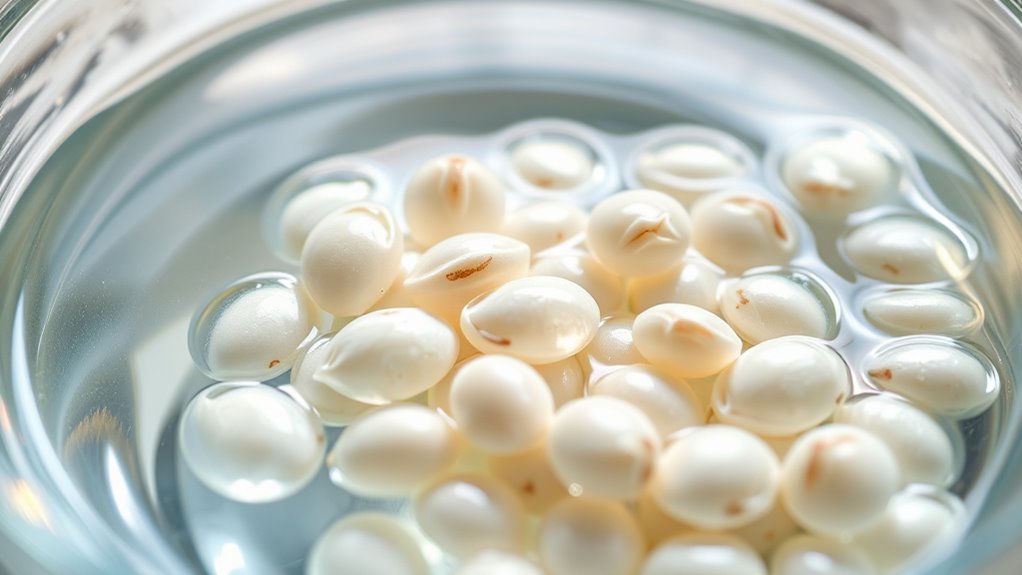

Pre-soaking seeds helps them germinate faster and more uniformly. You should soak seeds for about 8 to 24 hours, especially those with tough coats like beans and peas. This process hydrates seeds thoroughly, softens seed coats, and activates enzymes essential for growth. It also reduces the risk of rotting and creates a better environment for sprouting. Keep in mind the timing and precautions to maximize success—you’ll find more helpful details ahead.
Key Takeaways
- Pre-soaking initiates germination by thoroughly hydrating seed tissues and softening seed coats.
- It is especially beneficial for seeds with tough shells, like beans and peas, to ensure uniform sprouting.
- Typically, seeds are soaked for 8 to 24 hours, but exact timing depends on seed type.
- Proper pre-soaking improves germination rates, accelerates sprouting, and promotes healthier seedlings.
- Avoid over-soaking to prevent seed rot or fungal growth, using clean, room-temperature water.
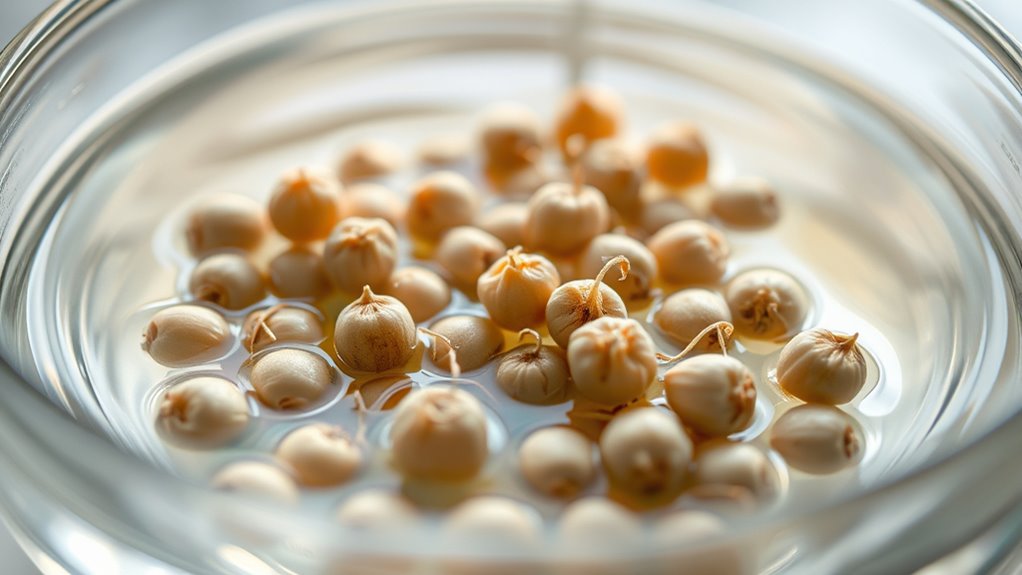
Have you ever wondered why some seeds sprout faster and stronger than others? The answer often lies in the process called seed germination, which begins with water absorption. When you pre-soak seeds before planting, you’re giving them a head start by jump-starting this natural process. Seeds are designed to remain dormant until conditions are just right, but soaking them in water helps initiate germination more quickly and uniformly. This simple step guarantees the seed’s tissues hydrate thoroughly, softening the seed coat and activating enzymes needed for growth. As a result, the seed’s internal structures become more accessible, reducing the time it takes to sprout once you plant them. Incorporating pre-soaking can also help optimize automation in gardening, making the process more efficient and consistent for growers.
Pre-soaking seeds jump-starts germination, softens seed coats, and promotes uniform sprouting for healthier plants.
Pre-soaking seeds is particularly beneficial for those with tough seed coats, like beans, peas, and certain flowers. These shells can act as barriers, delaying water entry and consequently slowing germination. When you soak these seeds, water penetrates more easily, breaking down the seed coat and allowing vital nutrients and enzymes to activate. This process increases the likelihood of uniform sprouting, which can be essential for maintaining consistent growth in your garden or farm. Additionally, soaked seeds often produce healthier seedlings because they start with a better foundation, having already absorbed water and begun metabolic processes necessary for growth.
Timing is important when pre-soaking seeds. Generally, 8 to 24 hours is sufficient for most types, but you should always check the specific recommendations for your seed variety. Soaking seeds too long can lead to issues like rotting or fungal growth, especially if you leave them in water for extended periods. To prevent this, use clean, room-temperature water and keep the seeds in a cool, shaded place. After soaking, drain excess water and plant the seeds promptly to prevent them from suffocating or rotting. This practice guarantees you maximize the benefits of water absorption without risking damage.
Pre-soaking seeds also helps conserve water once you plant them. Since they’ve already absorbed a significant amount of moisture, they’ll need less watering initially. This not only saves water but also provides a more consistent environment for germination. It’s like giving your seeds a jump-start so they can focus their energy on growing roots and shoots instead of struggling to hydrate. Whether you’re starting seeds indoors or outdoors, this simple step can boost germination rates and lead to healthier, more vigorous plants. So, next time you’re preparing your garden, consider pre-soaking your seeds to unveil their full potential right from the start.

Burpee SuperSeed 36-Cell Reusable Seed Starting Tray for Indoor Seedlings
- Easy Seed Starting: 36 flexible pop-out cells for simple planting
- Labeled Rows: Alphanumeric labels and Plant-o-Gram guide
- Optimized Drainage: Corner slots improve water flow and aeration
As an affiliate, we earn on qualifying purchases.
As an affiliate, we earn on qualifying purchases.
Frequently Asked Questions
Does Pre-Soaking Work for All Seed Types?
Pre-soaking doesn’t work for all seed types, as seed coat permeability varies. Some seeds, like beans, benefit from soaking because it softens their coats and speeds up germination. However, delicate seeds or those with fragile coats might rot or be damaged by soaking. You should consider the specific seed’s needs, as pre-soaking can enhance germination speed for some but harm others.
How Long Should Seeds Be Pre-Soaked?
Think of pre-soaking seeds like giving them a warm-up before a race. You should soak most seeds for 12 to 24 hours, which helps with seed coat softening and speeds up germination. Keep the water lukewarm, and avoid soaking too long, as it can cause rot. Check the seeds often, and drain them if they swell or get slimy. This simple step boosts your chances of healthy, quick sprouting.
Can Pre-Soaking Damage Delicate Seeds?
Pre-soaking delicate seeds can sometimes cause seed coat cracking, which might damage the seed and hinder germination. If you soak them too long or in too hot water, you risk slowing down germination speed or even harming the seed’s internal structure. To avoid this, keep the soaking period short, use cool water, and handle the seeds gently. Properly done, pre-soaking benefits delicate seeds without causing damage.
Is Pre-Soaking Necessary for Organic Gardening?
Pre-soaking isn’t strictly necessary for organic gardening, but it can substantially benefit your seeds. It softens the seed coat, which helps with seed coat softening, and can boost germination speed. By pre-soaking, you give your seeds a head start, especially for hard or large seeds. This simple step can lead to quicker sprouting and healthier plants, making your organic garden more successful with less effort.
What Are Common Mistakes to Avoid When Pre-Soaking Seeds?
When pre-soaking seeds, avoid common mistakes like leaving them in water too long, which can cause seed coat cracking or mold development. Don’t use overly hot water, as it can damage seeds. Make sure to drain excess moisture and keep seeds in a clean, humid environment. Additionally, skipping rinsing after soaking can promote mold. Monitoring soaking time helps prevent these issues and guarantees healthy germination.

Halatool 4 Pack Seed Starter Tray with 50 PCS Peat Pellets, 48 Cells Black Seeding Starter Trays for Organic Seed Starter Soil Pods for Planting Vegetables Plants Flowers – Starting Seeds Kit
- Complete Seed Starting Kit: Includes trays, lids, and peat pellets
- Value Pack for Easy Planting: 4 base trays, seed trays, lids, and 50 pellets
- Durable and Reusable Material: Thick plastic trays, eco-friendly peat pellets
As an affiliate, we earn on qualifying purchases.
As an affiliate, we earn on qualifying purchases.
Conclusion
Pre-soaking your seeds can gently encourage their journey to sprout, offering a subtle nudge in the right direction. While it’s not a magic fix, it’s a tender touch that can make a difference. Sometimes, a little patience and care go a long way, gently guiding your plants toward success. Trust the process, and with a bit of nurturing, you’ll find that nature’s timing often works best when given a gentle start.

QTFOUND Seed Storage Organizer Box 60 Slots, with 20 Envelopes and Small Tool, Sturdy Seeds Saving Seed Bank Container Kit (Seeds not Included)
- Complete Seed Storage Kit: Includes storage bag, bottles, envelopes, tools, and labels
- Moisture and Light Protection: Prevents moisture and light exposure for seed safety
- Secure Bottle Storage: Bottles firmly embedded to prevent collisions
As an affiliate, we earn on qualifying purchases.
As an affiliate, we earn on qualifying purchases.

Bonviee Seed Starter Trays with 12-LED Grow Lights, Clear, 5 Pack
- Full Spectrum LED Grow Light: Replicates natural sunlight for all growth stages
- Adjustable Humidity Domes: Provides versatile growing environment for various plants
- Raised Lid for Space: Allows for larger plants and extended seedling growth
As an affiliate, we earn on qualifying purchases.
As an affiliate, we earn on qualifying purchases.