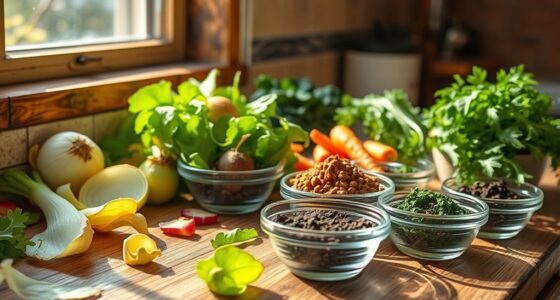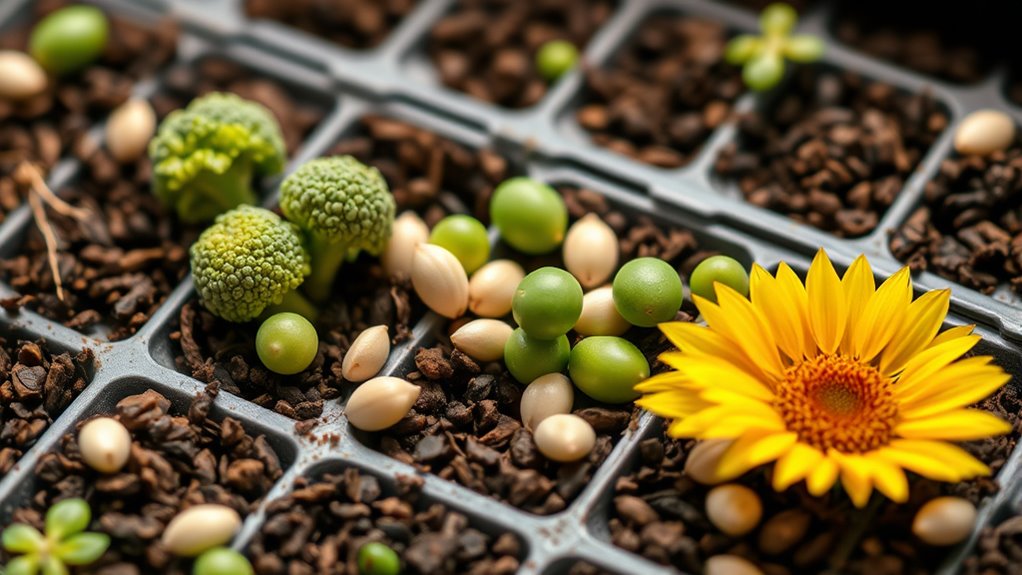
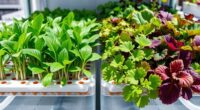
When selecting seeds for broccoli, radish, pea shoots, and sunflower microgreens, focus on high-quality, fresh seeds from reputable sources. Check germination rates, opt for organic or non-GMO options, and choose varieties suited to microgreen growing. Proper storage and handling can boost viability, ensuring healthy sprouting and robust growth. Using healthy, viable seeds sets a strong foundation for your microgreen crop—continue exploring to discover tips for selecting the best seeds for your setup.
Key Takeaways
- Choose high-quality, fresh seeds from reputable suppliers to ensure better germination and healthy microgreens.
- Select seed varieties suited for microgreens, considering germination time and growth habits.
- Opt for organic or non-GMO seeds for improved safety, flavor, and nutritional value.
- Check seed packaging dates and storage instructions to maintain seed viability over time.
- Consider seed diversity, including heirloom or specialty varieties, to enhance microgreen flavors and nutrition.

Choosing the right seeds is the first step to growing healthy and flavorful microgreens. When selecting seeds, it’s essential to consider seed viability, which measures how likely a seed is to germinate successfully. High seed viability ensures your microgreens will sprout evenly and grow robustly, saving you time and resources. You want to look for fresh seeds from reputable sources because older or poorly stored seeds tend to have lower viability, which can lead to uneven germination and disappointing yields. Seed sourcing options are plentiful—you can buy from local garden centers, specialty seed stores, or trusted online suppliers. Opting for organic or non-GMO seeds can also make a difference in the quality and safety of your microgreens.
Choose high-quality, viable seeds from trusted sources for healthy, flavorful microgreens.
Your choice of seed source impacts not just viability but also the purity and overall health of your microgreens. Reputable vendors often test their seeds for germination rates and certify they’re free from pests and diseases. When shopping, pay attention to packaging dates and storage recommendations, as these influence seed freshness and viability. Many seed suppliers offer specific varieties meant for microgreens, which are generally smaller, with concentrated flavor and nutrients. This specialization increases your chances of successful growth, especially if you’re new to microgreen cultivation.
Beyond viability and sourcing, you should also consider the variety of seeds you want to grow—broccoli, radish, pea shoots, or sunflower. Each of these has different germination times and growth habits, but all require healthy, viable seeds to perform well. Once you’ve selected high-quality seeds, it’s vital to prepare them properly, such as soaking or scarifying if needed, to enhance germination rates. Proper seed handling and storage at home—cool, dry, and dark—help maintain seed viability over time, so your future microgreens continue to flourish. Additionally, understanding the energetic properties of seeds can influence your selection process to align with your manifestation goals.
In addition, some seed sourcing options allow you to buy in bulk, which is cost-effective if you plan on growing microgreens regularly. Buying from local organic farms or seed exchanges can also provide access to heirloom or rare varieties, adding diversity to your microgreens. Remember, investing in good seeds is the foundation of a successful microgreen crop. When you prioritize seed viability by choosing reputable sources and handling your seeds carefully, you set yourself up for a plentiful, flavorful harvest that’s both nutritious and satisfying to grow.
Frequently Asked Questions
How Long Does It Take for Microgreens to Reach Harvest Size?
Typically, microgreens reach harvest size in 7 to 21 days, depending on the seed type and growing conditions. You should monitor their growth timeline closely, ensuring they develop vibrant color and healthy stems before harvesting. Use harvesting tips like snipping just above the soil line and harvesting in the morning for the freshest taste. Stay attentive to growth cues, and you’ll enjoy crisp, nutritious microgreens in no time.
What Are the Best Soil Types for Microgreen Seed Germination?
Think of your microgreen seeds as tiny explorers needing the perfect terrain. You should use a well-draining soil composition like a seed-starting mix or light potting soil. Prepare the seed bed by loosening the soil and ensuring it’s evenly moist. This creates a nurturing environment, helping seeds germinate quickly and uniformly. Avoid heavy soils, which can hinder growth, and always keep the soil moist for ideal results.
How Should I Store Seeds to Maintain Their Freshness?
To maintain seed freshness and extend shelf life, store your seeds in an airtight container in a cool, dark, and dry place. Keep them away from humidity, heat, and direct sunlight, which can reduce germination rates. Proper seed storage helps preserve viability, ensuring your microgreens sprout reliably over time. Check stored seeds periodically and use the oldest ones first to maximize freshness and germination success.
Can Seeds Be Reused From Previous Harvests?
In the age of the internet, you can definitely reuse seeds from previous harvests. Just keep in mind that seed viability decreases over time, so test a small batch first. Reusing seeds can save money and preserve your favorite varieties. Store them properly in a cool, dry place, and always check for germination before planting again. If they sprout well, you’re good to go with your next microgreen crop.
Are Organic Seeds More Nutritious Than Non-Organic Seeds?
Organic seeds aren’t necessarily more nutritious than non-organic seeds, but they often have higher seed nutrient content due to organic farming practices. When you choose seeds with organic certification, you can be confident they’re grown without synthetic chemicals, which might impact nutrient levels. While nutrition isn’t the only factor, organic seeds can support healthier microgreens, giving you a more nutrient-rich harvest and peace of mind about their quality.
Conclusion
So, now that you’ve got your seeds for broccoli, radish, pea shoots, and sunflower, you might think you’re all set. Ironically, the real challenge is resisting the urge to harvest them too soon—just when they’re barely sprouting! Patience isn’t your enemy here; it’s your secret weapon. After all, the tiniest microgreens can pack the biggest flavor, proving that good things truly come in small, sometimes impatient, packages.