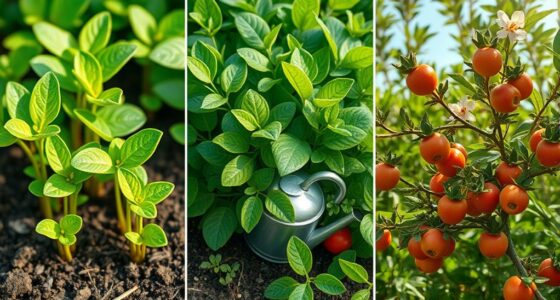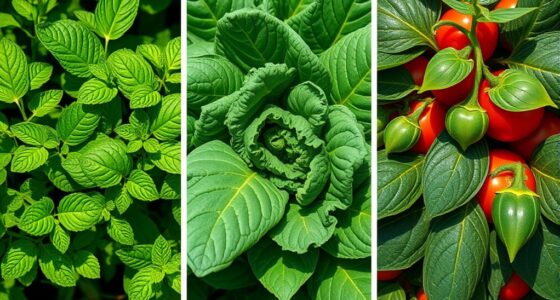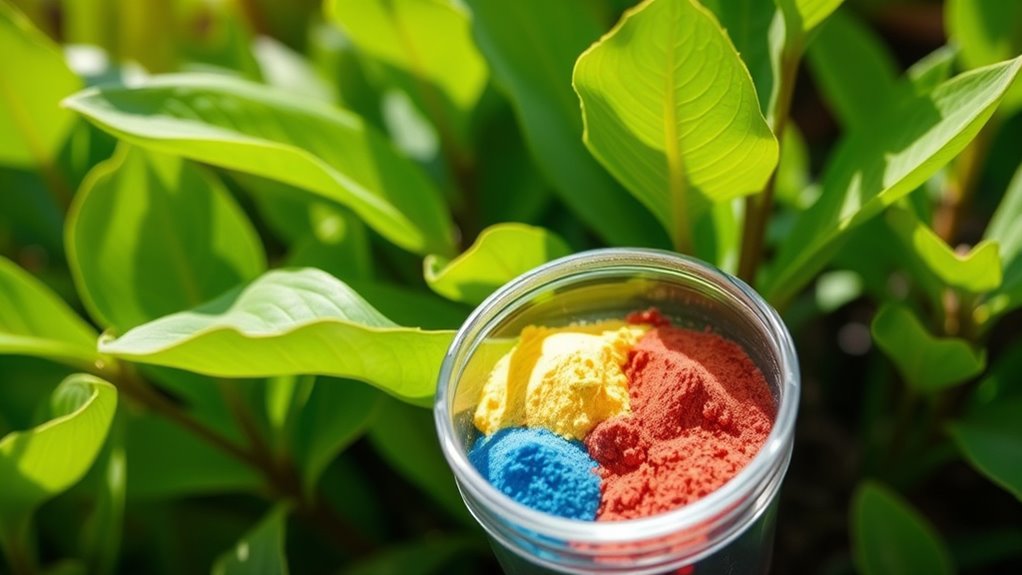
To achieve lush, healthy growth, focus on balancing NPK ratios suited to your plants’ needs. A common starting point is a 10-10-10 fertilizer for general purposes, but for leafy growth, higher nitrogen works best, while flowering plants benefit from increased phosphorus and potassium. Proper timing, soil health, and monitoring are key to maximizing results. Keep exploring these tips, and you’ll discover how to optimize your nutrient strategy for vibrant plants.
Key Takeaways
- NPK ratios indicate the proportion of nitrogen, phosphorus, and potassium in fertilizers, crucial for targeted plant growth.
- Balanced fertilizers like 10-10-10 support general development, while specific ratios promote flowering or root growth.
- High nitrogen ratios encourage leafy, vegetative growth; elevated phosphorus and potassium enhance flowering and fruiting.
- Understanding soil needs and plant stage helps select appropriate NPK ratios for optimal results.
- Proper nutrient ratios prevent deficiencies and overfeeding, ensuring lush, healthy plant growth.
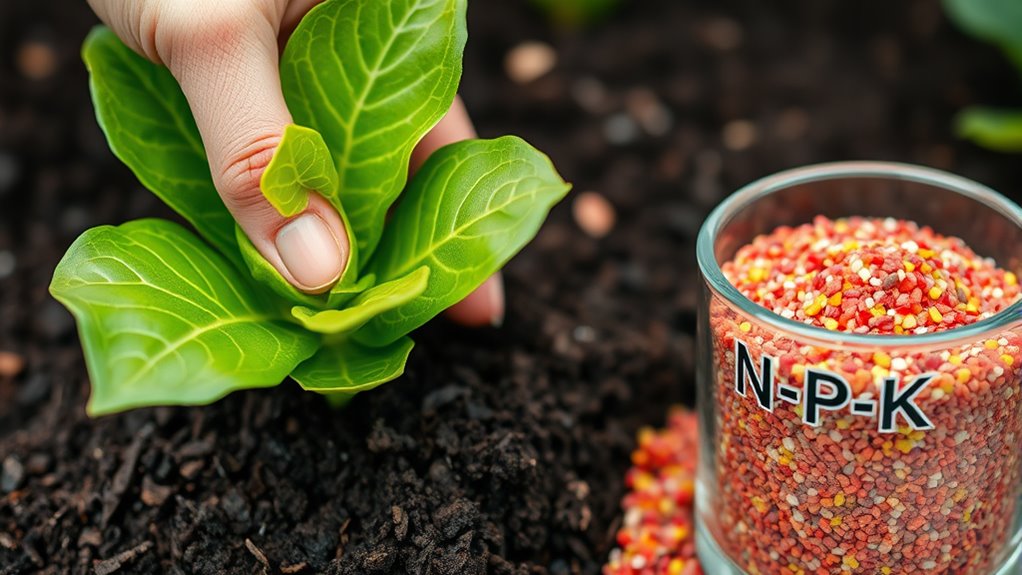
Ever wondered what makes plants grow lush and healthy? The secret often lies in understanding the right balance of nutrients, especially when it comes to the NPK formula—nitrogen (N), phosphorus (P), and potassium (K). These three elements are fundamental to plant development, and getting their ratios right can considerably boost your gardening success. To maximize nutrient uptake, you need to consider soil amendments and proper fertilizer scheduling. When you add soil amendments, you’re improving soil quality, making nutrients more available to your plants. Compost, manure, and other organic amendments can enhance soil structure and supply essential nutrients, ensuring your plants have a solid foundation for growth. Once your soil is well-prepared, you can tailor your fertilizer schedule to match your plants’ needs, applying the right amount at the right time to avoid deficiencies or overfeeding.
Understanding the NPK ratios helps you decide what type of fertilizer to use and when. For example, a balanced fertilizer with equal parts N, P, and K (such as a 10-10-10) works well for general purposes, providing a steady supply of all three nutrients. However, if your plants need vigorous leafy growth, a fertilizer with higher nitrogen content can promote lush foliage. Conversely, if you’re aiming for robust flowering or fruiting, a fertilizer with increased phosphorus and potassium will support those processes. The trick is to observe your plants and adjust your fertilization schedule accordingly. Applying fertilizer too often or in excess can lead to nutrient runoff and environmental issues, while underfeeding can result in weak, spindly growth.
Timing is vital when it comes to fertilizer scheduling. Usually, applying fertilizer when plants are actively growing is most effective—early spring and during peak growth periods. You should also consider soil testing to determine existing nutrient levels and avoid unnecessary or harmful overapplication. Incorporating soil amendments before planting or during the growing season allows you to create ideal conditions, ensuring nutrients are readily available. As your plants grow, monitor their health and adjust your fertilizer schedule to maintain the right NPK balance. By paying attention to soil amendments and carefully planning your fertilization routine, you’re providing your plants with the essential nutrients needed for vibrant, lush growth. When you master this balance, you’ll notice healthier plants, improved yields, and a more thriving garden overall.

10-10-10 Plant Fertilizer Slow Release – 10 10 10 All Purpose Granular Garden Fertilizer for Vegetables, Tomato, Arborvitae, Shrubs, Rose, Flowers, Fruit, Fig Trees (1/2 Quart)
- Balanced Nutrient Composition: 10-10-10 formula for all plants
- Slow-Release Formula: Provides up to 8 weeks of nutrition
- Suitable for Indoor and Outdoor: Ideal for gardens, lawns, and potted plants
As an affiliate, we earn on qualifying purchases.
As an affiliate, we earn on qualifying purchases.
Frequently Asked Questions
How Do I Determine the Right NPK Ratio for My Specific Plants?
To determine the right NPK ratio for your plants, start by soil testing to understand its nutrient levels. Consider your plant species, as some need more nitrogen for leafy growth, while others thrive with higher phosphorus for flowering. Adjust your fertilizer accordingly, aiming for a balanced NPK ratio that meets your plant’s specific needs. Regular testing and observation help you refine your approach for ideal growth.
Can NPK Ratios Be Adjusted During Different Growth Stages?
Think of adjusting NPK ratios like tuning a musical instrument for the perfect sound. Yes, you can modify these ratios during different growth stages. The key is understanding the adjustment timing to match your plant’s needs, ensuring ideal nutrient balance. As your plants grow, their requirements change, so fine-tuning the ratios helps promote healthy development and prevents deficiencies or excesses at each stage.
Are Organic Fertilizers Compatible With Standard NPK Formulas?
You might wonder if organic fertilizers are compatible with standard NPK formulas. Organic compatibility varies, but many organic fertilizers can work alongside or enhance NPK ratios, promoting nutrient synergy. You should consider how organic inputs complement the chemical nutrients, ensuring balanced absorption. When combined thoughtfully, organic fertilizers support healthy growth without disrupting nutrient ratios, offering a sustainable approach that benefits both plant health and the environment.
How Does Soil Ph Influence Nutrient Uptake From NPK Fertilizers?
Soil pH greatly impacts how you absorb nutrients from NPK fertilizers. If your soil’s acidity is too high or too low, it affects nutrient solubility, making it harder for your plants to take up essential elements. In acidic soils, some nutrients become less available, while in alkaline soils, others may leach away. Adjusting soil pH guarantees ideal nutrient uptake, promoting healthier, more vigorous growth.
What Are Signs of Over-Fertilizing With NPK Ratios?
Did you know over-fertilizing can damage 50% of plants annually? You might notice leaf burn, yellowing, or stunted growth, signaling nutrient overload. Excess NPK can lead to salt buildup, harming root absorption, and may cause foliar feeding issues, where leaves get burned instead of absorbing nutrients properly. Keep an eye on these signs to prevent over-fertilizing and make certain your plants stay healthy and vibrant.

Farmer’s Secret Soil Revitalizer – Organic (OMRI Listed) Dirt Health Booster – Liquid Compost Soil Amendment – Activated Humic Acid (32oz)
- Soil microbial stimulation: Boosts microbial activity in soil
- Monthly application recommended: Apply monthly during growing season
- Organic and chemical-free: Contains OMRI-listed organic humic acids
As an affiliate, we earn on qualifying purchases.
As an affiliate, we earn on qualifying purchases.
Conclusion
So, next time you’re tempted to ignore those perfect nutrient ratios, remember—your plants might just be silently judging you for your neglect. After all, who knew that a simple NPK formula could make or break your lush growth? So, go ahead, trust the science, and watch your plants thrive. Ironically, a little know-how goes a long way—because sometimes, all it takes is the right ratio to turn your garden into a paradise.

Miracle-Gro 1-Pound 1360011 Water Soluble Bloom Booster Flower Food, 10-52-10, 1 Pack
- Suitable for all blooming plants: For all blooming plants
- Instant nutrient boost: Instantly feeds for beautiful results
- Biweekly feeding schedule: Feed every 2 weeks
As an affiliate, we earn on qualifying purchases.
As an affiliate, we earn on qualifying purchases.

FoxFarm Grow Big Liquid Plant Food – 6-4-4 House Plant Fertilizer for Lush Vegetative Growth, Fast Nutrient Uptake for Roses, Tomatoes & Veggies – Quart Size Concentrate
- Promotes Plant Growth: Supports lush vegetative development
- Fast Nutrient Absorption: Ensures quick uptake of nutrients
- Versatile for Many Plants: Suitable for roses, tomatoes, and vegetables
As an affiliate, we earn on qualifying purchases.
As an affiliate, we earn on qualifying purchases.