Turn your kitchen scraps into nutrient boosters by composting or fermenting them. Mix fruit peels, coffee grounds, and vegetable scraps with brown materials like shredded paper or dried leaves to create rich compost. Alternatively, try Bokashi fermentation to quickly produce a nutrient-dense liquid fertilizer. These methods boost soil health and plant growth naturally. Keep moisture levels balanced and guarantee good aeration, and you’ll unlock powerful plant nutrients—discover more ways to maximize your scraps for vibrant garden success.
Key Takeaways
- Collect and balance kitchen scraps with greens (nitrogen) and browns (carbon) for optimal compost nutrient content.
- Use composting methods like vermicomposting or Bokashi to quickly produce nutrient-rich soil and liquids.
- Add garden soil or compost starter to introduce beneficial microbes that enhance nutrient breakdown.
- Create compost tea by soaking kitchen scraps in water, then dilute to boost plant nutrient uptake.
- Regularly turn and maintain moisture levels to accelerate decomposition and maximize nutrient availability.
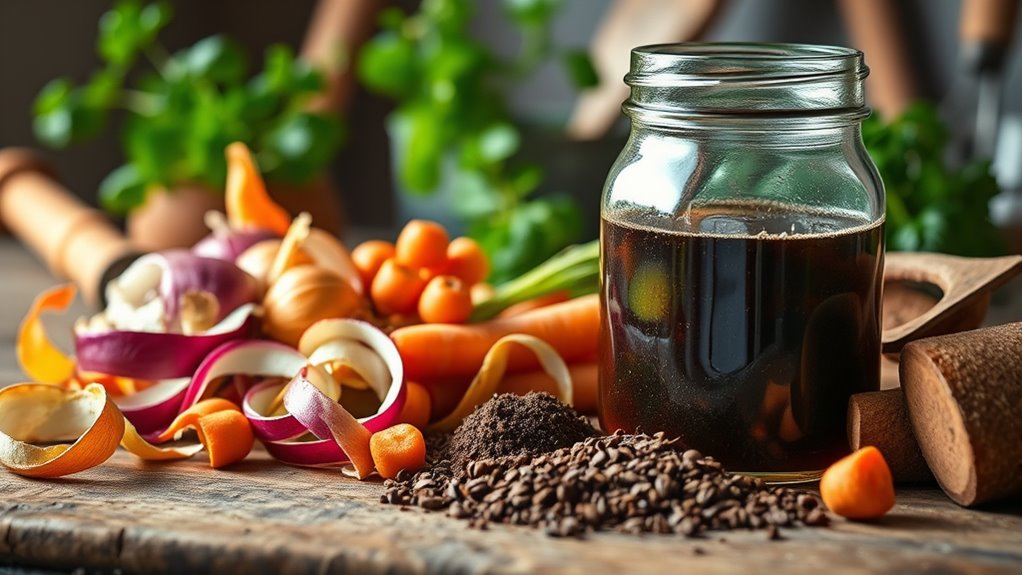
Turning your kitchen scraps into nutrient boosters is a simple and eco-friendly way to enhance your garden’s health. The key is understanding different composting methods and how to create effective kitchen scrap recipes that maximize nutrient extraction. No matter your space or time constraints, there’s a composting approach suited for you. Traditional composting involves layering kitchen scraps like vegetable peels, coffee grounds, and eggshells with yard waste, turning it regularly to aerate. If you prefer a faster method, vermicomposting uses worms to break down food waste efficiently, producing rich, fertile soil in a matter of weeks. Bokashi composting is another option that ferments kitchen scraps in an airtight container, requiring less space and maintenance while producing a nutrient-dense liquid fertilizer you can dilute and use directly on plants.
When creating kitchen scrap recipes for composting, focus on balancing greens and browns. Greens include fresh food scraps like fruit peels, coffee grounds, and grass clippings, which are rich in nitrogen. Browns are dry materials such as shredded paper, cardboard, or dried leaves, providing carbon. Combining these in the right ratio ensures rapid, healthy decomposition. For example, a simple recipe might involve layering vegetable scraps with shredded newspaper, then adding a sprinkle of garden soil or compost starter to introduce beneficial microbes. Remember to keep your compost moist but not waterlogged; this encourages microbial activity without creating odors. Incorporating composting methods like vermicomposting or Bokashi can further speed up the process and improve nutrient quality.
You can also experiment with kitchen scrap recipes designed to produce compost tea, a potent liquid fertilizer. Soak vegetable peels, coffee grounds, and herbs in water for a day or two, then strain the liquid and dilute it before watering your plants. This quick infusion supplies nutrients directly to roots, promoting vigorous growth. Additionally, some gardeners DIY compost bin recipes by combining kitchen scraps with coconut coir or straw, creating a balanced environment that accelerates decomposition.

WZQH Leather Work Gloves for Men or Women.Gardening,Welding,Coffee-grey L
- Material and Design: 100% split cowhide leather with soft cotton lining
- Protection Features: High abrasion, puncture, cut, and heat resistance
- Reinforced Palm: Extra protection for hands during heavy work
As an affiliate, we earn on qualifying purchases.
Frequently Asked Questions
Can I Use Scraps From Cooked Foods for Composting?
You can use scraps from cooked foods for composting, but you should do so carefully. Cooked food scraps can attract pests, so chop them into small pieces and bury them deep in your compost pile. Follow composting tips like balancing green and brown materials, maintaining moisture, and turning the compost regularly. This helps break down cooked food efficiently, turning your kitchen scraps into valuable nutrients for your garden.
How Long Does It Take for Scraps to Become Nutrient-Rich Compost?
You’re wondering about composting timelines and nutrient development. Typically, kitchen scraps turn into nutrient-rich compost in about 3 to 6 months, depending on factors like temperature, moisture, and aeration. To speed up the process, chop scraps into smaller pieces, maintain proper moisture, and turn the pile regularly. Patience is key, as well-decomposed compost will have a dark, crumbly texture and earthy smell, indicating it’s ready for your garden.
Are There Kitchen Scraps That Shouldn’t Be Composted?
Imagine you’re a pioneer in food waste reduction, steering through composting myths. Not all kitchen scraps should go in your compost bin. Avoid meat, dairy, oily foods, and pet waste, as they can attract pests or cause odors. Bones and processed foods also don’t decompose well. Stick to vegetable peels, coffee grounds, and eggshells for safe, effective composting. This keeps your effort eco-friendly and efficient, ensuring nutrient-rich soil for your garden.
What Is the Best Storage Method for Kitchen Scraps Before Composting?
To store kitchen scraps before composting, you should use an airtight container to prevent odors and pests. Keep the container in your freezer storage to slow down decomposition and maintain freshness. This method makes it easy to collect scraps over time without mess or smell, ensuring your kitchen remains clean and odor-free until you’re ready to compost. Just remember to empty and clean the container regularly for best results.
Can I Add Scraps Directly to My Garden Soil Without Composting?
You can add kitchen scraps directly to your garden soil as organic soil amendments, but it’s best to do so carefully. Incorporate small amounts to prevent pests and odor, and cover scraps with soil. While this method offers quick nutrients, composting benefits include better nutrient stability and reduced risk of disease. For ideal results, consider composting scraps first, which enhances soil health more effectively than direct addition.

Dr. Earth Organic 5 Tomato, Vegetable & Herb Fertilizer Poly Bag
- Enhances vegetable flavor and nutrition: For more nutritious and tasty vegetables
- Balanced plant nutrients: Optimum levels of primary plant nutrients
- Non-GMO and natural ingredients: Contains no GMOs, chicken manure or sewage sludge
As an affiliate, we earn on qualifying purchases.
Conclusion
By turning your kitchen scraps into nutrient boosters, you not only cut waste but also give your garden a natural boost. Some believe composting can even reduce the need for chemical fertilizers, making it a sustainable choice. While research supports compost’s benefits, it’s best to mix it with other organic matter for ideal results. So go ahead—start composting today and see how simple scraps can transform into rich, healthy soil for your plants.

Down To Earth All Natural Fertilizers Organic Vegetable Garden - 5 lb
- Eco-Friendly and Safe: Non-toxic for beneficial insects and pets
- Versatile Garden Use: Suitable for various vegetables, easy to apply
- Slow-Release Nutrients: Provides gradual, long-lasting plant support
As an affiliate, we earn on qualifying purchases.

Farmer’s Secret Fruit & Bloom Booster Fertilizer - Super Concentrated - Boosts Flowering and Yield on All Varieties of Fruits, Vegetables and Flowers - Formulated for Late Summer & Early Fall (16oz)
- Enhances fruit and bloom production: Boosts flowering and yield
- Suitable for all flowering and fruiting plants: Works on citrus, roses, vegetables, and more
- Highly concentrated formula: Dilute 1 tsp per 2 gallons
As an affiliate, we earn on qualifying purchases.