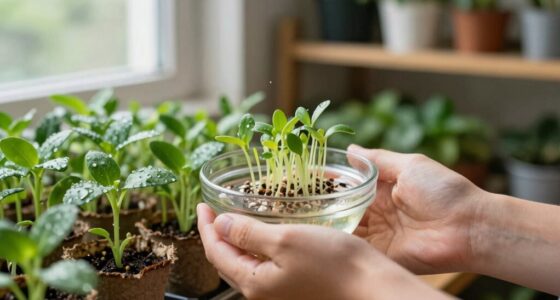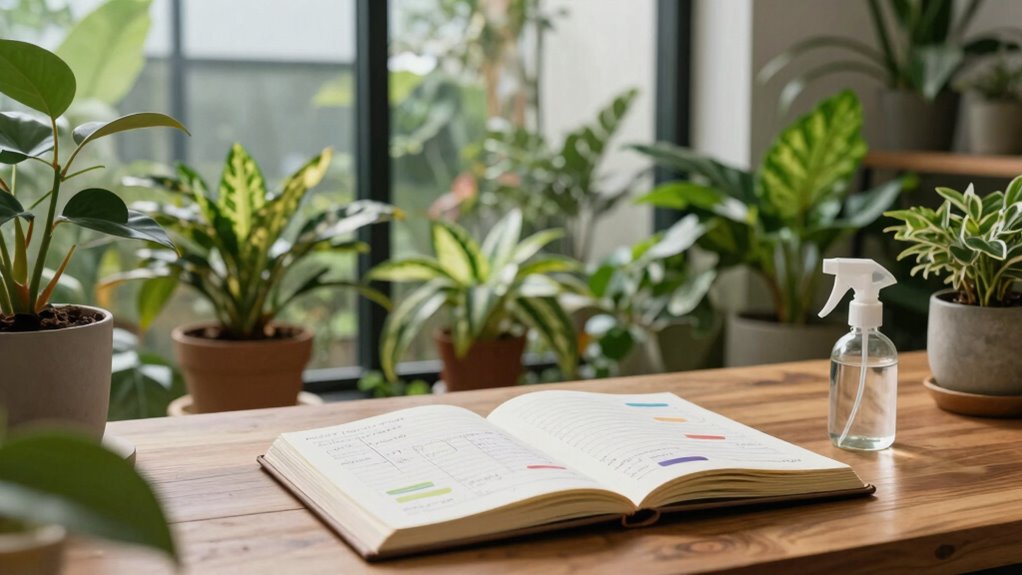

Creating an indoor garden nutrient journal makes caring for your plants easier and more effective. It helps you track nutrient intake, soil conditions, and plant health, so you can spot and fix issues early. Keeping detailed records means no more guesswork, leading to healthier, more vibrant plants. With consistent notes on soil testing, fertilization, and environmental factors, you’ll develop a reliable routine. If you want to learn how to set up your perfect journal, keep exploring these helpful tips.

Get garden gear delivered free with Prime
- Fast, free delivery on millions of items
- Prime Video, Amazon Music and more included
- Member-only deals all year
Key Takeaways
- Provides a structured way to track nutrient levels, plant health, and soil test results over time.
- Helps identify patterns and deficiencies early for timely corrective measures.
- Simplifies recording environmental factors, ensuring comprehensive garden management.
- Enhances consistency, making plant care more scientific and less guesswork.
- Builds confidence with organized data, leading to healthier, more vibrant indoor plants.
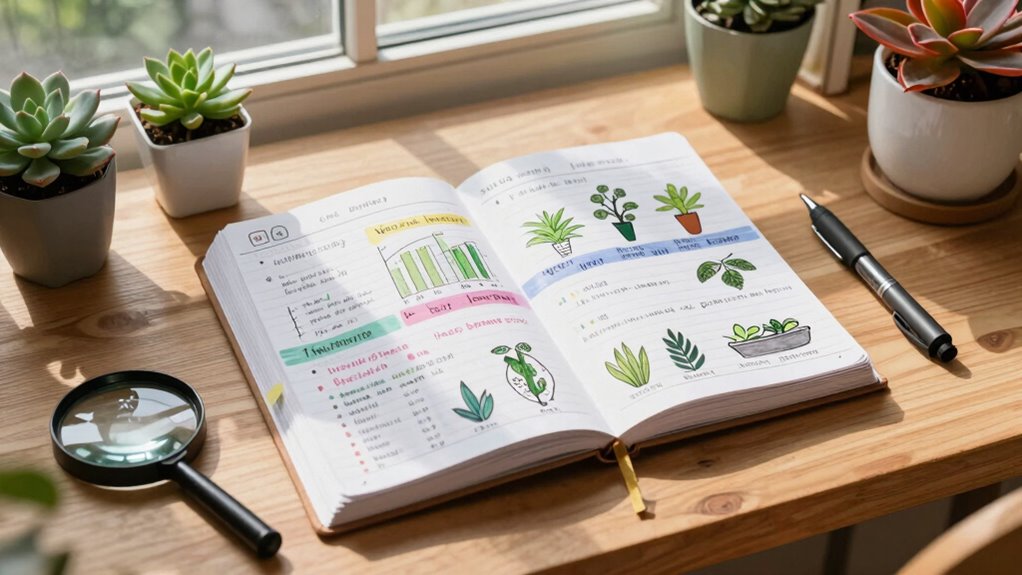
Keeping track of your indoor garden’s nutrient intake is essential for healthy, thriving plants. When you monitor what your plants receive, you’re giving them the best chance to grow robust and vibrant. A well-maintained nutrient journal helps you spot deficiencies early, adjust feeding routines, and ultimately improve plant health. Instead of relying solely on guesswork, you can base your decisions on concrete data, making your gardening efforts more effective and less stressful.
One of the most valuable tools in your garden journal is soil testing. Regular soil tests reveal the actual nutrient levels and pH balance in your soil or growing medium. This information is vital because it eliminates guesswork about what your plants need. You might notice your plants aren’t growing as expected, but soil testing pinpoints whether the problem is nutrient deficiency, pH imbalance, or something else. Armed with this knowledge, you can tailor your fertilization and soil amendments, ensuring your plants receive exactly what they need to flourish. Incorporating soil testing as part of your routine provides crucial insights into your garden’s health.
Soil testing reveals nutrient levels and pH, guiding precise fertilization for healthier, thriving plants.
Tracking plant health alongside soil testing results makes your journal even more powerful. As you record observations, such as leaf color, growth rate, and overall vigor, you begin to see patterns emerge. For example, if your plants show signs of yellowing leaves, checking the soil test results can confirm whether a nitrogen deficiency is causing the issue. This integrated approach helps you connect plant symptoms with soil conditions, allowing for more precise interventions. Observing these patterns over time can also help you develop a customized fertilization schedule tailored to your garden’s unique needs. Additionally, understanding the nutrient cycle can help you anticipate future deficiencies and adjust your practices accordingly.
Your nutrient journal should be straightforward and consistent. Note the date of each entry, the types of nutrients or fertilizers used, and any soil test results. Record environmental factors like light, humidity, and temperature, as these also influence plant health. When you review your journal regularly, you’ll notice trends—such as improvements after adding specific nutrients or setbacks following certain changes. This ongoing documentation transforms trial-and-error into a science, making your indoor gardening more predictable and satisfying.
Finally, developing a habit of soil testing and journaling early on saves you time and resources. It prevents over-fertilizing or underfeeding, both of which can harm your plants. Regularly assessing soil health and keeping detailed records help you optimize your feeding routines and prevent common issues. With a detailed record, you’ll gain confidence in your ability to care for your indoor garden, knowing exactly what adjustments to make at each stage. This proactive approach keeps your plants healthy, your soil balanced, and your gardening experience enjoyable. Starting a nutrient journal now might seem like extra effort, but it’s an investment that pays dividends in healthier, more resilient plants.
As an affiliate, we earn on qualifying purchases.
Frequently Asked Questions
Can I Customize the Template for Different Plant Types?
Yes, you can customize the template for different plant types. It’s designed with plant-specific tracking in mind, so you can easily tailor sections to suit each plant’s needs. The customization options allow you to adjust nutrient schedules, watering routines, and growth stages for various plants. This flexibility helps you stay organized, monitor progress accurately, and guarantee each plant receives the right care tailored to its unique requirements.
How Often Should I Update My Nutrient Journal?
Research suggests that regular nutrient tracking enhances plant health, so update your journal weekly or after every feeding. This frequency helps you spot deficiencies or excesses early, ensuring peak growth conditions. Consistent updates allow you to adjust nutrient levels precisely, preventing issues like nutrient burn or deficiencies. By maintaining a steady record, you’re actively supporting your plants’ health and growth, making your indoor garden more successful and resilient over time.
Is the Template Suitable for Hydroponic Systems?
Yes, the template is suitable for hydroponic systems because it allows you to track water pH and nutrient levels, which are essential in hydroponics. You can customize sections to monitor soil compatibility if you’re growing in different mediums. Regularly updating the journal helps you maintain ideal water pH and nutrient balance, ensuring healthy plant growth and preventing issues common in hydroponic setups.
What Tools Are Needed to Use the Journal Effectively?
To use the journal effectively, you’ll need a pH meter to monitor pH balance and a reliable way to record fertilizer ratios. Keep a pen or digital device handy for logging data daily. Consistently checking pH levels guarantees ideal nutrient absorption, while tracking fertilizer ratios helps you adjust feeding schedules. These tools help you maintain a healthy indoor garden, maximizing growth and yield with accurate, real-time insights.
Can I Access the Template on Mobile Devices?
You can absolutely access the template on mobile devices, and it’s as seamless as scrolling through your favorite app! With mobile access, you can update your nutrient journal anytime, anywhere. The template is compatible across various platforms, ensuring you don’t miss a beat in your indoor gardening journey. Whether you’re at home or on the go, staying organized has never been easier—your indoor garden’s success depends on it!
As an affiliate, we earn on qualifying purchases.
Conclusion
With this nutrient journal template in your hands, your indoor garden becomes a thriving symphony of growth, each plant dancing to the rhythm of your care. Think of it as your secret map, guiding your green friends to flourish brighter and stronger. Start today, and watch as your garden blossoms into a lush oasis. Remember, every great gardener needs a trusty journal—your garden’s compass to endless energy and vibrant life.
As an affiliate, we earn on qualifying purchases.
As an affiliate, we earn on qualifying purchases.
Fall Picks
fall essentials
As an affiliate, we earn on qualifying purchases.