The best fruit trees for small spaces are compact live plants that suit your light, climate, and growing setup. My best overall pick is the Little Miss Figgy Dwarf Fig Tree for its naturally compact habit, while the Meyer Lemon Tree is a strong choice for sunny indoor growing and the Dwarf Fruit Tree Starter Kit offers several kinds of fruit in one package. The main tradeoffs are whether to start with a live plant or seeds, how much room and sunlight you can provide, and whether you can meet each tree’s pollination and climate needs. Seeds may offer variety but take more patience and less predictable space planning than an established plant. Read on for the full breakdown, selection criteria, and guidance on matching a tree to your home or patio.

Get garden gear delivered free with Prime
- Fast, free delivery on millions of items
- Prime Video, Amazon Music and more included
- Member-only deals all year
Complete the kit


Key Takeaways
- Compact growth matters more than a small shipping size: Little Miss Figgy is a dwarf fig, while several other listings are seeds or young plants whose eventual size depends on variety and care.
- Live plants offer a clearer starting point: The Meyer lemon, Eureka lemon, starfruit, banana, and fig arrive as plants; the seed assortments require germination and a longer wait before their growth habits become clear.
- Indoor growing narrows the field: The two lemon options are the clearest candidates for a bright indoor setup, but neither removes the need for strong light and ongoing care.
- More seeds do not mean more usable trees: The 160-seed and 200-plus-seed assortments may suit experimentation, but they offer less certainty about which seedlings will fit a confined space.
- Plant count can compete with space: The nine-pack starter kit offers several fruit types, but buyers need room for multiple plants and should check the care needs of each before planting.
| 160 Mixed Dwarf Fruit Tree Seeds, 5 Varieties |  | Best Variety for Patient Container Gardeners | Seed count: 160 | Varieties: Lemon (40), orange (40), apple (40), cherry (20), blueberry (20) | Growing location: Indoor and outdoor | VIEW LATEST PRICE | See Our Full Breakdown |
| Meyer Lemon Tree, 13–22 Inches Tall, 1-Gallon Pot |  | Best Overall for a Sunny Small Space | Plant: Meyer lemon tree | Height: 13–22 inches | Pot size: 1 gallon | VIEW LATEST PRICE | See Our Full Breakdown |
| QEVJEKR Mixed Fruit Tree Seeds, 4 Varieties, 200+ Seeds |  | Best for Outdoor Seed-Starting | Seed quantity: 200+ | Seed varieties: Lemon, cherry, orange, and apple | Quantity per variety: 50+ seeds each | VIEW LATEST PRICE | See Our Full Breakdown |
| Live Starfruit (Carambola) Tree, 10–18 Inches |  | Best Live Tropical Specialty | Plant type: Live starfruit (carambola) tree | Height: 10–18 inches | Hardiness zones: 8–11 | VIEW LATEST PRICE | See Our Full Breakdown |
| Mixrug Dwarf Bonsai Fruit Tree Seeds, 5 Varieties, 180+ Seeds |  | Best for Indoor-or-Outdoor Seed Growing | Seed varieties: Apple, lemon, orange, blueberry, and cherry | Seed quantity: 180+ total | Variety counts: 40+ apple, 40+ lemon, 40+ orange, 20+ blueberry, 40+ cherry | VIEW LATEST PRICE | See Our Full Breakdown |
| Dwarf Fruit Tree Starter Kit, 9 Pack: Apple, Blueberry, and Blackberry |  | Best for Small-Space Variety | Plant count: 9 live plants | Varieties: Apple, blueberry, and blackberry; 3 of each | Plant type: Dwarf fruit plants | VIEW LATEST PRICE | See Our Full Breakdown |
| Grafted Eureka Lemon Tree Live Plant for Indoor or Outdoor Growing |  | Best for Indoor-Outdoor Flexibility | Variety: Eureka lemon | Plant type: Perennial citrus tree | Planting: Grafted | VIEW LATEST PRICE | See Our Full Breakdown |
| Truly Tiny Banana Tree Live Plant, 4–8 Inches |  | Best Tropical Accent for Warm Climates | Plant type: Banana tree | Height: 4–7 inches | USDA hardiness zones: 9–11 outdoors | VIEW LATEST PRICE | See Our Full Breakdown |
| Little Miss Figgy Dwarf Fig Tree Live Plant, 2.5-Inch Pot |  | Best Compact Fruit Tree | Botanical name: Ficus carica ‘Little Miss Figgy’ | Plant type: Live dwarf fruit tree | Pot size: 2.5 inches | VIEW LATEST PRICE | See Our Full Breakdown |
| fruit trees for small space | Sunlight | Growing location | Watering | Soil |
|---|---|---|---|---|
| 160 Mixed Dwarf Fruit Tree See | Full sun | Indoor and outdoor | Moderate | — |
| Meyer Lemon Tree | Full sun | Indoor and outdoor | Moderate | — |
| QEVJEKR Mixed Fruit Tree Seeds | Full sun | Outdoor | — | Loam |
| Live Starfruit | Partial sun | — | Moderate | Peat |
| Mixrug Dwarf Bonsai Fruit Tree | Full sun | Indoor or outdoor | Regular | Clay |
| Dwarf Fruit Tree Starter Kit | — | — | — | — |
| Grafted Eureka Lemon Tree Live | — | Indoor and outdoor | — | — |
| Truly Tiny Banana Tree Live Pl | — | — | — | Consistently moist, well-drained soil |
| Little Miss Figgy Dwarf Fig Tr | Full sun | — | Regularly during establishment; moderate once mature | Well-draining; loamy, sandy, or average garden soil |
More Details on Our Top Picks
160 Mixed Dwarf Fruit Tree Seeds, 5 Varieties
Five fruit types in one seed pack give small-space growers room to experiment without choosing a single tree upfront. The mix includes lemon, orange, apple, cherry, and blueberry seeds, with most of the count going to citrus and apple. Compared with the Meyer Lemon Tree, this is a lower-commitment way to try several crops, but seeds require germination and long-term growing before they can produce fruit. The indoor-and-outdoor listing suits a balcony or sunny window only if it receives full sun; limited light can undermine the compact-garden plan. Heirloom and GMO-free seed claims may appeal to seed-focused growers, while the different varieties will not necessarily share the same climate or care needs. I’d choose this pack for variety and patience, not for quick harvests or guaranteed dwarf growth.
Pros:- Includes five fruit varieties in one pack.
- Provides 40 lemon, 40 orange, 40 apple, 20 cherry, and 20 blueberry seeds.
- Listed for indoor or outdoor growing in pots, containers, or garden beds.
- Seeds are described as heirloom and GMO-free.
Cons:- Full sun and suitable growing conditions may be hard to provide in a shaded apartment.
- Seeds require germination and maturation, so fruit is not an immediate outcome.
- The listing does not establish that every variety will remain dwarf-sized or suit the same container conditions.
Best for: Small-space gardeners who want to start several fruit varieties from seed and have a bright, sunny growing area.
Not ideal for: Buyers seeking an established, reliably compact tree or fruit soon; these seeds need successful germination and extended growing time.
- Seed count:160
- Varieties:Lemon (40), orange (40), apple (40), cherry (20), blueberry (20)
- Growing location:Indoor and outdoor
- Sunlight:Full sun
- Watering:Moderate
- Seed features:Heirloom, GMO-free
- Item weight:13.61 g
Our verdict“Choose this pack if variety matters more than speed and you can give different seedlings the sunlight and care they need.”
Meyer Lemon Tree, 13–22 Inches Tall, 1-Gallon Pot
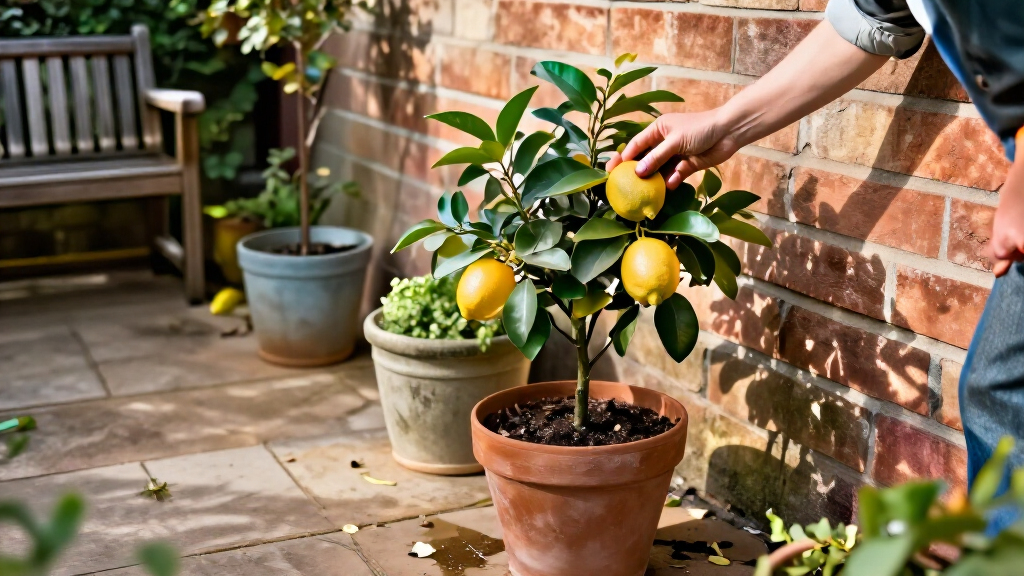
For a small-space buyer who wants an actual tree rather than a seed-starting project, this 13–22-inch Meyer lemon is the clearest fit in this group. It arrives in a 1-gallon pot and is listed for sunny indoor or outdoor growing, so it can suit a patio or a bright room where a larger tree would be awkward. Compared with the five-variety seed packs, it skips germination and offers a more direct path to a compact citrus plant; it is still young, and arrival with flowers or fruit depends on the season. The main constraint is light and climate: it needs full sun and winter protection outside its USDA Zones 9–11 range. Shipping exclusions also rule it out for buyers in several states. I rank it first for fit and immediacy, not for low-maintenance care.
Pros:- Arrives as a live, compact tree rather than seeds that must germinate.
- Supplied in a 1-gallon pot and listed at 13–22 inches tall.
- Can grow indoors or outdoors in a sunny space.
- Meyer lemons suit cooking, drinks, and desserts, and the tree may arrive blooming or fruiting depending on season.
Cons:- Needs full sun and winter protection in colder conditions.
- May arrive without blooms or fruit.
- Cannot ship to California, Alabama, Arizona, Texas, or Louisiana.
Best for: Apartment and patio gardeners who want a living citrus tree in a manageable pot and can provide strong sun and winter shelter.
Not ideal for: Buyers in California, Alabama, Arizona, Texas, or Louisiana, or anyone without a sunny spot and a plan to protect it from cold.
- Plant:Meyer lemon tree
- Height:13–22 inches
- Pot size:1 gallon
- Age:Approximately 9 months to 1 year
- Growing location:Indoor and outdoor
- Sunlight:Full sun
- USDA hardiness zone:9–11
- Watering:Moderate
- Shipping restrictions:Cannot ship to CA, AL, AZ, TX, or LA
Our verdict“Pick this live Meyer lemon if you want the most direct small-space citrus option and can meet its light, winter-care, and shipping requirements.”
QEVJEKR Mixed Fruit Tree Seeds, 4 Varieties, 200+ Seeds
This pack suits a small-space grower who wants to raise fruit trees outdoors from seed and is willing to follow a preparation step before planting. It provides 200+ seeds across four varieties—lemon, cherry, orange, and apple—with at least 50 of each. Compared with the 160 Mixed Dwarf Fruit Tree Seeds, it supplies more seeds overall but leaves out blueberry. Its resealable, moisture-resistant packs help keep the varieties separated in storage; they do not make the growing process simpler. Each seed needs a 3–5 day soak, with daily water changes, and the listed plan calls for full sun and loam soil outdoors. That makes it a weaker match for indoor-only gardeners than the Mixrug collection. The listing describes heirloom, non-GMO seeds, but seed-grown trees still need time and suitable conditions before fruiting.
Pros:- Includes 200+ seeds with 50+ each of lemon, cherry, orange, and apple.
- Individually packaged varieties help keep seeds organized.
- Seeds are described as heirloom and non-GMO.
- Moisture-resistant, resealable bags support storage between planting sessions.
Cons:- Requires soaking for 3–5 days with daily water changes before planting.
- Listed for outdoor growing, which limits its fit for indoor-only spaces.
- Needs full sun and loam soil, and seed-grown trees take time to mature.
Best for: Outdoor gardeners with loam soil who want a large supply of four fruit seed types and are comfortable with pre-plant soaking.
Not ideal for: Indoor-only growers or anyone who wants a live, compact tree rather than a seed-starting project with several days of preparation.
- Seed quantity:200+
- Seed varieties:Lemon, cherry, orange, and apple
- Quantity per variety:50+ seeds each
- Growing location:Outdoor
- Sunlight:Full sun
- Soil:Loam
- Seed type:Heirloom, non-GMO
- Soaking instructions:Soak 3–5 days in room-temperature water, changing daily
Our verdict“Choose this set for quantity and outdoor variety if you have loam soil and do not mind the required seed preparation.”
Live Starfruit (Carambola) Tree, 10–18 Inches
Among these options, this is the most distinctive choice for a grower who wants a live tropical fruit tree rather than a familiar citrus or a packet of seeds. The 10–18-inch starfruit seedling arrives as one plant, which removes the germination step required by the mixed seed sets. Its listed USDA Zones 8–11 range and partial-sun preference may appeal to gardeners whose space does not receive all-day direct sun, unlike the Meyer lemon and both seed collections. Still, the listing says you receive a tree, not fruit, and gives no container size or age to help gauge its eventual footprint. Moderate watering is specified, but success depends on matching its growing conditions. I’d rank it as a specialty pick, not the safest choice for someone seeking a predictable indoor fruit tree.
Pros:- Arrives as a live starfruit tree rather than seeds.
- Listed for USDA Zones 8–11.
- Partial-sun exposure offers an alternative to the full-sun requirements of the citrus and seed options.
- Moderate watering needs are specified.
Cons:- The listing provides a tree only; fruit is not included.
- No pot size or age is provided to help plan its container footprint.
- Requires suitable growing conditions, and the listing does not specify indoor use.
Best for: Gardeners in USDA Zones 8–11 who want to try a live carambola tree and can provide a suitable sunny-to-partly-sunny growing space.
Not ideal for: Buyers who need fruit soon, want a clearly defined container-ready size, or are looking for a proven indoor tree for a very small room.
- Plant type:Live starfruit (carambola) tree
- Height:10–18 inches
- Hardiness zones:8–11
- Sunlight:Partial sun
- Soil:Peat
- Watering:Moderate
- Quantity:1 plant
- Fruit included:No
Our verdict“Pick this live starfruit only if its zone range and growing conditions suit your space and you are content to wait for any fruit.”
Mixrug Dwarf Bonsai Fruit Tree Seeds, 5 Varieties, 180+ Seeds
For someone committed to growing from seed in a container, this collection is the most directly framed around small spaces: it is described as a dwarf bonsai fruit tree seed mix for indoor or outdoor growing. The five individually packed varieties—apple, lemon, orange, blueberry, and cherry—overlap with the 160-seed BuggyBeds pack, but Mixrug lists 180+ seeds and identifies its collection as organic, non-GMO, and heirloom. Those claims and the small-space framing make it appealing, though they do not remove the long wait or uncertainty of growing fruit trees from seed. Full sun and regular watering ask for steady care, and the listed soil and climate needs vary by species. Compared with the live Meyer lemon, this is broader but far less immediate; I’d pick it for a multi-variety project, not for a compact tree with known fruiting potential.
Pros:- Includes five varieties: apple, lemon, orange, blueberry, and cherry.
- Lists 180+ seeds with each variety packaged individually.
- Described as organic, non-GMO, and heirloom.
- Intended for container growing indoors or outdoors.
Cons:- Full sun and regular watering call for consistent care.
- Different fruit varieties have different soil and climate needs.
- Seed-grown plants take time to mature, and the listing does not guarantee a specific mature size or fruiting timeline.
Best for: Patient indoor or outdoor growers who want to try five fruit varieties in containers and can provide full sun and regular watering.
Not ideal for: Buyers who need a confirmed compact mature size, have limited light, or want an established tree with a clearer path to fruiting.
- Seed varieties:Apple, lemon, orange, blueberry, and cherry
- Seed quantity:180+ total
- Variety counts:40+ apple, 40+ lemon, 40+ orange, 20+ blueberry, 40+ cherry
- Growing location:Indoor or outdoor
- Sunlight:Full sun
- Watering:Regular
- USDA hardiness zone:8
- Soil:Clay
- Seed type:Organic, non-GMO, heirloom
Our verdict“Choose Mixrug for a varied, container-focused seed project if you have strong light and patience for species-specific care.”
Dwarf Fruit Tree Starter Kit, 9 Pack: Apple, Blueberry, and Blackberry
Three kinds of fruit in one kit make this the broadest choice here for a patio grower who wants more than one harvest type. It includes three each of dwarf apple, blueberry, and blackberry plants, with established root systems intended for transplanting. Compared with the Little Miss Figgy Dwarf Fig Tree, which focuses on one self-pollinating tree, this kit offers variety but needs room for nine plants and separate attention to their growing needs. The compact forms suit small gardens, though “dwarf” does not mean every plant can share one small pot. The product description also contains conflicting references to plums and pears, so I would rely on the listed apple, blueberry, and blackberry mix when deciding. It is a flexible starter selection, not a ready-made single-container solution.
Pros:- Includes three fruit types, with three plants of each
- Dwarf varieties are intended for patios, gardens, and other small spaces
- Plants are described as having established root systems for transplanting
- Offers more planting variety than single-tree options such as the Little Miss Figgy fig
Cons:- Nine plants require more space and ongoing care than a single dwarf tree
- The description inconsistently mentions plums and pears despite listing apple, blueberry, and blackberry
- The supplied information does not specify mature sizes or individual care needs
Best for: Small-garden owners who have space for several containers or planting spots and want apple, blueberry, and blackberry plants in one kit
Not ideal for: Balcony growers with room for only one container, or buyers who need precise, consistent variety information before ordering
- Plant count:9 live plants
- Varieties:Apple, blueberry, and blackberry; 3 of each
- Plant type:Dwarf fruit plants
- Recommended use:Outdoor
- Planting:Intended for transplanting
- Special feature:Low maintenance
- Item weight:2 pounds
- Dimensions:14 × 2 × 3 inches
Our verdict“Choose this kit if you can accommodate several plants and want a varied small-space fruit garden rather than one compact tree.”
Grafted Eureka Lemon Tree Live Plant for Indoor or Outdoor Growing
Indoor or outdoor growing gives this grafted Eureka lemon tree an advantage for people whose patio conditions change by season. It is described as beginner-friendly and suited to balconies, patios, and gardens, while its expected year-round blooming period may appeal to growers seeking a citrus plant with ongoing visual interest. Compared with the Meyer Lemon Tree, 13–22 Inches Tall, 1-Gallon Pot, this listing offers less guidance for judging how much immediate space the plant will occupy: it provides no plant size or mature height. That missing scale makes it harder to plan a windowsill or tight balcony. The listing also leaves climate and care details unspecified, so buyers should be prepared to confirm local growing requirements rather than assume indoor suitability removes the need for suitable light and care.
Pros:- Listed for both indoor and outdoor growing
- Grafted Eureka lemon variety
- Suitable for patios, balconies, and gardens
- Year-round expected blooming period
Cons:- No plant size or expected mature height is provided
- Climate and detailed care requirements are not specified
- One plant offers less fruit variety than the Dwarf Fruit Tree Starter Kit
Best for: Apartment and patio growers who want a grafted lemon plant that can move between indoor and outdoor settings
Not ideal for: Buyers with a precisely measured shelf or balcony space, or anyone who needs clear size and climate guidance before choosing a plant
- Variety:Eureka lemon
- Plant type:Perennial citrus tree
- Planting:Grafted
- Growing location:Indoor and outdoor
- Sunlight exposure:Partial shade
- Expected blooming period:Year round
- Unit count:1
- Brand:NY City Succulents
Our verdict“Pick this Eureka lemon if flexible indoor-outdoor placement matters more than having a clearly stated starting size.”
Truly Tiny Banana Tree Live Plant, 4–8 Inches
A 4–7-inch starter plant takes up little room at the outset, making this banana a distinctive option for a sunny container garden. Its bright green foliage adds a tropical look, and it can grow in a container or an outdoor garden. Compared with the Grafted Eureka Lemon Tree, which is presented as suitable for indoor and outdoor settings, this banana has clearer limits: outdoor growing is suited to USDA zones 9–11, and cooler-climate buyers are advised to use a container. That flexibility still depends on providing warm temperatures, full to partial sun, and consistently moist, well-drained soil. The small supplied size is convenient, but it is a starter plant rather than a mature fruiting tree, and the care demands make it a less hands-off choice than the Little Miss Figgy fig.
Pros:- Small 4–7-inch starting height suits tight spaces
- Can grow in containers or outdoor gardens
- Bright green leaves provide a tropical foliage effect
- Container growing is recommended in cooler climates
Cons:- Outdoor growing is suited to USDA zones 9–11
- Requires warm temperatures and consistently moist, well-drained soil
- Supplied as a small starter plant rather than a mature tree
Best for: Growers in USDA zones 9–11 who want a compact tropical starter plant for a warm, sunny patio or garden
Not ideal for: Cold-climate growers seeking a low-maintenance outdoor fruit tree or anyone unable to keep soil consistently moist
- Plant type:Banana tree
- Height:4–7 inches
- USDA hardiness zones:9–11 outdoors
- Light:Full sun to partial sun
- Soil:Consistently moist, well-drained soil
- Growing conditions:Warm temperatures
- Cool-climate growing:Containers recommended
Our verdict“Choose this banana for a warm, sunny container setup and skip it if your priority is an easier, cold-tolerant fruit tree.”
Little Miss Figgy Dwarf Fig Tree Live Plant, 2.5-Inch Pot
Compact growth and self-pollination make Little Miss Figgy the clearest fit here for someone who wants one fruit tree in a small garden or patio container. The listed expected height is 4 feet, a useful planning point that the Grafted Eureka Lemon Tree listing does not provide. It also produces edible figs and does not require a second tree for pollination. Compared with the nine-plant Dwarf Fruit Tree Starter Kit, this is a much simpler space commitment, though it gives up that kit’s range of fruit types. The tradeoff is that this arrives in a 2.5-inch pot as a starter plant, so it needs time to grow. It also calls for full sun and well-draining soil, and its listed hardiness zones are 7–10; shaded patios or colder locations may not suit it.
Pros:- Compact expected height of 4 feet suits small gardens and patios
- Self-pollinating, so a second fig tree is not listed as necessary
- Suitable for containers and produces edible figs
- Listed for USDA hardiness zones 7–10
Cons:- Arrives in a 2.5-inch pot and needs time to grow
- Requires full sun and well-draining soil
- Offers one fruit type, unlike the Dwarf Fruit Tree Starter Kit
Best for: Patio and small-garden growers who want one self-pollinating, container-suitable fruit tree with a stated compact height
Not ideal for: Growers with mostly shaded space, poorly drained soil, or climates outside USDA zones 7–10
- Botanical name:Ficus carica ‘Little Miss Figgy’
- Plant type:Live dwarf fruit tree
- Pot size:2.5 inches
- Expected height:4 feet
- Sunlight:Full sun
- USDA hardiness zones:7–10
- Soil:Well-draining; loamy, sandy, or average garden soil
- Pollination:Self-pollinating
- Watering:Regularly during establishment; moderate once mature
Our verdict“Choose Little Miss Figgy if you want a single, compact fig tree and can provide full sun while it grows from a starter plant.”

How We Picked
I ranked these options around the limits that define a small-space purchase: predictable mature size, suitability for containers or indoor growing, and how much uncertainty a buyer takes on after opening the package. A named dwarf live plant generally offers a more direct route to a manageable tree than a mixed seed assortment, where germination, variety, and eventual growth are less predictable. I also considered whether the product listing gives buyers a clear idea of what arrives, such as one live plant, a starter kit, or seeds.
The order favors choices with a more defined role for tight spaces, then options that can work well with specific light, climate, or growing conditions. Versatility and ease of planning count in a product’s favor; the need to grow several plants, wait for seedlings, or verify conditions before purchase counts against it. These listings do not provide enough detail to promise fruiting timelines, pollination compatibility, or performance in every climate, so I treat those as questions for buyers to check rather than assumed benefits.
| fruit trees for small space | Growing location | Sunlight | Watering | Soil |
|---|---|---|---|---|
| 160 Mixed Dwarf Fruit Tree See | Indoor and outdoor | Full sun | Moderate | — |
| Meyer Lemon Tree | Indoor and outdoor | Full sun | Moderate | — |
| QEVJEKR Mixed Fruit Tree Seeds | Outdoor | Full sun | — | Loam |
| Live Starfruit | — | Partial sun | Moderate | Peat |
| Mixrug Dwarf Bonsai Fruit Tree | Indoor or outdoor | Full sun | Regular | Clay |
| Dwarf Fruit Tree Starter Kit | — | — | — | — |
| Grafted Eureka Lemon Tree Live | Indoor and outdoor | — | — | — |
| Truly Tiny Banana Tree Live Pl | — | — | — | Consistently moist, well-drained soil |
| Little Miss Figgy Dwarf Fig Tr | — | Full sun | Regularly during establishment; moderate once mature | Well-draining; loamy, sandy, or average garden soil |
Factors to Consider When Choosing Best Fruit Trees For Small Spaces
A small-space fruit tree is a long-term fit, not just a compact item in a shipping box. Before choosing, I would map the plant’s future canopy, light needs, and seasonal care to the space I can actually provide. These checks help avoid a common mismatch: buying a tree that can live in a pot but cannot thrive in the light or climate available.
Plan for Mature Size, Not Starter Size
A young plant can look easy to fit on a shelf or patio while growing into a much larger commitment. Check the named variety’s expected height and width, and find out whether its mature size can be managed through pruning or a container. A label such as “dwarf” is useful, but it does not mean the tree will stay tiny without care. Also account for the pot itself, which takes floor space and can become heavy once filled with soil and watered. If the listing does not identify a cultivar or provide mature dimensions, treat the final size as uncertain rather than assuming it will remain compact.
Match Light and Climate to Your Actual Space
Count direct-sun hours where the tree will live, not just the brightness of the room or the overall exposure of the yard. A bright window may still provide less usable light than a sunny outdoor position, and indoor plants may need supplemental lighting depending on conditions. Check the plant’s temperature and cold tolerance against your local seasons before ordering. Container growing can make it easier to move a plant, but it does not make a cold-sensitive tree hardy outdoors. A tree that fits physically but needs more light or warmth than you can offer is a poor small-space choice.
Check Pollination Before Buying One Tree
Some fruit trees can produce fruit on their own, while others may need a compatible pollinating partner or help from pollinators. Do not assume that a single plant will fruit simply because it is sold as a fruit tree; confirm the variety’s pollination requirements with the seller or a reliable growing reference. In a small yard, a second tree may take up space you do not have. Indoor growers should also consider whether pollination may need to be handled by hand. If the product listing does not say whether the tree is self-fertile, resolve that question before choosing it as your only fruit plant.
Choose Seeds Only If You Can Wait and Sort
Seed assortments can be appealing when you want variety or enjoy starting plants from scratch, but the number of seeds is not the same as the number of suitable trees. Germination rates, seedling vigor, and the identity of the eventual plants can vary, and raising several seedlings may temporarily use more room than keeping one established tree. Seed-grown plants can also differ from the parent in growth and fruit characteristics. If space is tight, decide in advance how many seedlings you can keep and where they will grow while young. A live plant is often simpler when the priority is a defined variety and a more direct start.
Account for Container Weight and Seasonal Care
Containers give renters and patio growers control over placement, but they add chores and physical limits. A small pot dries faster and may restrict root growth, while a larger container uses more room and can be difficult to move after watering. Check drainage, watering frequency, feeding needs, and whether the tree needs seasonal pruning or a winter rest. Before placing a heavy container on a balcony, verify the space’s load limits rather than guessing. The right pot size is a balance: large enough to support the plant, yet manageable for the location and care routine.
Compare a Single Tree With a Multi-Plant Kit
A kit with several fruit types can spread the harvest and make the purchase feel more versatile, but it also multiplies the space and care demands. Different plants may not share the same light, water, or winter requirements, so one convenient package does not guarantee one simple setup. A single named tree is usually easier to place and monitor, while a mixed kit makes more sense when you have separate containers or a garden bed. Check what each included plant is, how it is supplied, and whether the listing explains its mature size. Choose the number of plants your space can support, not just the number included.
Frequently Asked Questions
Are seed-grown fruit trees a good choice when I have room for only one tree?
They can work if you enjoy starting plants and can tolerate uncertainty, but they are usually less predictable than buying a named live plant. Not every seed will germinate, and seedlings may vary in growth habit and eventual fruit. You may need space for several seedlings before choosing which one to keep. If you have room for only one tree and need its mature size or variety to be clear, a live plant with a named type is the more direct choice. Check the seed listing for species details and growing instructions before buying.
Can I grow a fruit tree indoors all year?
Some fruit trees can live indoors, but success depends on more than keeping them warm. Strong light, suitable humidity, room for the canopy, and a workable watering routine all matter, and some trees may have seasonal needs that an indoor room does not provide. Citrus is often considered for indoor growing, but a sunny window may not provide enough light for healthy growth or fruiting. Check the specific variety’s needs and plan for supplemental light if your home is dim. A tree that is suitable for indoor placement may still need outdoor time or other seasonal care.
Do I need two fruit trees to get fruit?
It depends on the species and cultivar: some fruit trees can set fruit with their own pollen, while others need a compatible second variety. Pollination needs can also be affected by whether pollinating insects can reach the plant or whether you are growing it indoors. Before buying a single tree, confirm its self-fertility and any partner-variety requirements. If a listing does not state this information, ask the seller or check a trusted horticultural source for the exact variety. In a small space, this check can prevent discovering later that a second tree is needed.
Is a dwarf fruit tree automatically suitable for a small pot?
No. Dwarf describes a growth habit or size relative to a standard tree, but it does not mean the plant can thrive indefinitely in any small container. The tree still needs enough root space, drainage, nutrients, and water, and its canopy may need pruning. A pot that is too small can dry quickly and restrict growth; one that is too large may be hard to move or place. Check the recommended container size and mature dimensions for the specific variety, then match those needs to your patio, balcony, or indoor area.
How should I choose between a starter kit and one live tree?
Choose a starter kit if you have room for several plants and want a mix of fruit types, after checking that each plant suits your growing conditions. A single live tree is a better fit when space is limited, you want one defined plant to care for, or you need to manage light and watering closely. Kits can bring different care requirements into one purchase, so variety may mean more work rather than less. Compare the number of plants, their identities, and their mature sizes before deciding. If you cannot give every plant adequate space and light, start with one tree.
Conclusion
For most small-space buyers, I would start with the Little Miss Figgy Dwarf Fig Tree as the best overall pick because its dwarf identity gives a clearer starting point for planning around limited room. The best value in flexibility is the Dwarf Fruit Tree Starter Kit if you have space for several plants and want more than one fruit type; skip it if one pot is your limit. For beginners who want to avoid germination uncertainty, a live plant such as the Meyer Lemon Tree is a more straightforward starting point, provided you can give it strong light. The best premium-style choice for citrus-focused growers is the Grafted Eureka Lemon Tree, while the Meyer lemon is a separate option for buyers who prefer that citrus type. For a specific tropical-fruit interest, consider the starfruit or tiny banana only after checking climate and light needs. If you mainly want an affordable experiment and can wait, choose a seed assortment; if predictable space use matters most, choose a named live plant and verify its mature size before ordering.