
To optimize seed germination, you should maintain soil temperatures between 65°F and 75°F, as this range encourages fastest sprouting. Keep soil pH around 6.0 to 7.0 to help seeds access nutrients effectively. Also, consider light needs—some seeds need exposure to light, so surface sow or cover lightly, while others prefer darkness. Adjusting these conditions can markedly boost your success, so explore further to discover how to fine-tune your approach for even better results.
Key Takeaways
- Maintain soil or ambient temperatures between 65°F and 75°F (18°C to 24°C) for optimal seed germination.
- Use a soil thermometer to monitor temperature and adjust planting time accordingly.
- Understand whether your seed type requires light or darkness to break dormancy and plan planting depth accordingly.
- Surface-sow light-sensitive seeds and cover darkness-requiring seeds with soil to meet their light needs.
- Create a consistent environment by controlling temperature and light exposure to improve germination success rates.
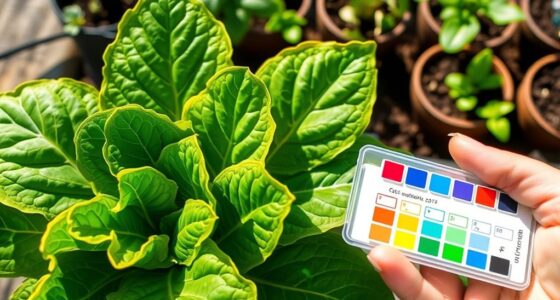
Have you ever wondered how to improve the success rate of your seed germination? One critical factor often overlooked is understanding seed dormancy and how environmental conditions, especially soil pH levels, influence it. Seed dormancy is a natural state that prevents seeds from sprouting immediately after ripening. To break this dormancy and encourage germination, you need to create the right conditions. Soil pH levels play a vital role here because they affect seed access to nutrients and water absorption. Most seeds prefer a slightly acidic to neutral pH, typically between 6.0 and 7.0. If your soil is too acidic or alkaline, seeds might struggle to break dormancy, leading to poor germination rates. Testing your soil’s pH and adjusting it with amendments like lime or sulfur can substantially improve seed vitality and readiness to sprout.
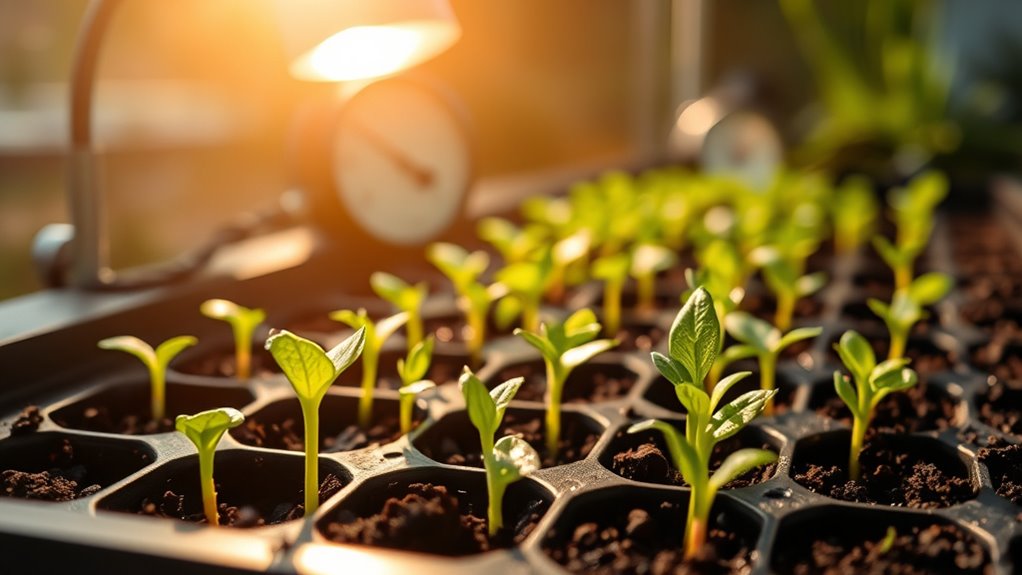
Temperature is another crucial element that influences seed dormancy and germination. Different seeds have specific temperature ranges in which they break dormancy and initiate growth. Some require warm conditions, while others need a period of cold stratification to wake from dormancy. If you provide the right temperature, you’ll activate the seed’s internal processes, encouraging sprouting. For most garden plants, maintaining soil or ambient temperatures between 65°F and 75°F (18°C to 24°C) is ideal. If it’s too cold, seeds may remain dormant longer than necessary, and if it’s too hot, they might dry out or become damaged. Monitoring soil temperature with a thermometer can help you time planting precisely, increasing your chances of successful germination.
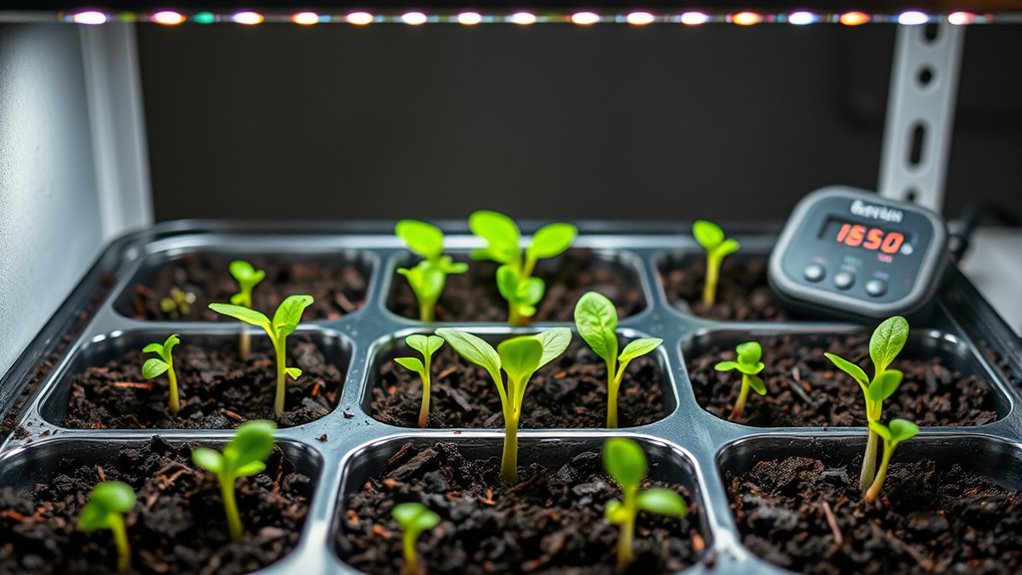
Light exposure also plays a vital role in breaking seed dormancy and promoting germination. Some seeds are photoblastic, meaning they require light to sprout, while others prefer darkness during germination. Understanding your seed type is essential. For seeds that need light, ensure they are not buried too deep in the soil; just a light covering or surface sowing is enough. Conversely, for seeds that favor darkness, plant them slightly deeper or cover them with soil. Proper light conditions, combined with ideal temperature and pH, create an environment conducive for seeds to wake from dormancy and develop into healthy seedlings.
Frequently Asked Questions
How Does Seed Dormancy Affect Germination Success?
Seed dormancy can prevent germination even under ideal conditions. When a seed’s coat is tough or impermeable, it blocks water and oxygen, hindering growth. To improve success, you might use dormancy-breaking techniques like scarification or stratification to weaken or soften the seed coat. This helps initiate germination by allowing water uptake and metabolic activity, increasing the likelihood of seed sprouting when conditions are right.
Are There Specific Light Spectrums That Enhance Germination Rates?
Did you know that blue light can increase germination rates by up to 20%? You should use specific light spectrums, like blue and red, to boost seed vigor. Blue light encourages healthy root growth, while red light promotes flowering and germination. By providing the right light spectrum, you actively enhance your seeds’ chances of sprouting successfully, ensuring stronger, more vigorous plants right from the start.
Can Temperature Fluctuations Improve Seedling Vigor?
Temperature fluctuations can improve seedling vigor if managed carefully, but they often hinder seedling strength if inconsistent. You should aim for temperature stability, especially during early growth, to guarantee strong, healthy seedlings. Slight variations might stimulate growth, but rapid or extreme fluctuations can stress plants and weaken their development. Maintaining consistent temperatures helps your seedlings develop robustly and reduces the risk of weaker, less resilient plants.
What Are the Best Methods for Seed Stratification?
Think of seed stratification like nature’s sleep therapy. You start by mimicking winter conditions, keeping seeds in a moist environment. This process encourages seed coat breaking and moisture absorption, essential for germination. You can use refrigerated soil or damp sand, chilling seeds for several weeks. For example, apple seeds benefit from this method, ensuring they break dormancy and sprout vigorously when planted.
How Does Humidity Influence Seed Germination?
Humidity plays a vital role in seed germination by maintaining proper seed moisture levels. If humidity is too high, excess moisture can cause mold or rot, while low humidity leads to desiccation. You should guarantee good air circulation to prevent excess moisture buildup and maintain ideal seed moisture. By controlling humidity, you create the perfect environment that encourages healthy germination without risking mold or dehydration.
Conclusion
By carefully controlling temperature and light, you set the stage for successful germination—like planting the seeds of tomorrow’s garden today. Remember, these factors are the silent architects of growth, shaping potential beneath the surface. When you optimize these conditions, you’re not just nurturing seeds; you’re nurturing dreams waiting to bloom. So, embrace patience and precision, for in your hands lies the power to turn tiny beginnings into flourishing life—proof that small changes can unleash extraordinary results.