
To troubleshoot nutrient imbalances, start by analyzing your soil test results to identify deficiencies or excesses. Observe your plants for symptoms like yellowing leaves or stunted growth to pinpoint specific issues. Adjust soil pH with amendments like lime or sulfur to improve nutrient availability, and apply targeted fertilizers based on your findings. Monitoring your plants regularly will help you catch problems early. Keep these strategies in mind, and you’ll soon discover more effective ways to keep your plants healthy.
Key Takeaways
- Conduct soil tests to identify specific nutrient deficiencies or excesses before applying solutions.
- Adjust soil pH with amendments like lime or sulfur to improve nutrient availability.
- Correct identified deficiencies by applying targeted fertilizers based on test results.
- Avoid over-fertilization to prevent nutrient toxicity and further imbalances.
- Regularly monitor plant symptoms and soil conditions for early detection and ongoing management.
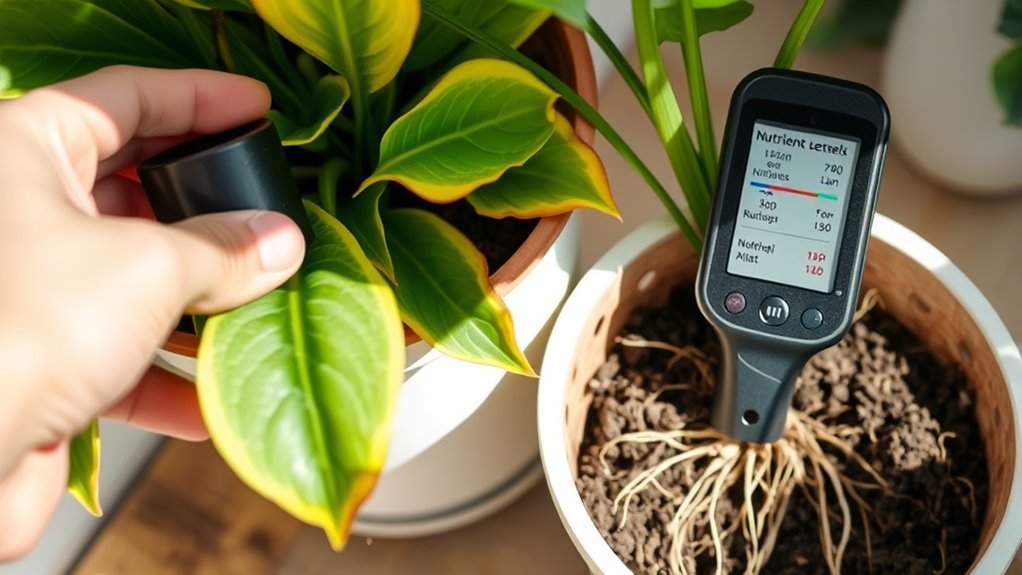
Nutrient imbalances can markedly affect your plants’ health and growth, but identifying and correcting these issues doesn’t have to be complicated. The first step is understanding that many problems stem from soil deficiencies or excesses. Proper soil testing is essential because it gives you a clear picture of what nutrients are present and in what quantities. When you test your soil, you’ll discover if there are deficiencies of essential elements like nitrogen, phosphorus, or potassium, which are *crucial* for plant development. Knowing this allows you to tailor your fertilization approach effectively, avoiding over-application that can lead to toxicity or under-application that causes deficiencies.
Proper soil testing reveals nutrient levels, guiding effective fertilization to prevent deficiencies and toxicity.
Once you have your soil test results, you can take targeted action. For example, if your soil lacks nitrogen, you might add a nitrogen-rich fertilizer to stimulate lush foliage growth. Conversely, if your soil shows excesses of certain nutrients, you may need to leach or amend the soil to prevent toxicity. Recognizing plant deficiencies early is *vital* because symptoms like yellowing leaves, stunted growth, or poor flowering often point back to nutrient imbalances. Addressing these deficiencies promptly can help your plants recover and thrive.
It’s also important to understand that nutrient imbalances can sometimes be caused by pH issues, which affect nutrient availability. If your soil is too acidic or alkaline, certain nutrients become less accessible to plants. Adjusting soil pH with amendments like lime or sulfur can improve nutrient uptake and prevent deficiencies caused by poor absorption, even if the nutrients are present in the soil. Additionally, soil pH plays a significant role in determining how well nutrients are absorbed and utilized by plants.
Another practical step is observing your plants closely. Different deficiencies show distinct symptoms: iron deficiency often causes interveinal chlorosis, while magnesium deficiency leads to yellowing between leaf veins. By paying attention to these signs, you can narrow down which nutrients are lacking or out of balance. Keep in mind that sometimes multiple deficiencies occur simultaneously, especially in poor soil conditions, so *comprehensive* testing and a holistic approach are best.
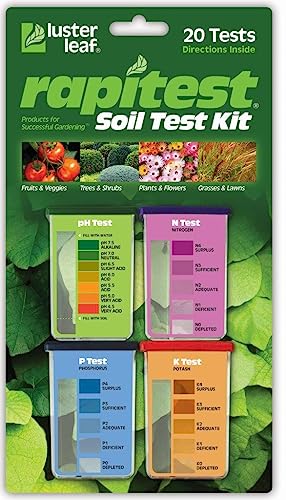
Rapitest Soil Test Kit for Gardens, Vegetables, Flowers and Lawns. USA designed and assembled soil tester completely, quickly and accurately measures/analyzes soil pH acidity and garden nutrients.
- Quick at-home soil pH and nutrient testing: Measures pH, Nitrogen, Phosphorous, Potash
- Includes 20 tests with all components: 5 tests each for pH, N, P, K
- Suitable for multiple garden spots: Tests soil variables across yard or garden
As an affiliate, we earn on qualifying purchases.
As an affiliate, we earn on qualifying purchases.
Frequently Asked Questions
How Do I Prevent Nutrient Deficiencies Before They Occur?
To prevent nutrient deficiencies, you should regularly conduct soil testing to identify nutrient levels and deficiencies early. Incorporate crop rotation into your planting schedule to prevent soil depletion and maintain nutrient balance. Additionally, use organic matter and fertilizers wisely to replenish essential nutrients. Staying proactive with these practices helps guarantee healthy plants, reduces deficiencies, and promotes ideal growth throughout the growing season.
What Are the Signs of Nutrient Toxicity in Plants?
You’ll notice nutrient toxicity through visual symptoms like leaf burn, yellowing, or dark spots, and abnormal growth patterns such as stunted or twisted stems. These signs indicate excess nutrients disrupting your plant’s health. Keep an eye on your plants regularly, and if you spot these symptoms, flush the soil and adjust your fertilization schedule to prevent further toxicity. Early detection helps maintain healthy, vigorous growth.
Can Organic Amendments Correct Nutrient Imbalances Effectively?
You might be surprised, but organic amendments can effectively correct nutrient imbalances when used correctly. Organic compost enriches your soil naturally, providing essential nutrients, while microbial inoculants boost nutrient availability and uptake. Together, they create a balanced ecosystem that addresses deficiencies and toxicities alike. Just remember, patience and proper application are key—over time, you’ll see your plants thrive as these organic solutions work their magic.
How Often Should I Test Soil Nutrients for Accurate Diagnosis?
You should test your soil nutrients at least once a year to maintain accurate nutrient monitoring schedules. If you grow crops frequently or notice signs of deficiencies, consider testing every 3 to 6 months. Regular soil testing helps you catch imbalances early, allowing you to adapt your fertilizer and organic amendments accordingly. Staying consistent with soil testing ensures healthier plants and better yields over time.
Are There Specific Nutrients That Commonly Interfere With Each Other?
Nutrient antagonism can considerably impact plant health, and fertilizer interactions often cause these conflicts. You should watch out for common nutrient clashes like nitrogen and phosphorus, or calcium and magnesium, which interfere with each other’s absorption. These fertilizer interactions can lead to deficiencies or toxicities. To prevent problems, monitor your soil regularly, apply nutrients thoughtfully, and balance essential elements, ensuring your plants thrive without nutrient conflicts.

Encap 10615-6 Sulfur Pouch Cover, 2.5 Pounds, 1250-Square Feet
- Product Type: Sulfur Pouch Cover
- Top SKUs: Popular for soil and plant health
- Encaps Solutions: Fast-acting lime and sulfur for pH adjustment
As an affiliate, we earn on qualifying purchases.
As an affiliate, we earn on qualifying purchases.
Conclusion
By mastering these troubleshooting tips, you could turn your plants into unstoppable green giants, shrugging off nutrient problems like they’re mere nuisances. Imagine your garden bursting with vibrant, perfectly balanced growth, so spectacular it could outshine a tropical paradise. With a little patience and the right solutions, you’ll transform your gardening chaos into a lush, thriving oasis—an awe-inspiring sight that’ll make even seasoned gardeners green with envy. Your plants’ ultimate health is just a troubleshooting step away!

Indoor Plant Food, Complete Liquid Fertilizer for Houseplants, 8oz
- Designed for Indoor Plants: Provides balanced nutrition for houseplants
- Promotes Healthy Growth: Encourages lush leaves and strong roots
- Universal Compatibility: Suitable for various indoor plant types
As an affiliate, we earn on qualifying purchases.
As an affiliate, we earn on qualifying purchases.
Rapitest Soil Test Kit for Gardens, Vegetables, Flowers and Lawns. USA designed and assembled soil tester completely, quickly and accurately measures/analyzes soil pH acidity and garden nutrients.
- Quick at-home soil pH and nutrient testing: Measures pH, Nitrogen, Phosphorous, Potash
- Includes 20 tests with all components: 5 tests each for pH, N, P, K
- Suitable for multiple garden spots: Tests soil variables across yard or garden
As an affiliate, we earn on qualifying purchases.
As an affiliate, we earn on qualifying purchases.