
Understanding electrical conductivity (EC) helps you monitor nutrient levels and salinity in water and soil, ensuring healthy crop growth and water quality. High EC indicates more salts and nutrients, which can affect plants and livestock, while low EC suggests fewer dissolved substances. By regularly checking EC, you can detect salinity issues early and adjust your watering or fertilizing practices accordingly. If you keep exploring, you’ll discover ways to use EC data for better crop management and soil health.
Key Takeaways
- EC measures water’s ability to conduct electricity, indicating dissolved salts and nutrients critical for plant health.
- Higher EC values typically reflect increased salinity, which can affect crop growth and water uptake.
- Regular EC monitoring helps optimize fertilization by tracking nutrient levels like nitrogen and potassium.
- Portable EC meters enable quick, on-site assessments of water quality for irrigation and livestock needs.
- Advances in smart sensors provide real-time EC data, supporting proactive nutrient management and water system sustainability.
Electrical conductivity (EC) is a vital tool for monitoring nutrient levels in agricultural and water management systems. When you measure EC, you’re fundamentally assessing how well water can conduct electricity, which directly relates to the concentration of dissolved salts and nutrients present. This makes EC an invaluable parameter for salinity measurement, helping you determine whether water is too salty for crops or livestock, or if it’s suitable for irrigation. Salinity levels can severely impact plant growth, so by keeping an eye on EC, you can make informed decisions to protect your crops and soil health. EC measurements are also a key part of water quality analysis, giving you a quick snapshot of the overall health of your water sources.
Monitoring EC helps assess water salinity and nutrient levels for healthier crops and water management.
Understanding how EC ties into salinity measurement is key. High EC readings usually indicate higher salinity, which can hinder plant water uptake and lead to poor crop yields. Conversely, low EC suggests low salt content, which is generally preferable, especially for sensitive plants. When you regularly check EC levels, you can detect rising salinity early and take corrective actions—like flushing soils, adjusting irrigation practices, or selecting salt-tolerant crops. This proactive approach helps prevent long-term soil degradation and guarantees your agricultural operations stay productive. Additionally, advancements in smart sensors have made real-time EC monitoring more accessible and accurate.
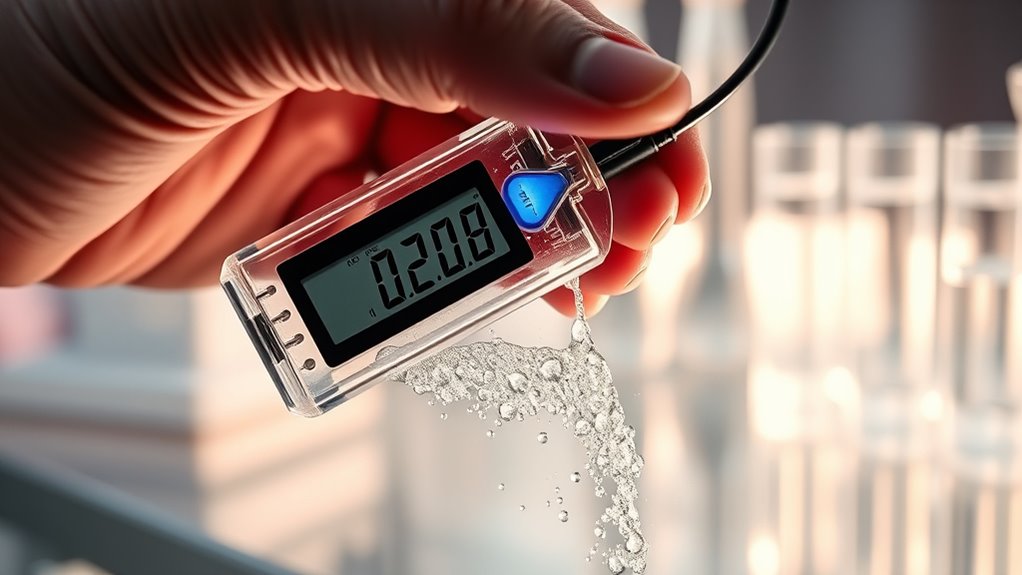
In water quality analysis, EC serves as a rapid screening tool. It allows you to evaluate whether water sources meet safety standards for irrigation, livestock, or even drinking water. For instance, if the EC exceeds recommended limits, it signals the presence of excessive salts or pollutants, prompting further testing. EC measurements are quick, cost-effective, and can be performed in the field with portable meters, enabling you to monitor water quality regularly without complex laboratory setups. When combined with other tests, EC provides an all-encompassing picture of water’s suitability for various uses.
Furthermore, EC is sensitive enough to detect changes in nutrient concentrations, such as nitrogen, potassium, and other essential minerals. These nutrients influence plant growth, and their levels are often reflected in the EC readings. By analyzing trends over time, you can optimize fertilization schedules, avoid over-application, and minimize runoff that could contaminate nearby water bodies. This integration of salinity measurement and water quality analysis ensures you maintain healthy soil and water systems, supporting sustainable farming practices.
Frequently Asked Questions
How Does Temperature Influence EC Readings?
Temperature effects can cause EC readings to vary, making your measurements less accurate if not adjusted. As temperature increases, EC values typically rise because ions move more freely. To counter this, you should use proper calibration techniques, such as temperature compensation, ensuring your readings are consistent across different conditions. Always check your device’s calibration and apply temperature correction factors for precise nutrient monitoring.
What Are the Ideal EC Levels for Different Crops?
You should aim for specific EC levels based on your crop type to optimize growth. For example, leafy greens thrive at 1.2-2.0 mS/cm, while fruiting crops like tomatoes prefer 2.0-3.0 mS/cm. Maintaining proper EC helps regulate soil salinity, preventing stress that hampers plant nutrient uptake. Regular monitoring ensures your plants receive the right nutrients without risking salt buildup, leading to healthier, more productive crops.
Can High EC Values Indicate Nutrient Deficiencies?
Think of your plants like a busy highway; high EC values are like traffic jams. Yes, they can indicate nutrient imbalance or salt buildup, which might seem like a deficiency but actually shows excess salts or nutrients clogging the system. This high EC can hinder water uptake, stressing your plants. Regular monitoring helps prevent this, ensuring your plants stay healthy by avoiding nutrient imbalances caused by too much salt.
How Often Should EC Be Tested in Nutrient Solutions?
You should test EC in your nutrient solutions daily or every other day to guarantee ideal fertilizer application and water quality. Regular testing helps you catch changes in nutrient levels early, preventing deficiencies or excesses. By monitoring EC frequently, you can adjust fertilizer doses promptly, maintaining a healthy balance for your plants. Consistent testing supports precise nutrient management, leading to better growth and higher yields.
What Are Common Sources of EC Measurement Errors?
You should be aware that common sources of EC measurement errors include calibration inaccuracies and poor electrode maintenance. If your calibration isn’t accurate, your readings can be misleading. Dirty or corroded electrodes can also cause errors, so routinely clean and store them properly. Additionally, verify your device is calibrated regularly to maintain measurement precision. By paying attention to calibration accuracy and electrode maintenance, you’ll get more reliable EC readings for nutrient monitoring.
Conclusion
Now that you understand electrical conductivity, you’re equipped to monitor nutrients like a modern-day alchemist. Using EC as your guide, you can guarantee ideal plant health without needing a philosopher’s stone. Remember, just like the trusty compass of old sailors, EC points you in the right direction for nutrient balance. Keep an eye on those readings, and you’ll master the art of healthy growth—no need for sorcery, just science!