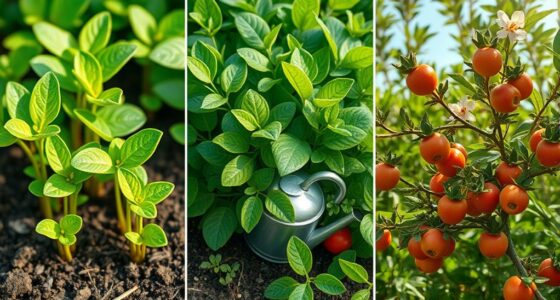
In hydroponics, macronutrients like nitrogen (N), phosphorus (P), and potassium (K) are essential for your plants’ growth and health. Nitrogen promotes lush foliage, phosphorus supports root and flower development, and potassium boosts overall plant resilience and water regulation. Balancing these nutrients at different growth stages ensures your plants thrive without deficiencies or toxicities. If you want to master how these elements work together, there’s more to uncover about optimizing your hydroponic system.
Key Takeaways
- N–P–K are essential macronutrients supporting plant growth, development, and reproduction in hydroponic systems.
- Proper nutrient ratios are tailored to growth stages, such as higher nitrogen for leafy greens and increased phosphorus and potassium for flowering.
- Hydroponics allows precise control of N–P–K concentrations, ensuring balanced nutrition and avoiding deficiencies or toxicities.
- Imbalances, like excess nitrogen or insufficient potassium, can hinder flowering, fruiting, or overall plant health.
- Regular monitoring and adjustment of N–P–K levels optimize plant performance and maximize yield in hydroponic cultivation.
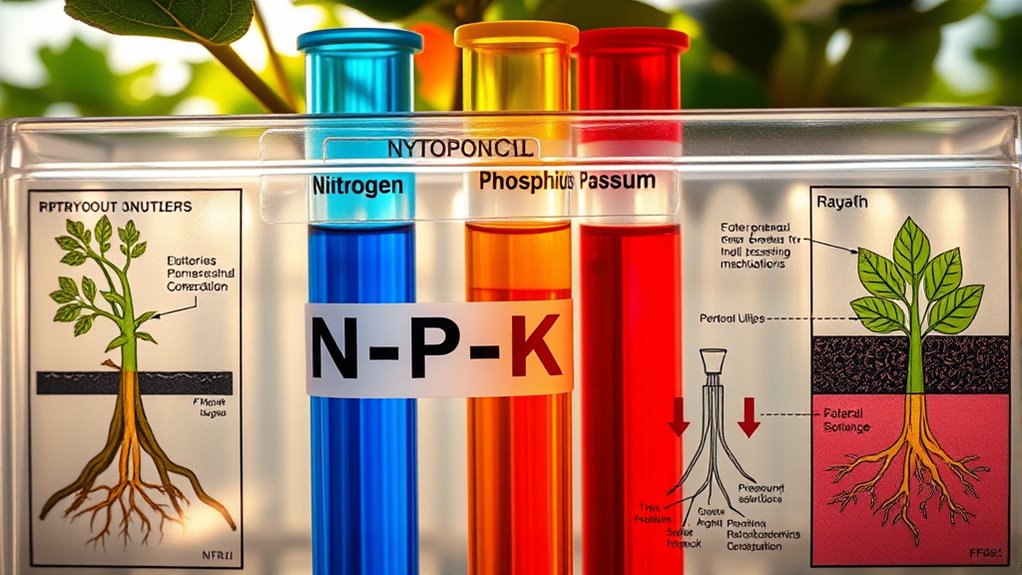
Ever wondered what keeps your hydroponic plants healthy and vigorous? It all comes down to understanding the essential macronutrients—nitrogen (N), phosphorus (P), and potassium (K)—and how they influence plant growth. When comparing soil vs. hydroponic nutrition, you’ll find that hydroponic systems rely entirely on the precise delivery of these nutrients through water solutions. Unlike soil, which naturally supplies nutrients but can vary in availability, hydroponics gives you direct control over macronutrient ratios, guaranteeing your plants get exactly what they need at every stage of growth.
Hydroponics offers precise control over essential macronutrients for optimal plant health.
In soil, nutrients are naturally present but can become depleted quickly or locked in forms that plants can’t absorb easily. This makes managing soil fertility a balancing act, often requiring amendments and adjustments over time. Hydroponic systems, on the other hand, eliminate this uncertainty by providing a nutrient-rich water solution that you can tailor precisely. Understanding the right macronutrient ratios is key to optimizing plant health. For example, seedlings and leafy greens thrive with higher nitrogen levels, which promote lush, vigorous foliage. Conversely, flowering and fruiting plants need more phosphorus and potassium to support bloom development and fruit production.
Getting the ratio right is critical. Most hydroponic nutrient formulas are designed with specific N–P–K ratios to match plant growth stages. During vegetative growth, a higher nitrogen ratio encourages leaf and stem development. As plants shift to flowering, increasing phosphorus and potassium supports flowering and fruiting processes. Consistently monitoring and adjusting these ratios guarantees your plants don’t suffer from deficiencies or toxicities, which can stunt growth or reduce yields.
Balancing macronutrients also involves understanding how they interact. Excess nitrogen, for example, can lead to overly lush foliage at the expense of flowers or fruits, while too little can cause yellowing and poor growth. Similarly, an imbalance of phosphorus can impair root development and energy transfer within the plant. Potassium is vital for overall health, affecting water regulation, disease resistance, and fruit quality. So, paying close attention to these ratios and tailoring them to your specific crop and growth stage makes all the difference.
Top picks for "understand macronutrient hydroponic"
As an affiliate, we earn on qualifying purchases.
Frequently Asked Questions
How Do Micronutrients Interact With Macronutrients in Hydroponic Systems?
You’ll find that micronutrients interact with macronutrients through micronutrient synergy, enhancing overall plant health. Proper trace element balance guarantees that essential micronutrients like iron, zinc, and manganese support nutrient uptake and prevent deficiencies. When these elements work harmoniously with macronutrients like nitrogen, phosphorus, and potassium, plants grow stronger and healthier. Maintaining this balance is key to optimizing hydroponic system productivity and avoiding nutrient lockout or toxicity.
What Are the Signs of Nutrient Deficiencies in Hydroponic Plants?
Think of your plants as delicate symphonies; when nutrient deficiencies strike, the melody falters. You’ll notice yellowing leaves, stunted growth, or curling edges—early whispers of trouble. Pest damage and water stress can mimic these signs, so observe carefully. If your plants look tired or uneven, they’re telling you something’s wrong. Address deficiencies promptly, ensuring the nutrients flow like a harmonious tune, and your hydroponic garden will thrive.
How Often Should Macronutrients Be Adjusted During Different Growth Stages?
You should perform nutrient adjustments regularly based on your plants’ growth stage. During vegetative stages, increase nitrogen for healthy leaf growth, while during flowering, boost phosphorus and potassium to support blooms. Monitor your plants closely for signs of deficiencies or excesses, and modify your nutrient solution accordingly. Consistent nutrient adjustment ensures your plants stay healthy, grow vigorously, and produce high yields throughout each growth stage.
Are There Organic Alternatives to Traditional Macronutrient Solutions?
Yes, you can use organic alternatives like organic fertilizers and compost teas to provide macronutrients in hydroponics. Organic fertilizers such as fish emulsion or seaweed extract supply essential nutrients naturally, while compost teas boost nutrient availability and microbial activity. These options offer a sustainable way to nourish your plants without synthetic chemicals, helping you maintain healthy growth and improve overall plant health in your hydroponic system.
How Does Ph Level Affect Nutrient Uptake in Hydroponic Systems?
The pH level directly impacts nutrient uptake in your hydroponic system by affecting pH stability and nutrient solubility. When pH is too high or low, nutrients become less soluble and harder for plants to absorb. To optimize growth, you should regularly monitor and adjust your system’s pH, maintaining it within the ideal range. This guarantees consistent nutrient availability and promotes healthy, vigorous plant development.
Conclusion
Remember, knowing your macronutrients like nitrogen, phosphorus, and potassium is key to thriving hydroponic plants. They fuel growth and keep your system healthy. Without them, even the best setup can fall flat. As the saying goes, “You reap what you sow.” Stay attentive to your nutrient balance, and your plants will flourish. Keep learning, adjusting, and nurturing — success in hydroponics depends on it.