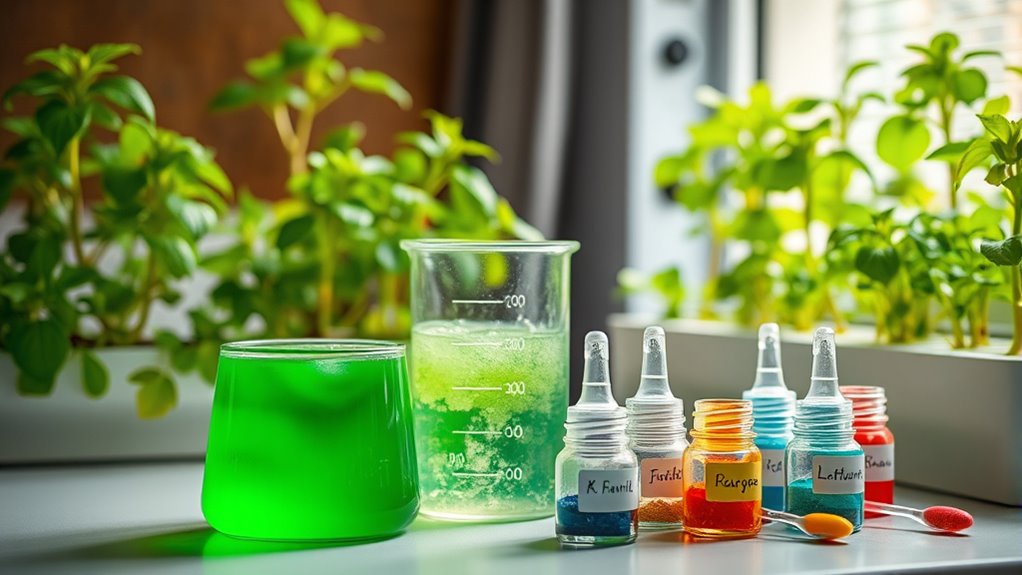

To create your own hydroponic nutrient solutions, start by understanding the essential macronutrients like nitrogen, phosphorus, and potassium, along with micronutrients such as calcium and magnesium. Mix water-soluble fertilizers or mineral salts in proper proportions, then measure and adjust the pH to around 5.5 to 6.5 using pH up or down solutions. Regularly monitor pH and nutrient levels to guarantee healthy growth, and if you’re curious, you’ll find more tips to perfect your recipe.
Key Takeaways
- Use water-soluble fertilizers like calcium nitrate, magnesium sulfate, and potassium phosphate for balanced macronutrients.
- Dissolve each nutrient separately before mixing to ensure complete solubility and prevent clumping.
- Adjust pH to 5.5–6.5 with phosphoric acid or potassium hydroxide after mixing all components.
- Record your recipe and pH adjustments for consistency and future refinement.
- Regularly test and monitor pH and EC levels to maintain optimal nutrient availability and plant health.

Have you ever wondered how to create your own nutrient solutions for hydroponic gardening? If so, you’re taking a smart step toward gaining control over your plants’ health and growth. Making your own solutions allows you to customize nutrient levels and guarantee your plants get exactly what they need. The key to success starts with understanding pH balancing and preventing nutrient deficiencies. Without proper pH levels, plants can’t absorb essential minerals, leading to deficiencies that stunt growth and reduce yields. Regularly checking and adjusting the pH of your solution is essential—aim for a range of 5.5 to 6.5, depending on your crop. When you maintain the correct pH, nutrients stay soluble and accessible, meaning your plants won’t suffer from deficiencies caused by imbalanced solutions.
To craft an effective DIY hydroponic nutrient solution, you’ll need a mix of macronutrients—nitrogen, phosphorus, and potassium—and micronutrients like calcium, magnesium, and trace elements. Start with a base that provides these essentials in the right proportions. For example, you could use a combination of water-soluble fertilizers or mineral salts like calcium nitrate, magnesium sulfate, and potassium phosphate. Dissolve each component thoroughly and check the pH after mixing. If it’s too high or low, adjust it with pH up or pH down solutions, which are usually made from phosphoric acid or potassium hydroxide. This step is essential because improper pH can cause nutrient lockout, making important minerals unavailable to your plants and causing deficiencies.
When creating your solution, avoid over-concentrating nutrients, which can lead to toxicity and imbalance. Always follow recommended dosages, and it’s wise to start with a diluted solution, then gradually increase as needed. Keep a detailed record of your recipe and pH adjustments to refine your process over time. Regularly testing your solution’s pH and electrical conductivity (EC) ensures your plants receive the right balance of nutrients. If you notice signs of nutrient deficiencies—yellowing leaves, stunted growth, or weak stems—revisit your solution’s composition and pH. Sometimes, deficiencies happen because nutrients aren’t being absorbed due to incorrect pH or imbalanced concentrations, not necessarily because they’re absent.
Creating your own hydroponic nutrient solutions might seem complex initially, but once you understand the importance of pH balancing and nutrient management, it becomes straightforward. With practice, you’ll learn to fine-tune your recipes to optimize plant growth and health. By maintaining proper pH levels and preventing deficiencies, you’ll give your plants the best chance to thrive in your DIY hydroponic system. This hands-on approach not only saves money but also empowers you to customize your garden’s nutrition, guaranteeing a productive and sustainable hydroponic setup.
Frequently Asked Questions
How Often Should I Change My Hydroponic Nutrient Solution?
You should change your hydroponic nutrient solution every 1 to 2 weeks. During this time, regularly check the water pH and perform water testing to guarantee ideal nutrient absorption. If you notice pH imbalances or buildup of salts and debris, it’s best to change the solution sooner. Maintaining fresh nutrient levels and proper pH balance promotes healthy plant growth and prevents potential issues in your hydroponic system.
Can I Reuse Nutrient Solutions for Different Plant Types?
You can reuse nutrient solutions for different plant types, but you should consider plant compatibility and nutrient stability. Some plants may require specific nutrients, and mixing solutions could lead to imbalances, harming your plants. To avoid issues, test and adjust the solution as needed, and monitor plant health closely. Reusing solutions works best when plants have similar nutrient needs and the solution remains stable over time.
What Are Signs of Nutrient Deficiency in Hydroponic Plants?
Did you know over 50% of hydroponic growers report nutrient deficiencies affecting plant health? You’ll notice deficiency symptoms like yellowing leaves, stunted growth, or leaf curling. These signs indicate your plants aren’t getting essential nutrients. Regularly monitor your plants closely, and if you see these symptoms, it’s time to adjust your nutrient solution to restore peak health and guarantee your plants thrive.
How Do I Adjust Nutrient Levels for Flowering Versus Vegetative Stages?
During flowering, you should increase nutrient concentration, especially phosphorus and potassium, to support bloom development, while in the vegetative stage, focus on nitrogen-rich nutrients. Always monitor pH adjustment to keep it within ideal range (around 5.5-6.5). Adjust nutrient levels gradually, ensuring the solution remains balanced. Regularly test your solution to prevent deficiencies or toxicities, and tweak as needed to promote healthy growth throughout each stage.
Are Homemade Nutrient Solutions Safe for All Plant Varieties?
Are homemade nutrient solutions safe for all plant varieties? Not necessarily. You need to take into account plant safety and nutrient variability, as different plants have unique needs. While your DIY mix might work well for some, others could be sensitive to certain ingredients. Always research specific plant requirements and test small batches first. This approach helps prevent nutrient deficiencies or toxicities, ensuring healthy growth across diverse plant varieties.
Conclusion
Creating your own hydroponic nutrient solution is simple and cost-effective, giving you control over your plants’ growth. Did you know that hydroponic systems can produce up to 25% higher yields than traditional soil gardening? By mixing your own nutrients, you guarantee your plants get exactly what they need for healthy development. So, give it a try—your garden’s productivity could skyrocket, and you’ll enjoy fresh, home-grown produce in no time!