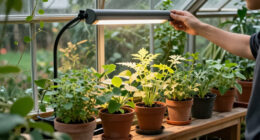
Growing spinach indoors can be tricky until you understand temperature control, as it directly affects plant health and flavor. If it’s too hot or cold, your spinach may bolt, become bitter, or struggle to grow. Maintaining the right temperature prevents stress and promotes steady growth. Getting this balance right makes a big difference, and by paying attention to indoor conditions, you’ll see better results. Keep going, and you’ll discover how to master the perfect environment for your spinach.

Get garden gear delivered free with Prime
- Fast, free delivery on millions of items
- Prime Video, Amazon Music and more included
- Member-only deals all year
Key Takeaways
- Proper temperature regulation prevents spinach bolting and leaf bitterness indoors.
- Maintaining optimal temperatures supports healthy growth and flavor development.
- Temperature stress from heat or cold can stunt growth and increase disease risk.
- Understanding indoor temperature effects helps avoid common cultivation pitfalls.
- Consistent temperature control ensures steady growth and prevents indoor spinach from becoming tricky.

Growing spinach indoors can be surprisingly challenging until you grasp the importance of temperature control. When your goal is to cultivate healthy, lush leaves, understanding how temperature affects growth is essential. But there’s more to consider—like light requirements and watering frequency—that directly influence how well your spinach thrives indoors.
First, let’s talk about light requirements. Spinach needs plenty of light to grow strong and vibrant. Ideally, you should place your plants in a location where they receive at least 12 to 14 hours of bright, indirect sunlight daily. If natural light is limited, supplement it with grow lights to guarantee your spinach gets enough energy for photosynthesis. Without sufficient light, your spinach may become leggy, pale, or stunted. Proper lighting not only boosts growth but also helps maintain the flavor and texture of the leaves. Remember, too much direct sunlight can scorch the leaves, so a balance is key.
Watering frequency is another essential factor. Spinach prefers consistently moist soil but not waterlogged conditions. You should check the soil daily and water when the top inch feels dry. Overwatering can lead to root rot, while underwatering causes the leaves to wilt and turn bitter. The goal is to keep the soil evenly moist, which supports steady growth and prevents stress on the plant. During warmer days or if your home is particularly dry, you might need to water more frequently. Conversely, if your indoor environment is humid, you can space out watering to avoid excess moisture. Additionally, maintaining proper temperature helps prevent stress and promotes healthy growth. Paying attention to indoor climate control can make a significant difference in spinach cultivation success. Proper temperature regulation supports optimal growth conditions and reduces the risk of disease. To further enhance growth, understanding the effects of temperature on spinach can help you create the ideal indoor environment and avoid common pitfalls like bolting or leaf bitterness.
As an affiliate, we earn on qualifying purchases.
Frequently Asked Questions
How Often Should I Water Indoor Spinach?
You should water your indoor spinach when the soil moisture feels slightly dry to the touch, usually every 2-3 days. Keep a consistent watering schedule to prevent overwatering or under-watering. Check the soil regularly, especially during warmer days, and adjust accordingly. Proper soil moisture is key to healthy spinach growth, so don’t let the soil stay soggy, but also avoid letting it dry out completely.
What Are Signs of Overwatering Spinach Plants?
When you see yellowing leaves, wilting, or a mushy stem, your spinach is showing signs of overwatering stress. These symptoms symbolize a drowning plant, risking root rot and decay beneath the surface. Too much water suffocates roots, preventing oxygen and causing decay. To rescue your spinach, let the soil dry out between waterings, and guarantee proper drainage. This helps restore balance and keeps your plant healthy.
Can Spinach Grow in Low Light Conditions Indoors?
Yes, you can grow spinach in low light conditions indoors, but its growth might slow down. Indoor lighting plays an essential role in spinach development, so make sure you provide as much light as possible, like placing it near a window or using grow lights. While spinach can tolerate lower light levels, ideal indoor lighting boosts healthy growth and helps prevent legginess or weak stems. Adjust your lighting setup for the best indoor spinach growth.
How Do I Prevent Pests on Indoor Spinach?
To prevent pests on indoor spinach, start with accurate pest identification so you can target the problem effectively. Regularly inspect your plants for pests like aphids or spider mites. Use organic pest control methods such as neem oil or insecticidal soap, applying them gently to affected areas. Keep your spinach healthy by maintaining proper humidity and airflow, which makes it less attractive to pests and reduces their chances of settling in.
What Soil Nutrients Are Essential for Indoor Spinach Growth?
You need soil with a pH between 6.0 and 7.0 for healthy indoor spinach growth. Key nutrients include nitrogen for leafy growth, phosphorus for root development, and potassium for overall health. If your spinach shows yellowing or poor growth, it might indicate a nutrient deficiency. Regularly test your soil and amend it with compost or balanced fertilizers to guarantee these essential nutrients are available, promoting lush, healthy spinach.
temperature control devices for indoor plants
As an affiliate, we earn on qualifying purchases.
As an affiliate, we earn on qualifying purchases.
Conclusion
Mastering indoor spinach is like tuning a delicate instrument—you need just the right temperature to bring out its true melody. Once you understand the warm hug it craves and the cool breath it thrives on, you’ll watch your greens flourish like a lush, vibrant garden in the middle of your home. Keep experimenting with the perfect climate, and soon, you’ll be harvesting leafy treasures that dance happily under your care, turning your space into a green paradise.
indoor plant humidity and temperature monitor
As an affiliate, we earn on qualifying purchases.
As an affiliate, we earn on qualifying purchases.
As an affiliate, we earn on qualifying purchases.
Halloween Picks
halloween
As an affiliate, we earn on qualifying purchases.