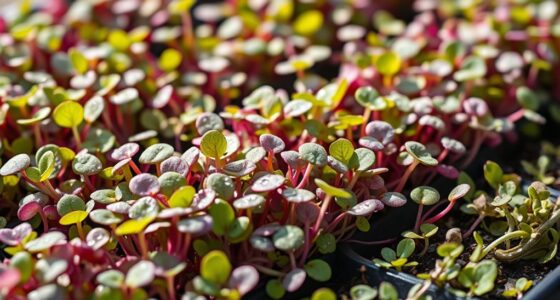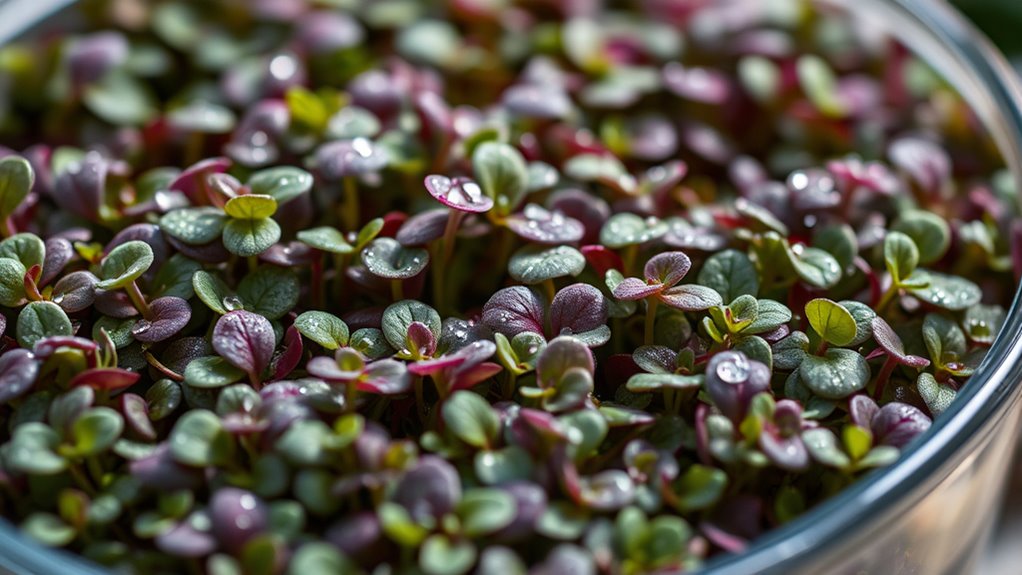
Microgreens are incredibly nutrient-dense, offering higher levels of vitamins, minerals, and antioxidants than mature greens. They provide a concentrated source of nutrients in a small package, making it easy to boost your health. Adding them to your meals can support your immune system, improve digestion, and increase energy levels. Because they’re quick to grow and versatile, incorporating microgreens into your diet is simple. Keep exploring to discover even more about their powerful health benefits.
Key Takeaways
- Microgreens contain higher concentrations of vitamins, minerals, and antioxidants compared to mature greens.
- They provide a compact, efficient way to boost overall nutrient intake with small servings.
- Regular consumption supports health by delivering essential nutrients in a nutrient-dense form.
- They enhance diet quality by adding nutrient-rich greens that can be easily grown indoors or in limited spaces.
- Microgreens are a convenient, flavorful way to increase daily intake of vital nutrients and support balanced nutrition.
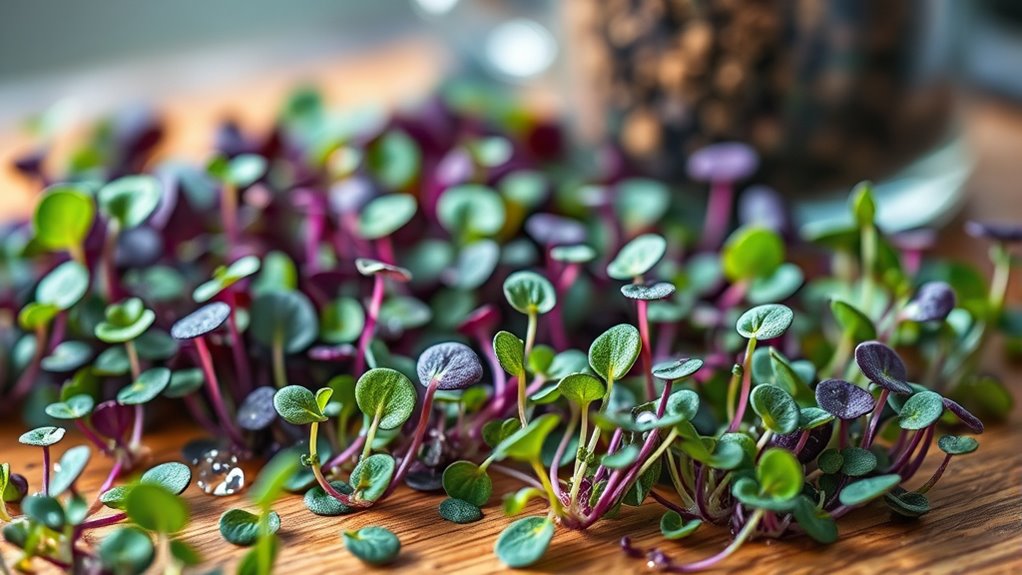
Microgreens are tiny, nutrient-packed greens that can substantially boost your diet. When you add them to your meals, you’re not just improving flavor, but also revealing a wide range of health benefits. One of the most noticeable advantages is their ability to enhance flavor profiles in a variety of dishes. Because microgreens often have concentrated, vibrant flavors—ranging from spicy and peppery to sweet and mild—they can elevate the taste of salads, sandwiches, soups, and even smoothies. You might find that a handful of microgreens transforms a simple dish into a gourmet experience, adding depth and complexity without overpowering other ingredients.
Their culinary versatility is another key reason to incorporate microgreens into your meals. You can use them as a garnish, blending them into wraps or tacos, or mixing them into pestos and sauces. They work well raw, maintaining their delicate texture and fresh flavor, but some varieties can also be lightly sautéed or added to cooked dishes for an extra layer of taste and nutrition. Because microgreens come in many varieties—such as radish, basil, beet, cilantro, and arugula—you have a broad palette to match with different cuisines and recipes. This flexibility makes them an easy addition for home cooks and professional chefs alike, allowing you to experiment and customize your meals effortlessly.
Beyond flavor and versatility, microgreens are an efficient way to boost your intake of essential nutrients. They contain higher concentrations of vitamins, minerals, and antioxidants compared to mature greens, making them a smart choice for supporting your overall health. Their compact size means you can grow a variety of microgreens indoors or in small spaces, ensuring fresh, nutrient-dense greens are always at your fingertips. Incorporating cultural impact into your diet can further enhance your overall well-being, as it promotes a connection to healthy eating habits and sustainable food practices. Whether you’re looking to enrich a simple salad or add a nutritious touch to your breakfast bowl, microgreens adapt easily and can be incorporated at any stage of meal preparation.
Incorporating microgreens into your diet is straightforward; just sprinkle them on top of dishes or blend them into smoothies. Their flavor enhancement can turn everyday meals into flavorful, nutrient-rich creations, and their culinary versatility invites endless experimentation. As you start to include more microgreens, you’ll likely notice not only an improvement in taste but also a boost in your intake of essential nutrients, all while enjoying the ease and flexibility they bring to your cooking routine.
Frequently Asked Questions
Can Microgreens Replace Traditional Vegetables in Meals?
Microgreens can’t fully replace traditional vegetables in your meals, but they do enhance flavor and add culinary versatility. You can use microgreens as a fresh topping or garnish, bringing vibrant color and a burst of flavor. While they’re nutrient-dense, they’re best as a complement rather than a substitute for the variety and bulk of regular vegetables. Incorporating microgreens alongside your usual produce maximizes both nutrition and taste.
Are Microgreens Suitable for People With Allergies?
Like Pandora’s box, microgreens can surprise you. They’re generally safe, but allergy risks exist, especially if you’re allergic to certain greens or seeds. Cross contamination during harvesting or processing can introduce allergens, so it’s wise to check labels and source from reputable growers. If you have food allergies, consult your doctor before adding microgreens to your diet to avoid unintended reactions.
How Long Do Microgreens Last After Harvest?
Microgreens typically last about 5 to 7 days after harvest if stored properly. To maximize their shelf life, keep them in a breathable container or paper towel-lined container in the refrigerator. Make sure to avoid excess moisture and keep them dry, as this can cause spoilage. Proper storage tips help preserve their freshness, flavor, and nutritional value, allowing you to enjoy microgreens for as long as possible.
Can Microgreens Be Grown Indoors Year-Round?
Yes, you can grow microgreens indoors year-round. Indoor cultivation provides a controlled environment, enabling you to enjoy fresh microgreens regardless of the season. With proper lighting, consistent watering, and good airflow, you can achieve healthy, vibrant microgreens at any time. This method makes it easy to incorporate nutritious greens into your diet daily, ensuring you always have access to fresh, home-grown microgreens indoors year-round.
Are There Any Safety Concerns With Consuming Microgreens?
You should be aware of some safety concerns when consuming microgreens. Pesticide concerns are valid if they’re grown with chemicals; always choose organic or grow your own. Bacterial contamination can also occur, especially if you don’t handle or wash them properly. To minimize risks, rinse microgreens thoroughly and buy from reputable sources. Staying vigilant helps you enjoy their nutritional benefits without worry.
Conclusion
Now that you know how microgreens pack a nutritional punch, imagine holding tiny, vibrant plants in your hand—each one bursting with essential nutrients—like miniature powerhouses. These little greens are a stark contrast to their modest size, offering big health benefits just as a small seed can grow into a mighty plant. By adding microgreens to your meals, you turn simple dishes into colorful, nutritious masterpieces, fueling your body with nature’s tiny, potent miracles.