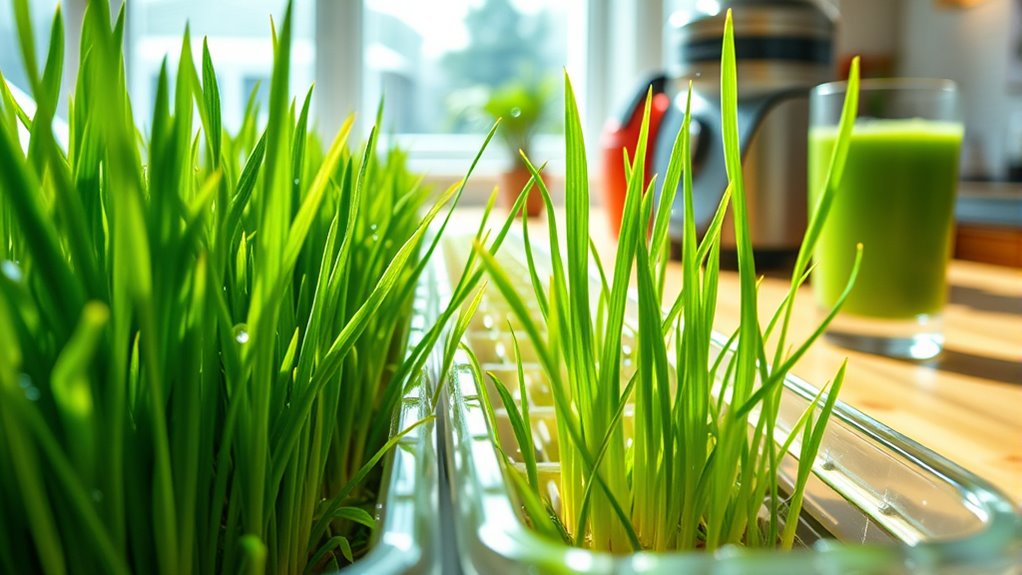

To grow hydroponic wheatgrass for juicing, set up a quality indoor system with proper lighting, maintaining a temperature of 65-75°F and a pH between 5.5 and 6.5. Use filtered water and a nutrient solution designed for leafy greens. Harvest when blades reach 6-8 inches for maximum nutrition and tenderness. Proper care and environment control guarantee fresh, nutrient-rich greens year-round—you’ll discover more tips to optimize your harvest as you continue.
Key Takeaways
- Use a quality hydroponic system with nutrient-rich solutions and maintain pH between 5.5-6.5 for optimal growth.
- Provide 12-16 hours of LED light daily and keep temperatures between 65-75°F.
- Maintain clean water with proper filtration, and monitor roots regularly for algae or mold.
- Harvest wheatgrass when it reaches 6-8 inches, cutting above the roots for fresh, nutrient-dense greens.
- Rinse and juice the harvested wheatgrass promptly for maximum nutrient preservation and health benefits.
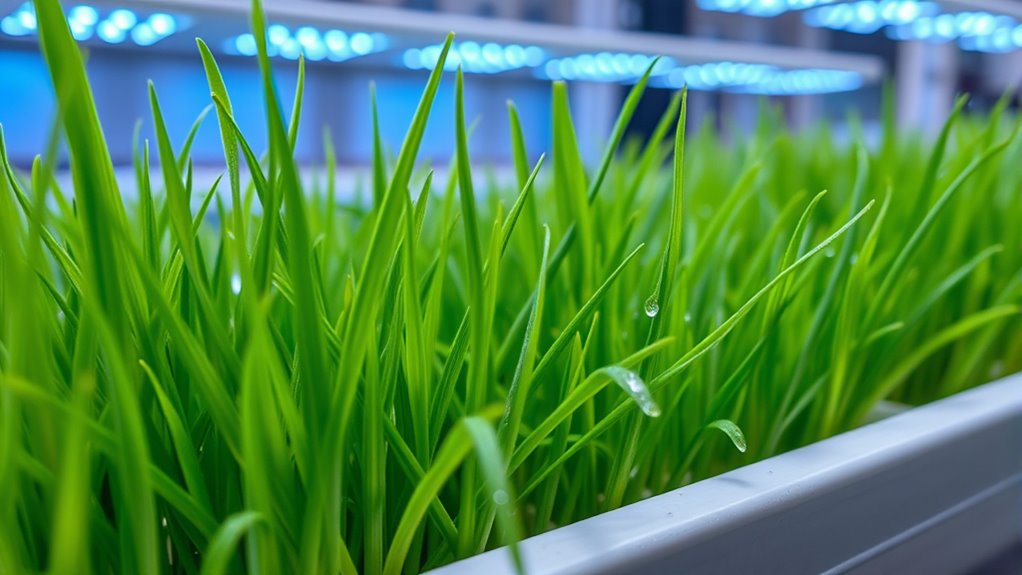
Have you ever wondered how to grow fresh, nutrient-packed wheatgrass indoors all year round? If so, hydroponic wheatgrass might be the perfect solution for you. Unlike traditional soil-based methods, hydroponic growing offers a highly controlled environment that maximizes efficiency and yields. When you choose hydroponics for wheatgrass, you unlock a range of nutritional benefits. Wheatgrass is packed with chlorophyll, vitamins, minerals, and antioxidants that promote overall health. Growing it hydroponically preserves these nutrients better because there’s no soil to dilute or interfere with nutrient absorption. Plus, you can harvest more frequently, guaranteeing a steady supply of fresh wheatgrass to juice or add to your meals.
Growing nutrient-rich wheatgrass indoors year-round with hydroponics for maximum freshness and health benefits.
To optimize growth, you need to understand the essentials of hydroponic systems. Start with a quality setup that includes a nutrient solution designed specifically for leafy greens. This solution supplies all the essential nutrients your wheatgrass needs in the right proportions, guaranteeing consistent growth and high nutrient content. The pH level of the solution should stay between 5.5 and 6.5; regular monitoring helps prevent deficiencies or toxicities. Light is another critical factor. Position your grow lights so that your wheatgrass receives about 12 to 16 hours of light daily. LED grow lights are energy-efficient and provide the full spectrum needed for healthy growth. Proper lighting ensures robust, lush blades and maximizes chlorophyll production, which is crucial for nutrient density.
Temperature control also plays a essential role. Wheatgrass thrives in temperatures between 65°F and 75°F. If it gets too hot or too cold, growth slows down, and the plant’s nutritional quality may decline. Maintaining consistent conditions allows you to produce wheatgrass that’s not only abundant but also rich in nutrients. You should also guarantee good airflow around your setup to prevent mold and fungal issues. Using a small fan can help circulate air, reducing humidity and promoting healthy, vigorous growth.
Water quality is equally important. Use filtered or distilled water to prevent mineral buildup and potential contaminants that can hinder plant health. Regularly check the roots for algae or mold, and rinse them gently if needed. When your wheatgrass reaches about 6 to 8 inches tall, it’s ready to harvest. Cutting just above the roots ensures a fresh, tender crop each time, allowing you to juice or add it to smoothies. With consistent care, your hydroponic wheatgrass will provide a steady stream of nutrient-dense greens, supporting your health and well-being all year long.

Hydroponic Cat Grass Grow Kit with 5Pack Non GMO Seeds, Organic Grass Growing Kit, Cat Grass for Indoor Cats, Soil-Free Planter, Perfect for Beginners, Ideal Birthday Gift for Cat Lovers
- Includes Organic Seeds: Non-GMO seed pack included
- Hydroponic Water-Level Marker: Ensures proper watering and prevents mold
- Mold-Free Growth Guarantee: Healthy, mold-free cat grass every time
As an affiliate, we earn on qualifying purchases.
As an affiliate, we earn on qualifying purchases.
Frequently Asked Questions
How Long Does It Take to See Results From Hydroponic Wheatgrass?
You’ll typically see results from hydroponic wheatgrass within 7 to 10 days. The harvesting timeline depends on growth indicators like the height of 6-8 inches and vibrant green color. As you monitor these signs, you’ll know when it’s ready for harvesting and juicing. Keep an eye on consistent growth, and you’ll enjoy fresh wheatgrass in just over a week, providing you with its nutritious benefits quickly.
Can Hydroponic Wheatgrass Be Grown Indoors Year-Round?
Sure, you can grow hydroponic wheatgrass indoors year-round—if you enjoy rearranging your furniture for ideal indoor lighting and mastering space optimization. With enough light and a little ingenuity, your wheatgrass can thrive regardless of outdoor seasons. Just remember, it’s a delicate balance of artificial sun and clever use of limited space, turning your home into a green oasis, one sprout at a time.
What Are Common Pests or Diseases Affecting Hydroponic Wheatgrass?
You should watch out for pests like aphids and fungus gnats, which can harm your hydroponic wheatgrass. To prevent pests, keep your growing area clean and inspect regularly. Disease management involves maintaining proper humidity and airflow, avoiding overwatering, and removing any affected plants promptly. By practicing pest prevention and disease management, you can keep your wheatgrass healthy and ensure a bountiful harvest all year round.
How Do I Test the Nutrient Levels in My Hydroponic System?
Did you know that proper nutrient testing can boost your wheatgrass yield by up to 30%? To test nutrient levels, start with regular nutrient testing using a reliable test kit or electronic meter. Check pH measurement to guarantee it stays between 6.0 and 7.0 for ideal growth. Adjust nutrient concentrations as needed, and always record your results to maintain consistent, healthy wheatgrass growth in your hydroponic system.
Is Hydroponic Wheatgrass Suitable for Small Space Gardening?
Yes, hydroponic wheatgrass is perfect for small space gardening. You can easily grow it in urban gardening setups using container options like shallow trays or small pots, making it ideal for limited spaces. It requires minimal equipment and space, so you can grow healthy wheatgrass indoors or on a balcony. This method maximizes your area and lets you enjoy fresh, nutritious wheatgrass without needing a large garden.
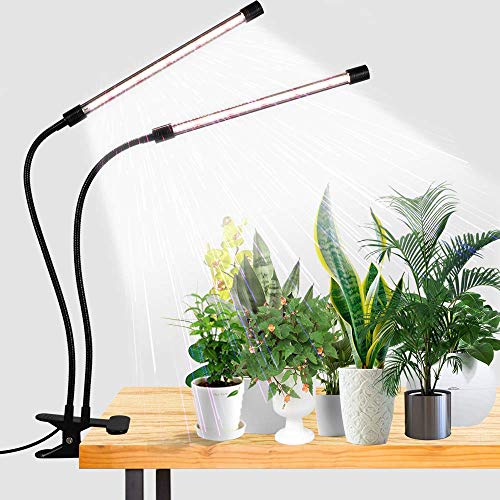
GooingTop Grow Light,6000K Full Spectrum Indoor Plant Growing Lamp
- Full Spectrum White and Red LEDs: 6000K sunlight-like illumination with high CRI
- Dimmable and Timer Settings: 5-level dimming with 4/8/12-hour cycle options
- Flexible Gooseneck and Clamp: Adjustable positioning for optimal plant lighting
As an affiliate, we earn on qualifying purchases.
As an affiliate, we earn on qualifying purchases.
Conclusion
Now that you’ve learned how to grow and juice hydroponic wheatgrass, you’re like a gardener tending to a lively, green oasis in your home. With a little care and patience, this vibrant plant becomes your personal fountain of health, nourishing your body with every sip. Think of your wheatgrass as a tiny, powerful sunbeam—brightening your day and fueling your wellness journey. Keep nurturing it, and watch your health flourish like a lush, thriving garden.

Liquid Plant Food – Fertilizer for AeroGarden & Hydroponic Systems, 8 oz
- Compatible with AeroGarden systems: Supports AeroGarden and similar units
- Promotes healthy plant growth: Encourages steady growth and strong roots
- Balanced hydroponic nutrients: Provides essential nutrients for indoor hydroponic plants
As an affiliate, we earn on qualifying purchases.
As an affiliate, we earn on qualifying purchases.

LETPOT LPH-SE Hydroponics Growing System, 12 Pods Smart Herb Garden Kit Indoor, Indoor Garden, APP & WiFi Controlled, with 24W Growing LED, 5.5L Water Tank, Pump System, Automatic Timer
- Smart Hydroponic System: App-controlled watering and lighting schedules
- Fast Growth LED System: Promotes 40% faster plant growth
- Full Spectrum LED Lighting: Mimics natural sunlight for healthy growth
As an affiliate, we earn on qualifying purchases.
As an affiliate, we earn on qualifying purchases.