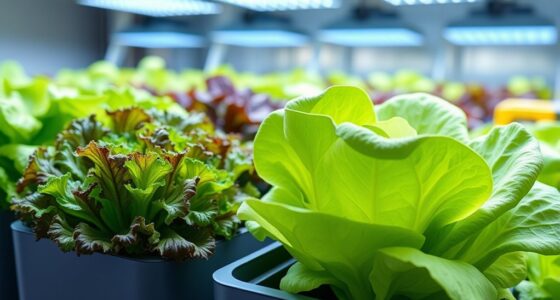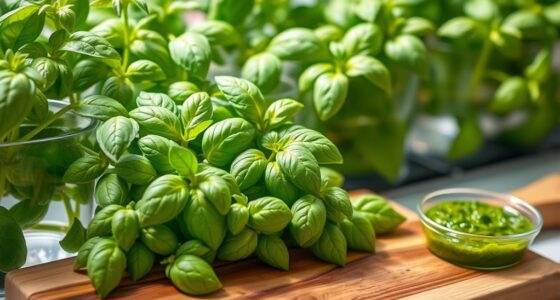
Hydroponic watercress is a fast-growing, soil-free green perfect for sandwiches and salads. You control its environment, which helps it grow quickly and healthily. With proper nutrient-rich water, you can harvest fresh leaves every few weeks, trimming to encourage new growth. It’s rich in vitamins A, C, and K, making your meals more nutritious. Keep learning how to optimize its growth—there’s plenty more to discover about this vibrant supergreen.
Key Takeaways
- Hydroponic watercress grows quickly and efficiently without soil, making it ideal for fast harvesting for sandwiches.
- Maintaining nutrient-rich water and proper pH levels ensures healthy, lush greens suitable for culinary use.
- Consistent lighting and optimal temperature conditions promote continuous growth, allowing multiple harvests.
- Regular harvesting by trimming encourages new, tender leaves perfect for sandwich toppings.
- Hydroponic systems save space and reduce pests, providing a clean, sustainable source of fresh watercress.
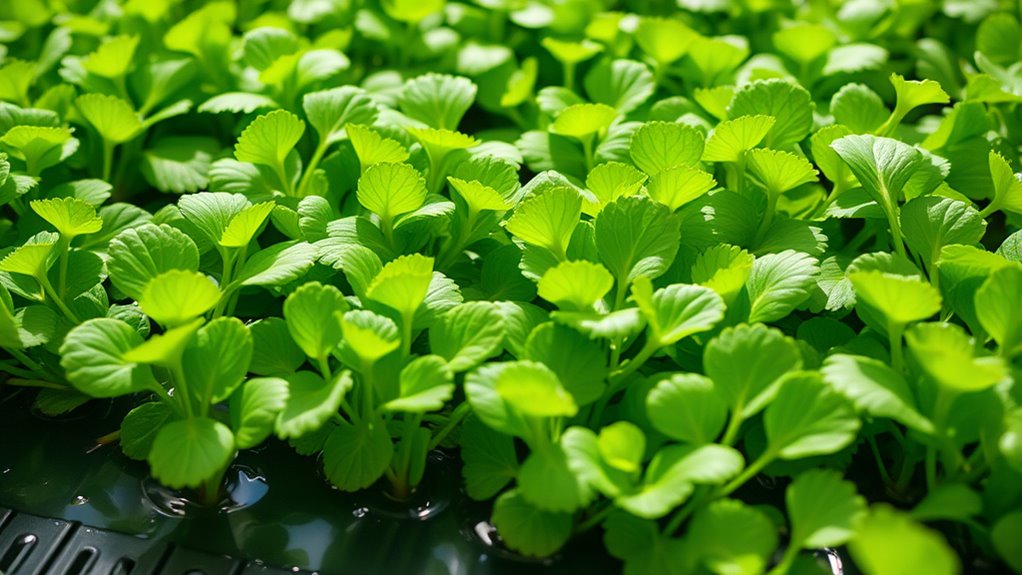
Hydroponic watercress offers a quick and efficient way to grow this nutritious leafy green without soil. If you’re looking to boost your meals with fresh, vibrant greens, hydroponic watercress is an excellent choice. It thrives in a soilless system, allowing you to control its environment and maximize growth. This method not only saves space but also accelerates the harvesting process, meaning you can enjoy your greens sooner. Whether you’re an experienced gardener or a beginner, understanding the nutritional benefits and growing techniques is key to successful cultivation.
Watercress is packed with nutrients that support your health. It’s rich in vitamins A, C, and K, along with antioxidants that help combat free radicals. Its high levels of calcium, iron, and magnesium promote bone health and improve circulation. Because hydroponic systems deliver nutrients directly to the roots, your watercress absorbs these essential elements more efficiently than traditional soil-grown greens. As a result, hydroponic watercress tends to be more nutrient-dense, making it a smart addition to salads, sandwiches, or smoothies.
Hydroponic watercress is nutrient-dense, packed with vitamins A, C, K, and essential minerals for your health.
Growing techniques for hydroponic watercress are straightforward but require attention to detail. You’ll start with a clean, nutrient-rich water solution designed specifically for leafy greens. The water should be maintained at a consistent pH level, ideally between 6.0 and 7.0, to promote healthy root development. Using a simple hydroponic setup, such as a deep water culture or flood-and-drain system, allows you to keep the water oxygenated and prevent stagnation. Keep the system in a bright, indirect light environment, as watercress loves good illumination but doesn’t require direct sunlight. Regularly check the water level and nutrient concentration, replenishing as needed to sustain ideal growth.
Temperature control is also essential. Watercress prefers cooler conditions, around 55-70°F (13-21°C). Higher temperatures can cause the greens to bolt or become bitter. To guarantee continuous growth, you should harvest the mature leaves every few weeks, trimming just above the base to encourage new growth. This cycle lets you enjoy fresh greens continually. Additionally, because watercress is sensitive to pests and diseases, maintaining cleanliness and monitoring for any signs of trouble is necessary for a healthy crop.
Frequently Asked Questions
How Does Hydroponic Watercress Compare to Soil-Grown in Flavor?
You’ll notice that hydroponic watercress often has a cleaner, crisper flavor compared to soil-grown, with subtle sensory differences. The flavor comparison shows that hydroponic greens tend to be milder and more consistent, as they’re grown in controlled environments. Soil-grown watercress may have a more robust, earthy taste, but can vary in flavor due to environmental factors. Overall, hydroponic watercress offers a fresh, vibrant taste ideal for sandwiches.
What Are the Common Pests Affecting Hydroponic Watercress?
You might worry about pests ruining your hydroponic watercress, but effective pest management keeps them in check. Common pests include aphids, whiteflies, and spider mites. To prevent infestations, practice crop rotation and monitor plants regularly. Maintaining cleanliness and proper ventilation also helps. These strategies make certain your watercress stays healthy and pest-free, so you can enjoy fresh greens without concern.
Can Hydroponic Watercress Be Grown Indoors Year-Round?
Yes, you can grow hydroponic watercress indoors year-round. To do this successfully, you need indoor lighting that mimics sunlight and climate control to maintain ideal temperature and humidity levels. Keep the environment consistent, providing enough light and fresh air, so the watercress thrives regardless of outdoor conditions. With proper setup, you’ll enjoy fresh, fast-growing greens anytime you want, right inside your home.
What Is the Optimal Ph Level for Hydroponic Watercress?
Think of pH as the secret sauce that keeps your hydroponic watercress thriving. You should aim for a pH level between 6.0 and 7.0. To achieve this, you’ll need to do some pH adjustment and monitor your nutrient balance regularly. Keeping the pH in this range ensures ideal nutrient uptake, leading to healthy, fast-growing greens. Think of it as maintaining the perfect mix for a vintage record—precise and balanced.
How Long Does It Take for Hydroponic Watercress to Reach Harvest Size?
You can expect hydroponic watercress to reach harvest size in about 2 to 3 weeks, depending on your growth rate and environmental conditions. You’ll notice the greens are ready when they’re around 2 to 4 inches tall, with tender, dark green leaves. Keep an eye on their growth and guarantee proper lighting and nutrient levels, so you can time your harvest perfectly for fresh, flavorful sandwiches.
Conclusion
Ready to elevate your sandwiches with fresh, nutrient-packed greens? Hydroponic watercress grows quickly and requires minimal space, making it perfect for your kitchen or small garden. Its vibrant flavor and health benefits make every bite more enjoyable. Why settle for less when you can easily grow your own? With just a little effort, you’ll have a continuous supply of crisp, delicious watercress. Isn’t it time you started growing your own fast-growing greens?