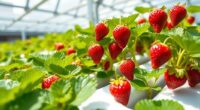
Growing peppers hydroponically lets you enjoy fresh, vibrant flavors that elevate your dishes. You can harvest ripe peppers to use raw in salads or grind dried peppers into powders for spices. Roasting, toasting, or pickling these peppers enhances their natural taste, adding depth to sauces, stews, and oils. With this approach, your culinary options expand markedly. Keep exploring how these techniques and varieties combine to create flavorful, memorable meals right from your garden.

Get garden gear delivered free with Prime
- Fast, free delivery on millions of items
- Prime Video, Amazon Music and more included
- Member-only deals all year
Key Takeaways
- Select and harvest ripe peppers from your hydroponic garden for optimal flavor and freshness.
- Experiment with various pepper varieties to create diverse dishes, from sweet to spicy profiles.
- Use techniques like roasting, grinding, or pickling to maximize flavor and culinary versatility.
- Incorporate fresh, dried, or infused peppers into salads, sauces, and marinades for enhanced taste.
- Store and preserve peppers through drying or pickling to extend their use in future recipes.

Pepper is a versatile ingredient that adds vibrant flavor and a touch of heat to countless dishes. When you start exploring different pepper varieties, you’ll discover a world of subtle and bold flavors that can elevate your cooking. From the fiery heat of cayenne to the sweet, fruity notes of pink peppercorns, each variety offers unique qualities that suit various recipes. Understanding how to use these different peppers through specific cooking techniques allows you to maximize their potential. For example, grinding black pepper fresh from the mill releases more aroma and flavor than pre-ground versions, making it a staple in seasoning meats, vegetables, and soups. Toasting peppercorns before grinding enhances their aroma, adding depth to your dishes. Roasting or sautéing peppers can mellow out their heat while intensifying their natural flavors, perfect for stir-fries or sauces. You might also experiment with pickling or fermenting peppers to develop tangy, complex flavors that complement cheeses or sandwiches. As you learn these techniques, you’ll find that the different pepper varieties lend themselves to specific methods, helping you craft dishes with balance and nuance.
Growing your own peppers hydroponically gives you control over the quality and freshness of your ingredients. Once you’ve cultivated a thriving garden, you’ll realize how much flavor freshness impacts your cooking. Harvesting peppers at their peak ripeness ensures you get the most vibrant flavors, whether you’re using them fresh or drying them for later use. Fresh peppers can be sliced or chopped to add color and spice to salads, salsas, or pasta dishes. Dried peppers can be ground into powders or rehydrated for sauces and stews. The process of growing peppers hydroponically also teaches you about different varieties and their growth habits, allowing you to select the perfect peppers for your culinary needs. With fresh, home-grown peppers, you can experiment more confidently with various cooking techniques and recipe ideas. Plus, knowing your peppers are free from pesticides and chemical treatments gives you peace of mind about what goes into your food.
From seed to table, understanding pepper varieties and mastering cooking techniques transforms simple ingredients into extraordinary dishes. Whether you’re seasoning a steak with freshly cracked black pepper, creating a fiery chili, or infusing oils with dried peppers, each step enhances your culinary experience. As you integrate your hydroponic garden into your kitchen routine, you’ll appreciate the freshness and flavor that only home-grown peppers can bring. With a little knowledge about different varieties and a few essential techniques, you’ll be able to craft flavorful, memorable meals that showcase the versatility of this incredible ingredient.
Frequently Asked Questions
How Do I Choose the Best Pepper Variety for My Climate?
To choose the best pepper variety for your climate, start with careful pepper plant selection based on your local conditions. Consider climate considerations like temperature, humidity, and growing season length. If you have a hot, dry climate, opt for drought-tolerant or heat-resistant peppers. For cooler or shorter seasons, select early-maturing varieties. Matching your climate considerations with the right pepper plant selection guarantees healthy growth and a successful harvest.
What Are Common Pests and How to Control Them Organically?
You’ll want to identify pests like aphids, spider mites, and pepper weevils early through pest identification. To control them organically, use neem oil, insecticidal soaps, or introduce beneficial insects like ladybugs. Regularly inspect your plants, remove affected leaves, and keep your garden clean. These steps help manage pest issues naturally, ensuring healthy peppers without harmful chemicals.
How Long Does It Take for Hydroponic Peppers to Mature?
Hydroponic peppers typically take about 60 to 90 days to mature, depending on the variety and growing conditions. You’ll notice their pepper flavor profiles develop as they ripen, influenced by your hydroponic nutrient solutions. To guarantee a healthy crop, maintain ideal nutrient levels and proper light. Regularly monitor growth, and you’ll enjoy a bountiful harvest of flavorful peppers in just a few months.
Can I Grow Peppers Indoors Year-Round?
Yes, you can grow peppers indoors year-round. Make certain you provide ample indoor lighting, like grow lights, to mimic sunlight and promote healthy growth. Keep pests at bay by regularly inspecting your plants and maintaining good hygiene. Proper temperature control and consistent watering also help, making your indoor space ideal for peppers regardless of the season. With these steps, you’ll enjoy fresh peppers anytime you want.
What Are Some Tips for Preserving Harvested Peppers?
Preserving your peppers is like bottling sunshine for later. You can use canning techniques to keep their fiery flavor or dry them using various drying methods for long-term storage. To do this, wash and dry peppers thoroughly, then either hot water bath can or air-dry in a well-ventilated area. These methods lock in flavor and heat, ensuring your peppers bring warmth to your dishes long after harvest.
Conclusion
Imagine biting into a freshly picked pepper, its vibrant color and fiery flavor telling a story of your garden’s journey. When you grow your own hydroponic peppers, you’re not just cultivating spice—you’re creating a sensory experience rooted in nature’s magic. It’s as if the garden’s energy infuses each bite, turning simple recipes into unforgettable moments. So, next time you cook, remember: your peppers are more than ingredients—they’re a fiery reminder of your hands’ connection to the earth.
Fall Picks
fall essentials
As an affiliate, we earn on qualifying purchases.