To care for your hydroponic cherry and dwarf tomatoes, make certain your nutrient solution is balanced and adjusted regularly for ideal growth. Keep the environment clean and monitor pests like aphids and whiteflies, using organic methods if needed. Maintain proper moisture levels to prevent disease and support healthy roots. Regularly inspect plants for signs of stress or pests, and you’ll enjoy vibrant, tasty fruit. Continue exploring for more tips on thriving hydroponic tomato care.
Key Takeaways
- Use nutrient-rich water solutions tailored to cherry and dwarf tomato needs, monitoring and adjusting regularly.
- Maintain optimal light, temperature, and humidity levels for consistent growth and fruit production.
- Regularly inspect plants for pests like aphids and whiteflies, managing them with organic methods.
- Prevent diseases by controlling moisture levels and ensuring cleanliness in the hydroponic system.
- Support plant health with proper pruning and staking to maximize yield and fruit quality.
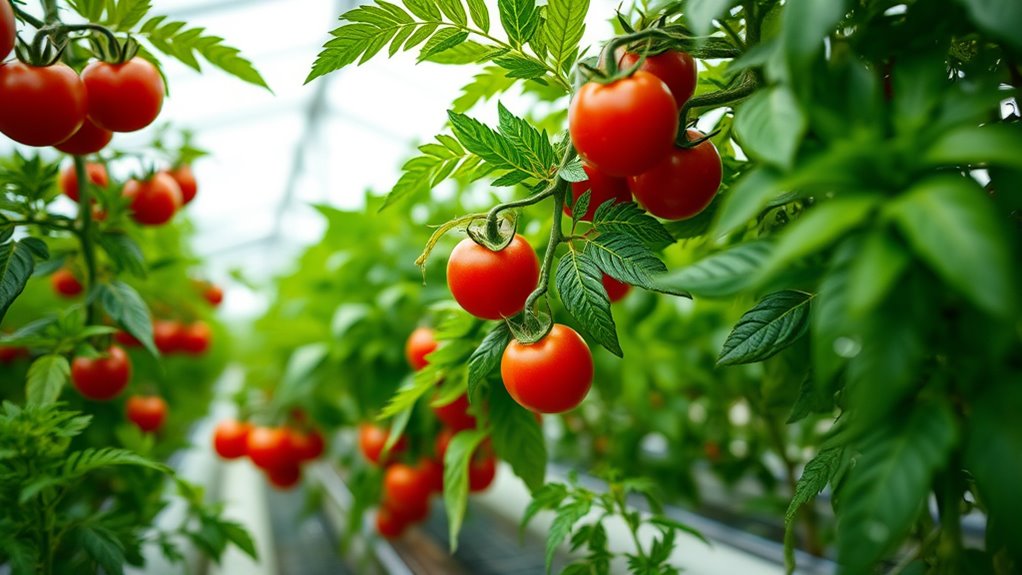
Hydroponic tomatoes are an innovative way to grow this popular vegetable indoors or in controlled environments without soil. Instead of traditional planting, you’ll use a nutrient-rich water solution that delivers everything your plants need directly to their roots. This method allows you to maximize growth conditions, control pests more effectively, and produce high yields in a small space. When it comes to caring for cherry and dwarf varieties, understanding how to manage soil nutrients and pest control is crucial to success.
Since hydroponic systems don’t rely on soil, you need to pay close attention to soil nutrients, which are replaced by carefully balanced solutions. You’ll want to monitor and adjust the nutrient levels regularly, ensuring your plants receive the right balance of nitrogen, phosphorus, potassium, and trace minerals. This precise control helps prevent deficiencies that could stunt growth or cause poor fruit development. Using a high-quality hydroponic nutrient mix simplifies this process, but consistent testing remains key to maintaining ideal conditions. Remember, unlike soil-based gardening, you can fine-tune the nutrient solution to match the specific needs of cherry and dwarf tomatoes, promoting healthy growth and abundant fruit production.
Monitor and adjust nutrient levels regularly for healthy hydroponic cherry and dwarf tomatoes.
Pest management in hydroponic systems differs markedly from traditional gardening. Since you’re growing in a controlled environment, you have fewer pest problems overall, but they’re not entirely eliminated. Common pests like aphids, whiteflies, or spider mites can still find their way in through contaminated tools, plants, or air circulation. To keep pests at bay, you should routinely inspect your plants and maintain cleanliness around your system. Introducing beneficial insects or using organic pest control methods can effectively manage outbreaks without harming your plants or compromising your system’s integrity. Additionally, since hydroponic systems don’t have soil, you avoid many soil-borne diseases, which is a huge advantage, but you still need to watch out for fungal or bacterial issues that thrive in moist environments.
Maintaining pest management and soil nutrient balance are ongoing tasks that directly influence your tomato plants’ health and productivity. Regularly testing nutrient levels and adjusting your solution ensures your cherry and dwarf tomatoes grow vigorously, producing tasty, vibrant fruit. Similarly, vigilant pest control keeps your plants healthy and minimizes damage, leading to better harvests. With careful attention to these aspects, you’ll enjoy the benefits of a clean, efficient, and productive hydroponic setup. Growing hydroponic cherry and dwarf tomatoes offers the flexibility to enjoy fresh, homegrown tomatoes year-round, all while maintaining control over the environment and minimizing common gardening worries.
Frequently Asked Questions
How Do I Prevent Pests in Hydroponic Tomato Systems?
To prevent pests in your hydroponic tomato system, start by using pest-resistant varieties and maintain a clean environment. Incorporate biological pest control methods like introducing beneficial insects such as ladybugs or predatory mites. Regularly inspect your plants for early signs of pests and remove affected leaves promptly. Keep your system sealed and monitor humidity levels, as pests thrive in damp conditions. These steps help keep pests at bay naturally.
What Are the Best Lighting Options for Indoor Hydroponic Tomatoes?
You’re right on the money when considering LED grow lights for indoor hydroponic tomatoes—they’re energy-efficient and deliver full-spectrum light, perfect for healthy growth. However, don’t overlook natural sunlight; placing your system near a south-facing window can enhance vitality. Combining LED lights with natural sunlight ensures your cherry and dwarf varieties get the light they need, helping them thrive and produce abundant fruit.
How Often Should I Prune Dwarf Tomato Plants Hydroponically?
You should prune dwarf tomato plants hydroponically every 1-2 weeks to maintain ideal plant maintenance. Regular pruning helps remove suckers and any dead or yellowing leaves, promoting better airflow and sunlight exposure. Keep an eye on your plants, and prune more frequently during peak growth periods. Consistent pruning encourages healthy development, increases fruit production, and prevents disease, ensuring your dwarf tomatoes thrive in your hydroponic system.
Can Hydroponic Cherry Tomatoes Be Grown Outdoors?
Yes, you can grow hydroponic cherry tomatoes outdoors, but you need to take into account climate conditions. Make sure your outdoor environment has warm temperatures, plenty of sunlight, and protection from wind and pests. Use sturdy containers and monitor for pests and diseases regularly. If your climate is cooler or unpredictable, think about providing shade or covering your plants to extend the growing season. Proper outdoor cultivation maximizes your cherry tomato yield.
What Are Common Nutrient Deficiencies in Hydroponic Tomato Cultivation?
You’ll often encounter nutrient deficiencies like nitrogen, calcium, or magnesium in hydroponic tomato cultivation. To prevent this, regularly check your nutrient solution and adjust with appropriate soil amendments. These deficiencies can harm root health, leading to poor growth and fruit production. Ensuring balanced nutrients helps maintain healthy roots and vibrant plants. Keep an eye on leaf color and plant vigor to catch deficiencies early and keep your tomatoes thriving.
Conclusion
So, go ahead and drown your tomatoes in nutrient-rich water instead of dirt. Watch those cherry and dwarf varieties thrive while you marvel at your “innovative” gardening skills—because nothing says “green thumb” like pretending you’re a hydroponic pioneer. Soon, you’ll be the envy of every backyard, boasting an endless supply of “farm-fresh” tomatoes. Just remember, in the world of hydroponics, the only thing more fragile than your plants might be your ego. Happy growing!