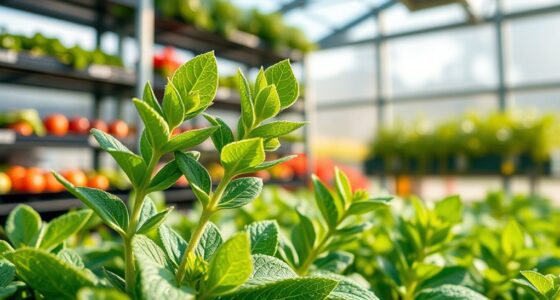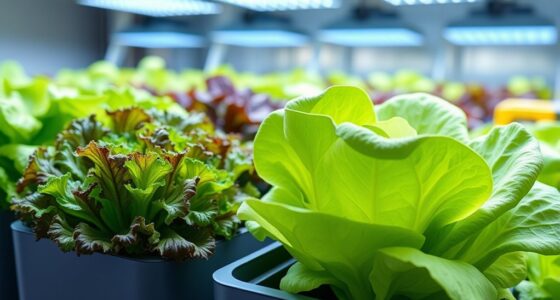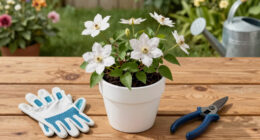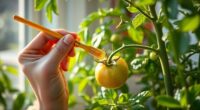
To keep your indoor plants healthy and thriving, regularly prune dead or overgrown stems using clean, sharp tools, cutting just above a node to encourage new growth. Harvest leaves or stems carefully with sharp scissors, cutting at the right points to promote regrowth while leaving enough behind. Maintain consistent watering, inspect for pests, and address issues promptly. Proper care promotes lush, vibrant foliage—continue exploring for detailed techniques to maximize your plant’s health and beauty.
Key Takeaways
- Use clean, sharp tools to make precise cuts above a node or leaf joint for healthy regrowth.
- Prune during active growth periods like spring or early summer to encourage vigorous development.
- Remove dead, damaged, or diseased parts to improve airflow and prevent pest spread.
- When harvesting, snip leaves or stems carefully at appropriate points, leaving enough of the plant intact.
- Regularly prune and harvest to maintain plant shape, promote lush foliage, and stimulate new growth.

Indoor plants thrive when properly pruned and harvested, as these practices encourage healthy growth and maximize their beauty. When you maintain consistent watering schedules, you guarantee your plants stay hydrated without overwatering, which can lead to root rot and other issues. Proper watering also supports pruning efforts by keeping the plant’s tissues healthy and resilient. Before you start pruning, check for signs of pests or diseases; pest control is essential to prevent infestations that can weaken or damage your plants. Inspect leaves and stems regularly, and address any issues promptly with natural or chemical treatments to keep your plants vigorous.
Proper watering and pest checks keep your indoor plants healthy and thriving.
When it comes to pruning, the key is to remove dead, damaged, or diseased parts of the plant. Doing so improves airflow and prevents the spread of pests or infections. Use clean, sharp scissors or pruning shears to make clean cuts, ideally just above a node or leaf joint. This encourages new growth and maintains the plant’s shape. Timing is important—prune when the plant is actively growing, typically during spring or early summer, to give it time to recover and produce fresh growth. Regularly trimming back leggy or overgrown stems not only improves appearance but also redirects energy to healthier parts of the plant, resulting in more lush foliage.
Harvesting, especially for plants that produce edible or decorative foliage, should be done carefully to promote continued growth. Use sharp scissors to snip leaves or stems at the appropriate points, avoiding tearing or damaging the plant. Always leave enough of the original stem or leaf to allow for regrowth. Remember, healthy plants grow best when their environment is well-maintained. This includes consistent watering schedules tailored to each plant’s needs and vigilant pest control to prevent any pest-related setbacks. If pests do appear, treat infestations early with organic solutions like neem oil or insecticidal soap, and isolate affected plants to prevent spread.
Additionally, selecting the right indoor plant varieties for your environment can significantly enhance your gardening success and overall plant health. Maintaining a disciplined routine of pruning and harvesting, along with attentive watering schedules and pest control, ensures your indoor plants stay vibrant and healthy. These practices stimulate new, vigorous growth and keep your greenery looking its best. By paying close attention to the needs of your plants and acting promptly when issues arise, you create an environment where they can thrive. Your efforts will be reflected in the lushness and beauty of your indoor garden, turning your space into a lively, green oasis.

VIVOSUN 6.5 Inch Gardening Scissors Hand Pruner Pruning Shear with Straight Stainless Steel Blades Orange 1-Pack
Reduce Hand Strain: These micro tip snips are made to reduces hand fatigue which makes them great for…
As an affiliate, we earn on qualifying purchases.
As an affiliate, we earn on qualifying purchases.
Frequently Asked Questions
How Often Should I Prune My Indoor Plants?
You should prune your indoor plants every 4 to 6 weeks, depending on their growth cycle. Regular pruning encourages healthy growth and keeps your plants looking their best. Keep an eye on new shoots and dead or yellowing leaves, trimming them when necessary. Adjust pruning frequency based on how quickly your plants grow; faster growers may need more frequent attention, while slower ones can be pruned less often.
What Tools Are Best for Precise Pruning?
Oh, because you want your plants to look like they’ve had a spa day, right? Use sharp scissors or pruning shears for precise cuts, so your plant heals quickly and looks tidy. Investing in good quality tools makes all the difference—no more crushing stems or jagged edges. Keep your tools sharp and clean, and you’ll enjoy neat, healthy growth. After all, your plants deserve the best care, don’t they?
When Is the Ideal Time to Harvest Indoor Herbs?
You should harvest indoor herbs when they reach herb maturity, typically just before they flower for the best flavor. The timing for harvesting is usually in the morning after dew has dried and before the sun gets too hot. Use sharp scissors or pruning shears to snip the herbs, leaving enough foliage for continued growth. Regular harvesting encourages lush, healthy plants and guarantees you enjoy fresh, flavorful herbs whenever you need them.
How Can I Encourage Bushier Growth Through Pruning?
To encourage bushier growth, you should prune your plants regularly by trimming just above a leaf node. This growth tip stimulates new shoots and increases overall fullness. The pruning benefits include stronger, healthier plants with more foliage, and it prevents legginess. Consistent pruning keeps your indoor plants vibrant and lush, ensuring they grow densely and beautifully. Remember, gentle and timely pruning is key to achieving the desired bushy appearance.
Are There Plants That Shouldn’T Be Pruned Indoors?
Some tropical plants and succulents shouldn’t be pruned indoors because it can harm them or disrupt their growth. Tropical plants like orchids or ferns often have delicate structures that don’t respond well to pruning. Similarly, succulents have thick, water-storing leaves that can easily be damaged by pruning. Always research your specific plants before trimming, and avoid pruning if it might cause stress or damage to their natural form.

Fiskars 6" Pruning Scissors for Flower Stems, Herbs, Buds, and Small Plants, Garden Snips with Stainless Steel Blades, Gardening Trimmers with Comfortable Handle
GARDENING ESSENTIAL: With these stainless steel blade gardening shears, pruning tasks like cutting flower stems or maintaining your…
As an affiliate, we earn on qualifying purchases.
As an affiliate, we earn on qualifying purchases.
Conclusion
By mastering pruning and harvesting, you shape your indoor plants’ growth and beauty, guiding their health and vigor. Yet, just as careful pruning fosters lushness, over-trimming can weaken their spirit. Remember, nurturing isn’t just about control; it’s about understanding when to let go. In tending your plants, you discover that growth comes not only from cutting back but also from patience and trust—reminding you that sometimes, growth requires surrender.

Mighty Mint Peppermint Oil Plant Protection Spray – Insect & Pest Control for Gnats, Spider Mites & Aphids – Plant-Based, Easy-to-Use – 16 oz
Plant-Based Pest Protection: Helps protect plants from common pests including gnats, spider mites, aphids, fungus issues, and other…
As an affiliate, we earn on qualifying purchases.
As an affiliate, we earn on qualifying purchases.

Bonsai Tools Set, 20 Pcs Gardening Succulent Tree Indoor Beginner Tool Kit, Include 262 Feet Bonsai Wire, 29.5"x29.5" Plant Repotting Mat, Leather Bag, Bonsai Scissors, Pruning Shears, Gifts for Women
【An Essential Bonsai Kit】The Bonsai Trees Kit includes 1x Portable Gardening Mat(29.5"x29.5"), 4x Bonsai Wire with Cutter(Total 262…
As an affiliate, we earn on qualifying purchases.
As an affiliate, we earn on qualifying purchases.