Combining indoor garden systems with aquaponics lets you grow herbs and vegetables effortlessly inside by blending fish cultivation with plant growth. You’ll set up fish tanks that provide nutrient-rich water to your plants, which in turn filter the water for the fish. This creates a sustainable, self-sufficient environment. Proper tank design, water flow, and system integration are key to success. Explore further to discover how these elements work together for a thriving indoor garden.
Key Takeaways
- Indoor garden systems with aquaponics integrate fish tanks and plant grow beds for sustainable, soil-free cultivation.
- Proper fish tank design ensures optimal water circulation, oxygenation, and nutrient delivery to plants.
- Water flows continuously between fish tanks and plants, creating a self-sustaining, closed-loop ecosystem.
- Fish waste provides natural fertilizer, reducing the need for chemical inputs and enhancing plant growth.
- Aesthetic and functional design considerations improve system performance and create a harmonious indoor environment.
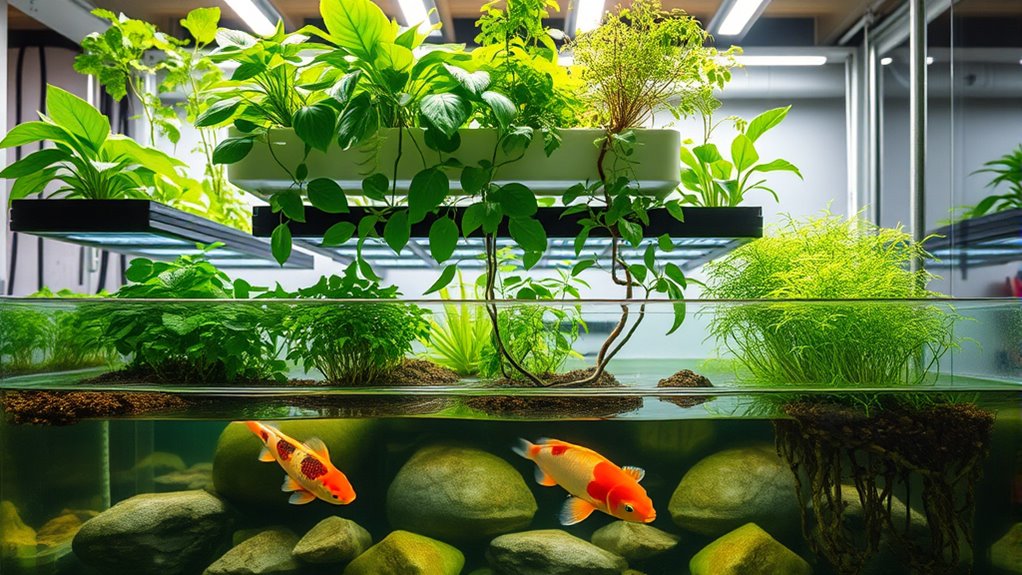
Have you ever considered growing fresh herbs and vegetables indoors with minimal effort? Indoor garden systems with aquaponics make this possible by seamlessly combining fish cultivation with plant growth. The key to a successful setup lies in understanding hydroponic integration, which involves growing plants without soil, using nutrient-rich water circulated from fish tanks. When done right, this creates a sustainable, self-sufficient environment where plants thrive on fish waste, and fish benefit from the filtered water.
Your fish tank design plays a fundamental role in the entire system. It needs to be tailored to support both healthy fish and ideal plant growth. A well-designed tank ensures proper water circulation and oxygenation, preventing stagnation and maintaining water quality. You’ll want to select a tank size appropriate to your space and the number of plants you intend to grow. A deeper tank might support more fish, which means more nutrients for your plants, but it also requires careful planning for water flow and filtration. The design should incorporate efficient filtration systems to keep the water clean and free of toxins, which is essential for both fish health and plant nutrient absorption.
Choosing the right fish tank size and filtration is key to supporting healthy fish and thriving plants.
Integrating the fish tank design with hydroponic systems involves creating a flow that mimics natural ecosystems. Water from the fish tank is circulated into the plant grow beds, carrying essential nutrients. As plants absorb these nutrients, the water becomes cleaner before returning to the fish tank, creating a closed-loop system. This cycle requires pumps and plumbing that are straightforward to operate but designed to prevent leaks or blockages. You’ll also want to consider the placement of your tank and grow beds to maximize space and ensure easy maintenance.
The beauty of this setup is that it’s largely self-sustaining once established. Fish produce waste, which acts as natural fertilizer, reducing or eliminating the need for chemical additives. The plants, in turn, filter the water, creating a healthy environment for both flora and fauna. This integration not only saves space but also minimizes water consumption because it recycles continuously. Plus, the satisfaction of harvesting fresh herbs and vegetables grown right in your home makes it all worthwhile.
In short, a thoughtfully designed fish tank tailored for aquaponics and hydroponic integration can transform your indoor space into a lush, productive garden. By focusing on effective fish tank design and water flow, you’ll create a harmonious environment where plants flourish and fish thrive — all with minimal effort on your part. Incorporating knowledge of art theory can inspire innovative design choices that enhance aesthetic appeal and functionality in your system.
Frequently Asked Questions
How Much Space Is Needed for Small-Scale Aquaponic Indoor Gardens?
You’ll need about 4 to 6 square feet for a small-scale indoor aquaponic garden. Make sure your space has sufficient lighting requirements, like grow lights or natural sunlight, to support plant growth. Choose plants suited for indoor aquaponics, such as lettuce, herbs, or spinach. Keep your setup compact and organized, allowing room for water tanks, grow beds, and filtration, while maintaining easy access for maintenance and monitoring.
What Are the Initial Costs of Combining Indoor Gardens With Aquaponics?
The initial costs of combining indoor gardens with aquaponics vary depending on your setup, but a thorough cost analysis helps you plan your budget effectively. Expect expenses for tanks, grow beds, pumps, plumbing, and lighting, which can range from a few hundred to several thousand dollars. You should prioritize budget planning to make sure you include essential equipment without overspending, making your indoor aquaponics system both affordable and sustainable.
Can Indoor Aquaponic Systems Be Automated for Easier Maintenance?
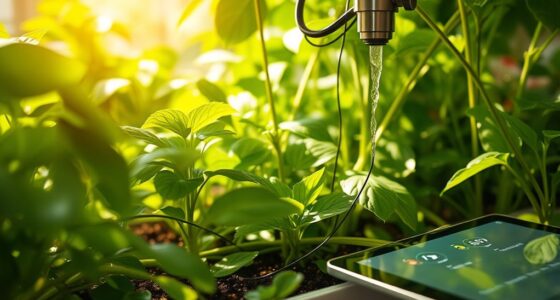
Yes, indoor aquaponic systems can be automated for easier maintenance. You can incorporate automation potential through sensors that monitor water levels, pH, and temperature, which trigger automatic adjustments. Using timers and smart controllers, you streamline tasks like feeding fish and controlling lighting. This minimizes manual effort, enhances system stability, and guarantees ideal plant and fish health, making your indoor aquaponics setup more manageable and efficient.
What Are Common Pests Specific to Indoor Aquaponic Gardens?
You’ll often face pests like aphids, spider mites, and whiteflies in indoor aquaponic gardens. To prevent these pests, focus on pest prevention by maintaining proper airflow and avoiding overwatering, which can attract insects. Use plant protection methods like introducing beneficial insects or applying organic neem oil. Regularly inspect your plants and keep the environment clean to reduce pest risks and keep your indoor garden healthy and productive.
How Do Indoor Conditions Affect Fish Health in Aquaponic Systems?
Indoor conditions directly impact fish health in aquaponic systems. You need to monitor water temperature closely, keeping it within the ideal range for your fish species, and avoid sudden fluctuations. Light exposure influences water quality and algae growth, so provide consistent lighting to prevent stress. Proper ventilation and maintaining clean, oxygen-rich water also help keep your fish healthy and thriving in an indoor environment.
Conclusion
By combining indoor garden systems with aquaponics, you can enjoy fresh, organic produce year-round. Did you know that aquaponics uses up to 90% less water than traditional gardening? This innovative approach not only saves resources but also boosts your gardening success. With just a small space, you can grow a thriving, sustainable garden indoors. Embrace this method, and you’ll reap the benefits of healthier food and a greener home environment.