IoT sensors and apps help you monitor your garden in real-time, tracking soil moisture, temperature, light, and nutrient levels. They enable you to automate watering, lighting, and pest control, reducing manual effort and preventing problems before they become serious. By using data-driven insights, you can optimize plant health and growth effortlessly. Keep going to discover how choosing the right devices and automation can transform your gardening experience.

Get garden gear delivered free with Prime
- Fast, free delivery on millions of items
- Prime Video, Amazon Music and more included
- Member-only deals all year
Key Takeaways
- IoT sensors provide real-time data on soil moisture, temperature, and light levels to optimize plant health.
- Mobile apps integrate sensor data for personalized care tips, reminders, and pest/disease alerts.
- Automated systems adjust watering and lighting based on sensor insights, reducing manual effort.
- Proper sensor selection and maintenance ensure accurate data collection and long-term garden health.
- Smart integration of sensors and apps fosters sustainable, efficient, and aesthetically pleasing gardening practices.
IoT soil moisture sensor for garden
As an affiliate, we earn on qualifying purchases.
As an affiliate, we earn on qualifying purchases.
How IoT Sensors Monitor Key Garden Conditions
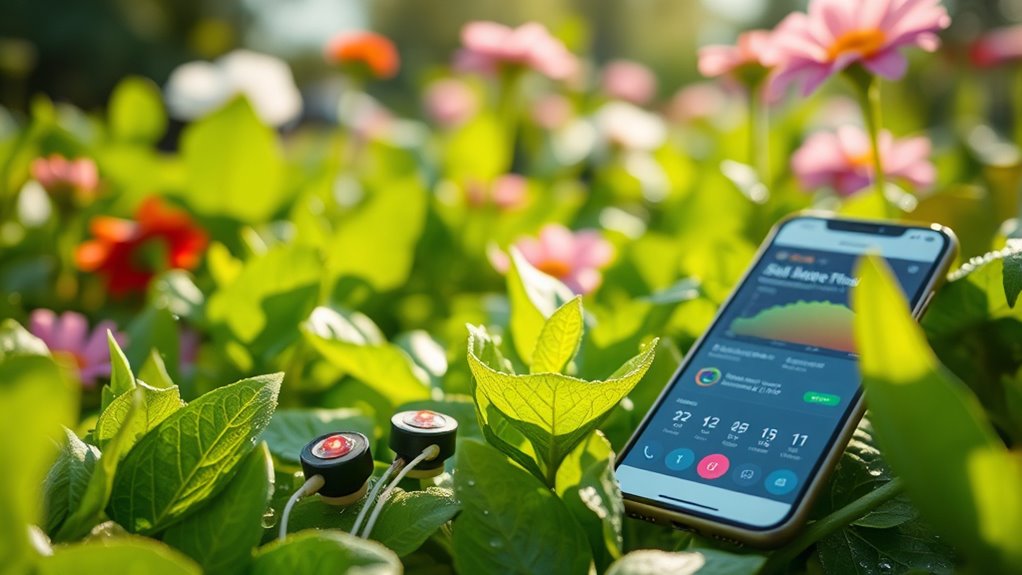
IoT sensors play a crucial role in monitoring your garden’s key conditions by providing real-time data on factors like soil moisture, temperature, and light levels. By continuously tracking soil health, these sensors help you understand when your plants need watering or adjustments to optimize growth. They also assist in pest detection by identifying unusual patterns or conditions that may attract pests, allowing you to act early. With this data, you can make informed decisions to maintain healthy soil and prevent pest infestations before they become serious. This proactive approach ensures your garden stays vibrant and productive. IoT sensors make it easier to care for your plants, giving you precise insights without constant manual checks. Smart gardening techniques enable you to automate and optimize your plant care routines for even better results.
As an affiliate, we earn on qualifying purchases.
The Role of Mobile Apps in Plant Care Management
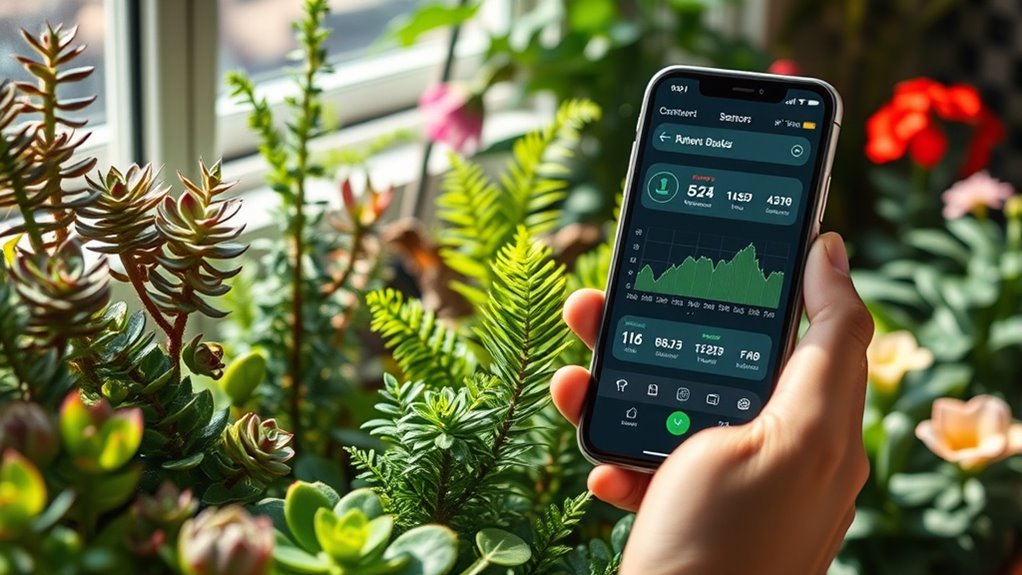
Mobile apps have revolutionized how you manage your plant care by putting essential information directly at your fingertips. With just a few taps, you can track plant health, receive pest control alerts, and schedule watering or fertilizing. These apps often include features like:
- Personalized care tips based on your plant types
- Reminders for pest inspections and treatment
- Monitoring tools that alert you to signs of disease or stress
- Many apps incorporate real-time sensor data to provide more accurate and immediate insights into your garden’s conditions
As an affiliate, we earn on qualifying purchases.
Benefits of Real-Time Data for Garden Optimization
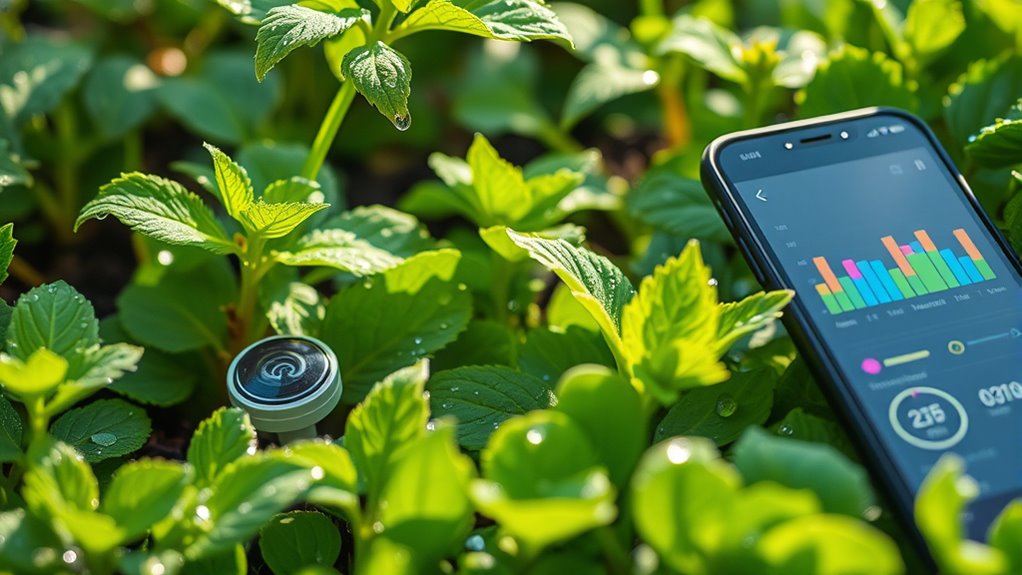
Real-time data transforms garden management by providing immediate insights into your plants’ condition, allowing you to make informed decisions quickly. With instant soil nutrient analysis, you can identify deficiencies or imbalances and adjust fertilization accordingly, promoting ideal growth. Pest detection sensors alert you to early infestations, enabling prompt action before damage spreads. This proactive approach helps you maintain a healthy garden and prevents issues from escalating. By monitoring soil moisture levels, you avoid overwatering or underwatering, ensuring plants stay hydrated without waste. Overall, real-time data empowers you to fine-tune your care routine, increase efficiency, and achieve better plant health. It turns guesswork into precise, data-driven management, saving you time and effort while keeping your garden thriving. Incorporating natural materials such as wood and linen can also enhance the authenticity and aesthetic appeal of your garden setup.
automated garden lighting system
As an affiliate, we earn on qualifying purchases.
As an affiliate, we earn on qualifying purchases.
Choosing the Right IoT Devices for Your Garden
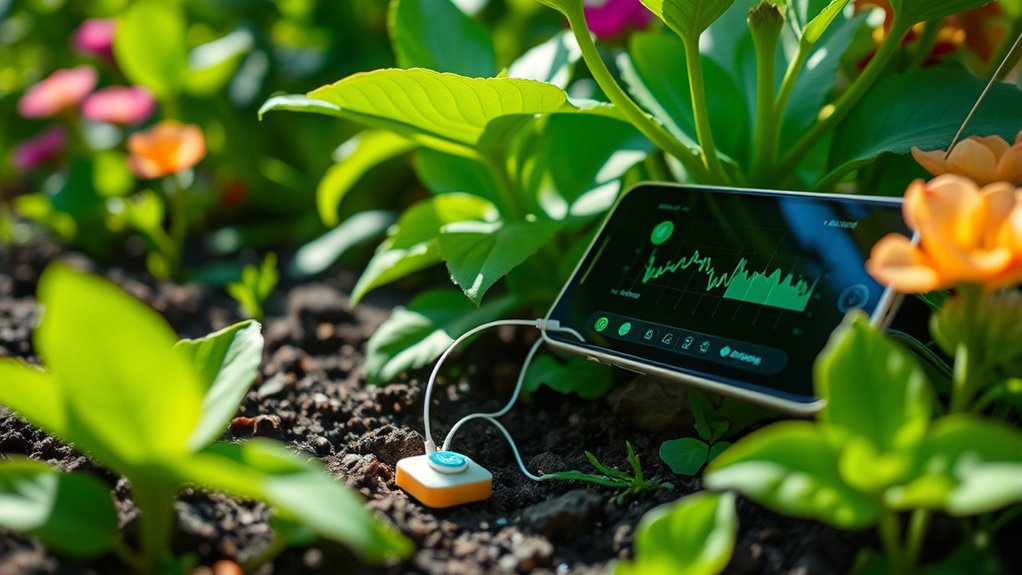
When selecting IoT devices for your garden, consider the types of smart sensors that best suit your needs, such as soil moisture or temperature sensors. Make certain these devices are compatible with your existing systems and easy to integrate. This way, you’ll guarantee seamless data collection and effective plant care. Additionally, choosing sensors with durable materials ensures longevity and reliable performance in outdoor environments.
Smart Sensor Types
Choosing the right IoT sensors for your garden depends on understanding the specific needs of your plants and environment. Different plant species and soil types require tailored monitoring. For example, if you’re growing sensitive flowers, you might need precise moisture sensors. For vegetable gardens in sandy soils, soil nutrient sensors are essential. Consider these sensor types:
- Soil moisture sensors to prevent over- or under-watering
- pH sensors to monitor soil acidity or alkalinity
- Light sensors to guarantee plants receive adequate sunlight
- Environmental conditions sensors can help track temperature and humidity levels, important factors in plant health and growth.
Compatibility and Integration
Selecting compatible IoT devices is essential to creating a seamless and effective garden monitoring system. Make sure your sensors and apps work well together, avoiding compatibility issues that can disrupt your setup. Check if your chosen devices integrate with your existing smart home or garden decor, ensuring a cohesive look. Compatibility extends to data sharing, so your soil moisture sensors, temperature gauges, and plant health monitors communicate smoothly. This integration helps you make better decisions about soil amendments and watering schedules. Also, verify that the devices support the platforms or apps you prefer, so you can easily track your garden’s health. Ensuring proper usage guidelines for each device can maximize their effectiveness and longevity. When everything works together seamlessly, caring for your plants becomes more intuitive and enjoyable, leading to a thriving, well-maintained garden.
Integrating Automation for Effortless Plant Maintenance
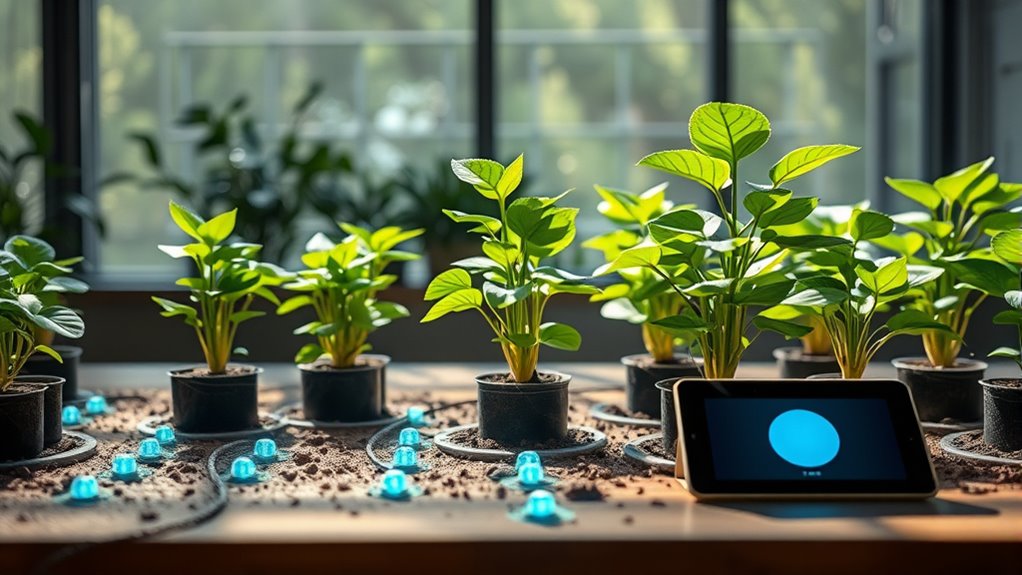
Integrating automation makes plant care simpler by handling routine tasks like watering and lighting. You can set up automated watering systems, smart lighting adjustments, and remote monitoring to keep your plants thriving effortlessly. These tools help you stay connected and in control, no matter where you are. Additionally, nutritional advantages of proper plant maintenance can be optimized through sensor data, ensuring your garden receives the right amount of nutrients and care.
Automated Watering Systems
Automated watering systems leverage IoT technology to make certain your plants receive the right amount of water without manual effort. These systems monitor soil moisture levels, ensuring your garden stays healthy and vibrant. By maintaining ideal soil health, you help plants absorb nutrients efficiently and reduce overwatering. Plus, consistent watering can help with pest control by preventing stressed plants that attract pests. Additionally, integrating sensor technology improves the accuracy of soil condition measurements, leading to even more efficient watering schedules.
Consider the benefits:
- Precise watering schedules based on real-time soil data
- Reduced water waste and lower utility bills
- Less time spent on manual watering and monitoring
With these systems, you can enjoy a thriving garden while effortlessly managing watering needs, keeping your plants healthy and pest-free.
Smart Lighting Adjustments
Have you ever noticed how different plants need varying amounts of light to thrive? With smart lighting adjustments, you can guarantee each plant gets the right amount of light, enhancing your garden’s aesthetics. IoT sensors monitor light levels and automatically modify your lighting system, providing ideal conditions without constant effort. This automation helps you select the best plant species for your space, tailoring light exposure to their specific needs. As a result, your garden remains vibrant and healthy, even if your schedule is busy. Smart lighting also prevents overexposure or insufficient light, which can stress plants. By integrating these adjustments, you create a balanced environment that promotes growth and beauty, making plant care effortless and your garden more visually appealing. Understanding plant lighting requirements is key to optimizing your garden’s health and appearance.
Remote Monitoring Capabilities
By combining smart lighting with remote monitoring capabilities, you can oversee your garden’s health from anywhere. With real-time data, you’ll quickly spot issues like plant disease detection or soil nutrient imbalances before they worsen. Automated alerts notify you of problems, so you don’t have to constantly check your system. You can also remotely adjust watering schedules or lighting based on soil moisture and light levels. This integration simplifies plant maintenance and saves you time. Additionally, home decoration inspiration can be incorporated with smart plant displays to enhance your living space while maintaining a thriving garden.
Future Trends in IoT-Enabled Gardening

As technology continues to advance, IoT-enabled gardening is poised to become more intelligent and personalized. Future trends include integrating sensors into urban agriculture systems, allowing city dwellers to grow fresh produce efficiently. These innovations will promote sustainable farming practices by optimizing water use, reducing waste, and improving crop yields. Expect smarter automation that adjusts lighting, watering, and nutrient delivery based on real-time data, making gardening effortless regardless of your skill level. Enhanced connectivity will enable you to monitor multiple garden sites remotely, ensuring plants thrive even when you’re away. As IoT evolves, it will foster more eco-friendly practices, supporting healthier environments and communities. Additionally, vertical farming techniques will become more prevalent, maximizing limited space and resource efficiency. Ultimately, these advancements will make gardening more accessible, sustainable, and tailored to individual needs.
Frequently Asked Questions
How Secure Are Iot Plant Care Systems Against Hacking?
You’re right to wonder about the security of IoT plant care systems. While they offer convenience, cybersecurity risks and data privacy concerns exist. Hackers could potentially access your device data or disrupt functions. To stay safe, make sure your systems have strong passwords, keep firmware updated, and use secure Wi-Fi networks. Being proactive helps protect your garden’s sensors and your personal information from cyber threats.
Can Iot Devices Detect Plant Diseases Early?
They say a stitch in time saves nine. With IoT devices, you can catch plant diseases early through advanced sensor accuracy. These sensors monitor humidity, temperature, and soil health, providing real-time data that helps detect signs of disease before visible symptoms appear. By acting swiftly, you protect your plants and ensure healthy growth, making IoT plant care a dependable tool for early plant disease detection.
What Is the Cost Range for Setting up Iot Gardening Solutions?
When considering IoT gardening solutions, you should do a thorough cost analysis and budget planning. Generally, setup costs range from $50 to $300 for basic sensors and controllers. More advanced systems with multiple sensors and remote access can cost up to $1,000 or more. Keep in mind, investing in quality devices can save you money long-term by improving plant health and reducing maintenance costs.
How Do Iot Sensors Perform in Extreme Weather Conditions?
Imagine your sensors in a storm; their sensor durability and weatherproof design are essential. In real cases, high-quality sensors with robust weatherproofing perform well in extreme conditions, resisting rain, snow, and heat. These features guarantee accurate data collection despite harsh weather. Properly designed IoT sensors maintain functionality, giving you confidence that your garden stays monitored and healthy, no matter the weather outside.
Are There Eco-Friendly or Sustainable Iot Gardening Options?
You can find eco-friendly IoT gardening options that support sustainable practices like organic composting and native plant integration. These devices use energy-efficient sensors and solar power, reducing environmental impact. By choosing smart systems that promote native plants and composting, you help conserve resources and boost biodiversity. Such sustainable solutions make your garden more eco-friendly, aligning technology with nature to create a thriving, responsible garden environment.
Conclusion
Embrace IoT-powered gardening to transform your outdoor space. While sensors and apps offer effortless care, they also deepen your connection with nature. As technology simplifies watering and monitoring, it reminds you that true growth comes from nurturing with awareness and patience. In this blend of innovation and tradition, you find a garden that’s not just thriving but also a reflection of your dedication and love for your plants.
Fall yard work Picks
leaf blowers
As an affiliate, we earn on qualifying purchases.