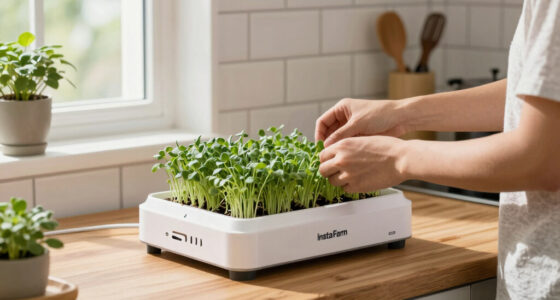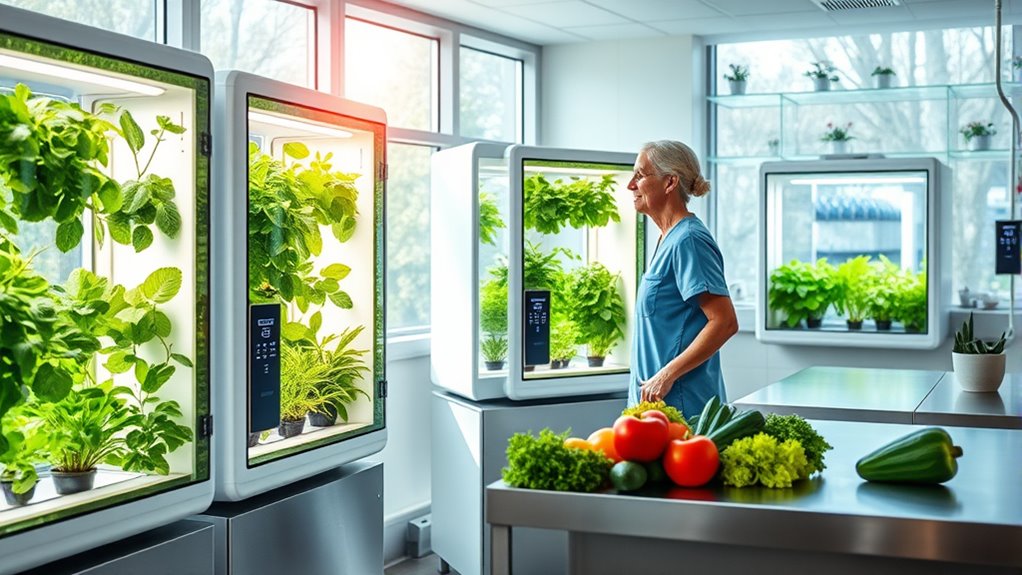

Smart gardens are transforming hospital food by providing you with fresh, nutrient-rich produce right on-site, which boosts flavor, quality, and nutritional value. This means your meals become more vibrant and delicious, supporting quicker recovery and better health. By growing ingredients directly within the hospital, it also reduces environmental impact and guarantees safer, sustainable choices. Keep exploring to discover how this innovative approach is reshaping nourishment in healthcare settings.

Get garden gear delivered free with Prime
- Fast, free delivery on millions of items
- Prime Video, Amazon Music and more included
- Member-only deals all year
Key Takeaways
- Smart gardens provide fresh, nutrient-rich produce harvested at peak ripeness, improving the quality and nutritional value of hospital meals.
- Automated monitoring and precise resource management ensure consistent supply of high-quality ingredients for patient diets.
- Incorporating homegrown herbs and vegetables enhances flavor, variety, and overall meal satisfaction for patients.
- The use of sustainable, local produce reduces food miles, ensuring fresher ingredients and better food safety.
- Patient engagement in gardening activities fosters a connection to their food, promoting healthier eating habits and satisfaction.

Smart gardens are transforming hospital food by bringing fresh, locally grown produce directly to healthcare facilities. This innovation allows hospitals to incorporate sustainable practices into their daily operations, reducing reliance on external suppliers and minimizing food miles. As a result, the food served to patients becomes not only fresher but also more environmentally friendly. You’ll notice that this approach supports a more sustainable food system, lowering the carbon footprint associated with traditional supply chains. By growing their own herbs, vegetables, and even small fruits, hospitals can guarantee the quality and safety of the ingredients used in patient meals, which directly impacts patient well-being.
Smart gardens bring fresh, local produce to hospitals, reducing food miles and ensuring healthier, safer patient meals.
With smart gardens, you have the ability to harvest produce at its peak ripeness, which preserves essential nutrients and flavors that often diminish during long transportation and storage. This means that the food you receive in hospitals is tastier, more nutritious, and more appealing. Improved food quality can positively influence patient recovery and satisfaction, as good nutrition is fundamental for healing and overall health. When patients are presented with fresh, vibrant meals, it not only boosts their appetite but also promotes a sense of care and attention to their needs, fostering a more holistic approach to healing. Additionally, the use of automation and monitoring technology makes maintaining the gardens more efficient, ensuring a reliable supply of fresh ingredients.
Moreover, smart gardens facilitate educational and community engagement opportunities, which can enhance the hospital’s overall environment. Staff and patients alike can participate in gardening activities, fostering a sense of connection to the food they consume. This involvement helps promote mindful eating and encourages healthier choices, further supporting patient well-being. The integration of sustainable practices also aligns with many hospitals’ goals of reducing waste and conserving resources, making their operations more eco-conscious and resilient.
From a practical standpoint, smart gardens are designed to be efficient and easy to maintain, often utilizing automation and intelligent monitoring systems that optimize water use and nutrient delivery. This means you spend less time on upkeep while still guaranteeing the garden thrives, providing a continuous supply of fresh produce. The availability of fresh ingredients allows kitchens to create more diverse and flavorful meals, which can improve patient satisfaction and dietary compliance. The combination of sustainability, quality, and patient-centered care makes smart gardens a powerful tool in revamping hospital food systems.
In essence, by integrating smart gardens into healthcare settings, you’re helping to create a more sustainable, health-focused food environment that prioritizes patient well-being. Not only does this approach enhance nutrition and meal quality, but it also aligns with broader efforts to promote environmental responsibility and community health. As hospitals continue to adopt these innovative solutions, they’re setting new standards for nourishing patients in ways that benefit everyone involved. Furthermore, utilizing urban farming techniques can help hospitals maximize limited space and improve local food resilience.
As an affiliate, we earn on qualifying purchases.
Frequently Asked Questions
What Are the Initial Costs of Implementing Smart Gardens in Hospitals?
When considering the initial investment for smart gardens in hospitals, you should know costs can vary based on size and technology features. You might explore funding options like grants, hospital budgets, or partnerships to cover expenses. The upfront costs include equipment, installation, and training, but they often lead to long-term savings and improved food quality. Planning carefully helps make sure your smart garden implementation is financially feasible and successful.
How Do Smart Gardens Adapt to Different Hospital Environments?
Smart gardens adapt to different hospital environments through adaptive integration and environmental customization. You can tailor these gardens to fit various space constraints, lighting conditions, and climate needs, ensuring ideal plant growth. By using sensors and customizable settings, you actively manage environmental factors like humidity and temperature. This flexibility allows smart gardens to seamlessly blend into diverse hospital settings, enhancing sustainability and fresh food availability for patients and staff alike.
Are There Any Maintenance Challenges Associated With Smart Garden Systems?
You might think smart gardens are hassle-free, but system malfunctions can happen, causing disruptions. Regular maintenance is essential to prevent issues like sensor failures or watering errors. Pest control also remains a challenge, as pests can sometimes invade even high-tech systems. Staying vigilant, performing routine checks, and promptly addressing malfunctions or pest problems guarantee your smart garden runs smoothly, delivering fresh, healthy produce consistently.
How Quickly Can Hospitals See Improvements in Food Quality After Installation?
You’ll notice improvements in food quality fairly quickly after installing a smart garden, often within a few weeks. The enhanced garden aesthetics boost patient satisfaction, as patients enjoy fresh, vibrant greens and herbs right from their hospital environment. This rapid transformation not only elevates the visual appeal but also provides fresh ingredients, making meals more nutritious and flavorful, ultimately contributing to a better healing experience for patients.
What Training Is Required for Hospital Staff to Operate Smart Gardens Effectively?
Staff training is essential for effective technology integration with smart gardens. You’ll need to learn how to operate the systems, monitor plant health, and troubleshoot issues. Usually, training sessions cover device setup, maintenance, and data management. You might also receive manuals or online tutorials. By ensuring your staff is well-trained, you help maximize the garden’s benefits, leading to fresher, healthier hospital food and smoother daily operations.
As an affiliate, we earn on qualifying purchases.
Conclusion
As you step into these smart gardens, you become part of a new chapter where health and innovation grow side by side. These gardens symbolize hope, nurturing more than just food—they cultivate wellness and sustainability within hospitals. By embracing this green revolution, you help turn sterile corridors into vibrant ecosystems. In doing so, you’re not just improving hospital food—you’re planting seeds for a healthier future, where compassion and technology bloom together in every nourishing bite.
hydroponic vegetable growing kit
As an affiliate, we earn on qualifying purchases.
As an affiliate, we earn on qualifying purchases.
As an affiliate, we earn on qualifying purchases.
Halloween Picks
halloween
As an affiliate, we earn on qualifying purchases.