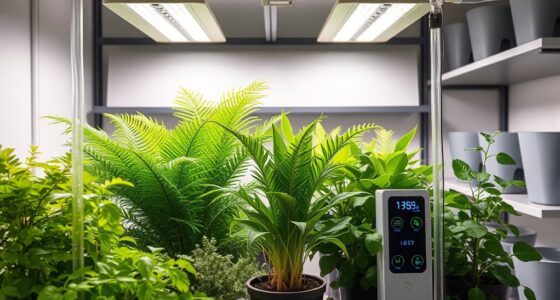
Most people underestimate how much planning grow shelf lights need for success. You need to take into account the right spectrum, placement, and timing to guarantee healthy plant growth. Improper setup can lead to weak, leggy plants or wasted energy. Proper planning helps optimize light exposure, reduce costs, and ensure even coverage. If you want your plants to thrive, it’s vital to pay attention to these details—continue along, and you’ll find out how to get it just right.

Get garden gear delivered free with Prime
- Fast, free delivery on millions of items
- Prime Video, Amazon Music and more included
- Member-only deals all year
Key Takeaways
- Proper spectrum selection ensures plants receive the right wavelengths for healthy growth, preventing weak or leggy plants.
- Correct placement and adjustable fixtures optimize light coverage and prevent damage or insufficient illumination.
- Consistent timing and reliable timers maintain optimal photoperiods, crucial for plant development.
- Balancing light intensity with energy efficiency reduces costs and prevents heat stress.
- Comprehensive planning of all factors enhances growth success and maximizes yield potential.

Many people underestimate how much planning goes into setting up grow shelf lights, assuming that simply plugging them in will suffice. However, successful indoor gardening depends heavily on understanding how your lights interact with your plants’ needs. One of the most *essential* factors is the light spectrum. Not all grow lights emit the same wavelengths, and plants rely on specific parts of the spectrum—mainly blue and red light—for photosynthesis and healthy growth. If you choose a light that lacks the proper spectrum, your plants may struggle, become leggy, or produce weak yields. To optimize growth, you need to select grow shelf lights that offer a full or targeted spectrum tailored to your plants’ growth stages.
Effective grow shelf lighting requires understanding light spectrum for healthy, thriving plants.
Beyond the spectrum, energy efficiency plays a *key* role in planning your setup. While it might be tempting to go for the brightest, most powerful lights, these can consume a significant amount of electricity, raising your costs over time. Energy-efficient grow lights, such as LEDs, deliver the same or better light quality while using less power. This not only cuts your electricity bills but also reduces heat output, which is *paramount* in small or enclosed spaces. When planning your grow shelf lighting, consider the balance between light intensity and energy consumption. You want enough light to promote healthy plant development, but not so much that it wastes energy or causes heat stress.
Placement is another *important* element that requires careful thought. You need to position your lights at the right height and angle to *guarantee* even coverage across your shelves. If they’re too close, your plants might get scorched; too far, and they won’t get enough light. Adjustable fixtures can help you fine-tune the distance as your plants grow. Additionally, consider the duration of light exposure; most plants require 12 to 16 hours of light daily during their vegetative stage, so setting a reliable timer is *crucial* for consistency.
In essence, setting up grow shelf lights isn’t just about plugging in a fixture and expecting results. It involves understanding the importance of the light spectrum, selecting energy-efficient options, and placing your lights thoughtfully to optimize plant health. By dedicating time to this planning phase, you *guarantee* your indoor garden will thrive, saving you money and effort in the long run. Proper planning makes all the difference between a struggling setup and a lush, productive indoor garden.
full spectrum LED grow lights for shelves
As an affiliate, we earn on qualifying purchases.
As an affiliate, we earn on qualifying purchases.
Frequently Asked Questions
How Do I Determine the Right Light Intensity for My Plants?
You determine the right light intensity by considering your plant’s light spectrum needs and plant photoperiod. Check the specific light requirements for your plant species, focusing on the spectrum that promotes growth. Adjust the light intensity so your plants receive enough light without burning or stretching. Monitor how they respond—healthy, compact growth indicates proper intensity. Regularly tweak your setup to guarantee your plants thrive under ideal lighting conditions.
What Are the Best Placement Strategies for Grow Shelf Lights?
To get the most out of your grow shelf lights, you should place them evenly across your plants, ensuring the light spectrum is optimized for growth stages. Keep lights at the right distance to maximize energy efficiency without causing stress. Adjust their placement as plants grow, and consider using adjustable fixtures. This thoughtful positioning helps your plants thrive while conserving energy, making your setup both effective and eco-friendly.
How Long Should I Leave Grow Lights on Each Day?
You should leave grow lights on for about 12-16 hours daily, depending on your plant’s needs. During this time, make certain the light spectrum matches their growth stage—blue light for vegetative and red for flowering. Remember to water your plants regularly, as consistent watering supports healthy growth. Adjust the light duration based on your plant’s response, and monitor for signs of overexposure or stress.
What Safety Precautions Should I Consider With Grow Shelf Lights?
Think of your grow shelf lights as guiding stars in your garden. To keep them safe, prioritize electrical safety by checking cords and outlets regularly, avoiding overloading circuits. Use proper covers and keep lights away from water. Also, minimize light pollution by positioning lights carefully, so they don’t disturb neighbors or escape into the night sky. These precautions guarantee your plants thrive safely and your environment remains undisturbed.
How Can I Customize Lighting for Different Plant Types?
To customize lighting for different plant types, focus on adjusting the light spectrum to match their specific needs. For example, use blue light to promote leafy growth and red light for flowering and fruiting. Pay attention to plant color, as healthier leaves indicate proper light. You can also vary light intensity and duration, ensuring each plant receives ideal conditions for growth, flowering, or fruit development.
adjustable grow light fixtures for indoor plants
As an affiliate, we earn on qualifying purchases.
As an affiliate, we earn on qualifying purchases.
Conclusion
Remember, while grow shelf lights might seem straightforward, a little extra thought can make a world of difference. Paying attention to planning guarantees your plants get the perfect glow they need to thrive. Sometimes, the most subtle adjustments can lead to the brightest results. So, take your time, consider all the details, and trust that your mindful approach will nurture growth in ways you might not immediately see. After all, patience often plants the seeds for success.
energy-efficient grow lights for indoor gardening
As an affiliate, we earn on qualifying purchases.
As an affiliate, we earn on qualifying purchases.
grow light timers for plant growth
As an affiliate, we earn on qualifying purchases.
As an affiliate, we earn on qualifying purchases.
Fall yard work Picks
leaf blowers
As an affiliate, we earn on qualifying purchases.