The best fish fertilizers pair useful plant nutrients with a formula and bottle size that suit your garden routine. My best overall pick is GS Plant Foods Liquid Fish and Kelp Fertilizer, which combines fish and kelp in a gallon format for broad garden use. Neptune’s Harvest Organic Fish Fertilizer 2-4-1 stands out for its distinct nutrient balance, while Alaska Fish Fertilizer 5-1-1 is a recognizable choice for gardeners seeking a higher-nitrogen formula. The main tradeoffs are nutrient emphasis, organic certification or ingredients, concentration, and the odor and handling that can come with liquid fish products. Read on for the full breakdown and guidance on matching a formula to your plants and application habits.

Get garden gear delivered free with Prime
- Fast, free delivery on millions of items
- Prime Video, Amazon Music and more included
- Member-only deals all year
Complete the kit


Key Takeaways
- GS Plant Foods Liquid Fish and Kelp earns the overall lead by pairing fish with kelp in a large-format liquid, while its gallon size may be more than a small garden needs.
- Neptune’s Harvest 2-4-1 has a different nutrient emphasis from the 5-1-1 formulas, making label comparison more useful than choosing by brand name alone.
- The lineup includes several compact 8-ounce products, including TPS Nutrients and fish-and-seaweed options; they suit cautious trial use but call for more frequent replenishment than gallon bottles.
- Fish-only, fish-and-kelp, and fish-and-seaweed formulas are not interchangeable: the added sea plants change the ingredient profile, so buyers should check the full label and their existing feeding plan.
- Bottle size and stated analysis vary widely across the 13 picks, so the right choice depends on garden scale and intended use—not simply the largest container or highest first number.
| GS Plant Foods Liquid Fish and Kelp Fertilizer, 1 Gallon |  | Best Overall | Brand: GS Plant Foods | Form: Liquid concentrate | Volume: 128 fluid ounces (1 gallon) | VIEW LATEST PRICE | See Our Full Breakdown |
| TPS Nutrients Fish Fertilizer, 8 oz | 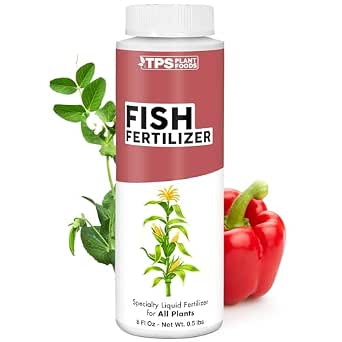 | Best for Small Collections of Plants | Brand: TPS Nutrients | Model number: TPS-FISHFERTILIZER-8OZ | Form: Liquid | VIEW LATEST PRICE | See Our Full Breakdown |
| Liquinox 7128 Fish Emulsion 5-1-1 Fertilizer, 1 Gallon |  | Best for Defined Nitrogen Feeding | Brand: Liquinox | Model: 7128 | Fertilizer analysis: 5-1-1 | VIEW LATEST PRICE | See Our Full Breakdown |
| Organic Fish Fertilizer for Gardens, Fruits, and Flowers, 1 Gallon |  | Best for Balanced Fruit and Flower Feeding | Fertilizer type: Liquid fish emulsion | NPK ratio: 2-3-1 | Volume: 1 gallon | VIEW LATEST PRICE | See Our Full Breakdown |
| Bloom City Organic Wild Fish Fertilizer, 32 oz |  | Best Mid-Size Pick for Indoor and Outdoor Use | Brand: Bloom City | Volume: 32 ounces | Nutrient source: Wild fish | VIEW LATEST PRICE | See Our Full Breakdown |
| FoxFarm Bush Doctor Wholly Mackerel Fish Fertilizer, 3-1-0, 1 Pint |  | Best for Root and Leaf Support | Brand: FoxFarm | Model: FX14113 | Fertilizer analysis: 3-1-0 | VIEW LATEST PRICE | See Our Full Breakdown |
| Neptune’s Harvest Organic Fish Fertilizer 2-4-1, 32 fl oz |  | Best for Flexible Application | Brand: Neptune’s Harvest | NPK ratio: 2-4-1 | Type: Organic liquid fish fertilizer | VIEW LATEST PRICE | See Our Full Breakdown |
| GS Plant Foods Organic Liquid Fish Fertilizer, 2-3-1, 1 Gallon | 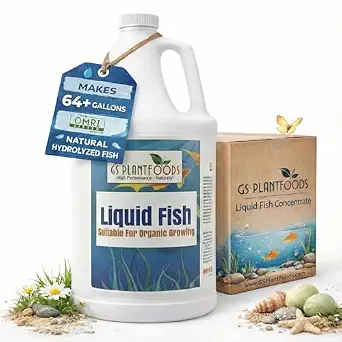 | Best for Large Gardens | Brand: GS Plant Foods | Type: Organic liquid fish fertilizer | NPK ratio: 2-3-1 | VIEW LATEST PRICE | See Our Full Breakdown |
| Alaska Fish Fertilizer for Plants, OMRI Listed, 5-1-1 |  | Best for Nitrogen-Focused Feeding | Fertilizer analysis: 5-1-1 | Type: Liquid fish emulsion fertilizer | Organic certification: OMRI Listed | VIEW LATEST PRICE | See Our Full Breakdown |
| Fish and Seaweed Liquid Fertilizer for Plants, 8 oz (250 mL) |  | Best Compact Fish-and-Seaweed Blend | Product type: Liquid fish and seaweed fertilizer | Volume: 8 ounces (250 mL) | Suitable for: Indoor and outdoor plants, containers, gardens, and raised beds | VIEW LATEST PRICE | See Our Full Breakdown |
| Alaska Fish Fertilizer Liquid Plant Food, 32 fl oz |  | Best for Hydroponic and Organic Gardening | Brand: Mandea | Form: Liquid | Volume: 946 ml (32 fl oz) | VIEW LATEST PRICE | See Our Full Breakdown |
| Liquid Salmon Fish Emulsion Fertilizer for Plants, 8 oz | 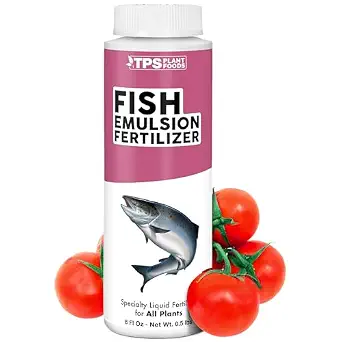 | Best Compact Pick for Small Gardens | Product type: Liquid fish emulsion fertilizer | Size: 8 oz | Suitable for: Indoor and outdoor gardens | VIEW LATEST PRICE | See Our Full Breakdown |
| Neptune’s Harvest Fish & Seaweed Liquid Fertilizer, 2-3-1, 36 fl oz |  | Best Fish-and-Seaweed Blend | Brand: Neptune’s Harvest | Formula: 2-3-1 | Contents: 75% fish, 25% seaweed | VIEW LATEST PRICE | See Our Full Breakdown |
| fish fertilizer | Volume | Brand |
|---|---|---|
| GS Plant Foods Liquid Fish and | 128 fluid ounces (1 gallon) | GS Plant Foods |
| TPS Nutrients Fish Fertilizer | 8 fluid ounces | TPS Nutrients |
| Liquinox 7128 Fish Emulsion 5- | — | Liquinox |
| Organic Fish Fertilizer for Ga | 1 gallon | — |
| Bloom City Organic Wild Fish F | 32 ounces | Bloom City |
| FoxFarm Bush Doctor Wholly Mac | 1 pint | FoxFarm |
| Neptune’s Harvest Organic Fish | 32 fluid ounces | Neptune’s Harvest |
| GS Plant Foods Organic Liquid | 128 fluid ounces (1 gallon) | GS Plant Foods |
| Alaska Fish Fertilizer for Pla | — | — |
| Fish and Seaweed Liquid Fertil | 8 ounces (250 mL) | — |
| Alaska Fish Fertilizer Liquid | 946 ml (32 fl oz) | Mandea |
| Liquid Salmon Fish Emulsion Fe | — | — |
| Neptune’s Harvest Fish & Seawe | 36 fl oz | Neptune’s Harvest |
More Details on Our Top Picks
GS Plant Foods Liquid Fish and Kelp Fertilizer, 1 Gallon
Fish hydrolysate paired with North Atlantic kelp gives this formula broader appeal than a fish-only option: it can feed vegetables, ornamentals, lawns, and houseplants through either a soil drench or foliar spray. Its OMRI listing also makes it a practical fit for growers following organic standards. Compared with Liquinox 7128, which provides a defined 5-1-1 analysis and added iron, manganese, and zinc, GS Plant Foods leans on its fish-and-seaweed blend and flexible plant coverage rather than a stated NPK ratio. The gallon container suits gardeners treating multiple beds or plant types, but it is a larger commitment than TPS Nutrients’ 8-ounce bottle. Dilution is required, and repeat applications every two to four weeks call for a regular routine.
Pros:- OMRI-listed for organic growing
- Combines North Atlantic seaweed with fresh fish hydrolysate
- Can be applied as a foliar spray or soil drench
- Suitable for a broad mix of plants, from vegetables to houseplants
Cons:- Requires dilution at different indoor and outdoor rates
- Needs repeat applications every two to four weeks
- A gallon may be more concentrate than small collections of plants need
Best for: Organic-minded gardeners who feed a mix of vegetables, lawns, ornamentals, and houseplants and want both soil and foliar application options.
Not ideal for: People with only a few plants or anyone who wants a ready-to-use fertilizer; this gallon concentrate needs measuring and dilution.
- Brand:GS Plant Foods
- Form:Liquid concentrate
- Volume:128 fluid ounces (1 gallon)
- Ingredients:North Atlantic seaweed (Ascophyllum nodosum) and fresh fish hydrolysate
- Application methods:Foliar spray or soil drench
- Mixing ratio:1:128 indoors; 1:64 outdoors
- Application frequency:Every 2–4 weeks
- Organic listing:OMRI listed
- Made in:USA
Our verdict“Choose this gallon blend if you want an OMRI-listed fish-and-kelp concentrate for several kinds of plants and are comfortable mixing it on a schedule.”
TPS Nutrients Fish Fertilizer, 8 oz
The compact 8-ounce bottle makes this a more manageable entry into fish feeding than the gallon formats from GS Plant Foods and Liquinox. Its hydrolyzed, low-nitrogen formula is described as gentle and intended to support roots, foliage, and soil microbial activity, which suits a modest mix of houseplants and garden plants rather than a large area demanding frequent, higher-nitrogen feeding. The tradeoff is that low nitrogen may not meet the needs of plants with stronger nitrogen demands, and the available product details do not give a dilution rate or NPK analysis for precise planning. Compared with Liquinox 7128’s stated 5-1-1 analysis, TPS offers less nutrient specificity; its smaller size is the more useful distinction for buyers who do not need bulk.
Pros:- Compact 8-ounce size suits small gardens and plant collections
- Hydrolyzed liquid formula is designed for quick uptake
- Intended to support roots and soil microbial activity
- Can be used with vegetables, flowers, garden plants, and houseplants
Cons:- Low nitrogen may not suit plants needing stronger nitrogen feeding
- Product details do not provide an NPK ratio
- Product details do not specify a mixing rate
Best for: Houseplant owners and small-space gardeners who want a small bottle of hydrolyzed fish fertilizer for a few vegetables, flowers, or garden plants.
Not ideal for: Gardeners feeding nitrogen-hungry plants or large beds who need a stated nutrient analysis, mixing directions, or a larger supply.
- Brand:TPS Nutrients
- Model number:TPS-FISHFERTILIZER-8OZ
- Form:Liquid
- Volume:8 fluid ounces
- Formula:Hydrolyzed, low-nitrogen
- Intended use:Gardens and houseplants
- Country of origin:USA
- Number of items:1
Our verdict“Pick TPS Nutrients for a small plant collection and gentle feeding, but choose a fertilizer with a stated higher-nitrogen analysis for demanding growth.”
Liquinox 7128 Fish Emulsion 5-1-1 Fertilizer, 1 Gallon
A stated 5-1-1 analysis makes Liquinox a clearer choice for gardeners who want a fish emulsion with a defined nitrogen-forward ratio. It also contains iron, manganese, and zinc, and can be applied to soil or foliage across lawns, vegetables, shrubs, trees, flowers, and potted plants. That specification gives it an advantage over Bloom City Organic Wild Fish Fertilizer, whose supplied details describe broad plant use but no NPK analysis. By contrast, GS Plant Foods Liquid Fish and Kelp adds seaweed and carries an OMRI listing, while Liquinox emphasizes its analysis and trace minerals. The gallon container is suited to broader garden use, though the stated rate of two tablespoons per gallon requires mixing and the monthly growing-season schedule is less frequent than GS Plant Foods’ two-to-four-week interval.
Pros:- Provides a stated 5-1-1 fertilizer analysis
- Includes iron, manganese, and zinc
- Suitable for soil or foliar application
- Listed for a wide range of garden and potted plants
Cons:- Requires dilution at two tablespoons per gallon
- Application is recommended monthly during the growing and blooming season
- Does not offer the listed seaweed component found in GS Plant Foods Liquid Fish and Kelp
Best for: Gardeners caring for lawns, vegetables, shrubs, or potted plants who want a fish emulsion with a stated 5-1-1 analysis and specified trace minerals.
Not ideal for: Buyers prioritizing an OMRI-listed fish-and-kelp blend or those who prefer a smaller container and do not need a gallon supply.
- Brand:Liquinox
- Model:7128
- Fertilizer analysis:5-1-1
- Form:Liquid fish emulsion
- Container size:1 gallon
- Application methods:Soil or foliar
- Mixing ratio:2 tablespoons per gallon
- Active ingredients:Iron, manganese, and zinc
Our verdict“Choose Liquinox if a defined, nitrogen-forward fish emulsion with trace minerals matters more to you than a fish-and-kelp blend.”
Organic Fish Fertilizer for Gardens, Fruits, and Flowers, 1 Gallon
Its 2-3-1 NPK ratio sets this sustainably sourced, cold-pressed fish emulsion apart from Liquinox 7128’s more nitrogen-forward 5-1-1 formula. That makes it a distinct option for gardeners seeking a fish fertilizer with a stated ratio that is not centered as heavily on nitrogen, while the soil-drench and foliar-spray options give flexibility across gardens, fruit plants, and flowers. Compared with GS Plant Foods Liquid Fish and Kelp, this product’s supplied details specify an NPK ratio but do not mention kelp or an OMRI listing. The gallon size is better suited to ongoing garden use than TPS Nutrients’ 8-ounce bottle, though buyers with a small number of plants may not need that much. Its pungent fish smell is a practical drawback, especially around indoor plants or frequently used outdoor spaces.
Pros:- Provides a stated 2-3-1 NPK ratio
- Made from sustainably sourced fish
- Can be used as a soil drench or foliar spray
- Intended for gardens, fruits, and flowers
Cons:- Has a pungent fishy smell
- Gallon volume may be excessive for a few houseplants
- Supplied details do not specify a mixing ratio or application schedule
Best for: Gardeners tending fruits, flowers, and vegetables who want a gallon of fish emulsion with a stated 2-3-1 ratio and two application methods.
Not ideal for: Indoor growers sensitive to fish odor, or gardeners who need an OMRI listing or a smaller bottle for limited plantings.
- Fertilizer type:Liquid fish emulsion
- NPK ratio:2-3-1
- Volume:1 gallon
- Source:Sustainably sourced fish
- Processing:Cold-pressed
- Application methods:Soil drench or foliar spray
- Intended plants:Gardens, fruits, and flowers
Our verdict“Choose this fertilizer for larger fruit and flower gardens where a stated 2-3-1 ratio matters more than low odor or a compact container.”
Bloom City Organic Wild Fish Fertilizer, 32 oz
A 32-ounce bottle lands between TPS Nutrients’ compact 8-ounce option and the gallon containers from GS Plant Foods and Liquinox, making Bloom City a practical middle-size choice for gardeners who want more than a trial-sized supply without committing to a gallon. Its wild-fish nutrient source and stated indoor-and-outdoor suitability cover vegetables, flowers, and ornamental plants, including container gardens and landscapes. Compared with GS Plant Foods Liquid Fish and Kelp, Bloom City’s supplied details do not specify kelp, an OMRI listing, dilution rates, or an application schedule; buyers who need those particulars may prefer GS. The tradeoff is limited product information for planning feeding strength and timing. Bloom City makes more sense as a flexible-use fish fertilizer than as a precision choice for gardeners shopping by NPK ratio.
Pros:- 32-ounce size sits between small bottles and gallon containers
- Uses wild fish as its nutrient source
- Suitable for indoor and outdoor growing
- Can be used for vegetables, flowers, and ornamental plants
Cons:- Supplied product details do not state an NPK ratio
- No mixing rate or application schedule is provided in the supplied details
- No OMRI listing is specified in the supplied details
Best for: Home gardeners with vegetables, flowers, or ornamentals indoors and outdoors who want a mid-size bottle rather than an 8-ounce or gallon format.
Not ideal for: Growers who need a stated NPK ratio, OMRI listing, or mixing and application directions before choosing a fertilizer.
- Brand:Bloom City
- Volume:32 ounces
- Nutrient source:Wild fish
- Suitable plants:Vegetables, flowers, and ornamental plants
- Use:Indoor and outdoor
- Growing settings:Containers and landscapes
- Made in:USA
Our verdict“Choose Bloom City if you want a mid-size fish fertilizer for indoor and outdoor ornamentals or edible plants and do not need detailed nutrient or mixing specifications.”
FoxFarm Bush Doctor Wholly Mackerel Fish Fertilizer, 3-1-0, 1 Pint
FoxFarm Bush Doctor Wholly Mackerel is a concentrated fish fertilizer for gardeners who want a straightforward 3-1-0 feed in a smaller bottle. Its nitrogen-forward formula is suited to leafy growth, while the product is also described as supporting roots and overall vigor. Dilution at 1 tablespoon per gallon makes it practical for both beds and containers, though the pint size is better suited to modest gardens than frequent large-scale feeding. Compared with Alaska Fish Fertilizer, which has a higher 5-1-1 analysis and a three-week schedule, FoxFarm calls for application every other week. That gives growers a more frequent routine, but also means more mixing and monitoring. Choose it for flexible garden use; skip it if you want a larger-format supply or fewer application sessions.
Pros:- Suitable for both in-ground and container gardens
- 3-1-0 formula supports nitrogen-focused feeding
- Designed for organic gardening
- Measured dilution rate makes mixing straightforward
Cons:- Pint volume may run short for extensive gardens
- Requires dilution before every application
- Every-other-week feeding means a relatively frequent schedule
Best for: Container gardeners and small-scale organic growers who want a fish-based feed for both roots and leafy growth.
Not ideal for: Gardeners feeding many large beds who would rather buy a gallon-size product or minimize recurring applications.
- Brand:FoxFarm
- Model:FX14113
- Fertilizer analysis:3-1-0
- Volume:1 pint
- Dilution rate:1 tablespoon (15 mL) per gallon (4 L) of water
- Application frequency:Every other week
- Suitable for:In-ground and container gardens
Our verdict“Choose FoxFarm for a small-to-medium garden needing a versatile fish fertilizer and a regular feeding routine.”
Neptune’s Harvest Organic Fish Fertilizer 2-4-1, 32 fl oz
Neptune’s Harvest stands out for giving gardeners two application options: use it as a soil drench or as a foliar feed. Its 2-4-1 formula and stated supply of micronutrients make it a flexible choice for mixed indoor and outdoor plant collections, while the 32-ounce bottle offers more volume than FoxFarm’s pint. The product is made from North Atlantic fish using a cold process intended to preserve nutrients, and it is OMRI Listed. The tradeoff is that the listed dilution is one ounce per gallon, so a bottle is not ready to use straight from the container. Compared with GS Plant Foods Organic Liquid Fish Fertilizer, Neptune’s Harvest uses less product per gallon, but GS provides a full gallon of concentrate for growers with bigger feeding needs.
Pros:- Can be applied as a soil drench or foliar feed
- Suitable for indoor and outdoor plants, lawns, trees, vegetables, and flowers
- OMRI Listed and made from North Atlantic fish using a cold process
- Provides micronutrients beyond its NPK analysis
Cons:- Must be diluted before use
- One-quart volume may be limiting for large properties
- The 2-4-1 analysis is less nitrogen-forward than Alaska Fish Fertilizer’s 5-1-1
Best for: Gardeners with a mixed indoor and outdoor collection who want to choose between foliar feeding and soil drenching.
Not ideal for: Growers who need a large supply for extensive gardens or prefer a ready-to-use fertilizer that needs no mixing.
- Brand:Neptune’s Harvest
- NPK ratio:2-4-1
- Type:Organic liquid fish fertilizer
- Volume:32 fluid ounces
- Dilution rate:1 ounce per gallon of water
- Application methods:Soil drench or foliar feed
- Listing:OMRI Listed
Our verdict“Pick Neptune’s Harvest if application flexibility matters more than buying a large-volume concentrate.”
GS Plant Foods Organic Liquid Fish Fertilizer, 2-3-1, 1 Gallon
For gardeners who feed broadly and often, GS Plant Foods offers the lineup’s clearest bulk-supply advantage: a full gallon of OMRI-listed hydrolyzed fish fertilizer. Its 2-3-1 blend can be applied to soil or foliage, giving it useful range across plant types and growing setups. The formula is described as made in the USA without synthetic chemicals, additives, or fillers. That flexibility comes with a relatively heavy dilution rate of 4 ounces per gallon of water, so the concentrate will be used more quickly than Neptune’s Harvest at one ounce per gallon. Compared with the pint-size FoxFarm Wholly Mackerel, GS is a more practical fit for repeated use across large beds, but less convenient to store and handle. It still requires mixing before application.
Pros:- One-gallon container suits frequent, broad garden use
- OMRI Listed for organic production
- Can be applied to soil or foliage
- Made in the USA without synthetic chemicals, additives, or fillers
Cons:- Requires dilution at 4 ounces per gallon of water
- Large container takes more storage space than Neptune’s Harvest’s 32-ounce bottle
- The higher dilution volume uses concentrate faster than products mixed at lower rates
Best for: Organic gardeners with large vegetable plots, multiple beds, or many plants to feed throughout the growing season.
Not ideal for: Apartment gardeners and occasional users who have little storage space or would struggle to use a gallon of concentrate.
- Brand:GS Plant Foods
- Type:Organic liquid fish fertilizer
- NPK ratio:2-3-1
- Volume:128 fluid ounces (1 gallon)
- Application rate:4 ounces per gallon of water
- Application methods:Soil or foliage
- Organic listing:OMRI Listed
- Country of origin:USA
Our verdict“Choose GS Plant Foods when you need a large OMRI-listed supply for regular feeding across a sizable garden.”
Alaska Fish Fertilizer for Plants, OMRI Listed, 5-1-1
Alaska Fish Fertilizer is the strongest fit here for gardeners seeking a nitrogen-forward 5-1-1 formula across vegetables, fruits, flowers, shrubs, trees, and containers. Its every-three-weeks schedule is less frequent than FoxFarm Wholly Mackerel’s every-other-week routine, which may suit growers who prefer a wider interval between feedings. The product is OMRI Listed and is formulated not to burn plants when used as directed, though it still needs to be diluted with water. Unlike Neptune’s Harvest 2-4-1, Alaska puts more emphasis on nitrogen than phosphorus, so the two serve different feeding priorities rather than being direct substitutes. The listing does not provide a bottle volume or a specific mixing rate, making it harder to plan supply and application strength in advance.
Pros:- 5-1-1 analysis provides a nitrogen-forward option
- OMRI Listed for organic gardening
- Suitable for vegetables, fruits, flowers, shrubs, trees, and containers
- Formulated not to burn plants when used as directed
Cons:- Must be mixed with water before application
- Specific dilution rate and package volume are not provided in the supplied product data
- Three-week schedule may not match gardeners seeking more frequent feeding
Best for: Organic gardeners focused on leafy growth who want a nitrogen-rich fish emulsion for a mix of garden and landscape plants.
Not ideal for: Buyers who need a stated dilution measurement or want a product with detailed volume and mixing information before purchase.
- Fertilizer analysis:5-1-1
- Type:Liquid fish emulsion fertilizer
- Organic certification:OMRI Listed
- Application:Mix with water
- Application frequency:Every 3 weeks during the growing season
- Suitable for:Vegetables, fruits, roses, shrubs, trees, and container plants
Our verdict“Choose Alaska for a broad-use, nitrogen-forward fish emulsion if the unspecified mixing rate is not a deal-breaker.”
Fish and Seaweed Liquid Fertilizer for Plants, 8 oz (250 mL)
This fish-and-seaweed blend is the compact pick for growers who want one small bottle for indoor plants, containers, raised beds, and outdoor gardens. Its stated use includes support for roots and healthy foliage, while watering cans and hose-end sprayers allow different application setups. That makes it more adaptable in delivery method than FoxFarm Wholly Mackerel, whose supplied instructions specify dilution and a regular schedule. The main limitation is the available product detail: no NPK analysis, dilution rate, or feeding frequency is provided, so it is harder to compare nutrient strength or plan a routine against Neptune’s Harvest 2-4-1. Its 8-ounce size also points toward light or occasional use rather than feeding a large garden. Choose it for compact convenience, not for precise nutrient planning.
Pros:- Combines fish and seaweed in one liquid fertilizer
- Suitable for indoor and outdoor plants, containers, gardens, and raised beds
- Can be applied with a watering can or hose-end sprayer
- Compact 8-ounce bottle is suited to limited storage space
Cons:- Small volume is unlikely to suit extensive garden feeding
- NPK analysis is not provided in the supplied product data
- Dilution rate and application frequency are not specified
Best for: Indoor plant owners and small-space gardeners who want a compact fish-and-seaweed product for containers or raised beds.
Not ideal for: Gardeners managing large plots or anyone who needs a published NPK analysis, mixing rate, and application schedule.
- Product type:Liquid fish and seaweed fertilizer
- Volume:8 ounces (250 mL)
- Suitable for:Indoor and outdoor plants, containers, gardens, and raised beds
- Application methods:Watering cans and hose-end sprayers
- Country of origin:USA
- NPK analysis:Not specified in supplied product data
Our verdict“Pick this compact blend for small gardens and flexible application, but choose a better-documented formula if nutrient planning is a priority.”
Alaska Fish Fertilizer Liquid Plant Food, 32 fl oz
A 5:1:1 liquid formula and stated suitability for hydroponic and organic gardening make this a fit for growers who want a concentrated fish fertilizer they can measure and mix. The 32-ounce bottle offers more working volume than the 8-ounce Liquid Salmon Fish Emulsion, making it more practical for repeated use. Compared with Neptune’s Harvest Fish & Seaweed, this Alaska product has no stated seaweed blend or dual soil-and-foliar application guidance, so its appeal is more focused on the fish fertilizer itself. The tradeoff is a significant use restriction: the description says not to apply it to crops intended for human consumption. It also cautions against skin and eye contact, so careful handling matters. I would choose it for non-food plants, not a vegetable garden.
Pros:- Liquid form is straightforward to measure and mix
- Stated suitability for hydroponic and organic gardening
- 32-ounce bottle provides more volume than the 8-ounce Liquid Salmon Fish Emulsion
- 5:1:1 mixing ratio is specified
Cons:- Not for crops intended for human consumption, limiting its use in edible gardens
- Safety instructions caution against skin and eye contact
- No application method or dilution amount is provided in the supplied product details
Best for: Growers tending non-edible plants who want a mixable fish fertilizer described as suitable for hydroponic and organic gardening.
Not ideal for: Vegetable gardeners and anyone fertilizing crops intended for human consumption, because the product description explicitly warns against that use.
- Brand:Mandea
- Form:Liquid
- Volume:946 ml (32 fl oz)
- Weight:1.5 lbs
- Pack quantity:12 bottles (as stated in description)
- Suitable for:Hydroponic and organic gardening
- Mixing ratio:5:1:1
- Target:Plants
Our verdict“Choose this for non-edible hydroponic or organic gardening if its food-crop restriction fits your plans.”
Liquid Salmon Fish Emulsion Fertilizer for Plants, 8 oz
The 8-ounce size gives this salmon emulsion a clear role: it suits a small planting area or a gardener who wants to try fish fertilizer without committing to a large container. Its stated use for indoor and outdoor gardens, including vegetables makes it more flexible for edible gardening than Alaska Fish Fertilizer, whose supplied description rules out crops intended for human consumption. It is also more compact than Neptune’s Harvest Fish & Seaweed in its 36-ounce bottle, though that larger option specifies a 2-3-1 formula, dilution rate, and soil-drench or foliar application. Here, the supplied details do not identify an analysis, dilution instructions, or application method. That leaves more unanswered questions for precise feeding schedules, and the small volume may run out quickly in a larger garden.
Pros:- Suitable for both indoor and outdoor gardens
- Description includes vegetables and other garden plants
- Compact 8-ounce size suits limited planting areas
- Made in USA
Cons:- Small volume may be insufficient for larger gardens or frequent feeding
- Supplied product details do not state an NPK analysis
- Supplied product details do not give dilution or application instructions
Best for: Indoor growers and people with a few outdoor plants or vegetables who want a small bottle of fish emulsion.
Not ideal for: Gardeners feeding many beds or large containers, and buyers who need a stated nutrient analysis or dilution guidance before use.
- Product type:Liquid fish emulsion fertilizer
- Size:8 oz
- Suitable for:Indoor and outdoor gardens
- Suitable plants:Vegetables and other garden plants
- Origin:Made in USA
- Application method:Not specified in supplied product details
Our verdict“Pick this compact emulsion for a small indoor or outdoor garden, but choose a product with stated feeding directions if you need a precise routine.”
Neptune’s Harvest Fish & Seaweed Liquid Fertilizer, 2-3-1, 36 fl oz
A 75% fish and 25% seaweed blend sets this apart from fish-only options such as Alaska Fish Fertilizer. The stated 2-3-1 analysis and two application routes—soil drench or foliar feed—give gardeners clearer starting points for different plants and feeding routines. It is described for vegetables, flowers, trees, lawns, and indoor plants, so one bottle can serve a varied garden. Compared with the 8-ounce Liquid Salmon Fish Emulsion, its 36-ounce size is better suited to regular use across more plants, and it includes an explicit dilution rate of 1 ounce per gallon of water. The tradeoff is that it must be diluted before application, adding a measuring and mixing step. Buyers who want a fish-only formula may prefer a simpler option, while this pick is for those seeking the added seaweed component.
Pros:- Blends 75% fish with 25% seaweed
- OMRI Listed
- Can be applied as a soil drench or foliar feed
- Provides a stated 2-3-1 formula and dilution rate
Cons:- Requires dilution before use
- The added seaweed may not suit buyers specifically seeking a fish-only formula
- 36-ounce bottle may be more than needed for a small number of plants
Best for: Gardeners who want one organic-listed fish-and-seaweed fertilizer for a mix of edible crops, flowers, lawns, trees, and indoor plants.
Not ideal for: Buyers who want a ready-to-use product, prefer fish-only fertilizer, or do not need a 36-ounce bottle.
- Brand:Neptune’s Harvest
- Formula:2-3-1
- Contents:75% fish, 25% seaweed
- Volume:36 fl oz
- Pack size:1
- Application:Soil drench or foliar feed
- Dilution:1 oz per gallon of water
- Certification:OMRI Listed
Our verdict“Choose this 36-ounce blend if you want stated dilution guidance, two application methods, and seaweed alongside fish nutrients.”

How We Picked
I compared the 13 listed fish fertilizers on label clarity, stated nutrient analysis, ingredient approach, package size, and likely fit for different garden routines. A formula with a clearly stated analysis is easier to match to a feeding plan; fish-and-kelp or fish-and-seaweed blends were judged for their broader ingredient profile, not treated as automatic upgrades. I also considered whether the listed format makes sense for a few containers, a home garden, or repeated larger applications.
The ranking favors versatility and useful product information, then accounts for distinct strengths such as a specific nutrient balance, a compact trial size, or an OMRI-listed label. No single NPK ratio is right for every plant or soil, so products are not ranked by the biggest number alone. Package size is a tradeoff rather than a quality score: gallon bottles can suit frequent use, while small bottles reduce commitment. I also factor in the practical limits of fish-based liquids, including odor, storage, dilution, and label directions; I do not imply hands-on testing or make unsupported claims about performance.
Factors to Consider When Choosing Best Fish Fertilizers
Before choosing among these bottles, match the fertilizer to your plants, your current soil-feeding routine, and how much product you can use while following its label. NPK, ingredients, and package size work together: a familiar ratio alone does not tell you how often to apply it or whether it fits a particular crop. These broader checks can help prevent overbuying or stacking fertilizers that serve the same purpose.
Match the NPK Ratio to Your Feeding Plan
Read the three NPK numbers as the relative amounts of nitrogen, phosphorus, and potassium, then compare them with the needs of your plants and any other fertilizer you use. The 5-1-1 Alaska and Liquinox formulas differ on paper from Neptune’s Harvest 2-4-1, so they should not be treated as equivalent just because both are fish fertilizers. A higher first number can appeal when nitrogen is a priority, but it does not make a formula universally better for flowering plants, vegetables, or established garden soil. Check the complete label for dilution and application guidance rather than inferring a dose from the analysis. A common mistake is combining a fish fertilizer with another high-nitrogen product without accounting for both. If you are unsure, use a soil test and the product directions to guide your choice.
Decide Whether You Want Fish Alone or a Seaweed Blend
Some picks are fish-based alone, while GS Plant Foods’ fish-and-kelp option and the fish-and-seaweed products add marine plant ingredients. That distinction matters if you want a particular ingredient profile, but a blend is not automatically a complete replacement for other soil amendments or a balanced feeding program. Compare the full ingredient statement, guaranteed analysis, and application directions; product names do not reveal every detail. If you already apply a seaweed product, adding another blend may duplicate part of your routine. Gardeners seeking a straightforward fish input may prefer to keep the formula simpler. Choose by the role you need the fertilizer to play, not by the number of ingredients on the front label.
Choose a Bottle Size You Can Use Responsibly
The roundup ranges from 8-ounce bottles to gallon containers, so the best size depends on both garden scale and frequency of use. Compact products such as TPS Nutrients Fish Fertilizer or the 8-ounce fish-and-seaweed option can make sense for a few plants or for trying a format before committing to more. Gallon sizes can reduce the need to restock in a larger garden, but they take more storage space and may be impractical if you apply fertilizer only occasionally. Estimate how much you will use according to label directions rather than assuming a larger bottle is better value. Check storage instructions and packaging details before buying, especially if the product will sit between seasons. Avoid keeping more liquid than you can store appropriately and use as directed.
Account for Odor, Handling, and Application Method
Fish-based liquids can have a noticeable smell, and the experience may vary by formula and handling conditions. If you garden near doors, patios, or shared outdoor spaces, check the label for application and storage guidance and think about where you will keep the container. A product suitable for watering cans may not fit your preferred routine if you rely on a different application method; verify the directions before purchasing. Spills and residue are easier to manage when you plan a mixing area and clean tools promptly. Do not choose a product based on odor claims unless the label or manufacturer clearly supports them. For an odor-sensitive household, practicality may outweigh a small difference in nutrient analysis.
Check Organic Claims and Listing Details
Organic wording, ingredient descriptions, and formal listings are not interchangeable. Alaska’s OMRI-listed product is distinct in this lineup because the listing is explicitly named, but buyers should still check the current package and listing for the exact product and intended use. Other products described as organic should be evaluated using their labels rather than assumed to carry the same certification or approval. If you follow a specific gardening standard, confirm that the complete product—not just one ingredient or a marketing phrase—meets it. Also look at application restrictions for edible crops and any local rules that affect your garden. This extra label check can matter more than choosing between two similar bottle sizes.
Avoid Using Fish Fertilizer as a Fix for Every Plant Problem
Slow growth, yellow leaves, or weak flowering can come from watering, light, root, pH, or pest problems rather than a lack of fertilizer. Applying more fish fertilizer without identifying the cause can waste product and may add nutrients the plant does not need. Start by checking growing conditions and, where useful, soil-test results; then choose a fertilizer that fits the diagnosed need. Follow the label’s dilution and frequency instead of making a stronger mix to seek faster results. If you already use compost or another liquid feed, count those inputs as part of the overall plan. The right fish fertilizer supports a routine; it cannot correct every underlying growing issue.
Frequently Asked Questions
Is a 5-1-1 fish fertilizer a better choice than a 2-4-1 formula?
Neither ratio is automatically better; they emphasize nutrients differently, and the right fit depends on your plants, soil, and other feeds. The Alaska and Liquinox products list 5-1-1, while Neptune’s Harvest lists 2-4-1, so compare them with your intended use rather than ranking them by the first number. A higher nitrogen figure can suit a plan where nitrogen is needed, but it is not a reason to apply more often or at a stronger dilution. Check the package directions and consider a soil test when nutrient needs are unclear. Avoid stacking products with overlapping nutrient contributions without accounting for the total feeding program.
Should I choose fish fertilizer with kelp or seaweed added?
Choose a fish-and-kelp or fish-and-seaweed blend when those added ingredients fit the role you want the product to serve. GS Plant Foods’ fish-and-kelp option and the lineup’s fish-and-seaweed products provide a different ingredient profile from fish-only choices, but that does not make them universally more effective. Read the complete label and compare it with other amendments already in use, since you may be duplicating ingredients. If you want a simpler input or already use a seaweed product, a fish-only formula may be easier to fit into your routine. Follow the directions for the specific product rather than borrowing a dose from another blend.
Is a gallon bottle sensible for a small container garden?
It can be, but a gallon may be inconvenient if you have only a few containers or fertilize infrequently. The 8-ounce and pint-sized options in this roundup can reduce storage demands and let you try a product format before buying a larger quantity. Compare the label’s dilution rate and your planned application schedule to estimate how much you are likely to use. A large bottle is more practical when repeated garden use matches the product’s storage guidance. Do not choose the smallest bottle automatically either: frequent replenishment may not suit a larger collection of plants. The useful size is the one you can store and use according to directions.
Does OMRI-listed mean a fish fertilizer is right for every organic garden?
No. An OMRI listing is a specific status, not a guarantee that a product suits every garden, crop, or certification requirement. Alaska Fish Fertilizer is explicitly identified as OMRI listed in this roundup, but you should check the current label and listing for the exact product and approved uses. Other products using organic language may not carry the same listing, so confirm their documentation rather than relying on the product name. If you follow a particular organic standard, check its requirements as well as local rules. Ingredient compatibility and application directions still matter after confirming the listing.
Can I combine fish fertilizer with other liquid feeds?
Sometimes, but do not mix products or apply them together unless their labels support that use. First compare the nutrient analyses and ingredients so you can spot overlapping nitrogen or other nutrients in your routine. Combining feeds without accounting for their contributions can lead to unnecessary application, and physical compatibility may vary between products. When directions are unclear, use products separately according to their own labels rather than improvising a concentrated mixture. A soil test can help clarify whether additional nutrients are needed. Keep a simple record of applications so you can identify what your plants received.
Conclusion
For a broad-use pick, I recommend GS Plant Foods Liquid Fish and Kelp Fertilizer as best overall: its fish-and-kelp formula and gallon size suit gardeners who expect regular use, though it may be excessive for a few pots. Best value for a larger garden is a gallon-format option such as Liquinox 5-1-1, provided that its analysis matches your feeding plan; the smallest bottle is not automatically the best value for every buyer. For a premium ingredient-profile choice, Neptune’s Harvest Fish & Seaweed combines fish and seaweed in a 2-3-1 formula. Beginners who want a smaller commitment can start with an 8-ounce option, such as TPS Nutrients, and follow its label closely. For a specific need, choose Alaska Fish Fertilizer if its 5-1-1 analysis or OMRI-listed designation fits your criteria, and choose a fish-and-seaweed blend when those added ingredients suit your existing routine. My final advice: match the formula to your plants and garden scale, then let the label—not bottle size or a headline number—guide application.