By integrating your hydroponic kit with a smart home system, you can control and monitor your garden effortlessly from anywhere. Connect sensors to track water pH, nutrient levels, and environmental conditions automatically. Use smartphone apps or voice commands to adjust lighting, nutrient delivery, and airflow, promoting healthy plant growth while saving energy. This seamless setup offers convenience and sustainability. Keep exploring to discover how you can optimize your indoor gardening experience even further.
Key Takeaways
- Connect hydroponic systems to smart home networks for seamless control and monitoring via smartphone or voice assistants.
- Automate lighting, nutrients, and environmental settings using smart sensors and scheduling features.
- Use integrated air quality devices like diffusers and purifiers to enhance indoor air alongside hydroponic growth.
- Receive real-time alerts and remotely adjust system parameters to maintain optimal plant health and resource efficiency.
- Leverage automation to promote sustainable gardening practices and reduce energy consumption within smart home ecosystems.
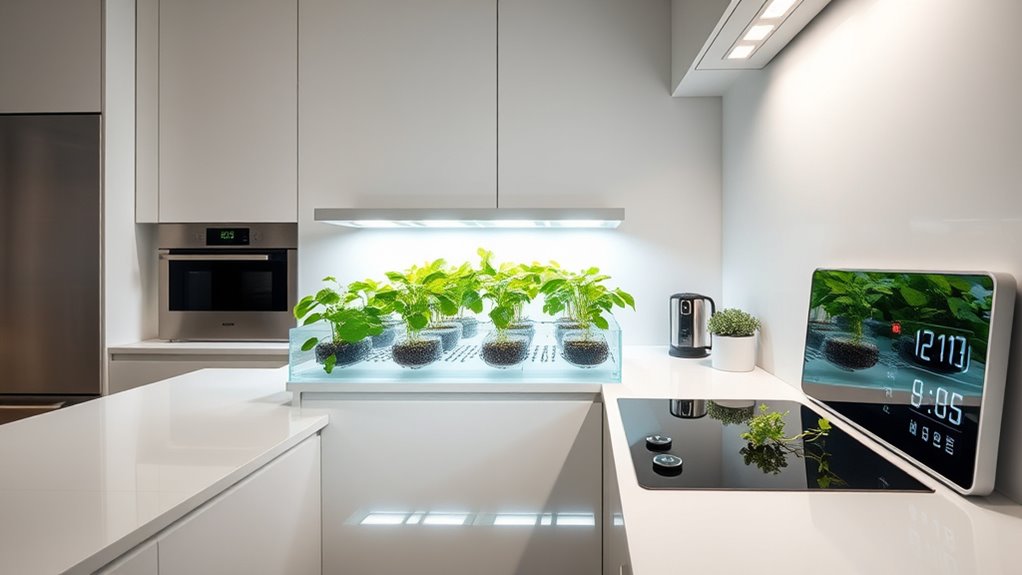
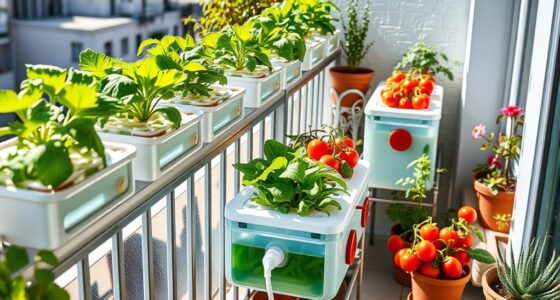
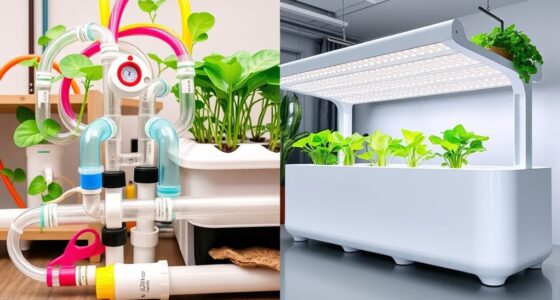
As smart home technology advances, integrating hydroponic kits into your living space has become easier and more practical than ever. You can now grow fresh herbs, vegetables, or even small fruit plants indoors with minimal effort, thanks to automation and intelligent systems. The key lies in seamlessly connecting your hydroponic setup to your existing smart home network, allowing you to control and monitor everything from your smartphone or voice assistant. Automated lighting is an essential feature that guarantees your plants receive the right amount of light daily without manual intervention. Smart LED grow lights can be programmed to turn on and off at specific times, mimic natural sunlight cycles, or adjust intensity based on plant growth stages. This not only promotes healthy development but also conserves energy, as the lights operate only when needed. You can set schedules or use sensors to maximize lighting conditions automatically, guaranteeing your plants thrive regardless of outside weather or your busy schedule. Additionally, incorporating essential oils and diffusers into your smart home can enhance the indoor environment by purifying the air and creating a calming atmosphere for your gardening space. Nutrient monitoring is another critical aspect of successful hydroponic gardening that benefits immensely from smart integration. Smart sensors can track parameters like pH levels, nutrient concentration, and water temperature in real-time. When these readings fall outside ideal ranges, your system can alert you immediately or automatically adjust nutrient delivery, ensuring your plants always have what they need to grow strong. This prevents issues like nutrient deficiencies or toxic buildup, which can hinder growth or damage plants. By automating nutrient monitoring, you remove much of the guesswork and manual testing traditionally involved in hydroponic gardening. It also allows you to maintain a consistent environment, which is essential for maximizing yield and quality. Connecting your hydroponic system to your smart home interface means you can keep an eye on everything remotely. Whether you’re at work or on vacation, you can receive alerts, adjust lighting schedules, or fine-tune nutrient levels with a few taps or voice commands. This level of control makes indoor gardening more accessible and less time-consuming, especially if you’re managing multiple plants or a larger setup. Plus, integrating these features promotes a more sustainable approach by reducing energy waste and optimizing resource use. With smart technology, your hydroponic garden becomes an intelligent system that adapts to your lifestyle and environmental conditions, guaranteeing you grow healthy, vibrant plants effortlessly.
Frequently Asked Questions
How Secure Is Remote Access to Integrated Hydroponic Systems?
Remote access to your integrated hydroponic system is generally secure if you use strong data encryption and robust user authentication. These measures protect your system from unauthorized access. Always update your software regularly, use unique passwords, and enable two-factor authentication when available. By following these steps, you can guarantee your hydroponic system remains safe while allowing convenient remote control and monitoring.
Can Smart Home Systems Automatically Adjust Nutrient Levels?
Your smart home system can definitely automatically adjust nutrient levels, making your hydroponic garden smarter than a supercomputer! Nutrient sensors detect imbalances in real-time, sending data to the system. It then makes automated adjustments to guarantee your plants get the perfect mix of nutrients. This seamless process keeps your crops thriving without manual intervention, turning your home into a lush, high-tech oasis where plants grow healthier and faster than ever.
What Is the Energy Consumption Impact of Integrating These Systems?
Integrating hydroponic kits with smart home systems slightly increases your power consumption, but it can augment energy efficiency by optimizing lighting, pumps, and climate controls. You’ll save energy overall by automating adjustments based on real-time data, reducing waste. While there’s an initial increase in power use, smart controls ensure your system operates only when needed, helping you balance productivity with lower overall energy consumption.
Are There Compatibility Issues With Existing Smart Home Devices?
You might encounter compatibility issues with existing smart home devices when integrating hydroponic kits, especially regarding third-party integrations. These systems often require specific protocols, so verify your devices support common standards like Zigbee or Z-Wave. Firmware updates can help resolve compatibility problems, but if your devices are outdated, they may not seamlessly connect. Double-check compatibility and update firmware beforehand to avoid disruptions in your smart system.
How Do I Troubleshoot Connectivity Problems Between Systems?
You might notice connectivity issues when wireless interference coincides with outdated firmware. To troubleshoot, first, move your devices away from potential interference sources like microwaves or cordless phones. Then, check for firmware updates for both your hydroponic kit and smart home system. Restart devices and re-establish connections. If issues persist, resetting your network settings can often clear conflicts, ensuring smoother communication between your systems.
Conclusion
As you integrate hydroponic kits with your smart home system, the possibilities are endless—and just beneath the surface, something bigger is brewing. Will this seamless connection open new levels of efficiency and sustainability? Or could unforeseen challenges emerge, testing your skills and patience? The future of smart gardening is in your hands, and the next move could change everything. Are you ready to discover what lies beyond the horizon? The next step awaits.