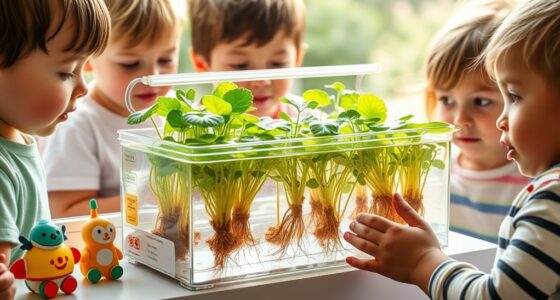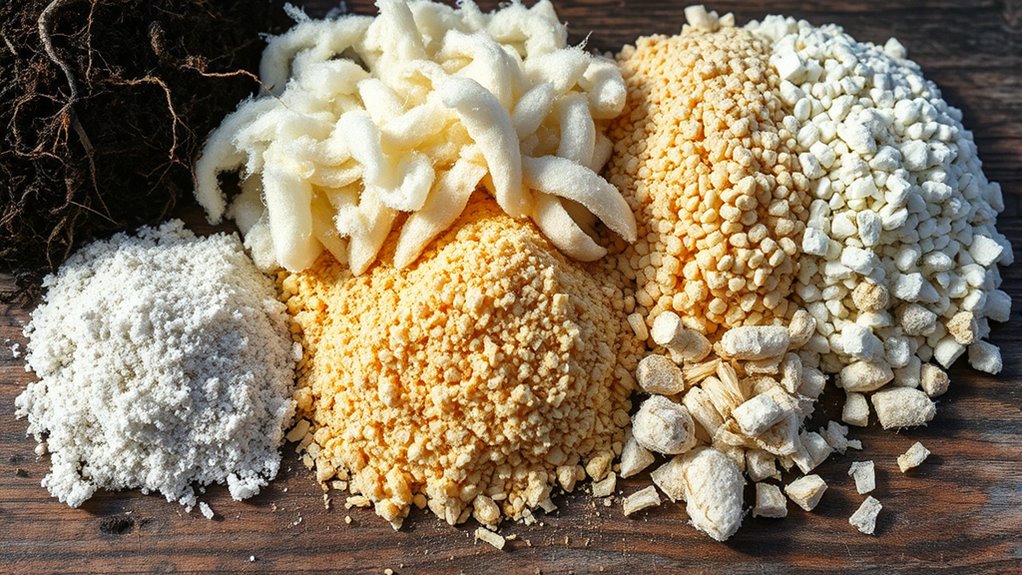

Choosing the best growing medium for your kit depends on your plants’ water and nutrient needs. Look for a balance of water retention and drainage, like a mix of organic materials such as coconut coir or peat moss combined with inorganic options like perlite or pumice. This blend will promote healthy roots, proper oxygen flow, and steady nutrient delivery. Keep in mind plant-specific preferences, and ongoing monitoring will help you optimize your setup—so stay tuned for more tips!
Key Takeaways
- Match the medium’s water retention and drainage properties to your plant’s specific needs.
- Combine organic (e.g., coconut coir, peat moss) and inorganic (e.g., perlite, pumice) components for balance.
- Consider sustainability—opt for eco-friendly options like coconut coir when possible.
- Use moisture meters and observe plant health to adjust watering and medium choice accordingly.
- Select a medium that supports proper nutrient delivery and airflow for optimal root development.
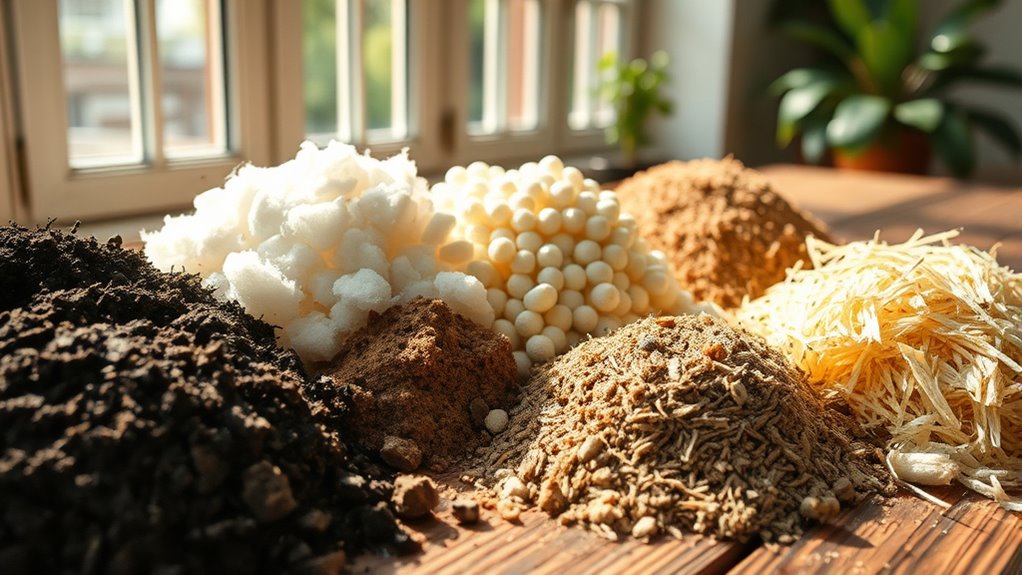
Choosing the right growing medium is essential to guarantee your kit thrives. The medium you select directly influences how well your plants grow, how much water they retain, and how efficiently nutrients are delivered. You want a medium that strikes a balance between holding enough water to keep roots hydrated and allowing excess moisture to drain away, preventing root rot. Good water retention ensures your plants never suffer from drought stress, especially during hot or dry conditions, while proper drainage allows oxygen to reach the roots, promoting healthy growth.
Choosing the right medium balances water retention and drainage for healthy plant growth.
Nutrient delivery is equally critical. The right medium should facilitate the transfer of essential nutrients from your watering or fertilizing routine to the plant roots. Some mediums act as a sponge, holding nutrients close to the roots for a longer period, while others release nutrients quickly, requiring more frequent feeding. The ideal growing medium will integrate both properties, providing a steady supply of nutrients to support vigorous growth without risking nutrient buildup or deficiencies.
When choosing your medium, consider its composition. For instance, organic options like coconut coir or peat moss are excellent for water retention and nutrient holding. Coconut coir, in particular, is sustainable and has a high water-holding capacity, making it a popular choice for many growers. Peat moss is also highly absorbent but can be less sustainable, so some growers opt for alternatives. Inorganic mediums like perlite or pumice are excellent for improving aeration and drainage. They don’t hold water well but allow excess moisture to escape, helping prevent overwatering issues. Combining these inorganic materials with organic ones often yields a balanced environment that supports healthy root development and efficient nutrient uptake.
You should also consider the specific needs of the plants you’re growing. Some plants thrive in high-moisture environments, while others prefer well-draining, aerated mediums. For example, leafy greens often need more water retention, whereas succulents demand excellent drainage. Adjusting your medium based on these requirements will optimize your plant health and growth rate.
Additionally, understanding the water retention properties of your chosen medium can help you better manage watering schedules and prevent issues like overwatering or drought stress. Remember that your growing medium isn’t static. As your plants grow, their needs evolve, so it’s wise to monitor moisture levels and nutrient availability regularly. Using a moisture meter can help you gauge whether your medium retains enough water or if it’s drying out too quickly. Supplementing with fertilizers or soil amendments can also enhance nutrient delivery. The right growing medium, combined with attentive care, ensures your kit remains healthy, productive, and thriving.

WZQH Leather Work Gloves for Men or Women.Gardening,Welding,Coffee-grey L
- Material and Design: 100% split cowhide leather with soft cotton lining
- Protection Features: High abrasion, puncture, cut, and heat resistance
- Reinforced Palm: Extra protection for hands during heavy work
As an affiliate, we earn on qualifying purchases.
Frequently Asked Questions
How Often Should I Replace My Growing Medium?
You should replace your growing medium every 1-2 years to maintain ideal soil sterilization and nutrient retention. Over time, soil can become depleted of nutrients and harbor pests or diseases. Regularly inspect your medium; if you notice poor plant growth or signs of disease, it’s time for a fresh start. Replacing it guarantees your plants get the best environment, promoting healthy growth and maximizing yields.
Can I Mix Different Types of Growing Mediums?
Like mixing a potion, you can blend different growing mediums, but do so carefully. Combining soils with varied compositions can enhance nutrient retention and improve aeration, benefiting your plants. However, make sure they’re compatible; incompatible blends may hinder roots or cause nutrient imbalances. Always test your mix first, maintaining proper soil composition for ideal growth. A well-balanced blend can turn your garden into a thriving, enchanted oasis.
What Is the Environmental Impact of Various Mediums?
You should consider the environmental impact of your growing medium by looking at sustainable sourcing and biodegradability. Some options, like coconut coir, are renewable and biodegradable, reducing waste. Others, such as peat moss, have significant environmental concerns due to non-renewable extraction and slow decomposition. Choosing eco-friendly mediums helps minimize your ecological footprint and supports sustainable practices in gardening.
Are Organic Growing Mediums More Effective?
Organic growing mediums are like a sponge, holding nutrients better and releasing them slowly. They often have organic certification, ensuring they’re free from synthetic chemicals. This means you get improved nutrient retention, which benefits plant health and growth. While effectiveness varies, many growers find organic mediums superior because they support sustainable practices and produce healthier plants. So, if you’re aiming for eco-friendly and nutrient-rich results, organic options are a smart choice.
How Do I Troubleshoot Poor Plant Growth in My Medium?
If your plants are growing poorly, check for watering issues first—overwatering or underwatering can stunt growth. Also, inspect for pest infestations, which can damage roots and leaves. Improve drainage if needed, and adjust your watering schedule accordingly. Regularly monitor for pests, and treat infestations promptly. Ensuring proper watering and pest control helps your plants thrive and overcome growth problems effectively.

COOLJOB 6 Pairs Gardening Gloves for Women Ladies, Breathable Rubber Coated for Yard Garden, Outdoor Indoor Protective Work with Grip, Medium Size, Red & Green
- Designed for Women: Lightweight, breathable, comfortable fit
- Protective and Durable: Thick fingertips and flexible cuffs
- Multi-Purpose Use: Suitable for gardening, yard work, repairs
As an affiliate, we earn on qualifying purchases.
Conclusion
So, after all that fuss about choosing the perfect medium, it turns out the best one might just be the simplest—your patience. Ironically, in the quest for the perfect growing environment, sometimes less is more. Don’t overthink it; your kit will thrive if you give it the basics and a little love. Who knew that the secret to success was just a bit of common sense—and maybe a little luck? Happy growing!

COOLJOB Gardening Gloves for Men, 2 Pairs Breathable Rubber Coated for Garden Weeding Landscaping, Outside Work for Lawn Yard, Men's Large Size, Black & Red
- Breathable and Comfortable Material: Red and black polyester base keeps hands dry
- Flexible and Dexterous Fit: Stretchy seamless knitted design with long cuff
- Durable Rubber Coating: Non-slip latex palm protects and extends glove life
As an affiliate, we earn on qualifying purchases.

PALMORRA Work Gloves for Men Women, Touchscreen Utility Mechanic Gloves, Flexible Grip General Working Gardening Gloves, Yellow, XL
- All-Day Comfort: Breathable stretch fabric for comfort
- Flexible Fit: Ergonomic design for natural movement
- Enhanced Grip: Premium synthetic leather palms
As an affiliate, we earn on qualifying purchases.