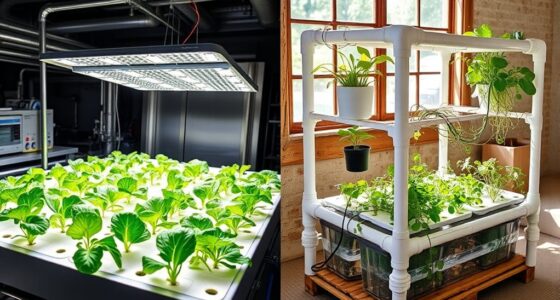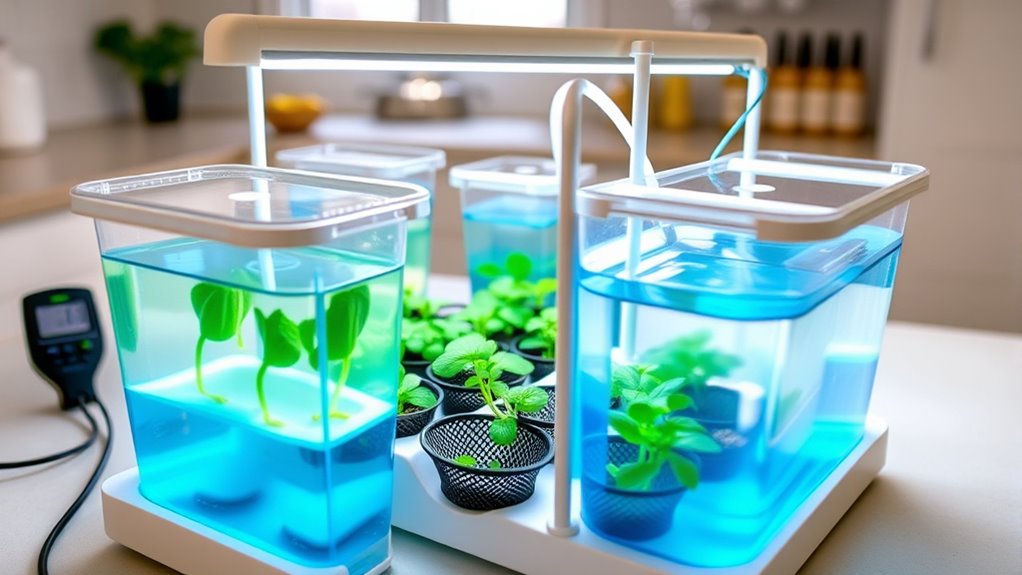

To set up your first hydroponic kit, start by preparing your nutrient solution with the right minerals and adjusting the pH to around 5.5–6.5 for best absorption. Position your grow lights 12–24 inches from plants and establish a consistent schedule, using a timer to automate it. Fill the reservoir with the nutrient mix, monitor water levels, and keep environmental factors stable. If you keep these steps in mind, you’ll uncover essential tips for successful growth every step of the way.
Key Takeaways
- Prepare and mix a nutrient-rich solution, adjusting pH to 5.5–6.5 for optimal nutrient uptake.
- Fill the reservoir with the prepared solution and ensure water levels are consistent.
- Set up grow lights 12–24 inches from plants, and establish a daily light cycle using a timer.
- Regularly monitor and adjust pH and nutrient concentration to prevent deficiencies.
- Maintain stable environmental conditions, including water quality, temperature, and light for healthy growth.

Setting up a hydroponic kit is a straightforward process that lets you grow plants without soil, using nutrient-rich water instead. To start, you’ll need to prepare a proper nutrient solution, which is essential for healthy plant growth. This solution supplies all the critical minerals and nutrients your plants need, including nitrogen, phosphorus, potassium, and trace elements. You can buy pre-mixed solutions or make your own by dissolving specific fertilizers into water. Whatever method you choose, ensure the nutrient concentration is appropriate for your plant type and growth stage. Mix the solution thoroughly and test its pH, aiming for a level around 5.5 to 6.5, depending on the plants you’re growing. Proper pH balance guarantees plants can absorb nutrients efficiently. Regularly monitoring and adjusting the pH helps prevent deficiencies and promotes optimal nutrient uptake.
Next, you’ll want to set up your lighting schedule. Light is a crucial factor in hydroponic systems because, without soil, your plants rely solely on artificial or natural light for photosynthesis. If you’re using grow lights, position them at an appropriate distance from the plants—usually 12 to 24 inches—depending on the light type. Establish a consistent lighting schedule, such as 14 to 16 hours of light per day, and stick to it. Consistency helps your plants develop strong stems and healthy leaves. Use a timer to automate this process so you don’t have to remember to turn lights on and off manually. If you’re growing indoors with natural light, place your system near a window that receives ample sunlight, and consider supplemental grow lights during shorter daylight hours or cloudy days to maintain the proper light cycle.
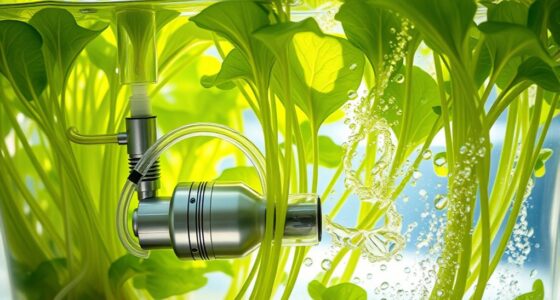
Once your nutrient solution is prepared and your lighting schedule is set, you’ll need to fill your hydroponic system’s reservoir with the solution. Make sure the water level stays consistent and the roots are adequately submerged. Regularly check the solution’s pH and nutrient concentration, topping up or replacing it as needed to prevent deficiencies or salt buildup. Keep an eye on your plants for signs of stress or nutrient imbalance, adjusting the solution accordingly. Maintaining a stable environment with appropriate light and nutrient levels encourages vigorous growth and maximizes yield. Incorporating appropriate filtration can help keep your water clean and free of contaminants, supporting healthier plant development.
Frequently Asked Questions
Which Plants Are Best for Beginners in Hydroponics?
For beginner-friendly crops in hydroponics, you should choose plants with easy plant selection like lettuce, spinach, basil, and mint. These plants thrive in a hydroponic setup, grow quickly, and require minimal maintenance. You’ll find them perfect for learning the basics of hydroponic gardening. Start with these beginner friendly crops, and you’ll enjoy a rewarding experience as you master the essentials of hydroponic plant growth.
How Do I Prevent Algae Growth in My Hydroponic System?
Did you know algae can double in size every 48 hours? To prevent algae growth, you need to focus on algae prevention strategies like maintaining proper water circulation, which discourages light from reaching the algae. Keep your system clean, cover exposed water surfaces, and use opaque containers to block light. Regularly check and change your nutrient solution, and you’ll keep algae at bay, ensuring healthy plant growth.
What Is the Ideal Ph Level for Nutrient Solutions?
You should aim for a pH level between 5.5 and 6.5 for your nutrient solution. Regular pH adjustment helps maintain this range, guaranteeing ideal nutrient absorption. If the pH drifts outside this range, nutrients become less available, affecting plant growth. Use pH testing kits and adjust with pH up or down solutions as needed. Consistent monitoring ensures your plants absorb nutrients efficiently, promoting healthy development.
How Often Should I Change the Nutrient Solution?
You should change your nutrient solution every 1 to 2 weeks to maintain ideal nutrient solution maintenance. Regular system flushing helps prevent salt buildup and guarantees your plants get fresh nutrients. Keep an eye on your plants for signs of nutrient deficiencies or excesses, and adjust your schedule if needed. Consistent changes and flushing keep your hydroponic system healthy and your plants thriving.
Can I Expand My Hydroponic Setup Later?
You can definitely expand your hydroponic setup later; it’s like hitting two birds with one stone. To do so, simply plan to expand capacity by adding more grow channels or containers, and consider installing additional grow lights to make sure all plants get enough light. Just make certain your system’s pump and nutrient supply can handle the extra load, so your plants stay healthy and productive as you grow.
Conclusion
Now that you’ve set up your first hydroponic kit, you’re on your way to growing fresh, healthy plants indoors. Did you know that hydroponic systems can produce crops up to 25% faster than traditional soil gardening? Keep monitoring your setup, and enjoy the rewarding experience of nurturing your own garden. With patience and care, you’ll soon be harvesting your own delicious greens—happy gardening!