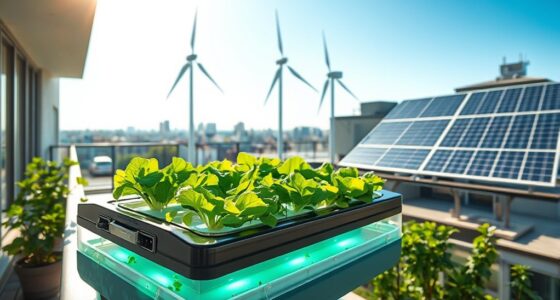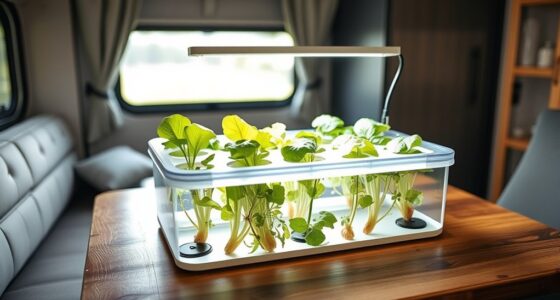
To guarantee your hydroponic kit thrives, choose a pump that matches your water volume and system complexity, with adjustable flow rates for ideal control. Submersible pumps are great for small setups, while external pumps handle larger systems better. Proper placement and regular maintenance of your pump keep water moving evenly, providing plants with nutrients and oxygen while preventing stagnant zones. Staying informed on best practices will help you maintain a healthy, productive system.

Get garden gear delivered free with Prime
- Fast, free delivery on millions of items
- Prime Video, Amazon Music and more included
- Member-only deals all year
Key Takeaways
- Choose a pump with appropriate capacity and adjustable flow for your hydroponic system’s size and water volume.
- Use submersible pumps for small setups; external pumps are better for larger, complex systems.
- Position pumps to ensure uniform water flow and prevent dead zones, promoting healthy plant and root growth.
- Regularly clean and maintain pumps and filters to ensure consistent circulation and system longevity.
- Select energy-efficient, durable pumps to reduce operational costs and support system stability.
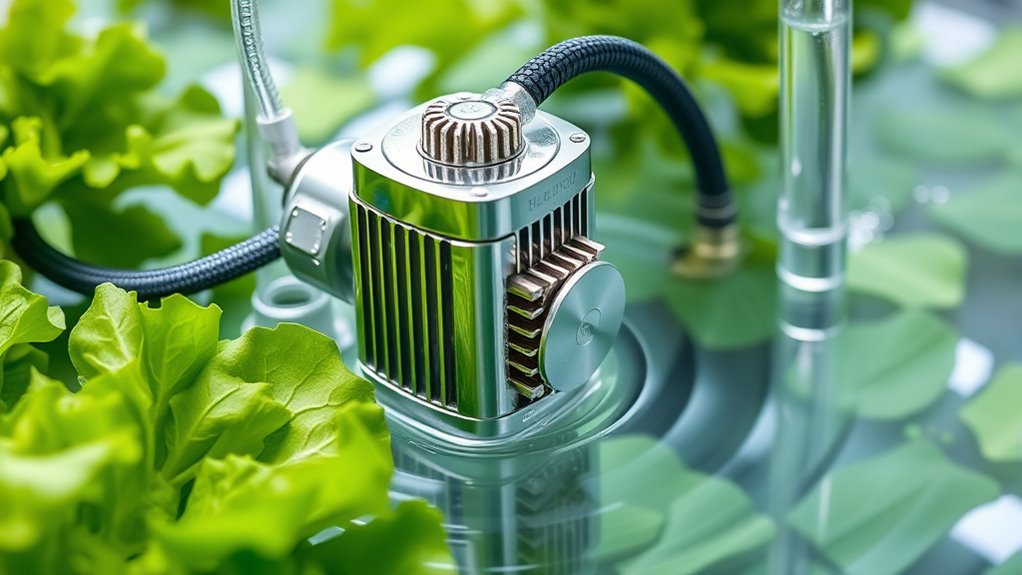
Efficient water circulation is vital for maintaining healthy plants in a hydroponic system, guaranteeing nutrients stay evenly distributed and roots receive adequate oxygen. When you set up your hydroponic kit, you want to make sure the water moves consistently throughout the system. Proper circulation prevents stagnation, reduces the risk of disease, and promotes ideal root development. Whether you’re working with a simple setup or an advanced aquaponic system, the goal remains the same: to deliver nutrients effectively while keeping water oxygenated.
Maintaining consistent water flow is essential for healthy, oxygenated plants in hydroponic systems.
In aquaponic systems, water circulation plays a dual role. Not only does it deliver nutrients directly to the plants, but it also maintains a healthy environment for the fish and beneficial bacteria that convert waste into plant-available nutrients. When choosing a pump, consider its capacity to handle the volume of water in your system. The right pump should provide steady flow without creating excessive turbulence, which can stress plants or disrupt delicate aquatic life. You want a pump that offers adjustable flow rates, giving you control to optimize nutrient delivery and oxygenation based on your system’s specific needs.
The type of pump you select impacts how well nutrients are distributed throughout your hydroponic setup. Submersible pumps are popular because they are easy to install and operate quietly, making them suitable for smaller or simpler systems. External pumps, on the other hand, are often more durable and capable of handling larger volumes, ideal for larger or more complex hydroponic or aquaponic systems. When considering nutrient delivery, guarantee the pump’s flow rate matches the demands of your plants and system size. Too high a flow can cause water splashing and aeration issues, while too low may result in uneven nutrient distribution and oxygen deficiency.
Additionally, pay attention to the quality and energy efficiency of the pump. A high-quality pump will last longer, run more quietly, and consume less power, saving you money in the long run. Proper placement of the pump is also vital—position it to promote uniform water movement and avoid dead zones where water may stagnate. Regular maintenance, like cleaning filters and checking for blockages, keeps your water circulation system running smoothly, ensuring consistent nutrient delivery and oxygen levels. Choosing a reliable pump can also reduce the likelihood of system failures and maintenance costs over time. Ultimately, selecting the right pump and understanding water movement helps create a thriving environment for your plants, fish, or beneficial bacteria, leading to healthier growth and higher yields.
hydroponic water pump with adjustable flow rate
As an affiliate, we earn on qualifying purchases.
As an affiliate, we earn on qualifying purchases.
Frequently Asked Questions
What Are the Energy Costs of Different Pump Types?
The energy costs of different pump types vary based on their energy efficiency and power consumption. Generally, magnetic drive pumps use less power and are more energy-efficient, saving you money over time. On the other hand, larger or older pumps may consume more electricity, increasing your costs. To keep energy expenses low, choose a pump with high energy efficiency and appropriate power consumption for your hydroponic setup, reducing ongoing electricity bills.
How Often Should I Clean My Hydroponic Pump?
Think of your hydroponic pump like a car engine—it needs regular maintenance to run smoothly. You should clean your pump every 2-4 weeks, especially if you notice reduced water flow or buildup. Regular pump maintenance ensures water quality stays high and prevents clogs or breakdowns. Skipping cleaning can lead to algae or mineral buildup, affecting plant health. Keep your pump in top shape for maximum growth!
Can I Use a Pond Pump for Hydroponic Systems?
Yes, you can use a pond pump for your hydroponic system, but make sure it has the right flow rate for your setup. A pond pump is designed to handle larger volumes of water, so check that its flow rate matches your system’s needs to prevent over- or under-circulation. Also, verify it’s compatible with your nutrient solution and is easy to clean to keep your plants healthy.
What Safety Precautions Are Needed for Pump Installation?
When installing a pump, prioritize electrical safety by unplugging it before handling, and always use grounded outlets to prevent shocks. Handle the pump carefully to avoid damage, and verify all connections are secure and dry. Keep water away from electrical components, and follow the manufacturer’s instructions. Regularly inspect cords and plugs for wear, and never modify electrical parts. These precautions keep your setup safe and functioning efficiently.
How Do Seasonal Changes Affect Water Circulation Needs?
Seasonal temperature fluctuations and sunlight exposure effects are like a roller coaster for your hydroponic system. In colder months, you’ll need a more powerful pump to maintain water flow, while warmer seasons might require less. Longer sunlight hours can increase water temperature, so adjust circulation to prevent overheating or stagnation. Monitoring these changes helps keep your plants healthy, ensuring consistent growth year-round.
submersible pump for small hydroponic system
As an affiliate, we earn on qualifying purchases.
As an affiliate, we earn on qualifying purchases.
Conclusion
Choosing the right pump and understanding water circulation are key to a thriving hydroponic setup. When you get it right, you’ll see your plants flourish and grow strong. Remember, it’s not just about the pump, but how you use it—think of it as the heartbeat of your system. With a little know-how, you’ll be able to keep everything running smoothly and enjoy your gardening venture to the fullest.
external water pump for large hydroponic setup
As an affiliate, we earn on qualifying purchases.
As an affiliate, we earn on qualifying purchases.
hydroponic system circulation pump
As an affiliate, we earn on qualifying purchases.
As an affiliate, we earn on qualifying purchases.
Fall yard work Picks
leaf blowers
As an affiliate, we earn on qualifying purchases.