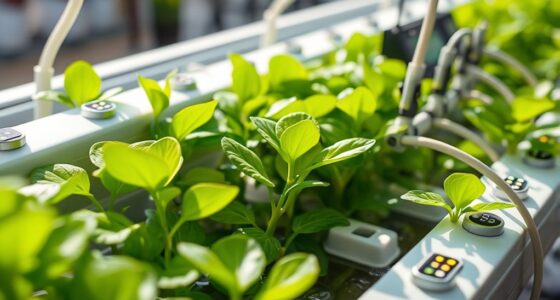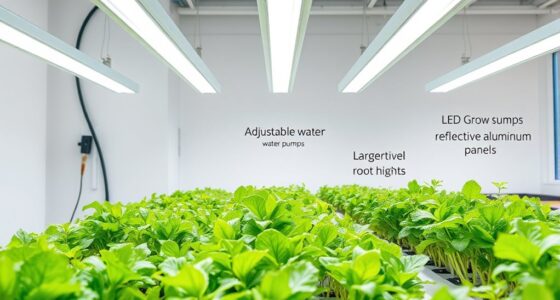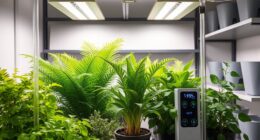
A hydroponic kit includes essential components like nutrient solutions that deliver crucial minerals directly to your plants’ roots, grow lights that mimic sunlight for photosynthesis, and containers with drainage to support healthy root zones. An aeration system keeps the nutrient solution oxygen-rich, preventing root rot, while circulation pumps and tubing ensure consistent nutrient flow and oxygen distribution. Understanding these parts helps you set up a thriving system—keep going to discover how each piece works together.
Key Takeaways
- Nutrient solutions provide essential minerals directly to plant roots, supporting growth without soil.
- Grow lights mimic sunlight, enabling photosynthesis indoors with options like LED, fluorescent, and HID types.
- Containers and trays hold plants and solutions while ensuring proper drainage and oxygen access for healthy roots.
- Aeration systems use air stones and pumps to oxygenate nutrient solutions, preventing root rot and promoting vigorous growth.
- Circulation pumps and tubing evenly distribute nutrients and oxygen, maintaining consistent system performance and plant health.
A hydroponic kit contains all the essential components you need to grow plants without soil. The core of this system is the nutrient solution, which supplies your plants with the vital minerals and elements they need to thrive. Unlike traditional soil-based gardening, hydroponics relies on these carefully balanced liquids to deliver nutrients directly to the roots. You’ll find that most kits include pre-mixed or concentrate nutrient solutions, making it easier to maintain optimal levels of nitrogen, phosphorus, potassium, and trace minerals. Regularly monitoring and adjusting this solution ensures your plants get exactly what they need for healthy growth.
Another key component is the grow lights. Since hydroponic setups often operate indoors or in spaces with limited sunlight, grow lights become essential for photosynthesis. These lights are designed to mimic natural sunlight, providing the specific spectrum necessary for plant development. Depending on your kit, you might get LED grow lights, fluorescent, or high-intensity discharge (HID) lamps. LED grow lights are popular because they are energy-efficient, emit less heat, and have customizable spectra to match different growth stages. Proper placement and timing of these lights are crucial; typically, you’ll set them on a timer to simulate day and night cycles, encouraging healthy flowering and fruiting.
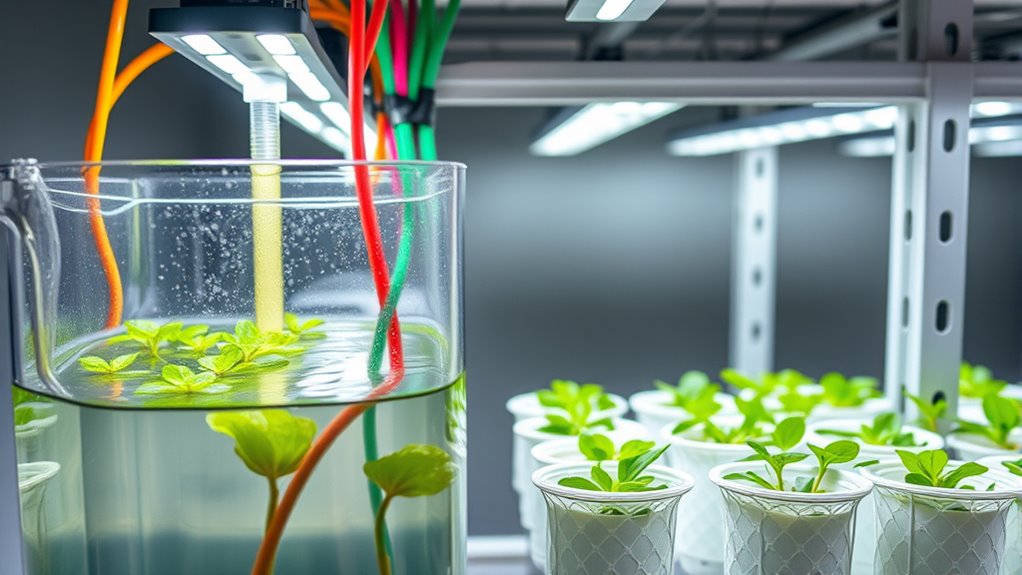
The system also includes containers or grow trays where your plants sit. These are designed to hold the nutrient solution and support the roots directly or via a medium like clay pellets or coconut coir. The containers often feature drainage holes to prevent waterlogging, ensuring roots get enough oxygen. Aeration is another critical element, often achieved through air stones connected to air pumps, which keep the nutrient solution oxygen-rich. This prevents root rot and promotes rapid growth.
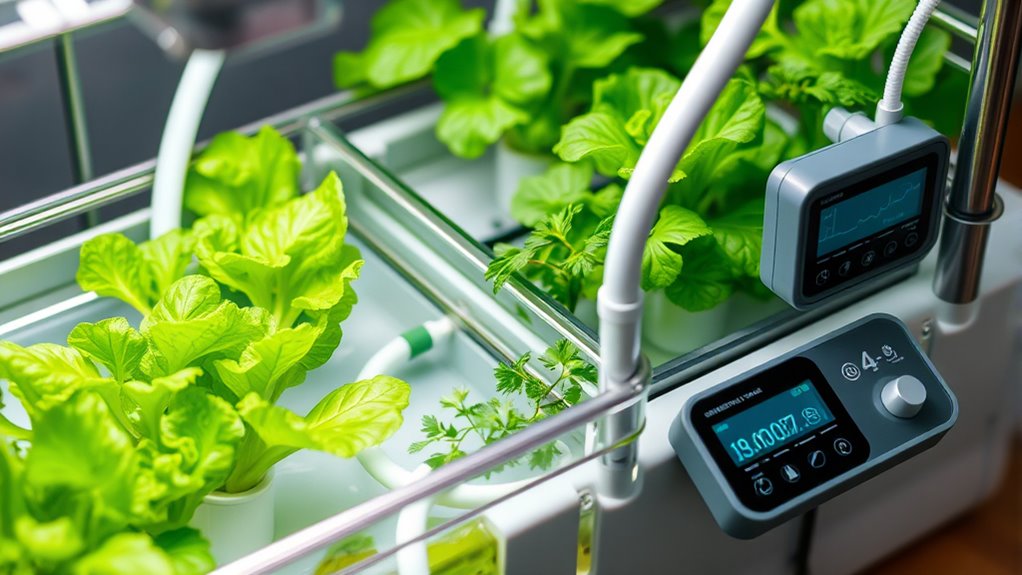
Additionally, many kits come with a pump to circulate the nutrient solution, ensuring an even distribution of nutrients and oxygen throughout the system. This circulation is vital because stagnant solutions can lead to imbalanced nutrient levels and algae buildup. The tubing connects all parts, facilitating smooth movement of liquids and air.
Frequently Asked Questions
How Do I Troubleshoot Common Hydroponic Kit Issues?
If your hydroponic kit isn’t performing well, start troubleshooting by checking the water pH balance and adjusting it to the recommended range. Look for signs of nutrient deficiency, like yellowing leaves or stunted growth, and supplement with appropriate nutrients. Confirm your pump is working properly and clean any clogs. Regularly monitor water levels and keep the system clean to prevent issues and promote healthy plant growth.
What Safety Precautions Should I Follow When Using a Hydroponic Kit?
When using a hydroponic kit, you should always wear safety gear like gloves and goggles to protect yourself. Guarantee electrical safety by unplugging devices before handling components and keeping cords dry to prevent shocks. Follow the manufacturer’s instructions carefully, avoid overloading outlets, and keep liquids away from electrical parts. These precautions help you enjoy gardening safely and prevent accidents or damage.
Can I Customize My Hydroponic Kit Components?
Yes, you can customize your hydroponic kit components to suit your needs. Check the customization options offered by your kit, and verify component compatibility before making any changes. You might add or upgrade parts like lighting, pumps, or grow trays. Just remember, selecting compatible components helps maintain system efficiency and prevents malfunctions. Personalizing your setup can enhance growth and make your hydroponic gardening more enjoyable.
How Often Should I Replace Parts in the Hydroponic System?
You should perform regular component maintenance and follow a consistent replacement schedule to keep your hydroponic system running smoothly. Typically, replace parts like pumps, filters, and tubing every 6 to 12 months, or sooner if you notice signs of wear or clogs. Regularly inspecting your system helps prevent failures, ensuring ideal growth conditions. Staying on top of component maintenance prolongs system life and maximizes your crop yield.
Are There Eco-Friendly Options for Hydroponic Kit Components?
Yes, you can choose eco-friendly hydroponic kit components like biodegradable containers and organic nutrients. Biodegradable containers break down naturally, reducing waste, while organic nutrients promote sustainable plant growth without harmful chemicals. By selecting these options, you minimize your environmental impact and support healthier ecosystems. Incorporate biodegradable containers and organic nutrients into your system to enjoy fresh produce while caring for the planet.
Conclusion
Think of your hydroponic kit as a garden’s heartbeat, each component symbolizing a essential pulse that sustains growth. When you understand how these parts work together—like the roots drawing life from nourishing water—you become a steward of vitality. With care and knowledge, you nurture more than plants; you cultivate resilience and innovation. Your kit isn’t just equipment; it’s a vessel of potential, transforming your space into a living, breathing symbol of growth and sustainability.