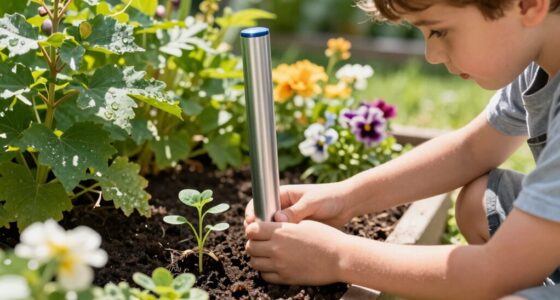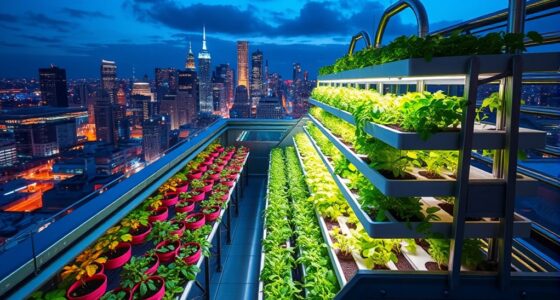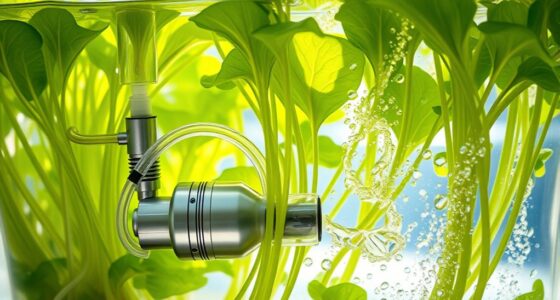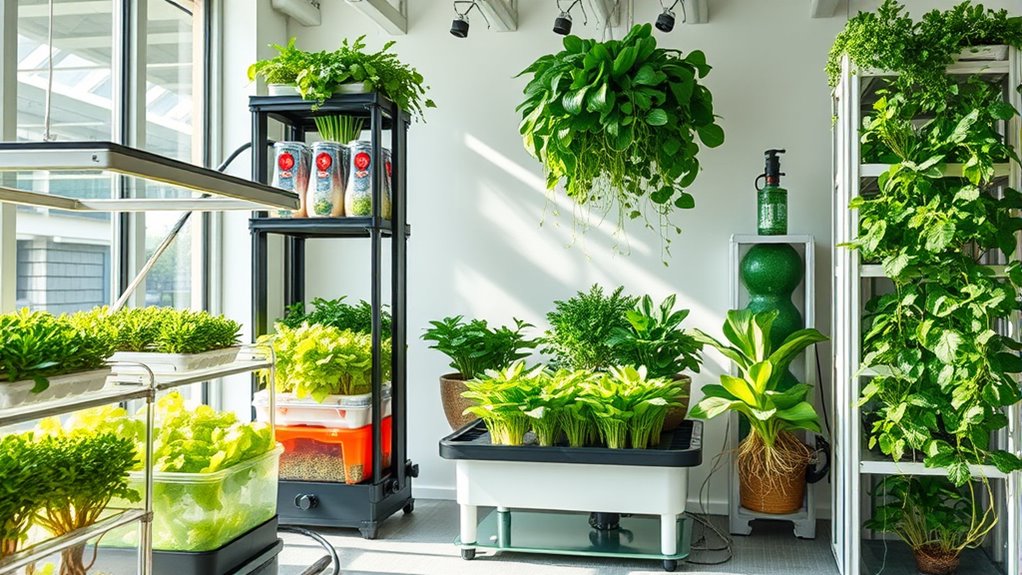

To choose the right hydroponic kit for your space, assess your available area and decide what system best fits your size and layout—whether compact or larger. Consider your lighting options, ensuring your setup works with natural or artificial light, and pick a system that matches your experience level. Think about maintenance needs and how much time you can dedicate. Exploring these factors thoroughly will help you find the perfect fit for your gardening goals.

Get garden gear delivered free with Prime
- Fast, free delivery on millions of items
- Prime Video, Amazon Music and more included
- Member-only deals all year
Key Takeaways
- Assess your available space size and choose a kit that fits comfortably and allows for scalability.
- Match the hydroponic system type to your experience level and maintenance capacity.
- Ensure compatibility with your existing lighting setup, considering natural or artificial light sources.
- Select a kit that supports your preferred growing medium and environmental conditions.
- Prioritize ease of assembly and maintenance to ensure consistent, successful plant growth.

Selecting the right hydroponic kit is essential for growing healthy plants efficiently. When you start exploring your options, one of the most important considerations is how well the kit matches your space’s conditions. This includes understanding soil compatibility, even in a soilless system, and ensuring the lighting requirements are met. While hydroponics often eliminates the need for traditional soil, some systems still benefit from knowing the type of growing medium used and how it interacts with your plants’ needs. For example, certain media retain moisture differently, and knowing this helps you choose a kit that complements your environment. If your space has limited soil-like materials or if you prefer a more soil-like experience, look for kits that support compatible growing media, such as coconut coir or rockwool, which can influence plant health and yield. Additionally, considering color accuracy in your lighting setup can significantly affect plant growth and development, especially when using artificial lights. Lighting requirements are another critical factor. Plants grown hydroponically still need adequate light to thrive, and your kit should be compatible with your available lighting setup. If you have a small indoor space with limited natural light, you’ll want a kit that can work with grow lights or LED panels. Conversely, if your space receives plenty of sunlight, selecting a kit that maximizes natural light can reduce your energy costs. It’s also important to consider the light spectrum the kit is compatible with—some plants require specific wavelengths for optimal growth, so choosing a kit that aligns with your lighting options ensures your plants develop strong roots and vibrant leaves. Beyond soil compatibility and lighting requirements, think about the size and scalability of the hydroponic kit. Do you want a small, desktop setup for herbs, or are you aiming for a larger system to grow vegetables? Make sure the kit fits comfortably within your space and can scale as your skills and needs grow. Ease of assembly and maintenance should also be priorities. If you’re new to hydroponics, select a kit with straightforward instructions and minimal components that could cause confusion or require frequent troubleshooting. Finally, consider the type of hydroponic system that suits your lifestyle. Nutrient film technique (NFT), deep water culture (DWC), or ebb and flow systems each have different requirements and complexities. Match your choice to your available time, technical comfort, and desired plant types. By paying close attention to soil compatibility, lighting needs, size, and system type, you’ll be able to select a hydroponic kit that not only fits your space but also helps you grow healthy, thriving plants with confidence.
Products Worth Considering

Orbit B-hyve XR 8-Zone Indoor/Outdoor Smart Sprinkler Controller

EGO POWER+ LB7654 Cordless Leaf Blower with 5.0Ah Battery

Husqvarna 120 Mark III 16-Inch Gas Chainsaw
As an affiliate, we earn on qualifying purchases.
Frequently Asked Questions
Can I Upgrade My Hydroponic Kit Later?
Yes, you can upgrade your hydroponic kit later. Look for models with upgradeable features and expansion options, so you can add more grow spaces or improve existing components. Many kits are designed with modular systems, making it easy to expand as your needs grow. Just guarantee the kit you choose is compatible with future upgrades, and you’ll enjoy customizing your setup over time without needing a complete overhaul.
What Maintenance Is Required for Different Kits?
You need to stay on top of maintenance to keep your hydroponic system thriving. Regularly check nutrient management to ensure your plants get the right balance, and clean water filtration components to prevent clogs and algae. Change nutrients as recommended and monitor water levels. Keeping a close eye on these details guarantees your system runs smoothly and your plants stay healthy—don’t let things slip through the cracks.
Are There Kits Suitable for Outdoor Use?
Yes, many hydroponic kits are suitable for outdoor use. Look for outdoor compatibility and weather-resistant features to guarantee your system withstands the elements. These kits often include durable materials and protective covers, making them ideal for gardens or patios. Choose a kit with weatherproof components, and consider placing it in a sheltered spot to prolong its lifespan and maintain healthy plant growth outside.
How Do I Troubleshoot Common Hydroponic Problems?
Troubleshooting hydroponic issues is like tuning a delicate instrument. Check for nutrient deficiencies and pH imbalances first, as they’re common culprits. If your plants droop or stall, test water pH and adjust it to the ideal range (5.5-6.5). Keep an eye on nutrient levels, and make certain your pump and water flow aren’t blocked. Regular monitoring helps catch problems early, keeping your hydroponic garden thriving.
Which Kits Are Best for Beginners With Limited Space?
If you’re a beginner with limited space, look for hydroponic kits with a compact design that fit easily into small areas. Budget-friendly options are also ideal, so you can start without overspending. Choose a kit that’s simple to set up and maintain, and offers good growth support for your plants. These features will help you enjoy gardening without feeling overwhelmed, making your hydroponic journey enjoyable and successful.
Conclusion
Choosing the right hydroponic kit is like planting a seed in fertile soil—you need the right environment to thrive. By considering your space, budget, and plant needs, you’ll set yourself up for success. Remember, this journey is a delicate dance between technology and nature, so stay adaptable and patient. With the right kit, you’ll cultivate a lush, thriving garden that blossoms like a well-tended symphony—beautiful, balanced, and uniquely yours.